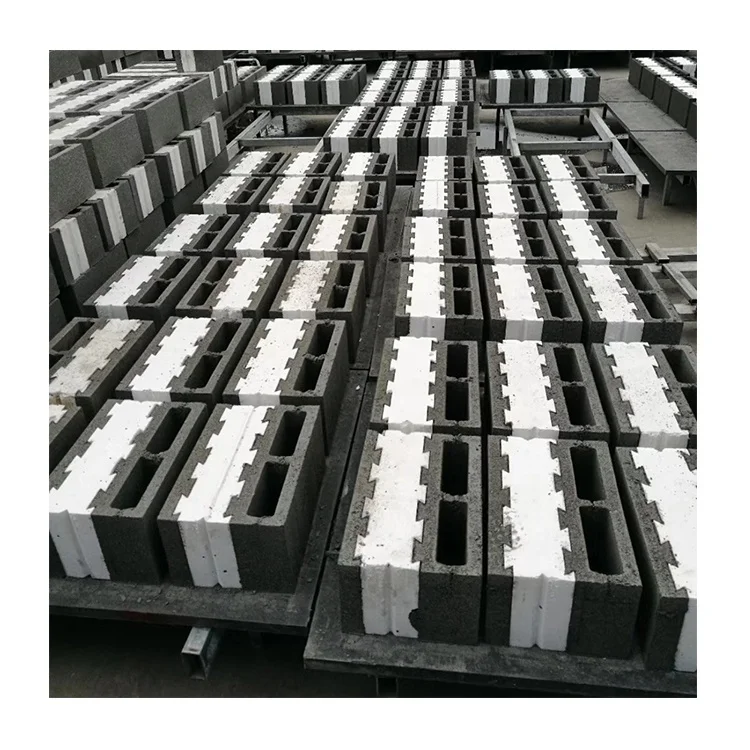
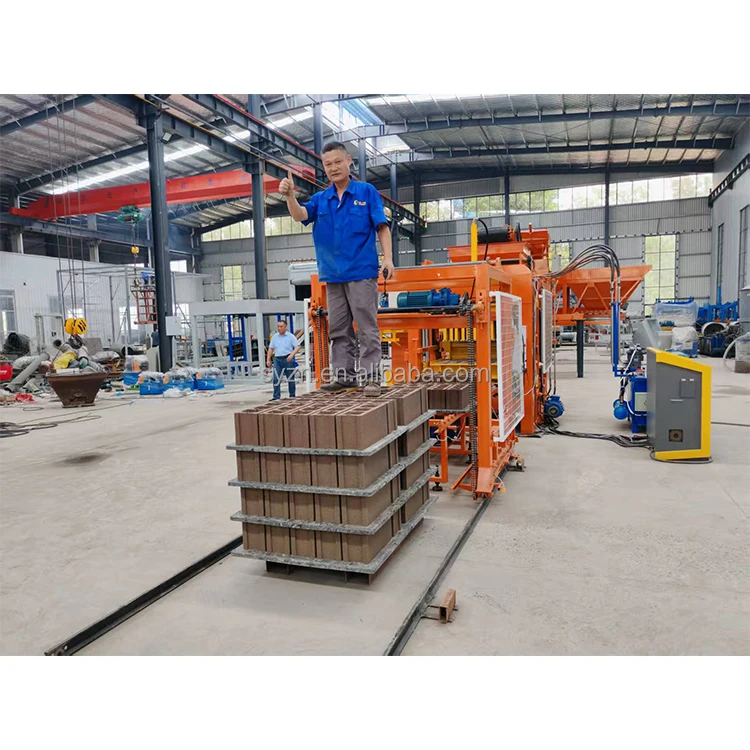
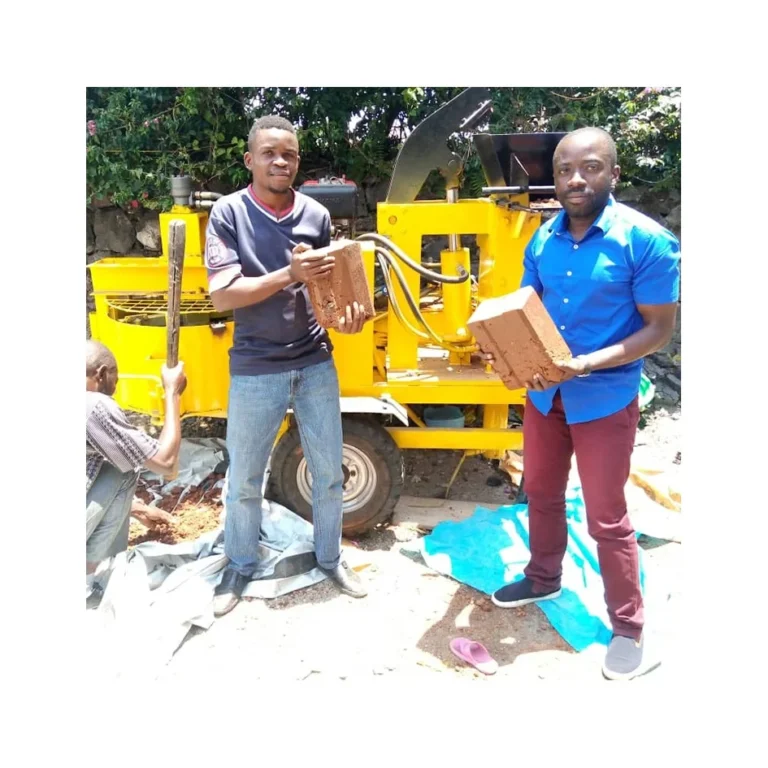
Single Focus, Matched System — the QMY18-15 is specified as a complete mobile unit where hydraulic station, vibration, and mould are balanced to your actual mix, not assembled from separate catalog pages.
Technical Specifications
| Parameter |
Value |
| Model |
QMY18-15 |
| Product Type |
Automatic Mobile Egg Laying Cement Block Making Machine |
| Rated Power |
24 kW |
| Working Method |
Hydraulic pressure station |
| Output Capacity |
About 34,000 pcs per shift (basis: 400×200×200mm block; smaller formats yield higher counts) |
| Block Types |
Hollow, solid, and custom formats per buyer requirement |
| Voltage |
Configured to local industrial supply (V/Hz to confirm at inquiry) |
| Control System |
PLC (display language to confirm at inquiry) |
| Pallet Requirement |
None — egg-laying design, blocks formed directly on ground |
| Automation Level |
Automatic mobile operation |
| Stacking Method |
Blocks laid directly on ground, no pallet handling |
| Hydraulic Pressure |
To confirm with supplier |
| Vibration Force |
To confirm with supplier |
| Cycle Time per Format |
To confirm with supplier |
| Mould Change Time |
To confirm with supplier |
| Overall Dimensions |
To confirm with supplier |
| Net Weight |
To confirm with supplier |
Application Suitability
| Application |
Material or Output |
| On-site hollow block production at housing project locations |
Cement, crushed stone, and sand mix |
| Mobile solid block manufacturing for remote construction sites |
Cement-based mixes with local aggregate |
| First plant setup for entrepreneurs entering block production |
Crusher dust, river sand, and cement blends |
| Contractor self-supply of custom block formats on schedule |
Tailored mix designs per site conditions |
Why "34,000 Pieces per Shift" Needs a Block Format Attached
A capacity number without a block format is marketing, not engineering.
I have watched buyers sign contracts based on a shift output figure only to discover on commissioning day that the number assumed a format they never intended to produce. The QMY18-15 is rated at about 34,000 pieces per shift specifically on a 400×200×200mm hollow block. Switch to a smaller solid paver and the count rises; move to a larger interlocking format and it drops. Every automatic mobile egg laying block machine manufacturer should state the format behind the figure — and we do. [NEED_CITE: block format assumptions in capacity declarations for mobile machines]

Where the Mobile Tier Sits in the Range
Before committing capital, a buyer needs to understand the full spectrum. The QMY18-15 occupies the mobile egg-laying tier — no fixed plant, no pallets, no curing racks. It sits below semi-automatic stationary lines that add pallet handling and below fully automatic plants with stackers and cubing. This automatic mobile egg laying block machine is the entry point for production independence, not the ceiling.
Footprint and Ground Conditions That Decide Output
The QMY18-15 lays blocks directly on a flat, cured concrete floor. The quality of that floor — levelness, hardness, and drainage — determines block breakage during the egg-laying cycle. A dusty or uneven surface causes the machine to drag, producing cracked corners and inconsistent density. Ground preparation is the hidden variable that separates a smooth shift from a frustrating one. [NEED_CITE: ground preparation standards for mobile egg-laying block machines]
Reading the Specs That Actually Matter
Hydraulic pressure and vibration force must be matched to the buyer’s specific mix design. Too much vibration on a lean cement mix shatters the block before it sets; too little on a rich mix leaves voids and weak cores. The 24 kW rated power on the QMY18-15 drives both the hydraulic station and the vibration system simultaneously, so peak demand during the press cycle must not trip the supply. PLC control removes manual timing guesswork, but the display language needs confirming before the machine leaves the factory — arriving with an interface the operator cannot read delays commissioning by days. Mould change time determines whether format flexibility is real or theoretical; if swapping a hollow block mould for a paver mould consumes most of a shift, the buyer has paid for versatility they cannot use.
The Cost of Skipping Voltage Confirmation
I once arrived at a site in West Africa to find a brand-new block machine sitting idle because the local grid ran at a frequency the motor was not wound for. The QMY18-15 voltage is configurable, but only if the buyer states the local V/Hz before production starts. Rewinding a motor on site is expensive and slow. [NEED_CITE: voltage and frequency standards by export market]
Why Source This Machine Here
Block machinery is our single focus, meaning the QMY18-15 press, its moulds, and its hydraulic station are designed as one system rather than bolted together from unrelated suppliers. Configuration is set against the buyer’s actual local aggregate and target block format, not pulled from a default catalog page. Custom mould design is available to buyer drawings, so the formats that actually sell in the local market are the ones the machine produces. The automation path is open — a buyer starting with the mobile tier can move to semi-automatic or full stationary lines later without scrapping their initial investment. Installation support includes on-site commissioning and operator training so the first production run is not a learning experiment.
Documentation & Verification
- Line layout with capacity calculation stating the 400×200×200mm basis
- Machine specification sheet with hydraulic and electrical ratings confirmed
- Mould drawing and format list showing included and custom moulds
- Voltage, frequency, and PLC display language confirmation record
- Factory test report on buyer’s specified block format before dispatch
Installation, Commissioning & Support
- Flat cured concrete floor required for egg-laying travel path
- 24 kW dedicated circuit with correct V/Hz matched to local grid
- Machine arrives assembled; on-site setup focuses on mould fitting and PLC language check
- First-run commissioning includes vibration and hydraulic tuning to buyer’s mix
- Operator training covers mould change procedure and daily maintenance points
- Wear parts and mould list provided for forward planning
What to Prepare Before Inquiry
Tell us the block formats your market actually buys — hollow, solid, paver, interlocking — and the dimensions of each. Share your local raw materials and their typical grading so we can match vibration and pressure settings. Confirm your site voltage and frequency, the PLC language your operators need, and the approximate daily volume you are targeting.
Frequently Asked Questions
Q: How is the 34,000 pcs per shift figure calculated and which format does it assume?
A: The figure is based on continuous production of 400×200×200mm hollow blocks across a standard shift. Smaller solid blocks will produce higher counts per shift, while larger or more complex formats such as interlocking pavers will reduce it. We state the assumed format in every capacity document so expectations match reality.
Q: Where does the QMY18-15 mobile tier sit compared to semi-automatic and fully automatic lines?
A: The QMY18-15 is the mobile egg-laying entry point — no pallets, no fixed plant, blocks laid directly on the ground. Semi-automatic lines add pallet handling and a curing area, while fully automatic lines include stacking and cubing. Each tier increases investment and plant footprint in steps.
Q: What voltage options are available and how is PLC language confirmed?
A: Voltage and frequency are configured to the buyer’s local industrial supply before production. PLC display language is confirmed during the order process and verified on the factory test record. Both items appear on the pre-shipment documentation so there are no surprises at commissioning.
Q: What ground conditions does the mobile egg-laying machine need on site?
A: A flat, cured concrete surface is required for the machine to travel smoothly while laying blocks. The floor must be level to prevent block cracking during release, hard enough to bear the machine weight, and large enough to accommodate the daily output layout before curing.
Q: Can the automation level be upgraded later from mobile to a stationary line?
A: Yes. The mobile tier is a starting point, not a dead end. Buyers who grow their block output can move to semi-automatic or fully automatic stationary configurations later. Moulds and format knowledge from the QMY18-15 carry over, reducing the learning curve on the next machine.

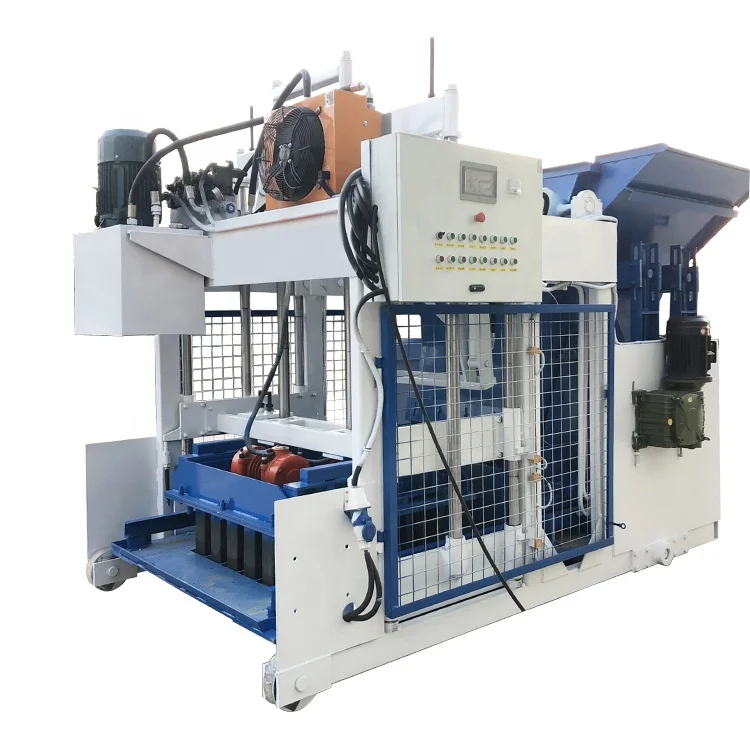 High quality block machine