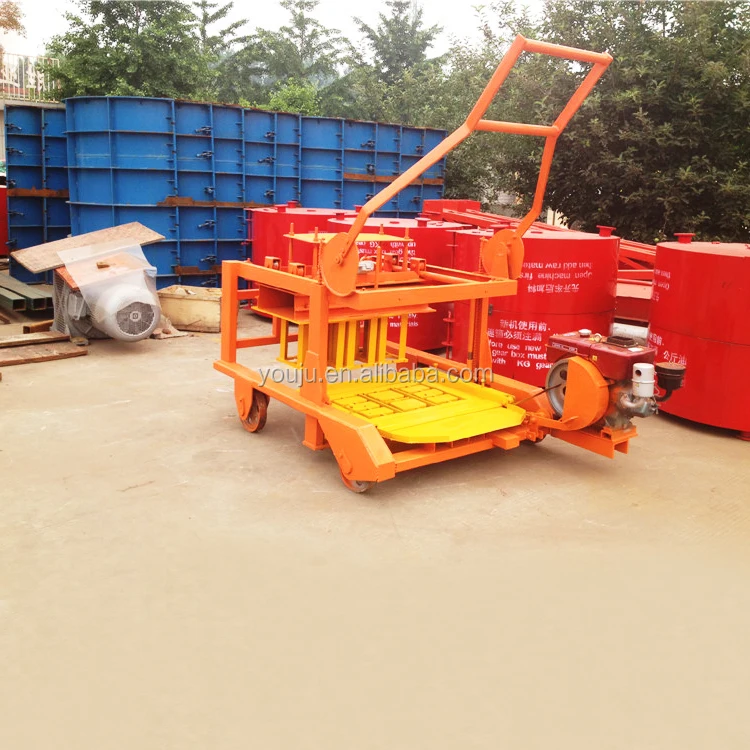
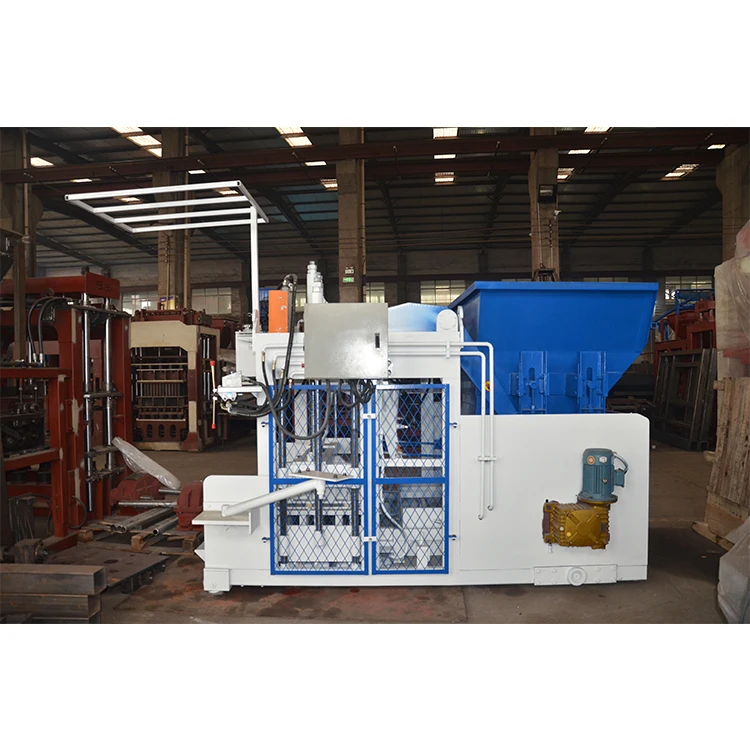
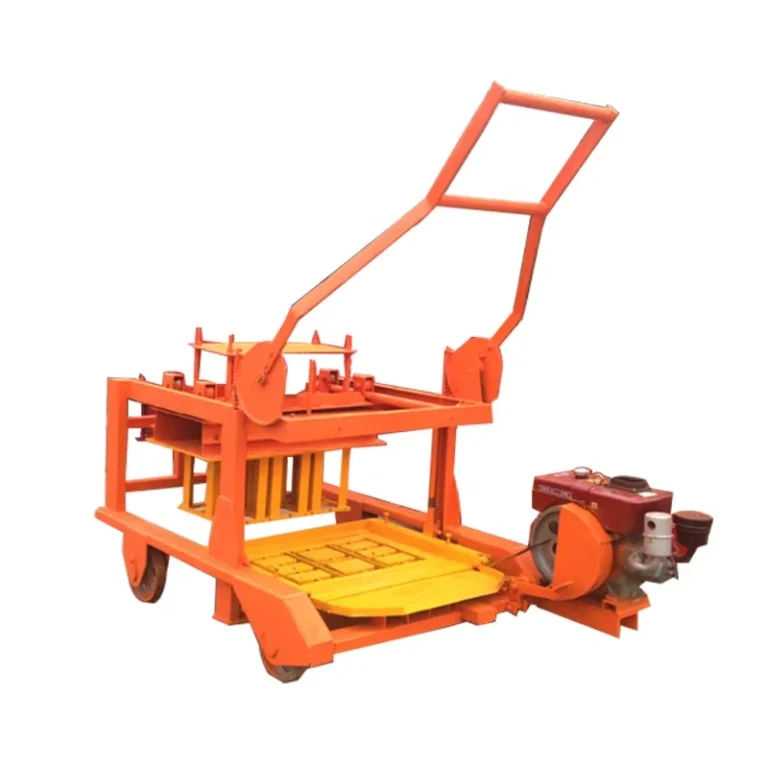
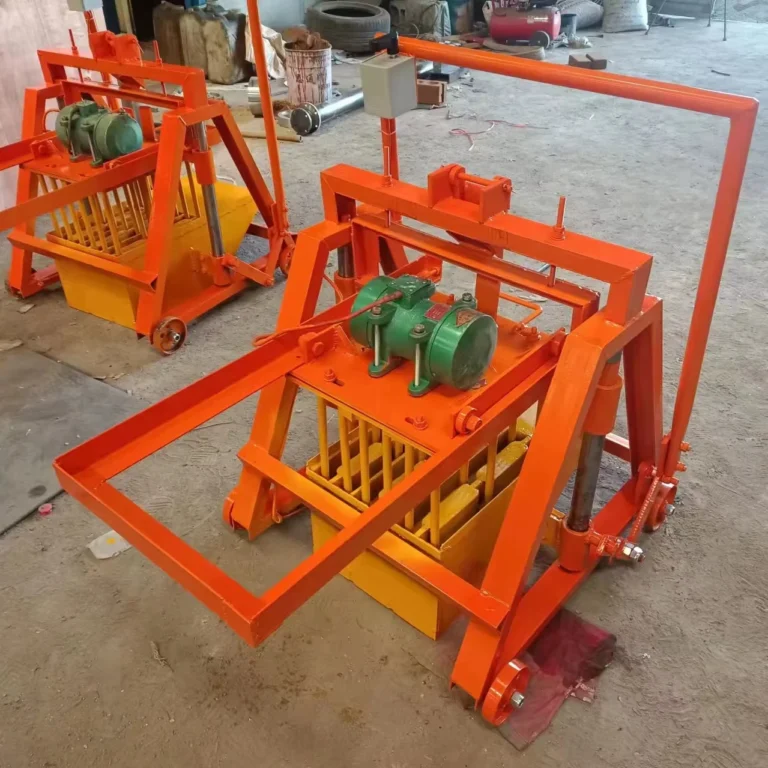
Full-Range Matching — the QMY12-15 is positioned on our mobile block machine tier map so buyers can match on-site output to their actual 4–9 inch hollow block target before committing.
Technical Specifications
| Parameter |
Value |
| Model |
QMY12-15 |
| Product Type |
Mobile Egg-Laying Concrete Block Making Machine |
| Block Format Range |
4-9 Inch Block Sizes (basis not stated in source — confirm block format / material / thickness) |
| Drive System |
Engine & Gear |
| Machine Type |
Mobile / Egg-Laying |
| Automation Level |
Automatic |
| Mould Format |
Hollow Block (other formats not stated in source — confirm) |
| Output Capacity |
(basis not stated in source — confirm block format / material / thickness) |
| Pallet Size |
Not applicable (egg-laying / pallet-free mobile type) |
| Vibration Force (kN) |
(source value not provided — verify against manufacturer catalog) |
| Hydraulic Pressure (MPa) |
(source value not provided — verify against manufacturer catalog) |
| Cycle Time per Format |
(source value not provided — verify against manufacturer catalog) |
| Mould Change Time |
(source value not provided — verify against manufacturer catalog) |
| Control System |
(source value not provided — verify against manufacturer catalog) |
| Voltage & Frequency |
(source value not provided — verify against manufacturer catalog) |
| Rated Power (kW) |
(source value not provided — verify against manufacturer catalog) |
| Overall Dimensions (L×W×H) |
(source value not provided — verify against manufacturer catalog) |
| Net Weight |
(source value not provided — verify against manufacturer catalog) |
| Certification |
(source value not provided — verify against manufacturer catalog) |
| Language Options |
(source value not provided — verify against manufacturer catalog) |
Application Suitability
| Application |
Material or Output |
| On-site hollow block production for building contractors |
Concrete mixes with local crushed stone, river sand, or volcanic ash aggregates |
| Housing and development project block supply |
4-9 inch hollow blocks laid directly on compacted ground surfaces |
| First-stage block operation for new entrepreneurs |
Low-infrastructure production without pallets or fixed curing racks |
| Remote construction site block manufacturing |
Engine-driven mobile operation independent of grid power availability |
What "Blocks Per Hour" Actually Means on a Mobile Machine
Capacity figures are meaningless without the block format and mix design they were measured against.
Many mobile block machine quotations state a single hourly number, but that figure is usually tied to a specific block size — often the smallest in the range. When a buyer switches to a 9-inch hollow block, the cycle extends and daily volume drops accordingly. I have seen contractors order a QMY12-15 class machine expecting a certain daily tally, only to find their actual output was noticeably lower because the capacity was quoted on a 4-inch block while they needed 6-inch and 8-inch formats for their project. The mix itself matters too: volcanic ash behaves very differently from river sand under vibration, and if the frequency and pressure were never matched to the buyer’s local aggregate, the blocks crack or fail strength tests [NEED_CITE: aggregate grading and vibration frequency matching for concrete block production]. As a mobile block machine manufacturer, we always ask which exact block format the buyer intends to run before we confirm any output figure.

Where the QMY12-15 Sits on the Full Range
The QMY12-15 occupies the mobile tier of our block machine lineup, sitting below semi-automatic stationary lines and fully automatic plants in both output and investment level. Buyers who need on-site production without fixed infrastructure start here, producing hollow blocks directly on the ground. For those whose daily volume target exceeds what a mobile machine can deliver, the next step up is a semi-automatic line with pallets and a curing area, followed by a fully automatic line with stacking and cubing. The mobile block machine manufacturer range is designed so a buyer can begin with the QMY12-15 and move to a stationary system later without scrapping the knowledge gained on mobile operation.
Ground Conditions That Decide Block Quality
An egg-laying machine deposits each block directly onto the surface beneath it, which means the ground itself becomes the curing bed. Uneven or soft ground causes blocks to tilt before the concrete sets, leading to dimensional inconsistency across a batch. The surface must be compacted, level, and free of standing water. In practice, a concrete floor slab is ideal, though well-compacted hard earth can work for short project runs. Ambient temperature and wind exposure at the site also affect early-stage curing, and these variables change from one construction site to the next [NEED_CITE: on-site concrete curing conditions for mobile block production]. The QMY12-15 is self-propelled on its engine-and-gear drive, so it can traverse a prepared site without external towing, but the terrain must still meet minimum flatness requirements for consistent block geometry.
Reading the Specs That Matter for Mobile Production
The drive system on the QMY12-15 is engine and gear, which means the machine does not depend on a grid connection for its core movement — a significant advantage on remote sites where power supply is unreliable. The block format range covers 4 through 9 inch sizes, but each size demands a different mould, and the cycle time shifts with every format change. Vibration force and hydraulic pressure work together to compact the concrete mix inside the mould cavity; if vibration is high but pressure is low, the block surface may look dense while internal voids remain, weakening the finished product. Since the QMY12-15 is an egg-laying type, pallet size is not a factor, which removes an entire cost line from the buyer’s budget but transfers the quality burden to ground preparation. The automation level is listed as automatic, meaning the vibration, pressing, and mould-release sequence runs through a controlled cycle rather than relying on manual timing by the operator.
The Hidden Cost of Skipping the Format Question
When a buyer orders a mobile machine based on a single capacity number without confirming which block format that number assumes, the machine arrives and the real production starts — only to fall short of the project schedule. The contractor then tries to extend operating hours, increasing fuel consumption and wear on the mould and vibration components without ever reaching the planned daily volume. Blocks produced under rushed cycles tend to show lower compressive strength, leading to rejection at inspection and rework costs that far exceed the price difference between machine tiers [NEED_CITE: compressive strength testing standards for concrete masonry units]. This scenario repeats often enough that we now require the target block format and local aggregate details before confirming a QMY12-15 quotation.
Why Sourcing the QMY12-15 Through a Focused Block Machine Manufacturer Matters
Our product range covers only block machines, their moulds, pallets, and supporting handling equipment, which means every QMY12-15 is specified as part of a matched system rather than assembled from unrelated suppliers. Configuration is set against the buyer’s actual mix design and local aggregate, not a generic catalogue default. Mould design is available for the specific hollow block formats the buyer’s market demands, including custom dimensions drawn to buyer specifications. The automation level is selectable across the full range, so a buyer who starts with the QMY12-15 mobile machine can later transition to a semi-automatic or automatic stationary line with continuity in mould format and operational logic. Installation and commissioning support includes operator training on the specific machine delivered.
Documentation & Verification
- Line layout showing QMY12-15 operating zone and ground preparation requirements
- Capacity calculation sheet stating the exact block format assumed for each output figure
- Mould drawing and format list confirming which 4-9 inch block sizes are included
- Voltage and control language confirmation document before production begins
- Factory test record with photographs of blocks produced during the test run
- Packing photographs and customs documentation support for shipment
Installation, Commissioning & Support
- Ground surface must be level and compacted to support QMY12-15 weight during egg-laying operation
- Engine drive requires fuel supply on site; no fixed electrical connection needed for propulsion
- Mould installation and alignment verified during commissioning against the buyer’s block format list
- Operator training covers cycle timing, mix consistency assessment, and mould change procedure
- Wear parts list supplied with the machine, identifying vibration components and mould liners for reorder
- Routine maintenance schedule covers gear lubrication intervals and engine servicing per operating hours
What We Need to Match the Right Machine to Your Project
To position the QMY12-15 correctly within the mobile block machine manufacturer range, share the specific hollow block dimensions you plan to produce, the local aggregate and cement types available at your site, and your target daily output volume. Let us know the ground conditions at your production area and whether a concrete slab or compacted earth will serve as the laying surface. Include your site’s ambient temperature range and any relevant block strength standards your project must meet, so we can confirm the vibration and pressure settings accordingly.
Frequently Asked Questions
Q: How is the QMY12-15 output capacity verified and what block format is it based on?
A: We verify capacity by running the QMY12-15 with the buyer’s specified block format and a representative concrete mix. The output figure we confirm is always tied to that exact block size, material, and thickness. If the buyer needs multiple formats, we provide a separate capacity calculation for each one so the daily production plan reflects reality.
Q: Where does the QMY12-15 sit on the mobile versus stationary machine range?
A: The QMY12-15 is in the mobile egg-laying tier, designed for on-site production without pallets or a fixed curing area. Semi-automatic and automatic stationary lines sit above it in output and investment, requiring pallets, a curing zone, and more infrastructure. Buyers choose the mobile tier when project-based, on-site production is the priority.
Q: What site conditions does the egg-laying machine require?
A: The QMY12-15 needs a level, compacted surface — ideally a concrete slab — to lay blocks directly on the ground. Soft or uneven terrain causes blocks to tilt before setting. Adequate space for the machine to traverse the laying area and ambient conditions suitable for concrete curing are also necessary.
Q: How does the QMY12-15 compare in investment level to a stationary block line?
A: The QMY12-15 requires a lower initial investment because it eliminates pallets, curing racks, and fixed plant infrastructure. Stationary lines offer higher volume but demand more capital for supporting equipment and site preparation. The mobile machine suits project-based production where the site changes between contracts.

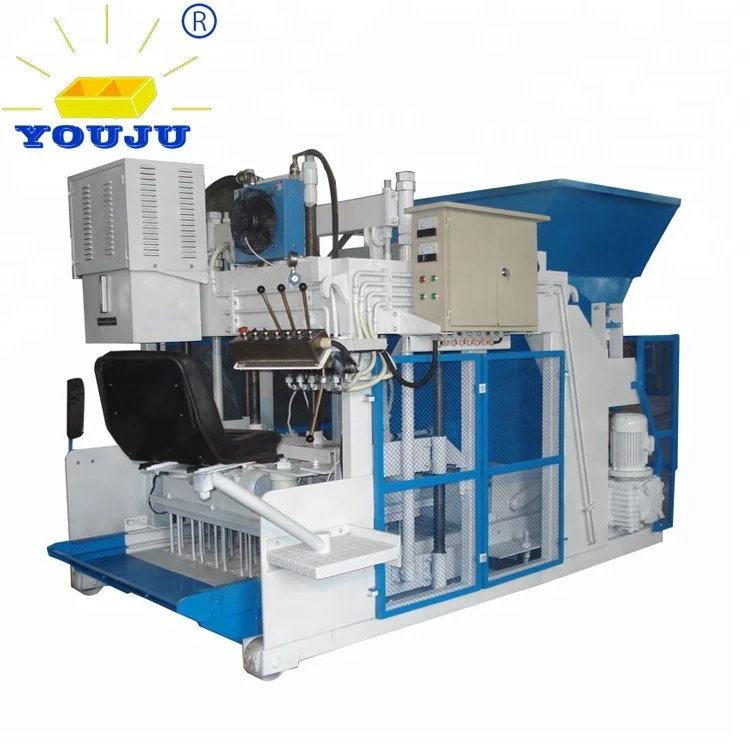
 Mobile block machine