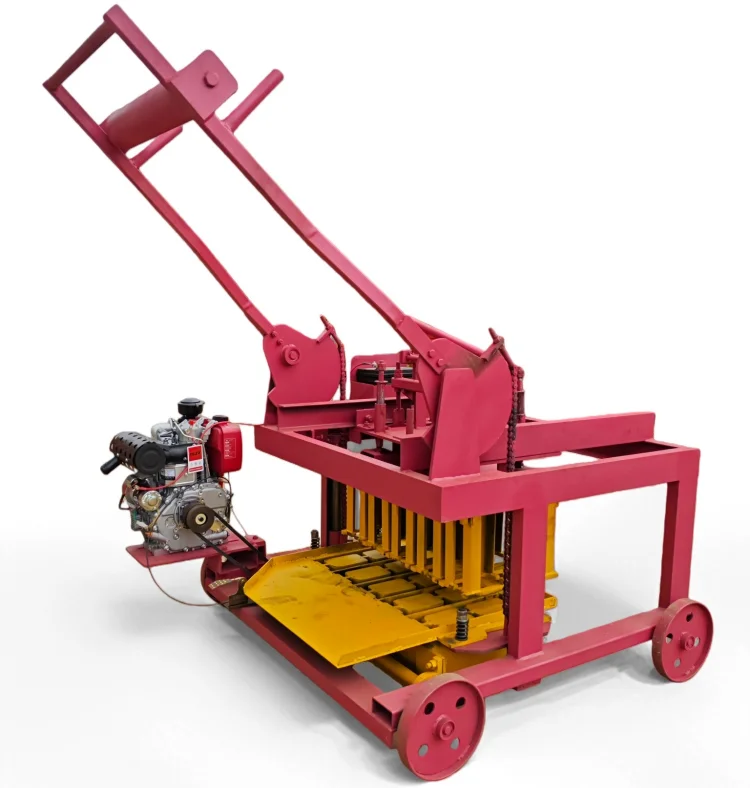
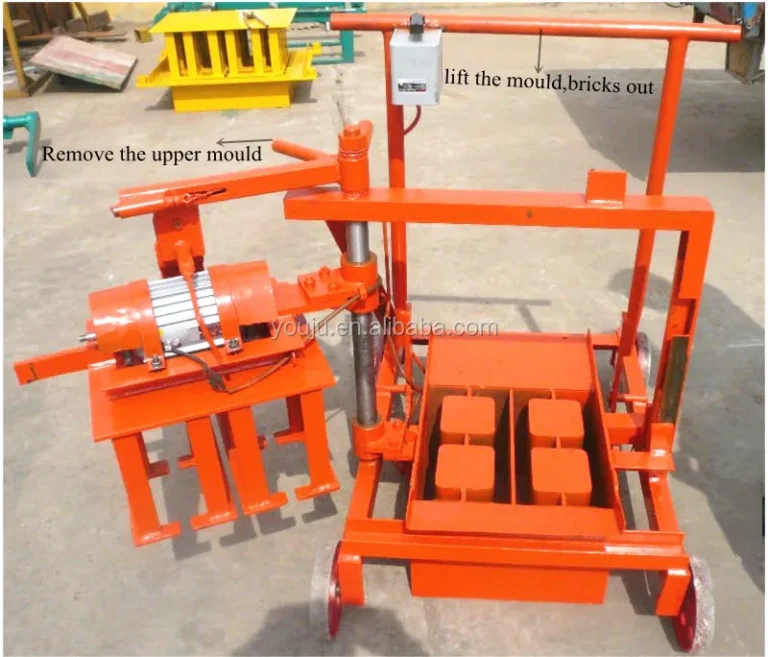
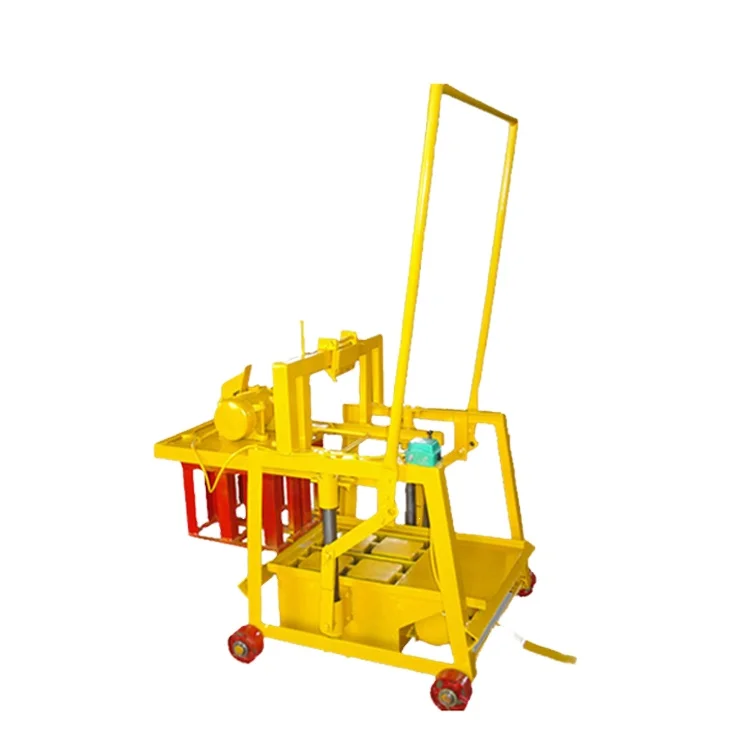
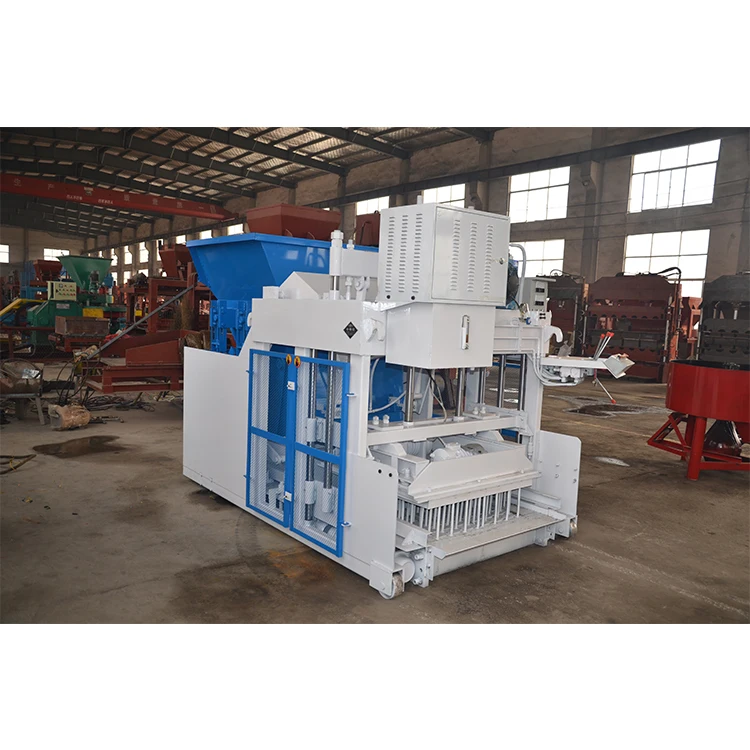
Single-Focus Configuration — Every QMY10-15 mobile block machine ships as a matched system where the press, mixer, and moulds are specified against your actual aggregate, not a catalogue default.
Technical Specifications
| Parameter |
Value |
| Model |
QMY10-15 |
| Product Type |
Mobile Concrete Block Making Machine |
| Molding Capacity |
10 pcs per mould |
| Molding Cycle |
10s – 15s |
| Daily Output |
11,000 pcs/day (8 hours) (basis not stated in source — confirm block format / material / thickness) |
| Total Power |
16 kW |
| Vibration System |
Dual vibration motors |
| Hydraulic System |
Upper and lower demoulding control with heat dissipator |
| Movement |
Electric walking, forward and backward by electric motor |
| Steering |
Hydraulic steering |
| Pallet Requirement |
None (egg-laying type) |
| Basic Equipment |
QMY10-15 host machine, JS7500 concrete mixer, dump truck |
| Optional Equipment |
PL1200 batching machine, cement silo, screw conveyor, loader |
| Automation Level |
Semi-automatic mobile / egg-laying |
Application Suitability
| Application |
Material or Output |
| On-site hollow block production |
Crushed stone, sand, cement, and local aggregate blends |
| Solid block manufacturing for housing projects |
River sand, quarry dust, and cement mixes |
| Paving block production by changing moulds |
Fine aggregate and cement with pigment additives |
| Remote or temporary job-site block supply |
Locally sourced raw materials without fixed batching plant |
What "11,000 Pieces per Day" Actually Means for a Mobile Block Machine for Sale
Capacity figures only hold weight when tied to a specific block format, mix design, and curing condition.
When a mobile block machine for sale is advertised with a single daily output number, that figure almost always assumes an ideal block size, a perfect mix, and uninterrupted operation across the full shift. In practice, I have watched contractors arrive at a project site only to find that the local aggregate — loaded with volcanic ash in one case — dropped block strength far below the required standard, forcing the cycle time to stretch and cutting real output in half. The crew was left waiting for bricks to lay while the forming stage bottlenecked the entire schedule [NEED_CITE: aggregate variability and its effect on concrete block compressive strength].

Placing the Mobile Tier in Your Line Strategy
The QMY10-15 occupies the entry tier of the range, sitting below semi-automatic stationary lines and fully automatic high-capacity plants. Its egg-laying design means blocks are formed directly on the ground, eliminating pallet investment and the curing-area handling equipment that stationary lines require. For a contractor evaluating a first block plant or a temporary job-site supply solution, this mobile block machine for sale provides a low-footprint starting point before committing to a fixed installation.
How the Range Scales When You Outgrow Mobile
If daily demand eventually exceeds what a single mobile unit can deliver, the step up to a semi-automatic stationary line adds pallet-based forming, automatic stacking, and a dedicated curing area. The QMY10-15’s basic equipment package — host machine, JS7500 mixer, and dump truck — can later serve as auxiliary capacity or be redeployed to a secondary site, preserving your initial investment [NEED_CITE: block production line scaling from mobile to stationary configurations].
Reading the Specs That Actually Matter
The dual vibration motors paired with hydraulic demoulding control determine block density across every format you produce. Vibration force must match the mix design; too little energy leaves voids in a hollow block wall, while excessive force can cause segregation in a lean mix. The 16 kW total power rating reflects the combined draw of vibration, hydraulics, and walking motors — a figure you need to cross-check against your site generator or transformer capacity. Hydraulic steering and electric walking allow the operator to reposition the machine along the production floor without external equipment, keeping the footprint flexible. The heat dissipator on the hydraulic circuit prevents fluid temperature rise during sustained cycling in hot climates, a detail that directly affects demoulding consistency over a full shift.
The Cost of Skipping the Configuration Conversation
Ordering a mobile unit based on a brochure number without confirming the block format, local aggregate, and site voltage is the most common reason I have seen job-site production stall. When the vibration force is not matched to the buyer’s mix, blocks crack during demoulding or fail the strength test after curing, and the rework cost dwarfs the time a proper pre-order survey would have taken. Unconfirmed voltage and frequency delay commissioning for weeks while replacement transformers are sourced locally [NEED_CITE: voltage and frequency standards by export market]. Mould formats not discussed upfront mean the machine arrives able to produce only one block type, forcing a second mould order and a production gap while it ships.
Why Source This Mobile Block Machine for Sale Through Shiyue
Block machinery is our single focus, so the QMY10-15 is specified as one matched system — press, mixer, moulds, and optional batching — rather than assembled from separate suppliers. We configure the vibration and hydraulic settings against your actual mix design and target block format, not a factory default. Mould design covers the formats your market sells, including custom drawings when standard options do not match. The automation level is selectable, so you can start with the mobile egg-laying tier and plan an upgrade path to stationary lines as demand grows. Installation support includes operator training on-site, and wear part lists are provided so your first replacement cycle does not catch you unprepared.
Documentation & Verification
- Line layout with capacity calculation stating the block format assumed for the quoted daily output
- Mould drawing and format list confirming every block type the QMY10-15 can produce
- Hydraulic and electrical schematic matching the as-built machine configuration
- Voltage, frequency, and control language confirmation sheet signed before production
- Factory test record on your specified block format and mix before dispatch
- Wear parts and mould availability list for first replacement planning
Installation, Commissioning & Support
- Ground-bearing assessment for egg-laying production area before the QMY10-15 arrives on site
- Power supply verification against the 16 kW total draw, including dedicated circuit for vibration motors
- Machine walk-through on hydraulic steering and electric walking operation during commissioning
- First-run cycle time and block density check using your local aggregate and mix proportions
- Operator training covering mould change procedure, hydraulic demoulding adjustment, and daily maintenance
- Wear parts catalogue with lead times so replacement planning starts before the first mould change
Before You Send an Inquiry
Tell us the block formats your market actually sells — hollow, solid, paving, or a mix — along with the target daily output for each. Share a sample or analysis of your locally available aggregate so we can match vibration and hydraulic settings to your real material. Confirm your site voltage, frequency, and the control display language your operators need. If you already have a mixer, loader, or batching plant, let us know so the optional equipment list is sized to fill the gaps rather than duplicate what you own.
Frequently Asked Questions
Q: How is the 11,000 pcs/day capacity calculated, and which block format does it assume?
A: That figure comes from an 8-hour shift using the 10s–15s cycle time, but the source does not state which block size or wall thickness it assumes. Before you commit, we provide a capacity calculation tied to your specific block format, mix design, and local aggregate so the real daily output is clear.
Q: Where does the QMY10-15 mobile tier sit compared to stationary lines in investment and footprint?
A: The mobile egg-laying tier requires no pallets, no fixed curing racks, and no permanent foundation, keeping both initial investment and site footprint lower than a semi-automatic or fully automatic stationary line. It suits contractors producing blocks directly on a housing project or entrepreneurs starting with minimal infrastructure.
Q: What voltage, frequency, and control language options are confirmed before dispatch?
A: We confirm your site voltage, frequency, and the preferred PLC display language during the quotation stage, not after shipment. A signed confirmation sheet goes into your documentation package so the machine powers up correctly on arrival and operators can read the interface.
Q: Which mould formats are available, and how long does a mould change take?
A: Mould options cover hollow blocks, solid blocks, and paving blocks, with custom designs available to your drawings. Mould change time depends on the format and operator familiarity; we provide the change procedure during commissioning and include it in the operation manual so your crew can handle it independently.
Q: What supporting equipment is included versus optional?
A: The basic package includes the QMY10-15 host machine, a JS7500 concrete mixer, and a dump truck. Batching machines, cement silos, screw conveyors, and loaders are optional. We size the optional list based on your existing equipment so the line layout connects without redundant stations.

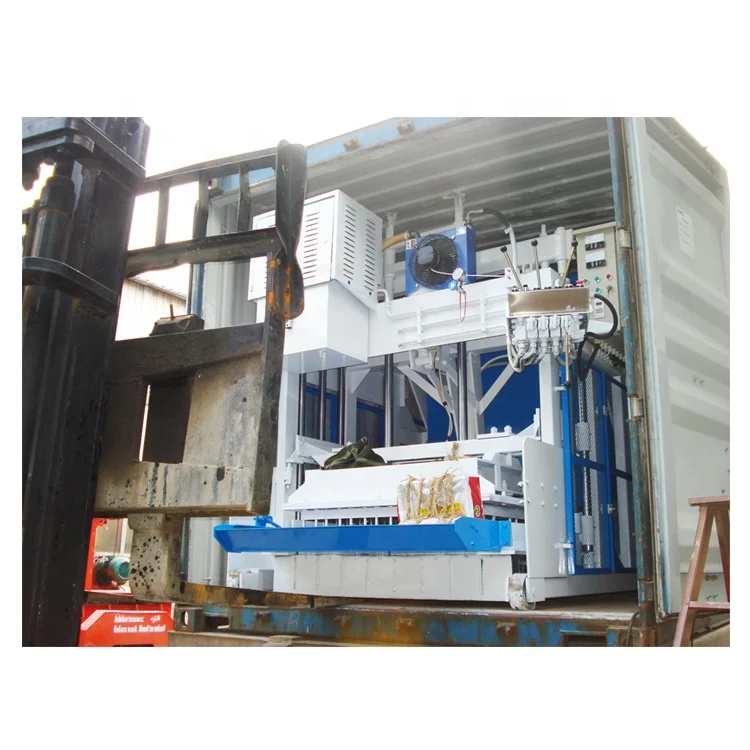
 Mobile block machine