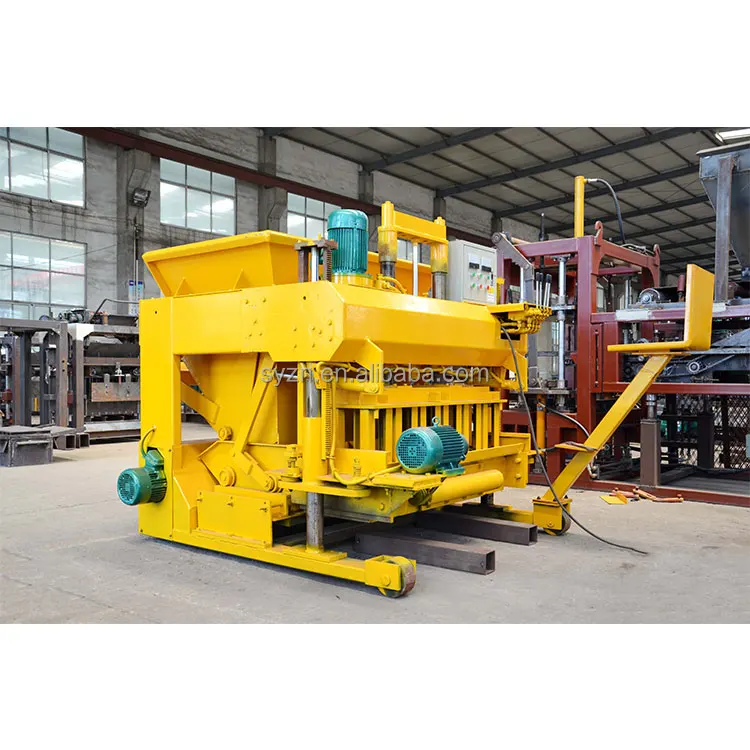
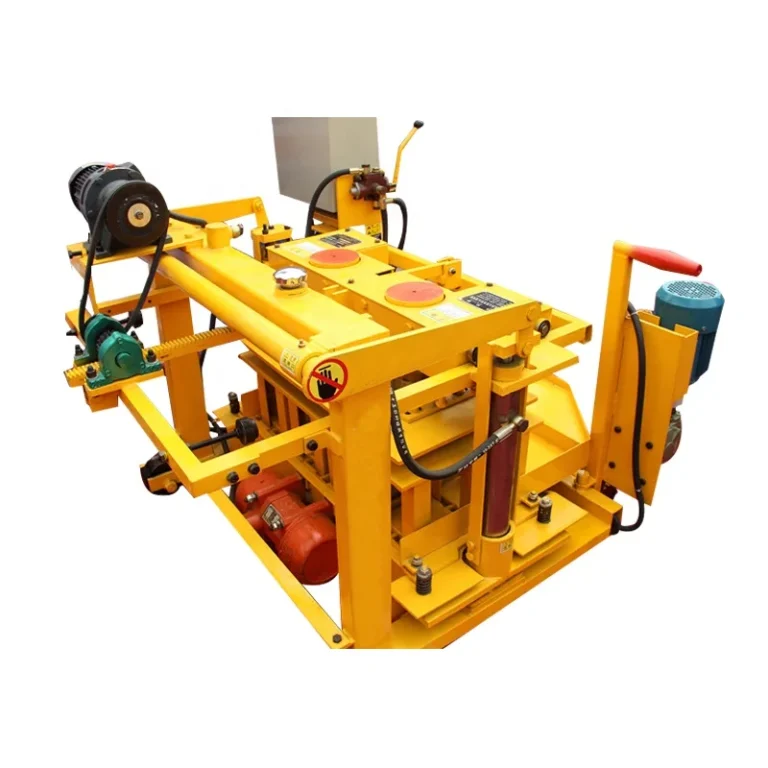
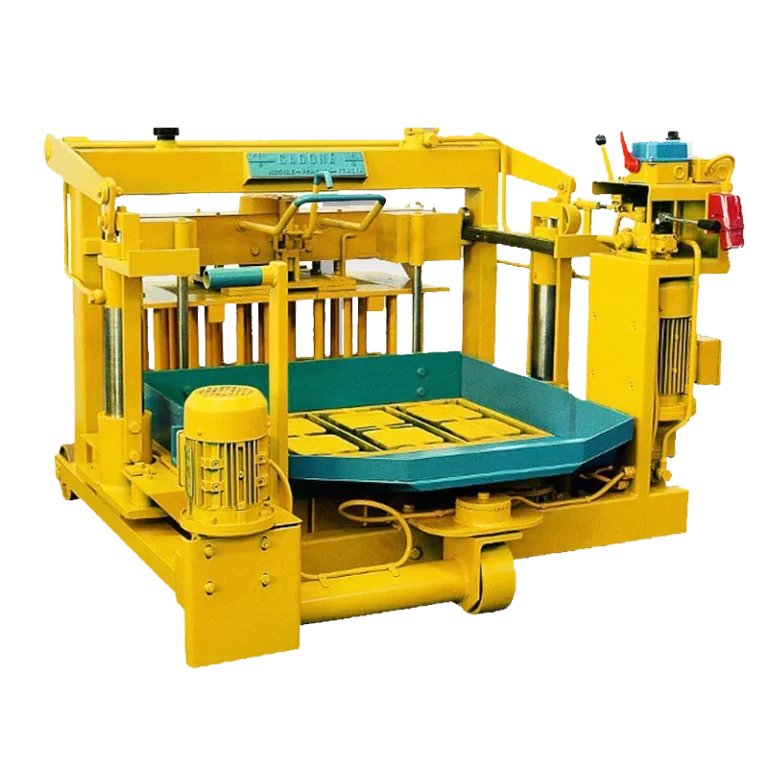
Matched System Approach — The QMR4-45 is specified alongside its diesel mixer, generating unit, and trolley as one coordinated set, so output rates, power supply, and on-site mobility align from day one rather than being assembled from mismatched sources.
Technical Specifications
| Parameter |
Value |
| Model |
QMR4-45 |
| Product Type |
Mobile Diesel Block Making Machine |
| Power Source |
Diesel engine |
| Rated Power |
8 hp |
| Molding Cycle |
45 s (basis not stated in source — confirm block format / material / thickness) |
| Molding Form |
Vibration and pressure |
| Vibration Force |
60 kN |
| Total Weight |
800 kg |
| Overall Dimensions (L×W×H) |
2420 × 1320 × 1650 mm |
| Pallet Requirement |
None (egg-laying / mobile type) |
| Mobility |
Wheel-mounted, movable on-site |
| Basic Equipment Included |
JZC350 or JQ350 diesel concrete mixer with electric generating unit; trolley |
| Block Formats Supported |
Paver brick, hollow block, concrete block, solid brick, fly ash brick (basis not stated in source — confirm mould options and changeover time) |
| Automation Level |
Manual / semi-manual operation |
| Voltage & Frequency |
Not applicable (diesel-powered main unit) |
Application Suitability
| Application |
Material or Output |
| On-site hollow block production for housing projects |
Crushed stone, sand, cement mixed on-site |
| Solid brick manufacturing at remote construction sites |
Fly ash, river sand, cement blends |
| Paver brick production for small contractor yards |
Aggregate and cement with local sand |
| First-tier block operation for entrepreneurs |
Low-capital entry without fixed plant infrastructure |
| Off-grid development projects |
Diesel-powered production where grid electricity is unavailable |
What a "45-Second Cycle" Actually Means for Your Daily Output
A cycle time is only meaningful when tied to the exact block format and mould you intend to run.
I have watched buyers receive a mobile block machine quoted at so many cycles per hour, only to discover the figure assumed a small solid brick while their market demands 200 mm hollow blocks that require longer vibration and a different fill depth. The QMR4-45 carries a 45-second molding cycle in its specification sheet, yet that number shifts depending on whether you are pressing a thin paver or a tall hollow block. [NEED_CITE: block format influence on actual cycle time in mobile egg-laying machines] When the format assumption is missing from the quotation, the daily output projection becomes unreliable before the first block is even laid. That gap between quoted capacity and real production is one of the most frequent complaints I hear from contractors who bought on price alone.

Where the QMR4-45 Sits in the Full Machine Range
Before committing capital, every buyer needs to see the complete ladder of options. The QMR4-45 occupies the entry tier of our mobile block machine range, positioned below semi-automatic stationary lines and fully automatic plants. It serves buyers who need blocks produced directly at the construction site without investing in a fixed facility, conveyor systems, or curing racks. As a mobile block machine manufacturer, we map each tier by investment level, plant footprint, and labour requirement so you can compare before narrowing down.
Understanding the Diesel Advantage for Off-Grid Sites
Grid electricity is unreliable or entirely absent at many project locations across Latin America, Africa, and Southeast Asia. The QMR4-45 runs on an 8 hp diesel engine, removing dependence on local voltage and frequency standards altogether. The included mixer is paired with an electric generating unit to handle any auxiliary electrical needs on-site. This diesel-first configuration matters most for remote housing developments and road-side paver projects where running a three-phase line would cost more than the machine itself. [NEED_CITE: off-grid construction site power availability in developing regions]
Reading the Specs That Shape Real Production
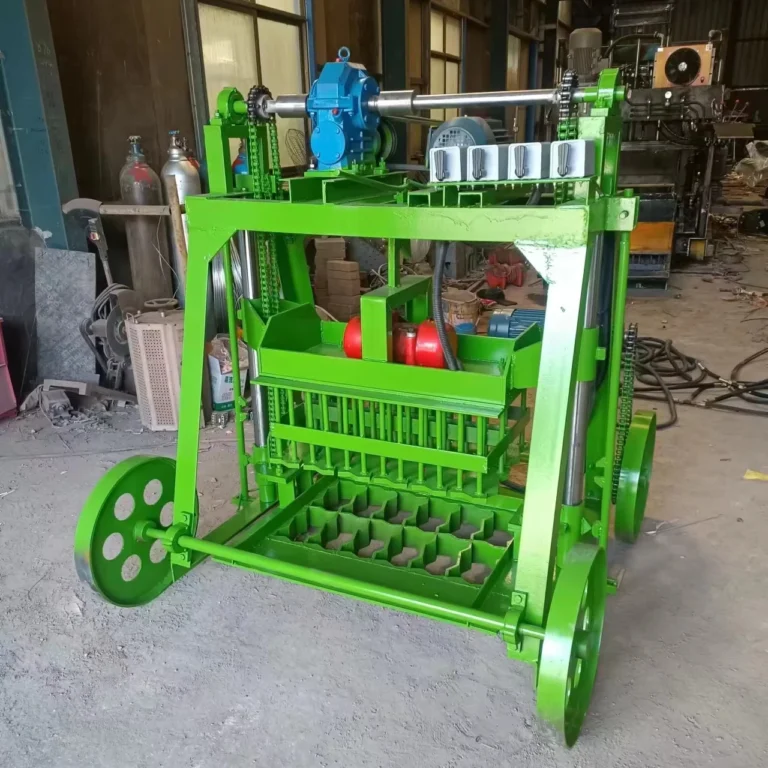
The 60 kN vibration force works together with mechanical pressure to compact the concrete mix into the mould cavity. Higher vibration force generally improves density and block strength, but only when the mix design matches — a dry mix with well-graded aggregate responds differently than a wet fly-ash blend. The 800 kg total weight gives the machine enough mass to stay stable during vibration, yet it remains light enough for two workers to reposition on wheels across a building site. The egg-laying design means blocks are deposited directly onto the ground, eliminating pallet costs and reducing the curing-area footprint. Overall dimensions of 2420 × 1320 × 1650 mm keep the machine compact enough to operate inside a partially built structure or a narrow contractor yard.
The Hidden Cost of Skipping the Format Conversation
When a mobile block machine is ordered without confirming which block format the buyer’s market actually sells, the mould arrives wrong and a replacement takes weeks to ship. I have seen contractors in Ecuador lose an entire rainy season because the machine was set up for solid bricks while local demand was for 150 mm hollow blocks. The mix design also shifts with format — hollow blocks need a stiffer mix to hold their shape after the mould lifts, while pavers require finer aggregate for a smooth face. [NEED_CITE: common mould mismatch issues in mobile block machine exports] Skipping this conversation before purchase turns a low-investment machine into a costly delay.
Why Buyers Source This Tier From Us
Block machinery is our single focus, so the QMR4-45 arrives with its mixer, generating unit, and trolley specified as one matched set rather than pieced together from unrelated suppliers. We confirm the buyer’s local aggregate and target block format before proposing a mould, not after the machine ships. Mould design covers the formats your market actually sells, and custom drawings are available if your region uses a non-standard size. Automation level is selectable across our range — you can begin with this mobile unit and step up to a semi-automatic line when volume justifies it. Installation support and operator training are included so your crew is producing acceptable blocks within the first days on-site.
Documentation & Verification
- Line layout showing QMR4-45 footprint and curing area for your chosen block format
- Machine specification sheet confirming 60 kN vibration force and 8 hp diesel rating
- Mould drawing and format list matching your local block dimensions
- Factory test record on your target block type before dispatch
- Operation and maintenance manual covering diesel engine and vibration motor service intervals
Installation, Commissioning & Support
- Level compacted ground required; no concrete foundation needed for the 800 kg wheel-mounted QMR4-45
- Diesel fuel supply and basic hand tools for on-site assembly of mixer and generating unit
- First-day commissioning includes vibration force check and mould alignment verification
- Operator training covers mix consistency, mould filling technique, and egg-laying spacing
- Wear parts list and mould maintenance schedule provided at handover
- Ongoing support for mould replacement and diesel engine servicing questions
What to Share When You Enquire
To match the right mobile block machine from our range to your project, tell us the block formats your market sells, the daily volume you need, and whether your site has grid electricity or requires full diesel operation. Share your local aggregate type and any sample blocks you currently purchase so we can confirm mix compatibility. Let us know your curing area dimensions so we can advise on egg-laying layout and production flow.
Frequently Asked Questions
Q: How is the QMR4-45’s daily output calculated, and which block format does the 45-second cycle assume?
A: The 45-second cycle is listed without a specified block format, so we recalculate based on the exact hollow block, solid brick, or paver you intend to produce. Daily output depends on shift length, crew size, and curing logistics. We provide a format-specific capacity sheet with every proposal so you see realistic numbers before ordering.
Q: Where does this mobile machine sit compared to semi-automatic and automatic tiers?
A: The QMR4-45 is the entry tier, suited for on-site production without a fixed plant. Semi-automatic lines add stationary presses with pallet systems and higher throughput, while automatic lines include batching, stacking, and cubing. We help you compare investment, footprint, and labour across all tiers before you decide.
Q: What plant footprint and curing area do I need for pallet-free egg-laying production?
A: Because blocks are laid directly on the ground, you need a flat, compacted area large enough for one day’s output plus walking space between rows. The exact area depends on your block format and daily target. We include a layout sketch showing spacing and production flow with each quotation.
Q: Can I start with the QMR4-45 and move to a semi-automatic line later?
A: Yes. Many buyers begin with a mobile unit to validate local demand, then invest in a stationary semi-automatic line as orders grow. Mould formats and block knowledge carry over, and we can design the upgrade path so your initial investment is not wasted.
Q: What mould formats are available, and how long does a mould change take on-site?
A: Moulds are available for hollow blocks, solid bricks, pavers, and fly ash bricks in sizes matching your market. Changeover involves unbolting the current mould and fitting the replacement, typically manageable within a shift once the crew is trained. We provide a mould change procedure sheet with each format set.

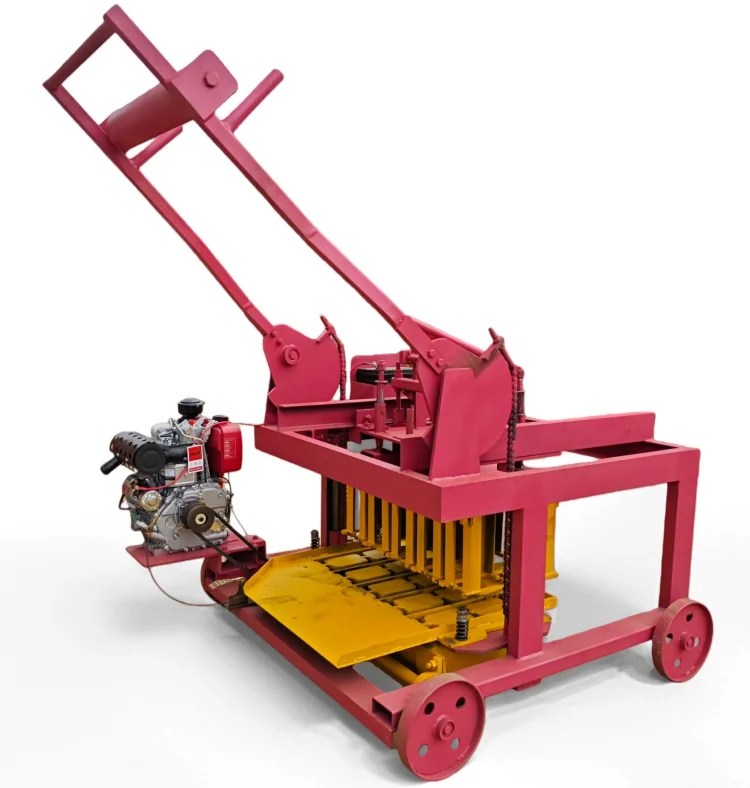
 Mobile block machine