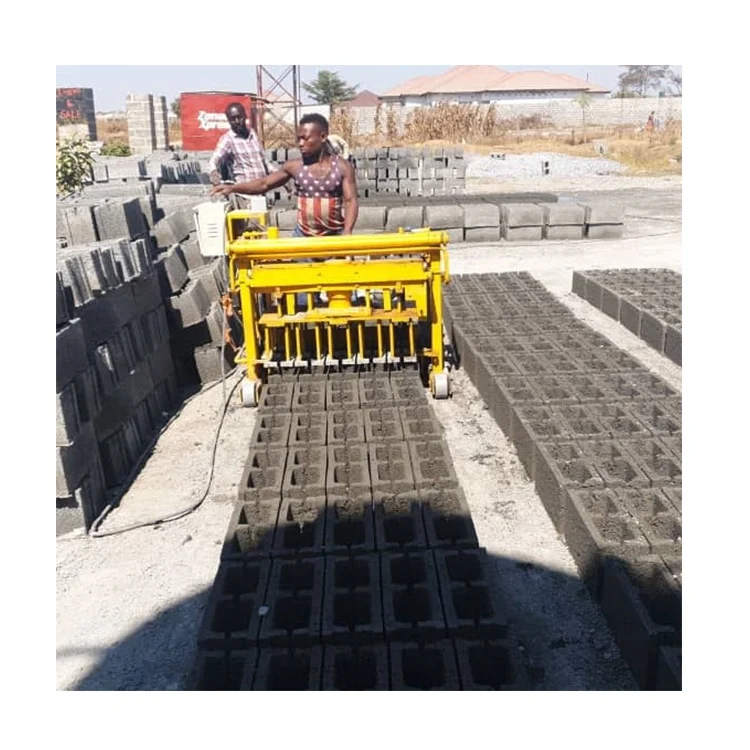
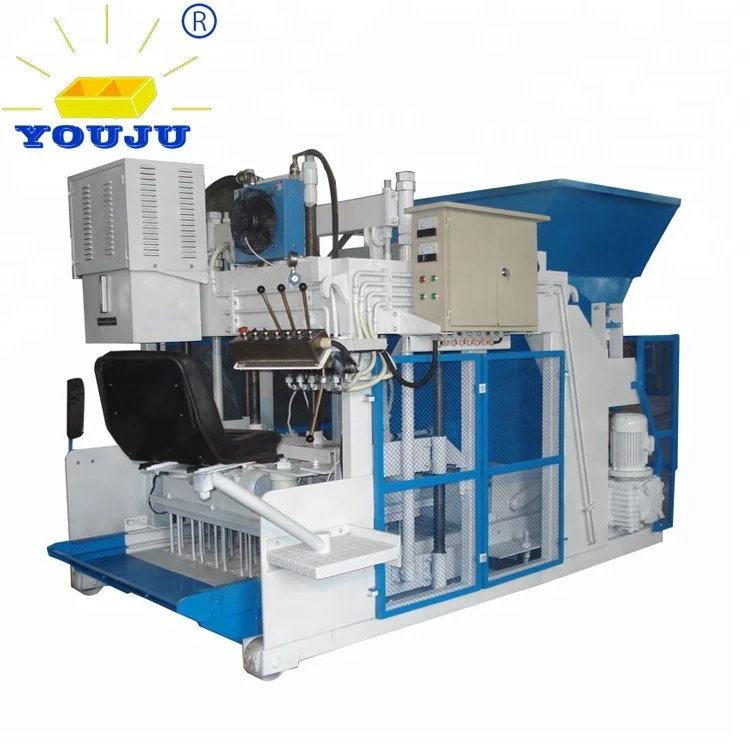
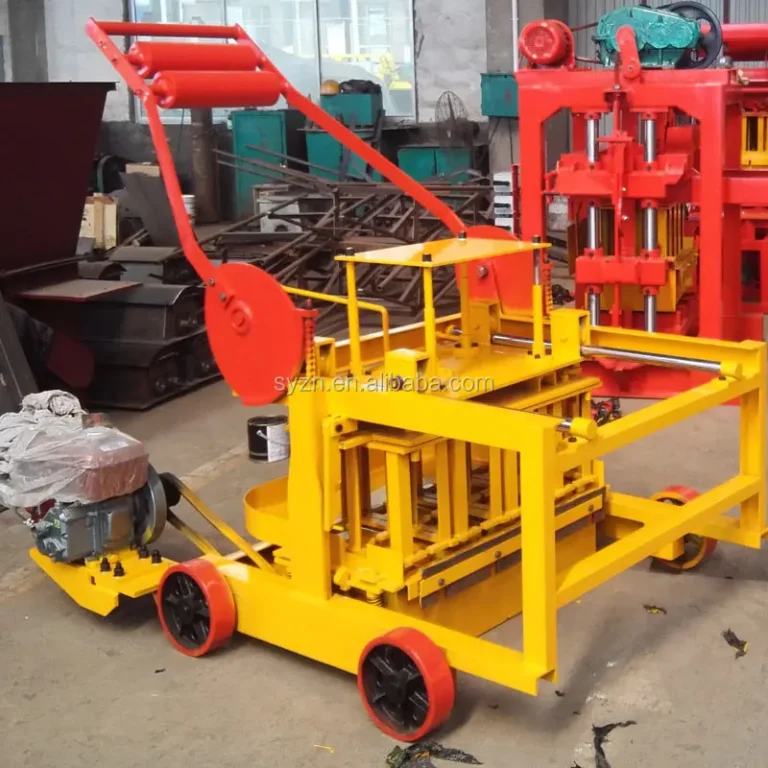
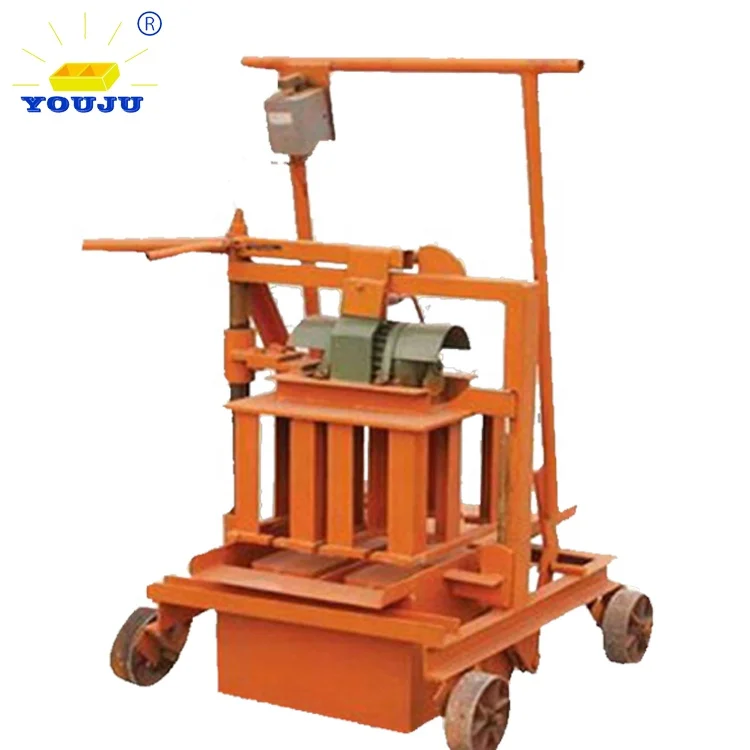
Single-Machine Focus — The QMR4-45 diesel mobile block making machine is specified as a complete egg-laying unit, matching mould, power source, and cycle time to your actual block format rather than leaving critical variables open.
Technical Specifications
| Parameter |
Value |
| Model |
QMR4-45 |
| Product Type |
Diesel Mobile Egg-Laying Block Making Machine |
| Overall Dimensions (L×W×H) |
2420×1320×1650 mm |
| Net Weight |
810 kg |
| Moulding Cycle |
40–45 s |
| Power Source |
6 kW electric motor or 6–8 HP diesel engine |
| Voltage & Frequency |
220 V / 380 V or client local voltage (Hz to be confirmed) |
| Pallet Requirement |
None — egg-laying type |
| Output Capacity (400×200×200 mm hollow block) |
3000 pcs/day based on 8-hour shift, 40–45 s cycle, 4 pcs per mould |
| Output Capacity (400×150×200 mm hollow block) |
3500 pcs/day based on 8-hour shift, 40–45 s cycle, 5 pcs per mould |
| Output Capacity (400×120×200 mm hollow block) |
4500 pcs/day based on 8-hour shift, 40–45 s cycle, 6 pcs per mould |
| Mould Formats |
400×200×200 / 400×150×200 / 400×120×200 mm hollow block |
| Automation Level |
Manual operation |
| Stacking Method |
On-ground egg-laying |
| Assembly State |
Fully assembled, mobile unit |
| Warranty |
1 year |
Application Suitability
| Application |
Material or Output |
| Housing project site production |
Hollow blocks from crushed stone, river sand, and cement |
| Contractor self-supply yards |
400×200×200 mm hollow blocks at 3000 pcs/day on an 8-hour shift |
| Off-grid or unreliable-power sites |
Diesel-powered production without grid connection |
| First-time block plant startups |
Low-footprint egg-laying operation on any level concrete floor |
| Rural and remote infrastructure |
Smaller-format hollow blocks (400×120×200 mm) for partition walls |
Why "3000 Blocks per Day" Can Mislead You on a diesel mobile block making machine
Every output figure must state the block format, cycle time, and shift length it assumes.
Capacity numbers quoted without a format reference cause more site disputes than almost any other specification gap. A machine rated at 4500 pieces per day on a 120 mm partition block will produce noticeably fewer units when the mould is swapped to a 200 mm load-bearing block — yet both numbers appear on the same nameplate. I once visited a contractor’s yard in Southeast Asia where the daily tally fell well short of expectations because the quoted capacity assumed a smaller block than what the local market actually demanded. The QMR4-45 diesel mobile block making machine avoids this trap by tying each capacity claim to a specific mould, cycle, and shift assumption [NEED_CITE: block output verification methods for mobile egg-laying machines].

Where This Machine Sits in a Block Production Range
The QMR4-45 egg laying block machine occupies the entry tier of mobile block production. It is built for buyers who need blocks at a job site without investing in a fixed plant, pallet inventory, or curing rack infrastructure. Semi-automatic lines require pallets, stacking systems, and a dedicated curing area — a step up in both capital and site preparation. Full-automatic lines add batching, automatic pallet feeding, and cubing. This unit strips all of that away: it lays blocks directly on the ground and moves forward under its own power, keeping the setup to a single machine and an operator.
Diesel Power and the Off-Grid Job Site
Grid reliability determines whether an electric or diesel drive makes sense. Many housing projects in developing regions face load-shedding schedules that interrupt production mid-cycle, leaving half-pressed blocks in the mould. The diesel engine option on the QMR4-45 removes this dependency entirely. A 6–8 HP diesel unit provides enough torque for the vibration and pressing sequence without external power. For sites where a generator is already available, the electric motor variant at 220 V or 380 V offers quieter operation and lower running cost. Confirming the correct voltage and frequency before dispatch prevents commissioning delays once the machine arrives [NEED_CITE: voltage and frequency standards by export market].
Reading the Specs That Actually Shape Your Output
Three parameters on this diesel mobile block making machine determine what you can realistically produce each day. The moulding cycle of 40–45 seconds sets the rhythm — every block format shares this cycle, so output differences come from the number of cavities per mould. The 400×200×200 mm mould carries 4 cavities, the 400×150×200 mm carries 5, and the 400×120×200 mm carries 6. That cavity count is the real driver behind the spread from 3000 to 4500 pieces per day. Net weight at 810 kg keeps the unit stable during vibration without requiring a bolted foundation, but the machine still needs a level, cured concrete surface to lay blocks that hold their edges on demoulding. The absence of pallets means curing happens in place — plan your yard layout so that freshly laid blocks are not driven over by wheelbarrows moving raw material to the hopper.
The Hidden Cost of Skipping Site and Material Checks
Buying a mobile block machine on specifications alone, without matching it to local aggregate and site conditions, leads to problems that show up in the first week. I remember one project yard where the river sand contained a high clay fraction — bricks collapsed on demoulding and daily output dropped to roughly half the expected figure. The fix involved resetting vibration intensity and adjusting the sand-to-cement ratio, but that downtime cost the contractor a full week of production. When clay-laden sand, incorrect water content, or an uneven floor meet a machine that was never configured for those conditions, the result is wasted material, broken blocks, and frustrated crews [NEED_CITE: effects of aggregate clay content on block demoulding strength].
Why Buyers Source This Range Through Shiyue
Block machinery is the sole product focus here, which means the QMR4-45 diesel mobile block making machine is not assembled from mismatched components sourced across unrelated suppliers. The mould, vibration assembly, and power unit are specified together as one matched system. Configuration is set against the buyer’s actual target block format and local aggregate, not a catalogue default. Mould options cover the hollow block sizes that sell in the buyer’s market, and custom mould drawings can be produced for non-standard formats. Automation level is selectable — a buyer who starts with this manual egg-laying unit can move to a pallet-based semi-automatic line later without changing suppliers. Installation guidance and operator training are included so the crew understands cycle timing, mix proportions, and mould change procedure from day one.
Documentation & Verification
- Line layout showing yard space needed for egg-laying path and curing zones
- Capacity calculation sheet stating block format and shift assumption per mould
- Mould drawing with cavity count and dimensional tolerances for each format
- Voltage and frequency confirmation form signed before production starts
- Factory test record on buyer’s chosen block format before dispatch
- Operation and maintenance manual covering daily greasing and mould alignment checks
Installation, Commissioning & Support
- Level concrete floor required — the 810 kg unit needs no anchor bolts but demands a flat surface
- Confirm 220 V or 380 V supply and Hz rating before electric motor wiring
- Diesel engine variant requires fuel line priming and air bleed on first start
- Mould alignment checked during commissioning to prevent uneven block density
- Operator training covers cycle timing, mix water control, and demoulding technique
- Wear parts list provided for vibration springs and mould liner replacements
Preparing Your Inquiry
Before requesting a quote, gather your target block formats and the daily output you need for each. Share details about your local sand and aggregate type, the available power supply or lack thereof, and the yard area you can dedicate to block laying and curing. If you already operate a mixer or plan to source one locally, mention its batch capacity so the feed rate can be matched to the QMR4-45 cycle.
Frequently Asked Questions
Q: How is the QMR4-45’s daily output calculated, and what block format does it assume?
A: Each output figure is tied to a specific mould size and cavity count. For example, 3000 pieces per day assumes the 400×200×200 mm hollow block mould with 4 cavities, a 40–45 second cycle, and an 8-hour shift. Switching to a smaller format with more cavities increases the count, while a larger block reduces it. Always confirm which format the quoted number refers to.
Q: Where does this egg-laying machine sit compared to semi-automatic and full-automatic block machines?
A: It is the entry point of the range. Semi-automatic machines add pallets, a pallet feeder, and basic stacking — suitable when you have a covered curing area. Full-automatic lines include batching, automatic stacking, and cubing. The QMR4-45 requires none of that infrastructure, keeping startup cost and site footprint low.
Q: What voltage and frequency options are available, and what if my site has no grid power?
A: The electric motor variant supports 220 V or 380 V, with frequency confirmed to match your local grid. If grid power is unavailable or unreliable, the diesel engine option with 6–8 HP provides a fully self-contained power source, so production can proceed at remote or off-grid job sites.
Q: Can I upgrade from this mobile machine to a pallet-based semi-automatic line later?
A: Yes. Starting with the QMR4-45 lets you establish block production and a local customer base with minimal investment. When demand grows, you can move to a pallet-based semi-automatic line with stacking and curing racks, keeping the same supplier relationship for moulds and spare parts continuity.
Q: What mould formats are available beyond hollow block?
A: The standard offering covers three hollow block sizes. Custom moulds can be designed to buyer drawings for other formats such as solid blocks or interlocking pavers, provided the mould dimensions fit the machine’s pressing envelope. Share your target format drawing for a feasibility review.

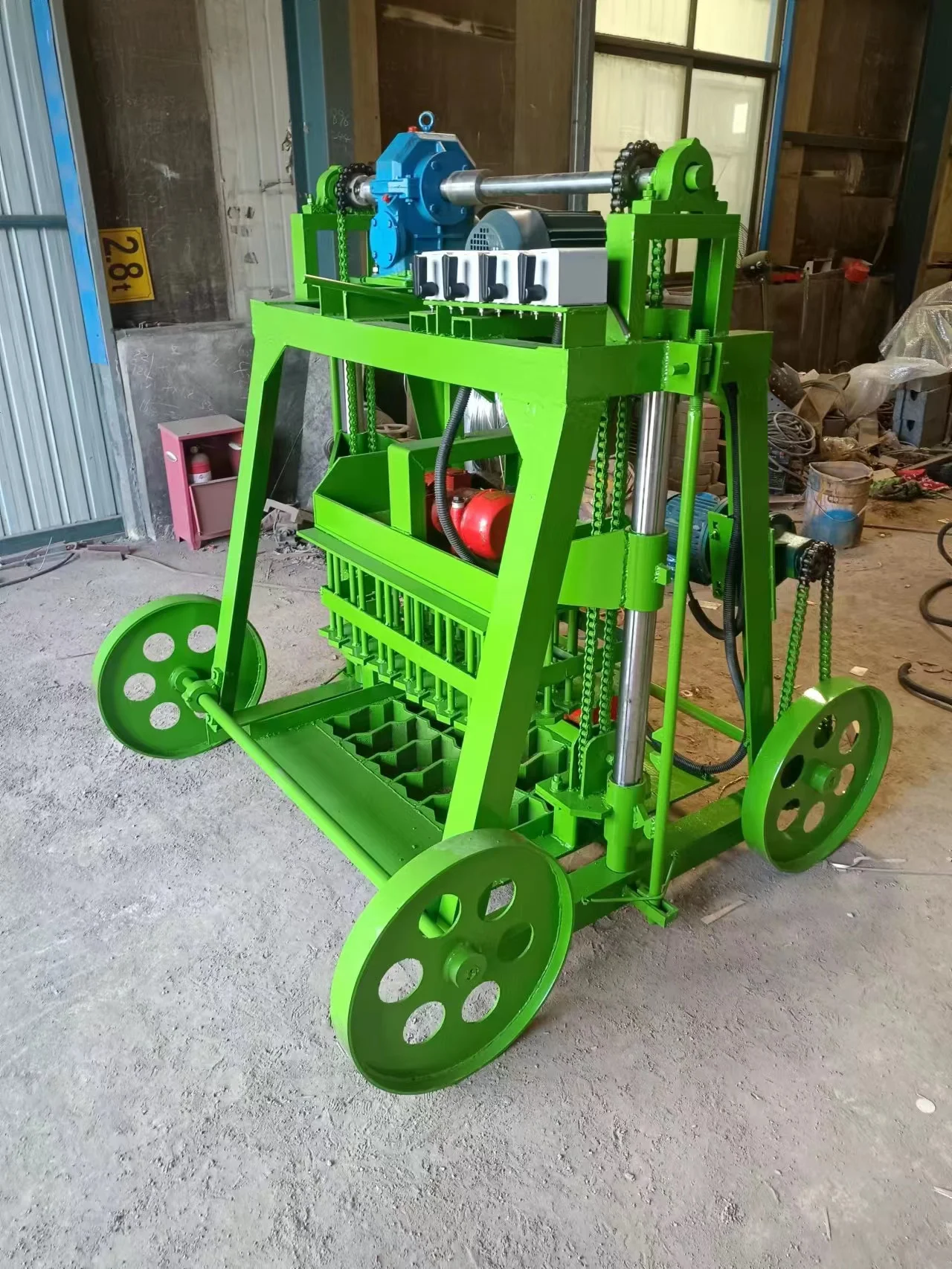
 Mobile block machine