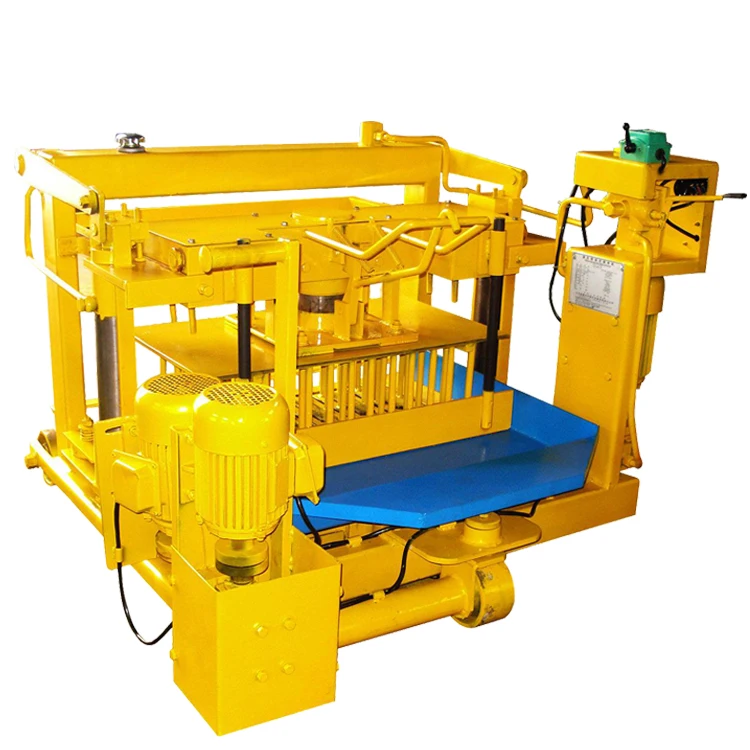
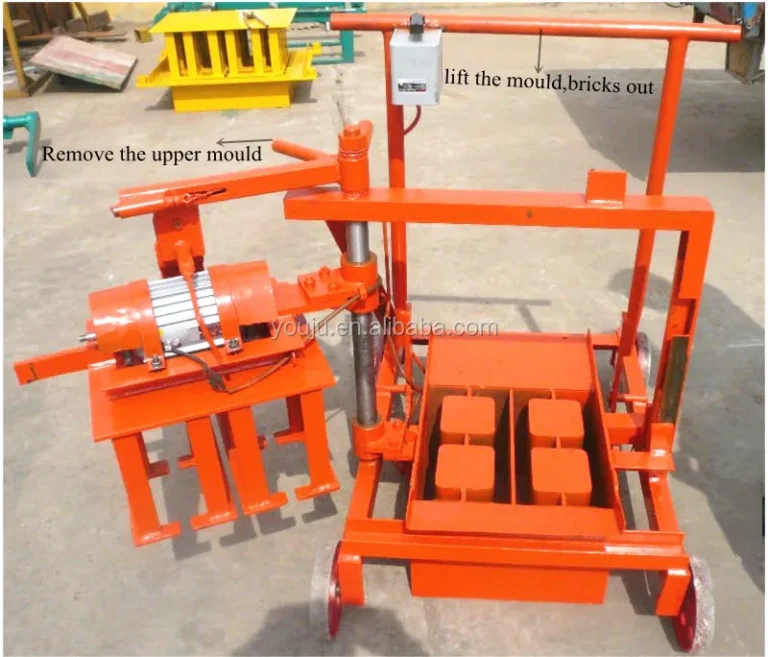
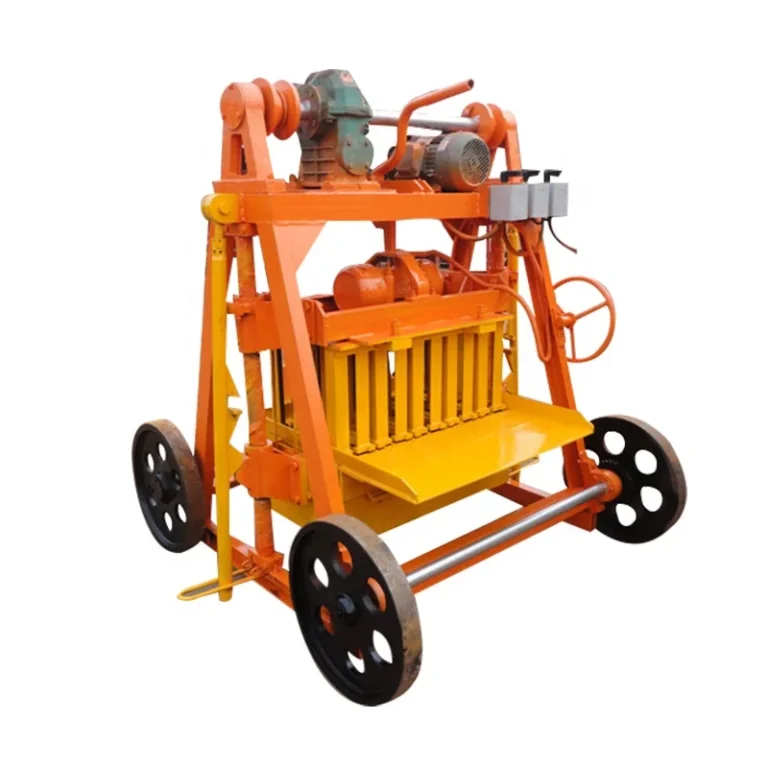
Single-focus machinery supply — we configure the QMJ4-45 and its moulds as one matched system against your actual block format and site conditions, not a catalogue default.
Technical Specifications
| Parameter |
Value |
| Model |
QMJ4-45 |
| Product Type |
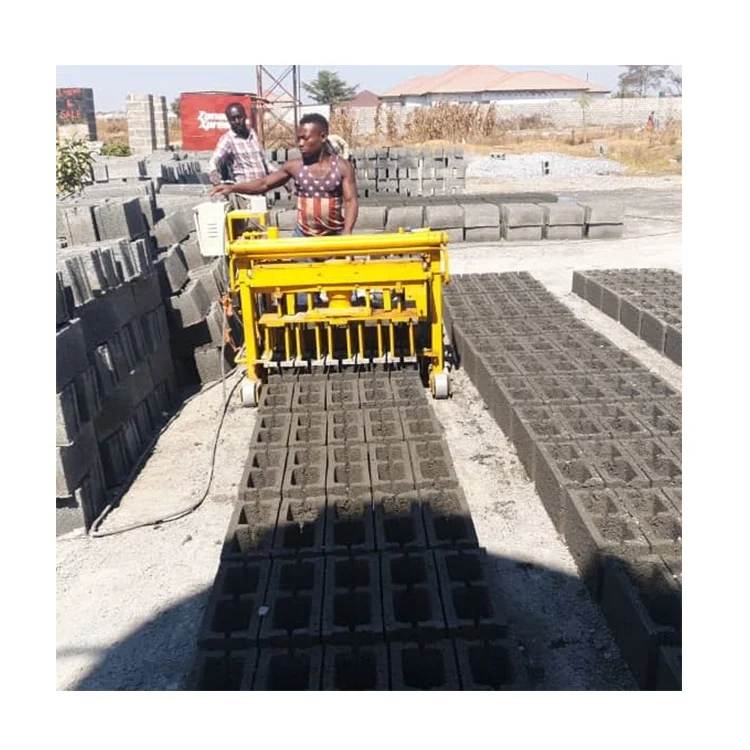
Mobile Egg Laying Block Making Machine |
| Molding Capacity |
4 pcs/mold for 400×200×200 mm hollow block (basis to be confirmed for other formats) |
| Vibration Frequency |
2400 r/m |
| Productivity |
~3000 pcs/8h for 400×200×200 mm; ~3500 pcs/8h for 400×150×200 mm; ~4500 pcs/8h for 400×120×200 mm |
| Forming Method |
Mold vibration |
| Demold & Turning Method |
Manual |
| Molding Cycle |
40–45 s |
| Total Power |
6 kW |
| Power Source |
Diesel or petrol engine |
| Pallet Requirement |
Not required (egg-laying design) |
| Automation Level |
Manual operation, no fixed pallet line |
| Warranty |
1 year |
Application Suitability
| Application |
Material or Output |
| On-site hollow block production for building contractors |
Cement, crushed stone, river sand, and water mixed locally |
| First block plant setup by entrepreneurs |
Standard hollow blocks in 400×200×200, 400×150×200, and 400×120×200 mm formats |
| Remote housing project block supply |
Engine-driven operation where grid electricity is unavailable |
| Low-investment multicellular brick production |
Local aggregate with cement binder, cured on prepared ground |
What "4000 Blocks per Day" Actually Means on a Job Site
Daily output figures are meaningless unless the block format, mould cavity count, and cycle time behind them are stated openly.
I have watched buyers receive a mobile egg laying block machine manufacturer quote that promises a single headline number, only to discover on arrival that the figure assumed the smallest block in the range. When they switch to the hollow block their market actually buys, the real throughput drops. [NEED_CITE: capacity calculations must state the block format assumed] The QMJ4-45 productivity figures above are therefore listed per format — 400×200×200 mm yields around 3000 pieces in an eight-hour shift at a 40–45 second cycle, while the narrower 400×120×200 mm block reaches approximately 4500 pieces because six cavities fill the same mould area. Knowing these numbers before you order prevents the gap between quotation and reality.

Where the QMJ4-45 Sits in the Full Machine Range
The QMJ4-45 occupies the entry tier of our block machinery line. It is a mobile egg laying block machine manufacturer model designed for buyers who need to produce blocks without investing in a fixed plant, pallets, or a dedicated curing rack system. The engine-driven power source removes grid dependency entirely, which matters for remote project sites or regions where industrial electricity is unreliable.
Choosing Between Mobile, Semi-Automatic, and Automatic
Stepping up from the QMJ4-45 to a semi-automatic stationary press adds pallet handling, higher vibration force, and hydraulic pressure — all of which increase density and allow paving blocks or interlocking formats. The decision point is usually daily volume and format variety. If your market requires three or more block types and consistent compressive strength across batches, a stationary line becomes necessary. [NEED_CITE: block strength requirements by construction standard] The QMJ4-45 serves the opposite scenario: a single dominant hollow block format, moderate volume, and a site where infrastructure investment must stay minimal.
Reading the Specs That Matter for Egg-Laying Production
The 2400 r/m vibration frequency is the core forming parameter on this machine. In egg-laying design, vibration alone compacts the mix — there is no hydraulic top pressure to supplement it. That means the frequency must be matched to your local aggregate gradation and cement content; too low a frequency with fine river sand leaves the block under-compacted and prone to cracking on demould. I once adjusted vibration timing and feed duration on a similar unit in West Africa after the buyer’s local sand proved finer than assumed, and block integrity improved immediately. The 6 kW total power rating is modest, consistent with engine-driven operation and the absence of hydraulic pumps. The 40–45 second moulding cycle reflects manual demould and repositioning, which is standard for this class.
The Cost of Skipping Site and Material Verification
Ordering an egg-laying machine without confirming your curing ground surface, aggregate fineness, and ambient temperature leads to problems that no specification sheet can fix after delivery. Blocks laid on uneven or unprepared ground crack under their own weight before initial set. [NEED_CITE: curing surface preparation for mobile block production] A mix designed for coarse aggregate will not compact properly if your local source supplies fine sand, and the resulting strength inconsistency shows up only after the blocks reach the building site. These are the failures that erase whatever price advantage a basic machine offered.
Why Source This Range Here
Block machinery is our single focus, so the QMJ4-45 is specified alongside its moulds, engine, and maintenance parts as one system rather than assembled from unrelated suppliers. We set the configuration against your actual mix design and target block format, not a catalogue default. Mould design covers the hollow block sizes your market sells, with custom drawings available if your region uses non-standard dimensions. The automation level is selectable across our range — you can start with the QMJ4-45 and move to a semi-automatic line later without changing your block format or pallet investment. Installation support includes operator training on vibration timing and mix adjustment for your specific aggregate.
Documentation & Verification
- Line layout showing curing area and machine travel path for the QMJ4-45 egg-laying cycle
- Machine specification sheet confirming engine type, vibration frequency, and total power
- Mould drawing and format list for all three hollow block dimensions available
- Factory test record on your specified block format before dispatch
- Operation and maintenance manual with wear parts list for first replacement planning
Installation, Commissioning & Support
- Prepared flat ground required — the QMJ4-45 lays blocks directly without pallets or a fixed foundation
- Diesel or petrol engine eliminates the need for a dedicated electrical circuit on site
- Machine ships assembled; operator begins production after engine start-up and mould fitting
- First-run commissioning covers vibration timing adjustment to match your local aggregate and cement ratio
- Wear parts list provided so you can stock mould liners and vibration motor brushes before first replacement is due
What to Include in Your Inquiry
To configure the QMJ4-45 correctly, tell us which hollow block format your market buys most, your target daily output, and the type of sand and aggregate available locally. If grid power exists at your site, mention voltage and frequency so we can advise whether an engine-driven or electric model fits better. Sharing your curing area dimensions helps us confirm whether the egg-laying travel pattern will work within your space.
Frequently Asked Questions
Q: How is the QMJ4-45 daily output calculated, and which block format does it assume?
A: Output is calculated per format using mould cavity count and cycle time. For the 400×200×200 mm hollow block, four cavities at a 40–45 second cycle give roughly 3000 pieces per eight-hour shift. The 400×120×200 mm format yields about 4500 pieces because six cavities fit the same mould. Always confirm which format a quoted number assumes.
Q: Where does the QMJ4-45 sit in the full block machine range?
A: It is the entry-tier mobile option for buyers who need hollow block production without a fixed plant or pallets. When your daily volume grows or your market demands paving blocks and interlocking bricks, stepping up to a semi-automatic stationary line with hydraulic pressure and higher vibration force becomes the logical move.
Q: Can the QMJ4-45 produce paving blocks or interlocking bricks?
A: The QMJ4-45 is designed primarily for hollow blocks using mould vibration without hydraulic top pressure. Paving blocks and interlocking bricks require higher compaction force and precise dimensional tolerance that a stationary press with hydraulic pressure delivers more consistently. We can advise on the right model if those formats are in your plan.
Q: What site conditions does an egg-laying machine need?
A: You need a flat, firm surface for the machine to travel on and lay blocks directly. The curing area must be large enough for the daily output to remain undisturbed for at least 24 hours. Engine-driven operation means no grid connection is required, but fuel supply and basic engine maintenance capability are necessary on site.
Q: What is the upgrade path from the QMJ4-45?
A: The next step is a semi-automatic stationary line that adds pallet handling, hydraulic pressure, and higher vibration force. This opens up paving block and interlocking brick production while increasing daily output. Your existing block format knowledge and market relationships carry over directly to the larger line.

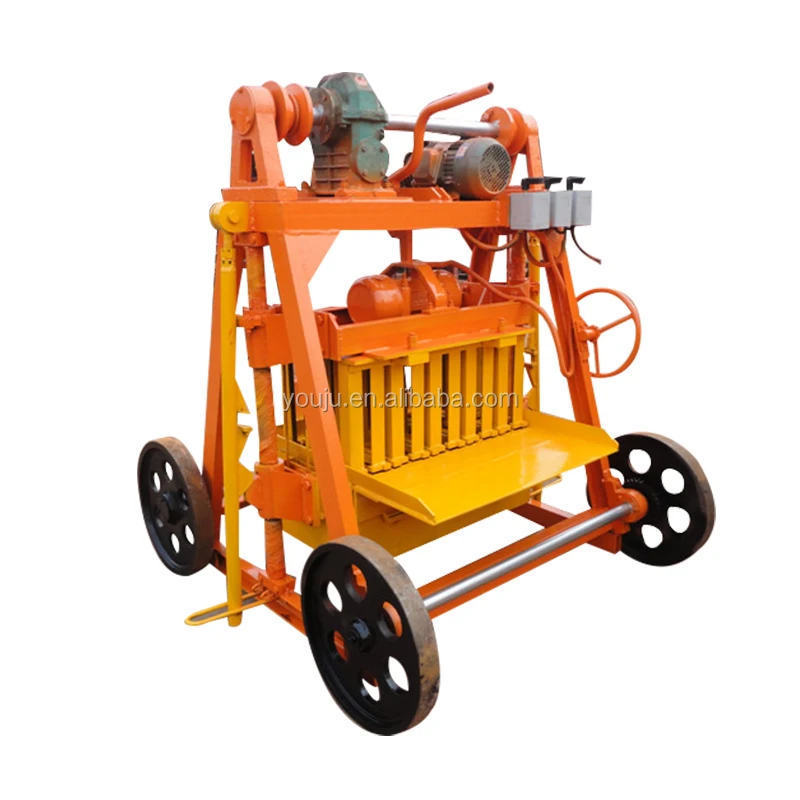
 Mobile block machine