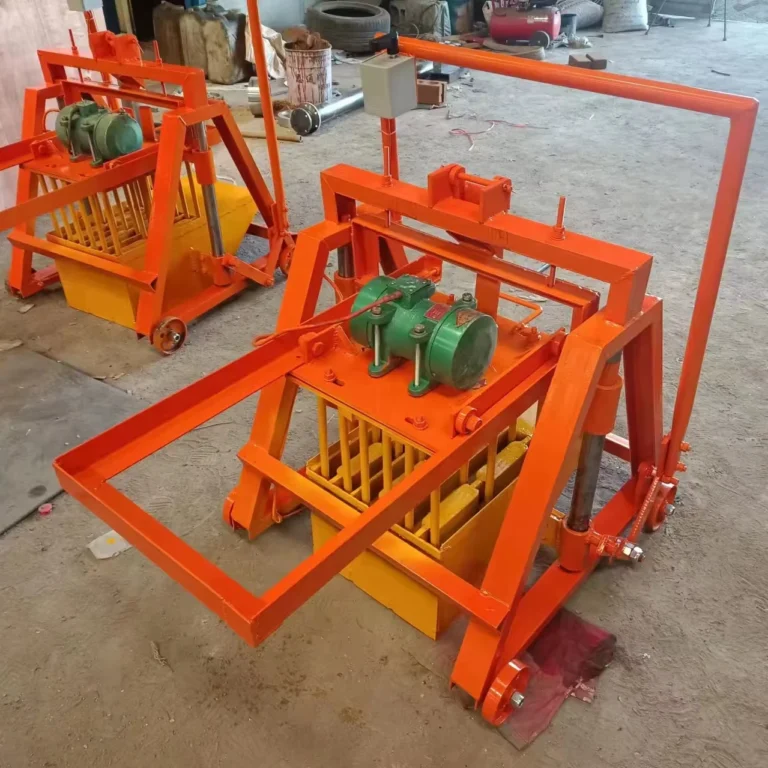
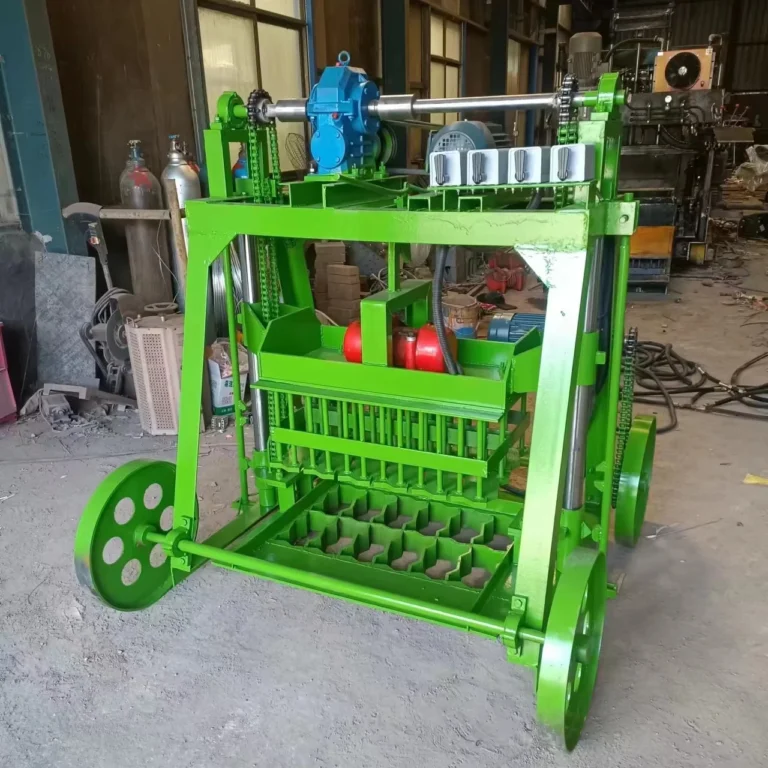
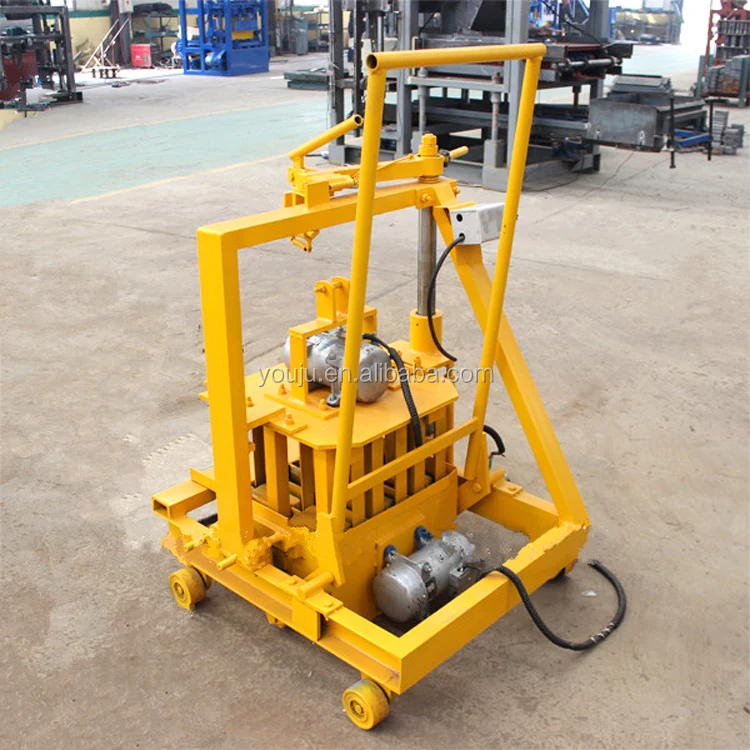
Matched System Sourcing — the QMJ4-45 is positioned within a coordinated block production range so buyers understand where a manual egg-laying machine ends and semi-automatic or fully automatic tiers begin, preventing over-investment or under-performance.
Technical Specifications
| Parameter |
Value |
| Model |
QMJ4-45 |
| Product Type |
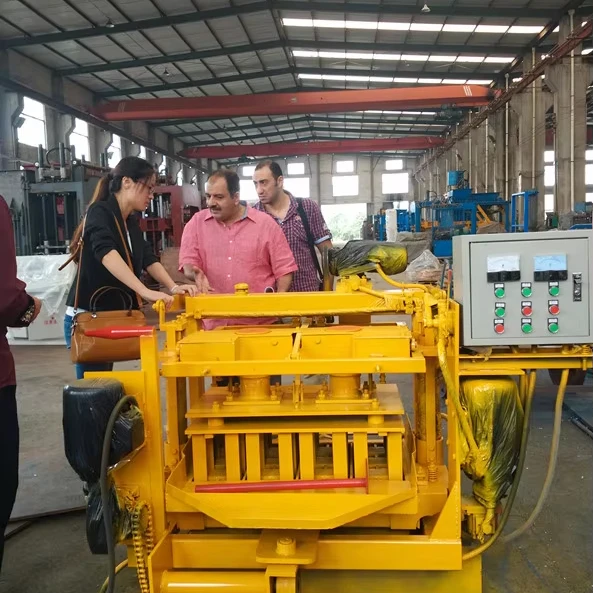
Mobile Egg-Laying Concrete Block Making Machine |
| Mobility |
Wheel-mounted for on-site movement |
| Vibration System |
Twice vibrations of molding core |
| Automation Level |
Manual |
| Pallet Requirement |
None (egg-laying directly on ground) |
| Mould Compatibility |
Changeable for various block formats; custom moulds available by drawings |
| Output Capacity |
(basis to be confirmed per block format and material) |
| Cycle Time per Format |
(basis to be confirmed) |
| Hydraulic Pressure (MPa) |
(basis to be confirmed) |
| Vibration Force (kN) |
(basis to be confirmed) |
| Rated Power (kW) |
(basis to be confirmed) |
| Voltage & Frequency |
(must be confirmed before order) |
| Overall Dimensions (L×W×H) |
(basis to be confirmed) |
| Net Weight |
(basis to be confirmed) |
| Certification |
CE (verify applicability to this specific model) |
Application Suitability
| Application |
Material or Output |
| On-site building projects |
Solid blocks from locally sourced sand and cement |
| First-time block plant startups |
Hollow blocks using crushed stone aggregate |
| Rural housing and fencing |
Interlocking bricks from laterite or quarry dust |
| Paving and landscaping |
Pavers produced by changing moulds on the same unit |
What "Blocks per Hour" Leaves Out of the Conversation
Capacity figures mean nothing without stating the block format they assume.
Every mobile block making machine for sale lists a production rate, but few state which block size that number references. A QMJ4-45 might produce a solid count with small pavers, yet that same machine lays fewer units per shift when fitted with a large hollow block mould. Buyers who skip the format check end up with equipment that cannot meet their daily targets, forcing overtime or a second machine purchase [NEED_CITE: capacity calculation standards for block machinery].
I once reviewed a project where a contractor ordered a manual mobile unit based on a generic output number. The local river sand was extremely fine, requiring longer vibration cycles to reach target density. Real throughput dropped noticeably compared to the catalogue figure. The lesson: always tie the capacity discussion to a specific block dimension, a confirmed mix, and the actual aggregate available on the job site.

Where the QMJ4-45 Fits in the Full Range
This machine sits at the entry tier, serving buyers who need on-site block production without fixed plant infrastructure. As a manual egg-laying mobile block making machine for sale, it eliminates the need for pallets and secondary handling. Blocks are laid directly on the ground and cured in place. For a contractor pouring blocks next to a wall under construction, that simplicity removes an entire material-handling step.
Stepping Up from Manual to Semi-Automatic
When daily volume needs outgrow what a single operator can manage, the next tier introduces pallet-fed stationary presses with mixer and conveyor integration. The QMJ4-45 does not accept pallets, so the upgrade path involves moving to a different machine class entirely. Understanding this boundary helps a buyer decide whether to start with a low-investment manual unit and plan a future second line, or invest in semi-automatic equipment from the outset [NEED_CITE: block plant automation tier comparison].
Reading the Vibration and Mould Specifications
The QMJ4-45 uses a twice-vibration molding core rather than a single-pass system. Double vibration compacts the concrete mix more evenly across the block height, which matters when local aggregate varies in particle shape. A consistent density reduces breakage during the curing period. Mould change is manual, and the time required depends on the operator and the block format. Buyers planning multiple formats should request a mould drawing and format list before ordering, confirming that the blocks their market demands are actually producible on this machine. Voltage and frequency must be stated and confirmed before production begins, as an incorrect motor winding delays commissioning on arrival.
The Cost of Skipping the Configuration Step
Ordering a mobile machine without confirming local aggregate, target block format, and site voltage leads to predictable problems. Blocks come out under-compacted because the vibration force was never matched to a mix the buyer can actually source. Moulds arrive that produce a format the local market does not buy. Electrical panels arrive wired for a frequency that the site generator cannot supply. Each of these issues adds weeks of delay and unbudgeted cost to a project that was supposed to save money by going mobile [NEED_CITE: common commissioning delays in exported block machinery].
Why Buyers Source This Tier Here
Block machinery is the single focus, meaning the QMJ4-45 is not an add-on to a broader catalogue. The machine, its moulds, and any supporting handling tools are specified as one matched set. Configuration is built around the buyer’s actual mix design and local aggregate, not a default setting. Custom moulds can be produced from buyer-supplied drawings, so a specific interlocking profile or non-standard paver is achievable. The automation level is transparent: this is a manual machine, and the upgrade path to semi-automatic or fully automatic tiers is clearly defined within the range, so future expansion does not require switching suppliers.
Documentation & Verification
- Line layout showing site area needed for egg-laying and curing zones
- Capacity calculation sheet stating the exact block format and mix assumed
- Mould drawing and format list for every block type the machine can produce
- Voltage, frequency, and control language confirmation before production
- Factory test record demonstrating block density with the buyer’s specified mix
Installation, Commissioning & Support
- Level ground area required for egg-laying path and adjacent curing space
- Dedicated power circuit matched to confirmed voltage and frequency rating
- Machine arrives assembled; wheels and handles ready for immediate site movement
- First-run block test with local aggregate to verify vibration timing and density
- Operator training covering mould change procedure and daily maintenance points
- Mould and wear parts list provided for future reordering
What to Prepare Before Sending an Inquiry
To size the QMJ4-45 correctly, share the block formats your market sells, including dimensions and daily volume targets. Confirm the local raw materials available—sand type, aggregate size, cement grade—along with the voltage and frequency at your site. Note whether you have existing curing space and any forklifts or handling equipment, as these affect how blocks are moved after laying.
Frequently Asked Questions
Q: What block format is the QMJ4-45 output figure based on?
A: Output varies with the mould installed. A capacity figure only holds meaning when tied to a specific block size, wall thickness, and mix. Request a calculation sheet that names the format behind every number, then compare that to your actual daily target.
Q: Where does the QMJ4-45 sit compared to semi-automatic tiers?
A: It is the entry point—a manual, egg-laying machine requiring no pallets or fixed plant. Semi-automatic tiers add pallet feeding, stationary pressing, and mixer integration. The choice depends on your daily volume and whether you can invest in a fixed production area.
Q: What voltage and site conditions does this machine require?
A: Voltage and frequency must be confirmed before production. The machine needs level, compacted ground for egg-laying and adjacent curing space. Share your site power specification early to ensure the motor winding matches your supply.
Q: How long does a mould change take, and what formats can one machine produce?
A: Mould change is manual and duration depends on operator experience and block size. The machine supports multiple formats through interchangeable moulds, including custom profiles from buyer drawings. Request a format list to confirm your target blocks are covered.
Q: What is the upgrade path if volume outgrows this manual mobile machine?
A: The next step is a semi-automatic stationary line with pallet handling and automated mixing. Since the QMJ4-45 does not use pallets, the upgrade involves a different machine class within the range, not a simple add-on.

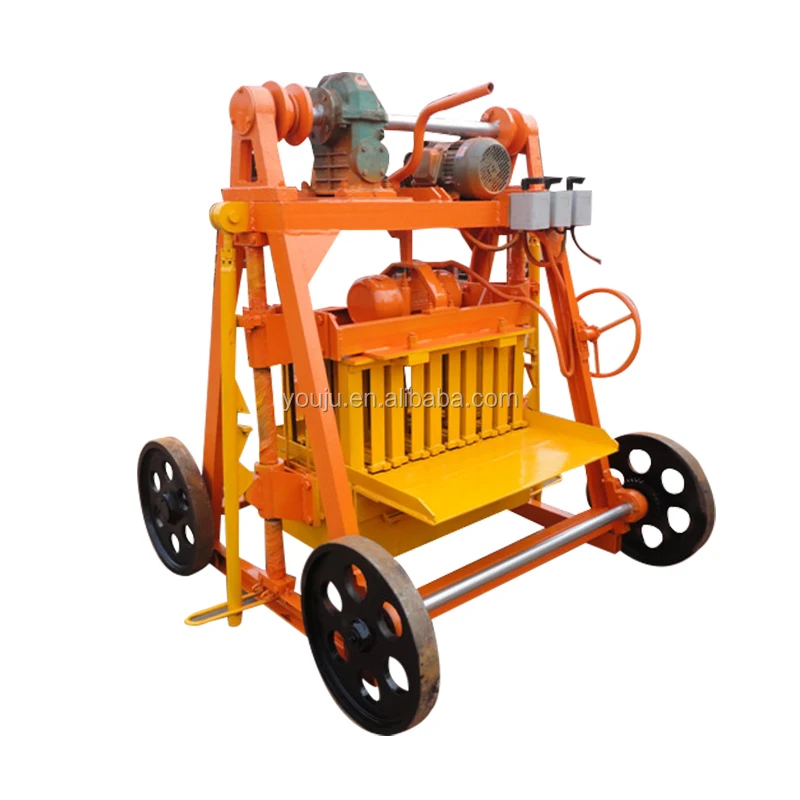
 Mobile block machine