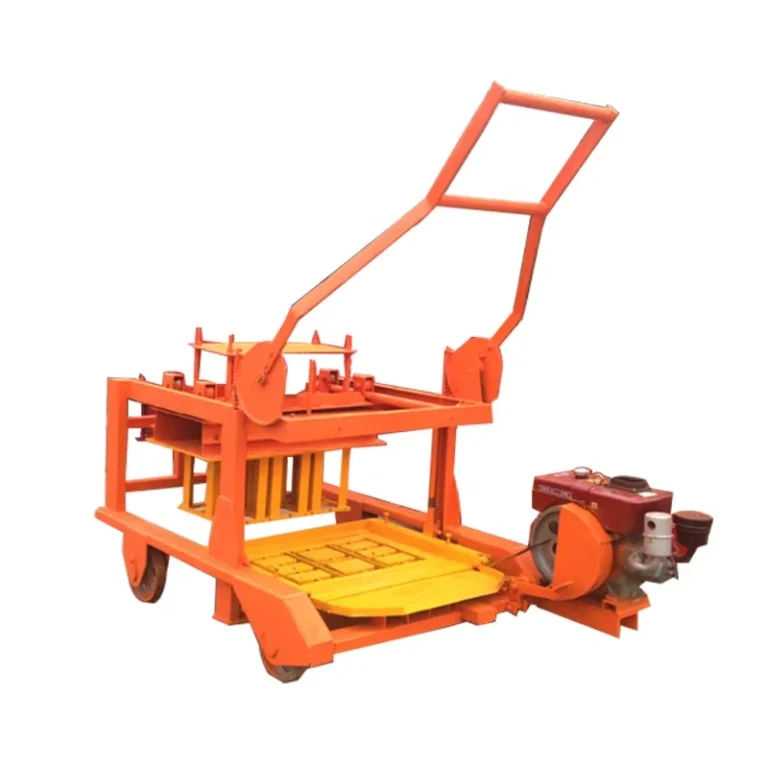
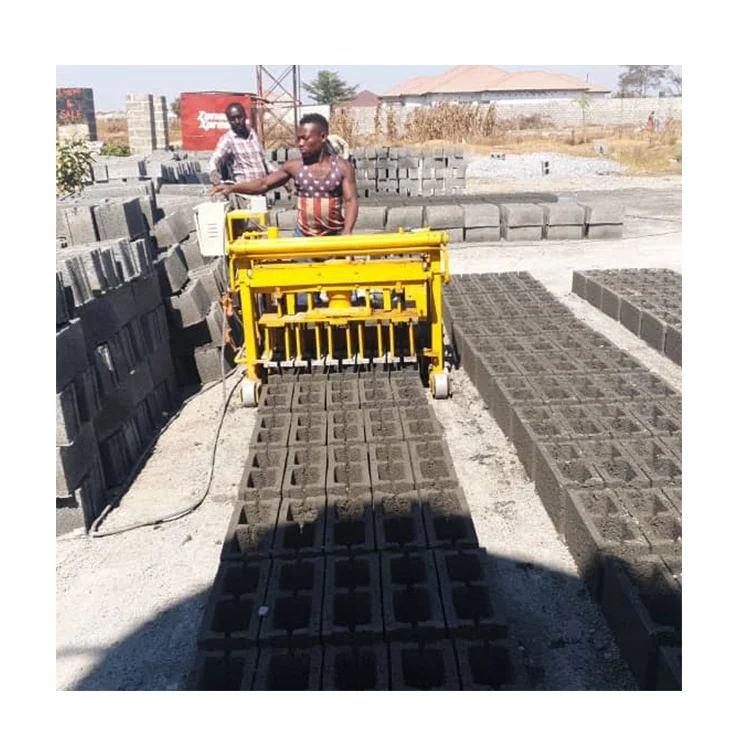
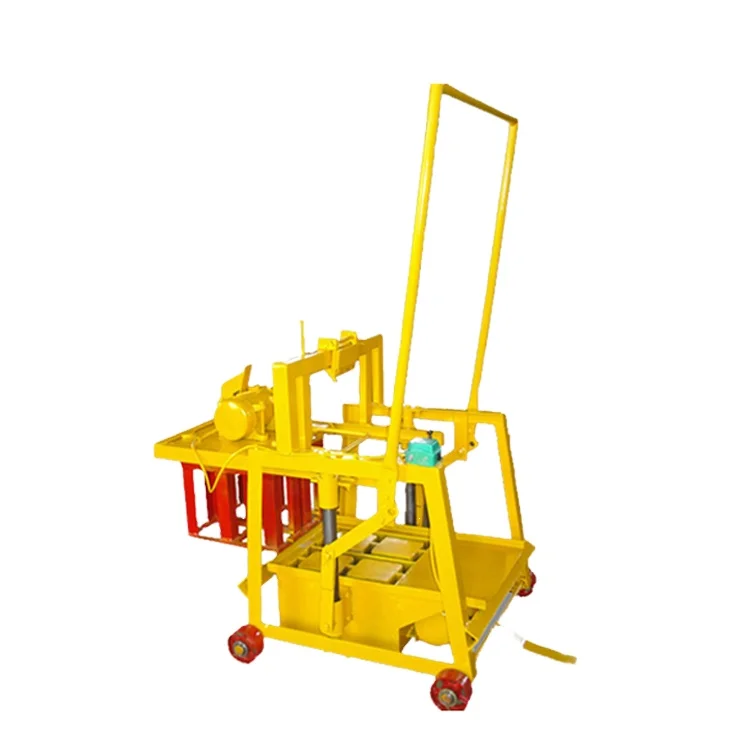
Single Focus Machinery — Our QMJ2-45 configuration starts with your local aggregate sample and target block format, ensuring the vibration and manual mechanics match what you can actually source on-site.
Technical Specifications
| Parameter |
Value |
| Model |
QMJ2-45 |
| Product Type |
Manual Mobile Concrete Block Making Machine |
| Mould Format |
Hollow brick (400×200×200, 400×150×200, 400×100×200 mm) |
| Cycle Time |
25–30 s per mould |
| Output Capacity |
160 pcs/h rated at 400×200×200 mm hollow brick; 320 pcs/h rated at 400×100×200 mm hollow brick |
| Pallet Requirement |
None (egg-laying design) |
| Power Source |
Diesel or petrol engine (exact type confirmed at order) |
| Labor Requirement |
1 to 3 workers |
| Automation Level |
Manual |
| Mould Change |
Supported, multiple hollow brick formats via mould swap |
| Control System |
Manual operation |
Application Suitability
| Application |
Material or Output |
| On-site housing project production |
Hollow blocks from crushed stone, sand and cement mixed locally |
| Remote or off-grid construction sites |
Engine-powered hollow brick output without grid connection |
| First-time block plant entrepreneurs |
Small-volume hollow brick runs with minimal capital and no fixed plant |
| Contractor self-supply on infrastructure jobs |
400×200×200 and 400×150×200 mm hollow blocks laid directly on prepared ground |
Why "1,280 Blocks per Shift" Rarely Matches the Site Reality
The QMJ2-45 output of 160 pcs/h is rated at 400×200×200 mm hollow brick — change the format and the figure changes.
Many buyers see a single headline capacity number and plan an entire project schedule around it. When the machine arrives and they switch to a 400×150×200 mm mould, the cycle still takes 25–30 seconds but each cycle produces a different count, and the daily total shifts. I have watched contractors lose days because the foreman assumed the quoted figure applied to every block size equally. [NEED_CITE: block format impact on cycle output in mobile egg-laying machines]

Where This Machine Sits in the Full Range
The QMJ2-45 occupies the entry tier of our mobile block machine lineup. It is designed for buyers who need to produce hollow bricks on-site without investing in pallets, a curing rack system, or a fixed plant footprint. If your project requires multiple block formats and higher daily volume, stepping up to a semi-automatic stationary model becomes worth evaluating — but for first-time operators and remote sites, this manual mobile block machine manufacturer offering keeps capital and complexity low.
Engine-Powered Mobility and Site Independence
Because the QMJ2-45 runs on a diesel or petrol engine rather than an electric motor, it operates wherever fuel is available. This matters for housing developments that have not yet connected to the grid, road-building camps, and rural infrastructure projects. The egg-laying design means the machine lays each block directly onto prepared ground and then moves forward — no pallets to purchase, store, or rotate through a curing area. [NEED_CITE: off-grid block production logistics in developing regions]
Reading the Specs That Actually Matter
Cycle time of 25–30 seconds governs how many mould cycles the operator can complete per hour, but the block count per cycle depends entirely on the mould cavity layout. A 400×200×200 mm mould typically has fewer cavities than a 400×100×200 mm mould, which is why the rated output jumps from 160 to 320 pcs/h when you switch to the narrower format. Labour requirement of 1 to 3 workers covers one person feeding the mix and one or two handling the machine movement and block spacing. Since the vibration is mechanically driven rather than hydraulically controlled, mix consistency and aggregate grading directly affect block density — a sandy mix with high clay content will not compact the same way clean crushed stone does, and the manual vibration force has limited ability to compensate.
The Cost of Skipping the Raw Material Test
When a buyer orders without sending an aggregate sample, the machine arrives configured for a generic mix. If the local sand carries high clay or the gravel is oversized, the blocks come out weak or the cycle slows because the mix does not flow cleanly into the mould. I saw this happen last year when a buyer in West Africa assumed any river sand would work; the clay content cut his daily output roughly in half and delayed a housing deadline. A manual egg-laying machine has no hydraulic pressure adjustment to compensate — what goes in is what you get. [NEED_CITE: aggregate grading effect on manual block compaction]
Why Source This Manual Mobile Block Machine Here
Our single focus on block machinery means the QMJ2-45 is specified as a system: machine, mould set, and engine are matched before dispatch rather than assembled from separate suppliers. We ask for your raw material sample and target block format before quoting, so the mould cavity layout and mix guidance align with what your site can actually produce. Mould design covers the hollow brick sizes your market sells, and custom formats can be added later as demand shifts. Automation level is selectable across our range — if your volume outgrows this manual model, the step to semi-automatic is a conversation, not a new supplier search. Installation support includes operator training on mould change, mix ratio, and ground preparation so your crew is producing acceptable blocks from the first shift.
Documentation & Verification
- Mould drawing and format list confirming every hollow brick size included in your order
- Capacity calculation sheet stating which block format each output figure assumes
- Engine specification sheet with fuel type and rated power for non-electric models
- Operation and maintenance manual covering mould swap, mix ratio, and ground prep
- Wear parts and mould list so you know what to reorder and when
- Factory test record showing block output on your specified format before dispatch
Installation, Commissioning & Support
- Ground must be level and firm; the QMJ2-45 lays blocks directly on prepared earth or a concrete floor
- Engine fuel type confirmed at order — diesel or petrol matched to what is available on your site
- Machine ships assembled; on-site setup involves mounting the selected mould and connecting the engine
- First-run commissioning includes mix ratio adjustment using your local aggregate sample
- Operator training covers mould change procedure, block spacing, and daily maintenance checkpoints
- Wear parts list provided at delivery so reorder timing is planned before the first replacement is due
What to Include in Your Inquiry
Tell us which hollow brick formats your market demands and the daily volume you need to hit. Share a sample or description of your local sand and aggregate so we can verify the mix before configuring the mould. Let us know whether your site has grid power or requires the engine-powered option, and describe the ground conditions where blocks will be laid.
Frequently Asked Questions
Q: How is the QMJ2-45 output capacity verified, and what block format does each figure assume?
A: Every output figure we quote names the block format it assumes. The 160 pcs/h rate is based on 400×200×200 mm hollow brick at a 25–30 second cycle. Switch to a 400×100×200 mm mould and the rated figure changes to 320 pcs/h because more cavities fit the same cycle. We provide a capacity sheet so you can plan around the format you actually sell.
Q: Where does the QMJ2-45 sit in the full range — when should a buyer step up?
A: This model is the entry tier for buyers who need on-site production without a fixed plant. If your daily volume grows beyond what 1–3 workers can sustain, or you need pallet-based curing for higher strength, moving to a semi-automatic stationary machine becomes the logical next step within our range.
Q: What site conditions and space are needed for engine-powered mobile block production?
A: You need a level, firm surface for the machine to travel on and enough open area for blocks to cure in place. Fuel supply for the diesel or petrol engine must be arranged locally. No electrical connection or pallet storage area is required.
Q: What mould formats are available, and can custom moulds be added later?
A: Standard moulds cover 400×200×200, 400×150×200, and 400×100×200 mm hollow brick. Custom moulds to your drawing can be added at order or later as your product range expands, since the mould swap mechanism on the QMJ2-45 accepts interchangeable mould boxes.
Q: What documentation and support come with the machine for commissioning and training?
A: You receive a mould drawing set, capacity calculation per format, engine spec sheet, operation manual, wear parts list, and a factory test record. On-site commissioning includes operator training on mould change, mix ratio, and daily maintenance routines.

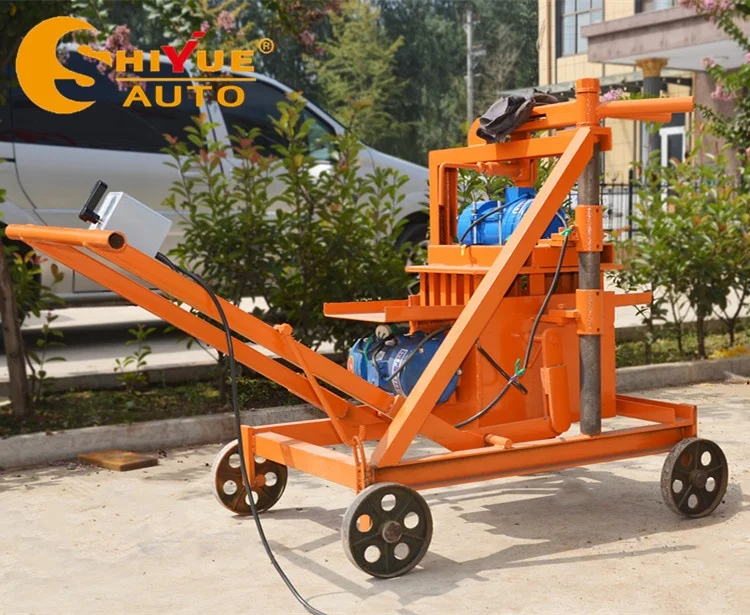
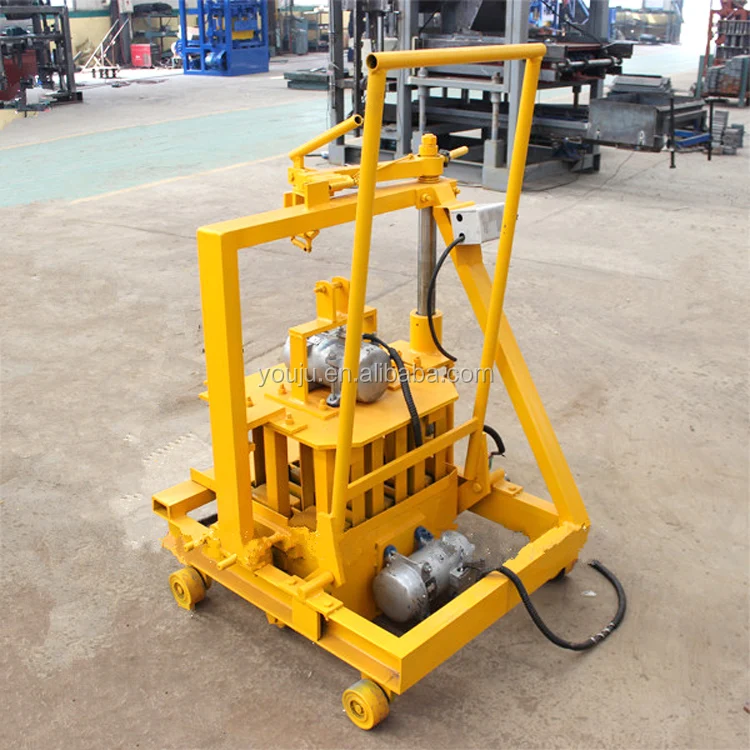 Mobile block machine