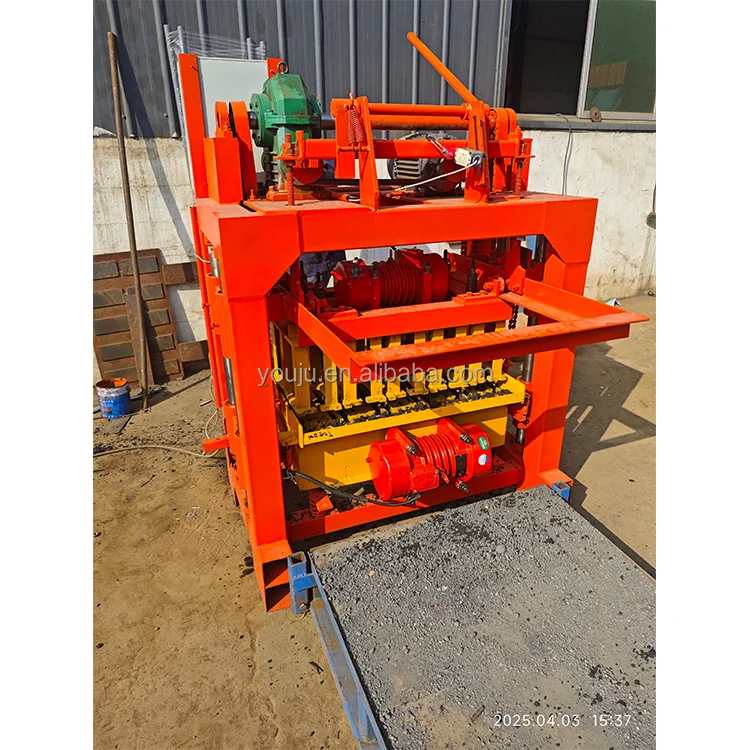
Complete System Specifying — The Eco Brava block machine is quoted with its matching moulds, pallets, and drive options as a single portable unit, so the capacity you see on paper is the capacity you get on site.
Technical Specifications
| Parameter |
Value |
| Model |
Eco Brava |
| Product Type |
Interlocking Clay Brick and Hollow Block Making Machine |
| Rated Power |
5.5 kW electric motor or 12 HP diesel engine |
| Molding Cycle |
15–20 s |
| Output Capacity |
1440–1920 pcs per 8 hours based on 300×150×100 mm interlocking block, 1 pc per mould (basis to be confirmed for other formats) |
| Pcs per Hour |
180–240 based on 300×150×100 mm interlocking block, 1 pc per mould |
| Block Size Example |
300×150×100 mm |
| Pcs per Mould |
1 |
| Rated Pressure |
16–20 MPa |
| Raw Material Compatibility |
Clay, soil, mud, cement, concrete |
| Machine Weight |
400 kg |
| Overall Dimensions |
1100×750×1700 mm |
| Voltage |
Configurable to buyer’s local voltage and frequency (to be confirmed before production) |
| Automation Level |
Semi-automatic — automatic material feeding, mould pressing and mould lifting |
| Power Source Option |
Electric motor or diesel engine |
| Mould Type |
Interchangeable modeler wombs |
| Assembly State |
Skid-mounted, single-unit portable |
| Certification |
CE declaration where applicable |
Application Suitability
| Application |
Material or Output |
| On-site interlocking brick production for housing projects |
Locally sourced clay or soil mixed with cement |
| Small-scale hollow block production for contractors |
Concrete mix with local aggregate |
| Paving block runs for landscape and pathway work |
Cement-bound sand and crushed stone |
| First block plant for entrepreneurs entering the market |
Mud or soil-based interlocking bricks |
| Remote job sites without reliable grid power |
Diesel-driven production using 12 HP engine option |
Why the Voltage Question Must Come Before the Dispatch Date
Confirming local voltage and frequency before production prevents motor burnout on arrival.
An Interlocking Clay Brick Making Machine manufacturer ships units across multiple continents, and grid standards vary wildly. I once saw a portable block press arrive in Peru configured for 415V/50Hz when the site ran 380V/60Hz — the motor burned within the first hour of commissioning. That failure had nothing to do with the press itself and everything to do with a missing confirmation step. Voltage and frequency must be locked in writing before the Eco Brava enters production, not assumed from a catalogue default [NEED_CITE: voltage and frequency standards by export market].

Where the Eco Brava Sits in the Shiyue Range
The Eco Brava occupies the entry-mobile tier. It is a single skid-mounted unit designed for buyers who need to produce interlocking clay bricks at a job site without investing in a fixed batching plant, conveyor network, or automatic stacking line. For a contractor running a housing project or an entrepreneur testing a new market, this tier removes the fixed-infrastructure commitment while still delivering a consistent semi-automatic pressing cycle. When volume eventually outgrows this portable tier, the buyer moves up to higher-output stationary lines within the same range.
Dual Power and the Sites That Decide Between Them
The choice between the 5.5 kW electric motor and the 12 HP diesel engine is not a preference — it is dictated by the site. Grid-connected yards and established block plants use the motor for lower running cost and quieter operation. Remote housing developments, rural road projects, and areas with unreliable electricity depend on the diesel option to keep production running regardless of grid availability [NEED_CITE: power source selection for construction equipment in off-grid environments]. The Eco Brava block machine for sale ships with one or the other based on the buyer’s confirmed site conditions.
Reading the Pressure and Cycle Numbers Honestly
The 16–20 MPa rated pressure working together with the 15–20 second moulding cycle determines how densely the clay or soil mix is compacted into each brick. Higher pressure at a given cycle time yields a denser, stronger interlocking brick — but only if the mix design and local aggregate support it. A clay-rich soil may compress well at the lower end of that pressure range, while a sandier mix with less natural cohesion may need the upper end combined with a slightly higher cement ratio. The mould cycle time also governs realistic daily output: at 15 seconds per cycle and 1 piece per mould, the theoretical rate sits around 240 pieces per hour, while a 20-second cycle drops that to roughly 180 pieces per hour on the same 300×150×100 mm interlocking format.
The Cost of Skipping Format Confirmation
Quoting capacity without stating the block format leads to a painful mismatch on site. A buyer expecting thousands of standard hollow blocks per day from a machine rated at 180–240 pieces per hour on a single 300×150×100 mm interlocking brick will face a production shortfall the moment the line starts running a different format. The mould cavity count, cycle time, and block dimensions all shift the actual hourly output. When these variables are left unconfirmed, the buyer invests in a machine that physically cannot meet the project schedule [NEED_CITE: capacity calculation mismatches in block making equipment procurement].
Why Buyers Source This Tier from Shiyue
Block machinery is our single focus, so the Eco Brava is specified as one matched system — press, mould, and power source — rather than assembled from separate suppliers. The configuration is set against the buyer’s actual mix design and target block format, not a catalogue default. Mould design covers the interlocking shapes the buyer’s market actually sells, with custom drawings available. The automation level is selectable, meaning a buyer can begin with this semi-automatic unit and move to a higher-output line later. Installation guidance and operator training ensure the machine is running correctly from day one.
Documentation & Verification
- Machine specification sheet listing confirmed voltage, frequency, and control language
- Mould drawing and format list showing included and optional interlocking brick shapes
- Capacity calculation stating the exact 300×150×100 mm block format assumed
- Factory test record with photographs taken before crate closure
- CE declaration supplied where applicable to the destination market
Installation, Commissioning & Support
- Skid-mounted 1100×750×1700 mm frame requires a level concrete pad, not a deep foundation
- 5.5 kW motor or 12 HP diesel drive needs dedicated circuit or fuel supply confirmed on site
- Single-unit portable design arrives assembled — no press dismantling or re-alignment needed
- Semi-automatic cycle parameters set during first-day commissioning with operator present
- Interchangeable mould wombs demonstrated during training so format changeover is practiced
- Wear parts list and mould replacement schedule provided before first production week ends
Starting the Conversation
To configure an Eco Brava correctly, we need to know the interlocking brick format your market sells, the clay or soil type available locally, and your confirmed site voltage and frequency. Share your target daily output and whether grid power is reliable at the production location, and the proposal will state capacity against your exact format rather than a generic figure.
Frequently Asked Questions
Q: How is the 180–240 pcs/hour capacity calculated and which block format does it assume?
A: That figure is based on a 300×150×100 mm interlocking block with one piece per mould and a 15–20 second cycle. If your target format is larger, smaller, or uses a multi-cavity mould, the hourly output will differ. We state the capacity against your confirmed block format in every proposal so there is no ambiguity about daily production expectations.
Q: Electric motor versus diesel engine — which power source fits my site conditions?
A: If your site has stable grid power matching the confirmed voltage and frequency, the 5.5 kW electric motor offers lower running cost and quieter operation. For remote housing projects or areas with frequent outages, the 12 HP diesel engine keeps production independent of the grid. The choice is confirmed before production begins.
Q: What other block formats and moulds are available if my volume outgrows the Eco Brava?
A: The wider Shiyue range covers hollow blocks, solid blocks, paving blocks, kerbstones, and porous bricks across higher-output automatic lines. Interchangeable mould wombs on the Eco Brava itself allow some format variation, and when daily demand exceeds this tier’s capacity, the upgrade path moves to stationary automatic presses with larger pallet sizes and multi-cavity moulds.
Q: Which voltage and frequency configurations are confirmed before shipment?
A: Every Eco Brava is built to the buyer’s confirmed local voltage and frequency — not a default. We require written confirmation of these values plus the preferred PLC or control display language before the machine enters production. This step prevents motor damage and commissioning delays when the unit arrives on site.
Q: What installation support and spare mould supply come with the machine?
A: The 400 kg skid-mounted unit arrives fully assembled and needs only a level pad and power connection. Commissioning support includes operator training on the semi-automatic cycle and mould changeover. A wear parts list and mould catalogue are supplied so replacements can be ordered before the first change is due.

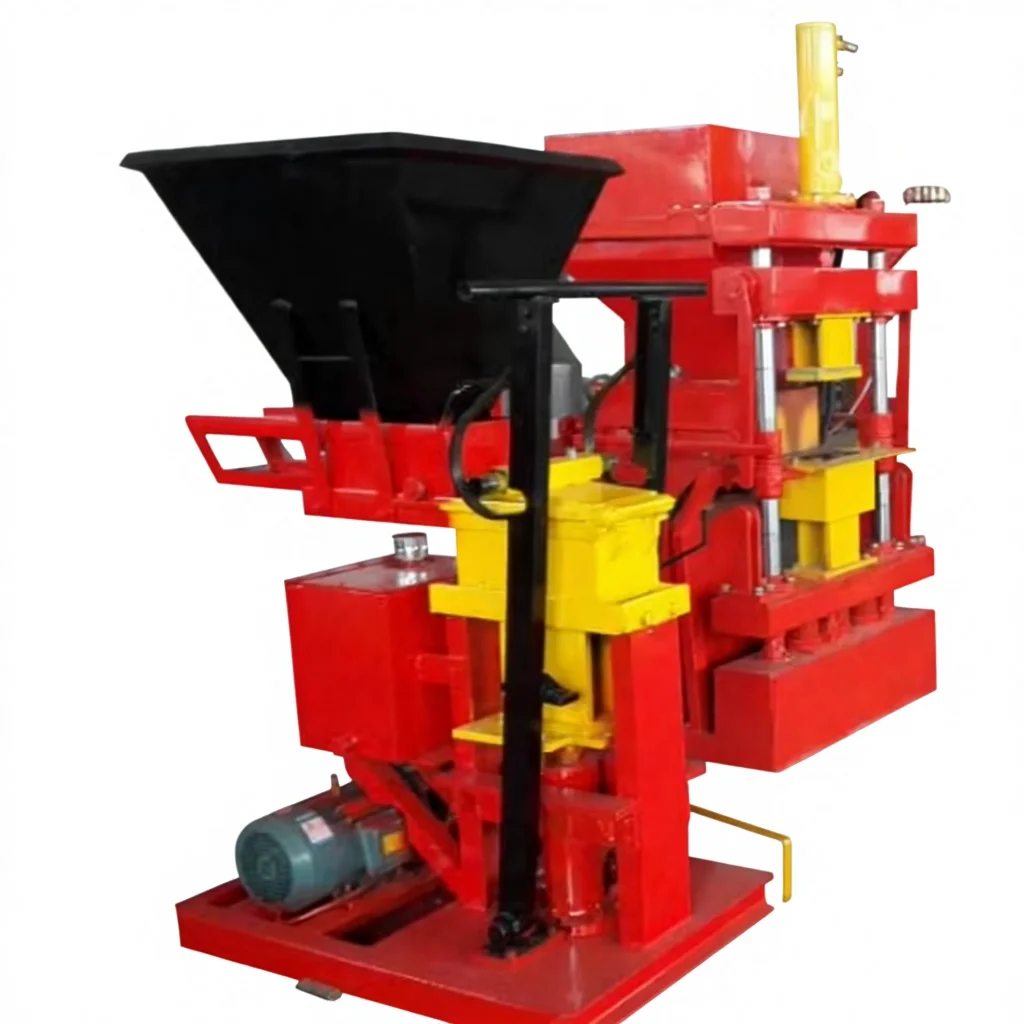
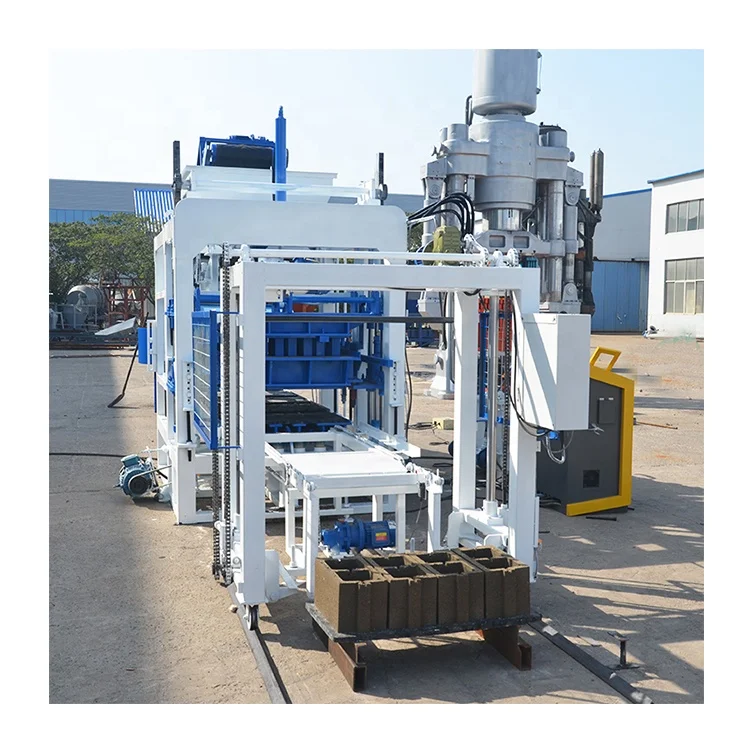 Stationary block machine