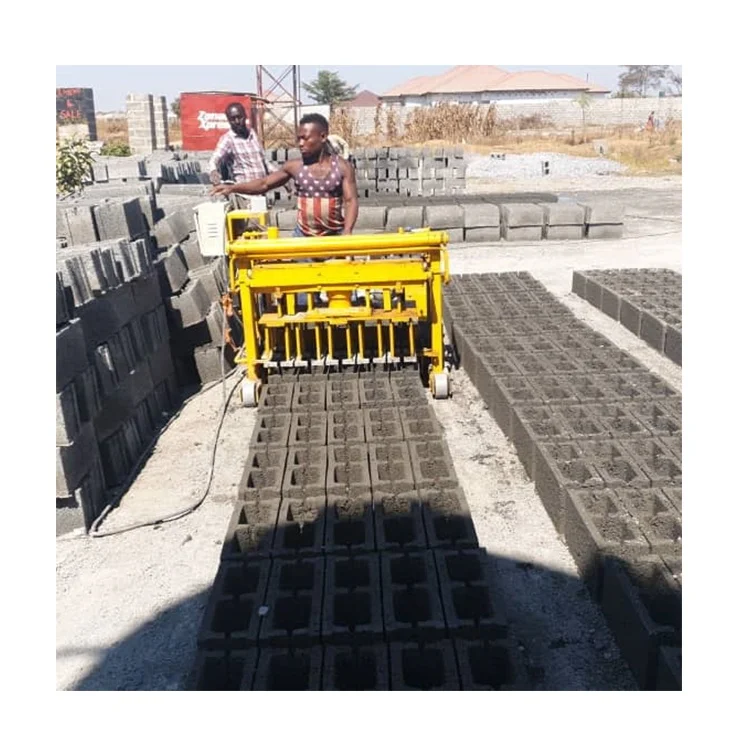
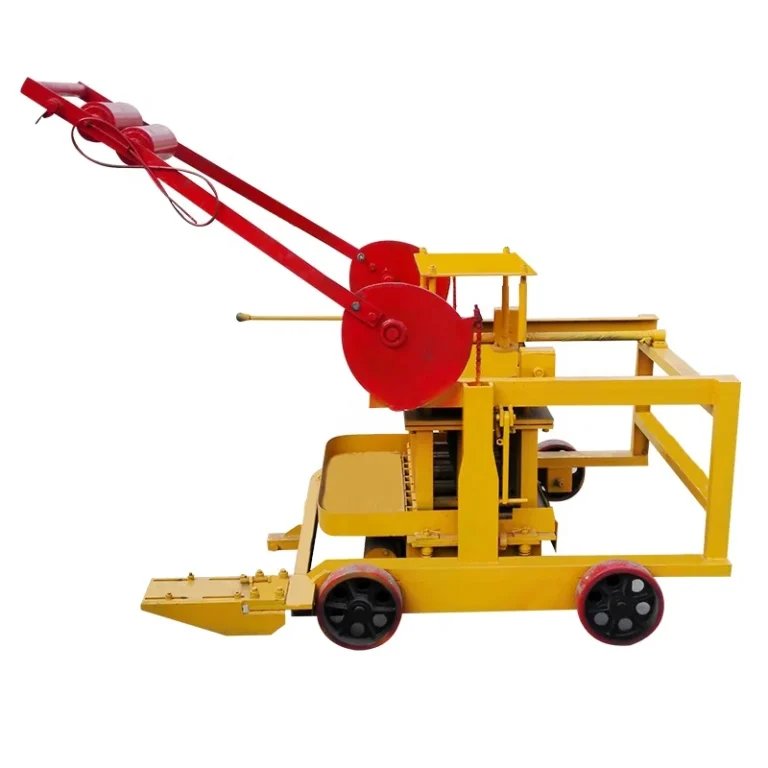
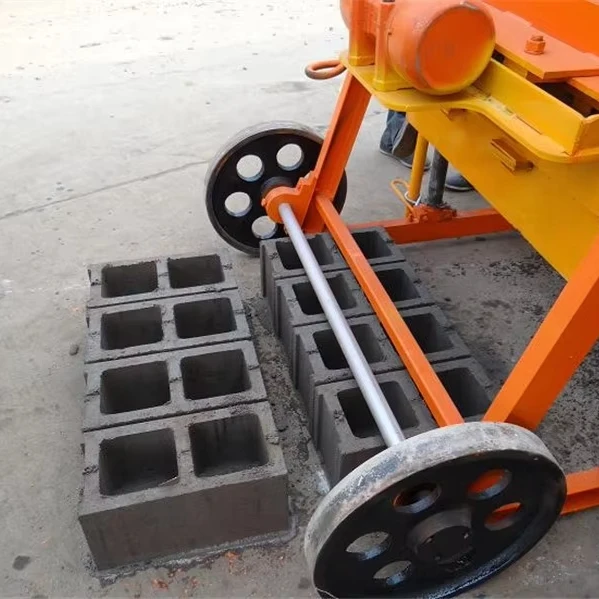
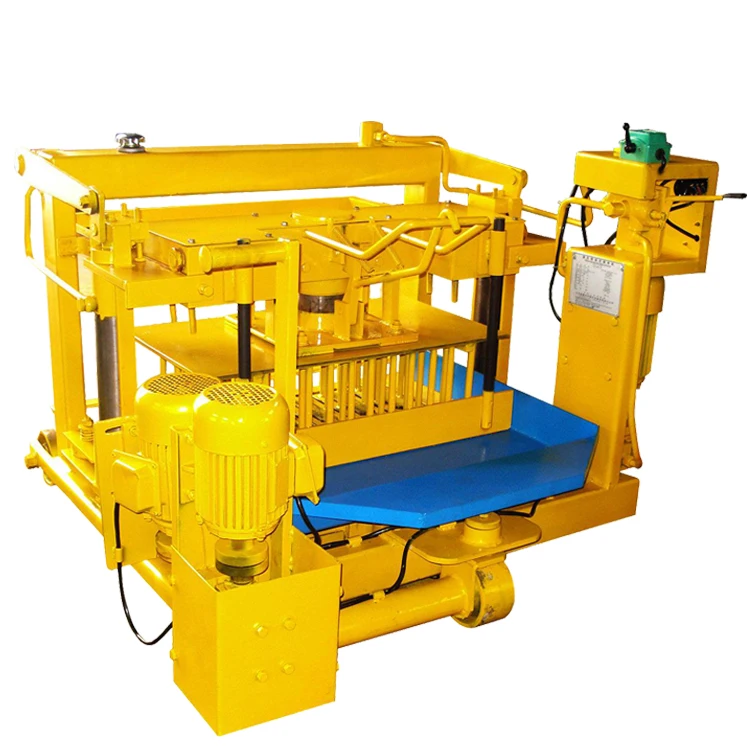
Matched System Approach — the QMY4-30 mobile block machine ships with mould, power, and material configuration aligned to your local aggregate rather than a generic catalogue setup.
Technical Specifications
| Parameter |
Value |
| Model |
QMY4-30 |
| Product Type |
Mobile Concrete Block Making Machine |
| Overall Dimensions (L×W×H) |
1300 × 1500 × 1000 mm |
| Net Weight |
950–1000 kg |
| Vibration Method |
Mold Vibration |
| Vibration Force |
28.6 kN |
| Excitation Frequency |
4500 r/min |
| Total Power |
5.95 kW |
| Output Capacity |
3000 pcs/day (basis not stated in source — confirm block format and material) |
| Raw Materials |
Concrete, fly ash, cinder, coal gangue, river sand, gravel, cement, industrial waste residue |
| Automation Level |
Manual / Mobile (egg-laying) |
| Pallet Requirement |
Not applicable |
Application Suitability
| Application |
Material or Output |
| On-site hollow block production |
Crushed stone, river sand, and cement blends |
| Solid block manufacturing at housing projects |
Fly ash, cinder, and coal gangue mixes |
| Paving block laying on development sites |
Gravel and cement with fine aggregate |
| Remote-area block supply for contractors |
Locally sourced sand and industrial residue |
What the Daily Output Figure Actually Depends On
A mobile block machine for sale quoting 3,000 pieces per day means nothing until you know which block format sits behind that number.
I have stood on project sites in West Africa watching crews count their first day’s output and come up far short of what the brochure promised. The gap almost always traces back to the block format assumed during quoting — a hollow block cycle takes longer and uses more material than a small solid paver, yet the headline number rarely distinguishes between them. With the QMY4-30, vibration force of 28.6 kN and an excitation frequency of 4,500 r/min determine how quickly each mould fills and compacts, but cycle time shifts noticeably when you move from a 150 mm solid block to a 200 mm hollow one [NEED_CITE: block format cycle time variance across mobile egg-laying machines]. Always ask your supplier to break down capacity per format before committing.

Where the QMY4-30 Fits on the Block Machine Range
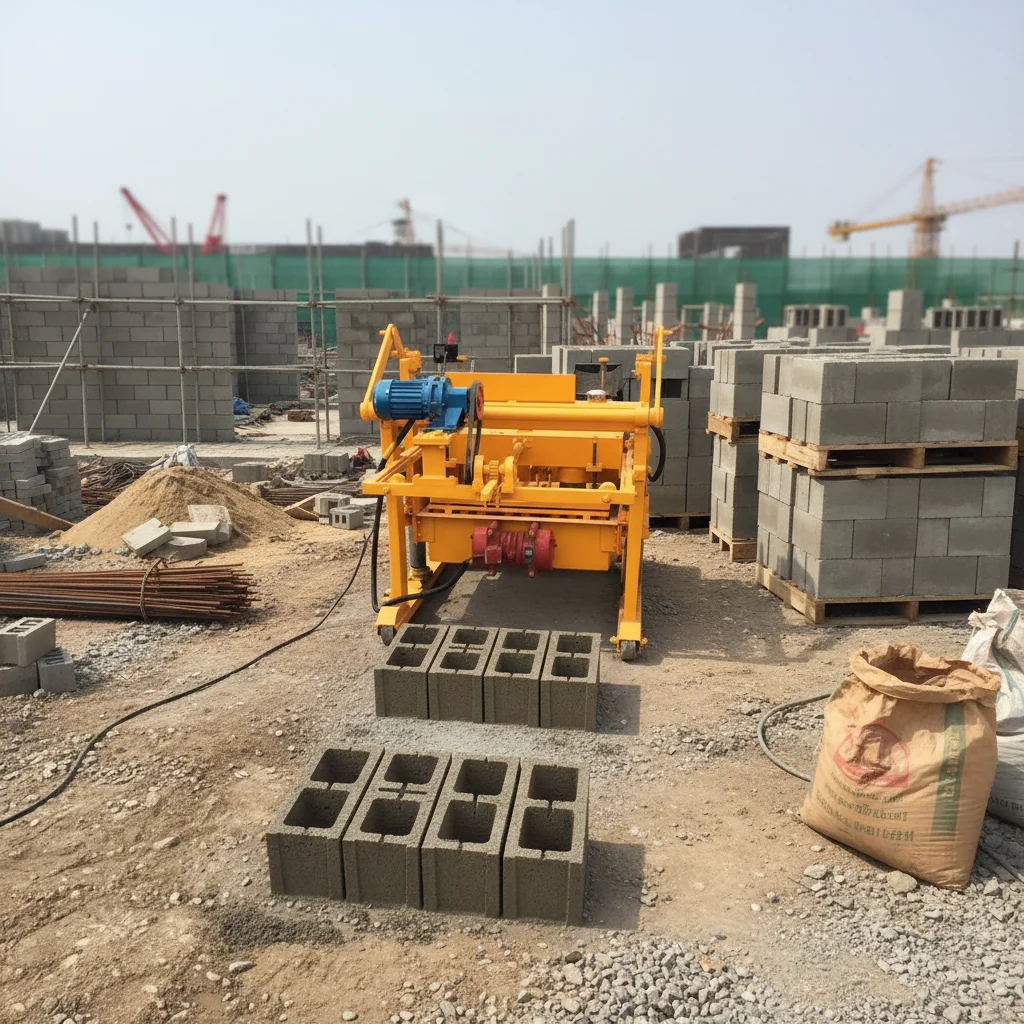
The QMY4-30 occupies the entry tier for buyers who need block production without building a fixed plant. As a mobile egg-laying unit, it lays blocks directly onto the ground surface and moves forward, eliminating pallets, curing racks, and stacking infrastructure. This makes it a practical mobile block machine for sale to contractors working on housing developments, road projects, or remote sites where capital for a stationary line is not justified. The footprint of 1300 × 1500 mm and sub-tonne weight mean it can be positioned with a small crane or forklift and relocated as the build progresses.
The Material Question You Must Answer Before Dispatch
Every site I have commissioned across sub-Saharan Africa and South Asia has taught me one rule: local aggregate dictates everything. The QMY4-30 accepts concrete, fly ash, cinder, coal gangue, river sand, gravel, and cement — a wide raw material window. But raw material flexibility on paper does not guarantee clean demoulding in practice. High-clay red soil with elevated moisture content can stick inside the mould cavity, producing blocks with torn edges and inconsistent density. I now insist on seeing photos and moisture readings of the buyer’s actual aggregate before confirming dispatch, even if it delays shipment by a week [NEED_CITE: effect of aggregate moisture and clay content on concrete block demoulding quality]. A machine that arrives configured for the wrong mix is a machine that sits idle.
Reading the Specs That Matter for Block Density
Three numbers in the QMY4-30 specification sheet directly shape the blocks you produce. The vibration force of 28.6 kN applied through the mould is the primary driver of compaction — on a mobile platform without hydraulic press-head pressure, this vibration energy must be sufficient to consolidate the mix into a structurally sound block before demoulding. The excitation frequency of 4,500 r/min works in tandem: higher frequency produces finer vibration that settles smaller aggregate particles, improving surface finish on pavers and solid blocks. Total power draw of 5.95 kW keeps utility demands low, which matters on sites running from a diesel generator rather than grid supply. The trade-off is clear — lower power constrains the vibration motor size, so mix design and aggregate gradation must complement the available force.
The Cost of Skipping Configuration Details
Buyers who order a mobile unit without confirming voltage, frequency, and mould inventory often discover the gaps only after the container arrives. A 5.95 kW motor wound for the wrong voltage will either burn out or run underpowered, reducing vibration force below the rated 28.6 kN. Mould formats not included in the original quotation mean paying for air-freight on heavy steel tooling weeks into production. On mobile machines, there is no pallet system to absorb mismatches — the ground surface becomes your curing bed, and if it is uneven or poorly prepared, every block the QMY4-30 lays will show it [NEED_CITE: ground preparation standards for mobile egg-laying block production]. These are not defects in the machine; they are gaps in the specification conversation that happened before the order was placed.
Why Buyers Source This Range Here
Block machinery is the single focus at Shandong Shiyue Intelligent Machinery, so the QMY4-30 is specified as part of a matched system — mould, power configuration, and material compatibility are evaluated together rather than sourced from separate suppliers. Machine configuration is set against the buyer’s actual mix design and local aggregate, not pulled from a default catalogue line. Custom mould design is available to buyer drawings, so if your market sells a format not in the standard range, it can be tooled for this platform. The automation level is selectable, meaning a buyer can begin with the QMY4-30 and move to a semi-automatic or automatic line later without changing the block format logic. Installation support includes operator training at the site, so crews learn cycle timing and mix adjustment on their own aggregate from day one.
Documentation & Verification
- Line layout showing the QMY4-30 operating footprint and curing area requirements
- Machine specification sheet confirming vibration force, frequency, and power draw
- Mould drawing and format list for every cavity included in the order
- Voltage and frequency confirmation document signed before production begins
- Factory test record on buyer-specified block format and mix proportion
- Operation and maintenance manual with wear parts list and replacement intervals
Installation, Commissioning & Support
- Requires a level, compacted ground surface across the full production path for consistent block laying
- Confirm site supply matches the 5.95 kW draw; dedicated circuit recommended to avoid voltage drop
- Arrives partially assembled; vibration motor and electrical panel connected during on-site commissioning
- First-run block samples tested for density and edge quality against local aggregate mix
- Operator training covers cycle pacing, mould change procedure, and daily vibration motor inspection
- Wear parts list supplied with recommended reorder quantities for mould liners and vibration components
Getting Your Configuration Right
To move forward with a QMY4-30 quotation, share the block formats your market demands, the daily volume you need per format, and the raw materials available within hauling distance of your site. Include your site voltage and frequency, the language your operators read, and whether you already have ground preparation and curing space allocated. Photos of your local aggregate and a sample block from your current supplier, if any, help confirm mould and vibration settings before production starts.
Frequently Asked Questions
Q: How is the daily output of the QMY4-30 calculated, and which block format does it assume?
A: The 3,000 pcs/day figure must be traced to a specific block format, wall thickness, and mix type before it is meaningful for your planning. A small solid block cycles faster than a large hollow block on the same mould vibration platform. Always request a capacity table broken down by each format you intend to produce, so your project schedule reflects realistic daily volumes.
Q: Where does the QMY4-30 sit compared to semi-automatic and automatic machines?
A: The QMY4-30 is an entry-tier mobile unit requiring no pallets, fixed plant, or stacking infrastructure. Semi-automatic machines add pallet handling and higher vibration force for greater density. Automatic lines include batching, stacking, and cubing for continuous high-volume output. Your investment level, site footprint, and daily volume target determine which tier fits.
Q: What electrical supply does the QMY4-30 require on-site?
A: The total power draw is 5.95 kW, which must be matched to your site voltage and frequency before the motor is wound. Confirm whether your supply is grid or generator, and whether voltage fluctuation exceeds standard tolerance. This confirmation should be documented before production to avoid rewinding or underpowered operation upon arrival.
Q: Which mould formats come with the QMY4-30, and how does mould change work?
A: The platform supports hollow, solid, paving, and curbstone moulds, but the exact formats included depend on your quotation. On a mobile egg-laying unit, mould change involves releasing the mould box, swapping the cavity insert, and resetting vibration timing. Confirm the change procedure and required tools so format switching does not consume a full shift.
Q: Can I move from the QMY4-30 to a higher tier later?
A: Yes. Starting with a mobile unit lets you validate your market, mix design, and block formats with minimal capital. When volume demands grow, a semi-automatic or automatic line can be configured around the same block formats and mould dimensions, preserving your existing product range while increasing throughput and consistency.

 Mobile block machine