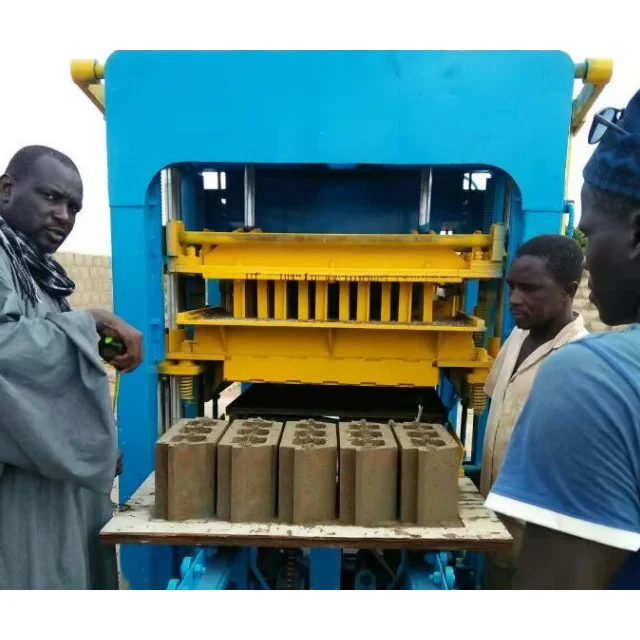
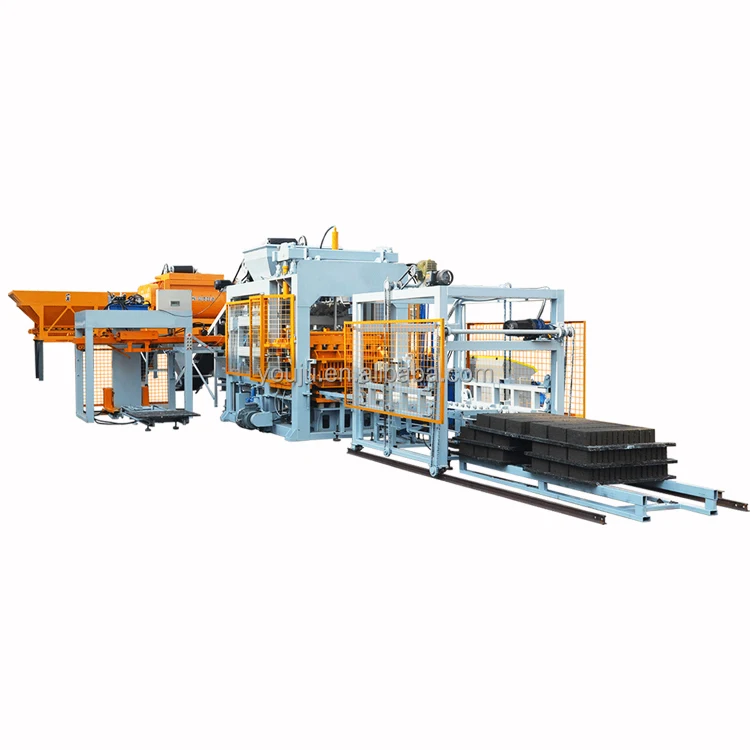
Matched System Specification — The LY4-10 hydraulic interlocking clay brick making machine is positioned within our complete block machine range with automatic feeding and pressing configured as a single matched unit, eliminating the need to source separate feeders, moulds, and handling equipment from disconnected suppliers.
Technical Specifications
| Parameter |
Value |
| Model |
LY4-10 |
| Product Type |
Hydraulic Interlocking Clay Brick Making Machine |
| Rated Power |
11 kW |
| Molding Cycle |
7-10 seconds |
| Hydraulic Pressure |
25-32 MPa |
| Net Weight |
1500 kg |
| Overall Dimensions (L×W×H) |
2260×1500×2380 mm |
| Voltage |
Customized to local standard |
| Mould Format |
Interlocking brick (four pcs per cycle) |
| Output Capacity |
Four interlocking bricks per cycle (basis not stated in source — daily output to be confirmed against working hours and block format) |
| Automation Level |
Automatic material feeding, mould pressing, and mould lifting |
| Warranty |
1 year (excluding wearing parts) |
Application Suitability
| Application |
Material or Output |
| Ecological construction projects |
Clay and cement interlocking brick production |
| On-site housing development |
Compressed earth block (CEB) production using local soil |
| Small-to-medium block plants |
Interlocking paver and wall block manufacturing |
| Building material distributors |
Adding interlocking format to existing product range |
What "Four Bricks Per Cycle" Actually Means on the Shop Floor
Real output depends entirely on the block format and mix design you run, not the cycle time alone.
I have seen buyers at trade shows in Europe and North America compare machines based on a single cycle number, only to discover after installation that their local clay-cement mix required a longer pressing phase to achieve adequate density. When a supplier quotes an interlocking clay brick making machine manufacturer without specifying which block format and material composition the cycle assumes, the daily tally often falls short of what the project schedule demands. The LY4-10 completes a cycle in 7-10 seconds producing four interlocking bricks, but translating that into a reliable shift output requires matching the hydraulic pressure profile to your specific aggregate and moisture content [NEED_CITE: impact of raw material moisture on compressed earth block density].

Where the LY4-10 Sits in the Full Machine Range
The LY4-10 occupies the compact hydraulic tier of our block machine lineup, positioned between entry-level manual presses and high-capacity fully automatic lines. Buyers surveying options for a first interlocking brick plant or a dedicated on-site production setup typically land here because the machine delivers automatic feeding and pressing without the footprint or investment level of a continuous production plant. Its 2260×1500×2380 mm dimensions allow installation in a standard workshop bay or a sheltered area on a construction site.
Matching Machine Tier to Your Project Timeline
Choosing the right tier from the full block machine range involves weighing daily volume requirements against available space and capital allocation. A construction contractor producing ecological interlocking blocks for a single housing development may find the LY4-10 sufficient, whereas a distributor supplying multiple retail outlets would likely move to a higher-tier automatic model. This machine handles the interlocking format with a mould that produces four units per press, making it a focused solution rather than a multi-format platform [NEED_CITE: block format demand patterns in regional construction markets].
How Hydraulic Pressure and Cycle Time Interact for Block Density
The 25-32 MPa hydraulic pressure range provides the compression force needed to consolidate a clay-cement mix into a structurally sound interlocking brick. Higher pressure within this range is typically applied when the aggregate contains a greater proportion of fine particles, requiring more force to expel trapped air and achieve uniform density. The 7-10 second molding cycle allows the hydraulic ram to reach full pressure and hold briefly before the mould lifts — a sequence that prevents premature release cracking. An 11 kW rated power supply drives both the hydraulic pump and the automatic feeding mechanism, meaning the electrical circuit must be sized to handle simultaneous motor starts without voltage drop that could interrupt a pressing cycle.
The Cost of Overlooking Voltage and Control Language Before Shipment
Arriving at a job site to find the machine wired for a voltage standard that does not match the local grid is a delay that compounds quickly. I have walked past machines sitting idle at ports because the frequency was wrong for the destination country, and the local electrician could not source a compatible transformer on short notice. Confirming the voltage, frequency, and PLC display language before production begins removes a variable that otherwise sits outside the buyer’s control until the container opens [NEED_CITE: voltage and frequency standards by export market].
Why Sourcing the Press and Mould from One Supplier Matters
Specifying the LY4-10 as a single system — press, mould, and feeder — means the hydraulic pressure curve is tuned to the interlocking brick geometry from the start, rather than adjusted on site after discovering the mould requires a different compression profile. Block machinery is our single focus, so the machine, mould, and supporting handling are documented as one matched set. The configuration is set against your actual mix design and local aggregate, not pulled from a catalogue default. Mould design covers the interlocking formats your market sells, including custom drawings when a project specifies a non-standard profile. Automation level is selectable, so a buyer can start with the LY4-10 and move to a higher-tier line as demand grows.
Documentation & Verification
- Line layout and capacity calculation stating the interlocking block format assumed in daily output
- Machine specification sheet confirming hydraulic pressure range, cycle time, and mould configuration
- Voltage and control language confirmation documented before production begins
- Mould drawing and interlocking format list supplied for buyer approval
- Factory test record on your specific clay-cement mix ratio before dispatch
Installation, Commissioning & Support
- Foundation pad must support 1500 kg static load plus dynamic hydraulic press forces within the 2260×1500 mm footprint
- Dedicated electrical circuit sized for 11 kW rated power with voltage customized to local grid standard before shipment
- Machine ships as a single assembled unit; on-site placement requires overhead clearance matching the 2380 mm height
- First-run commissioning includes hydraulic pressure calibration across the 25-32 MPa range against your mix design
- Operator training covers automatic feeding sequence, mould change procedure, and daily maintenance checkpoints
What to Include in Your Inquiry
To match the right machine tier from our range to your project, provide the specific interlocking brick dimensions you plan to produce, the composition of your local clay or soil aggregate, and the daily volume your schedule requires. Include your site voltage and frequency so the electrical system can be configured before dispatch, and note whether existing pallet handling or curing infrastructure will be used alongside the press.
Frequently Asked Questions
Q: How do I verify what daily output the LY4-10 can actually deliver?
A: Request a capacity calculation that states the interlocking brick format and working hours assumed. A cycle time of 7-10 seconds producing four bricks is the starting point, but real daily output depends on your mix design, loading time, and shift length. We provide this calculation before quotation so the figure matches your actual product.
Q: Can the voltage and frequency be set for my local grid?
A: Yes. Voltage is customized to your local standard before production begins, and the frequency is matched accordingly. We document the exact voltage, frequency, and control language in writing so there is no mismatch when the machine arrives at your site.
Q: Where does the LY4-10 fit compared to larger automatic block lines?
A: The LY4-10 sits in the compact hydraulic tier, suited for small-to-medium interlocking brick production with a contained footprint. Higher-tier automatic lines offer greater volume and fully automatic stacking, but require more floor space and capital. This model serves as an entry point that can be supplemented as demand grows.
Q: Are custom interlocking brick mould designs available?
A: Yes. We supply moulds for standard interlocking formats and can engineer custom profiles based on your drawings or a sample brick. The mould drawing and format list are provided for your approval before production, ensuring the geometry matches what your market requires.
Q: What site conditions does the LY4-10 require for installation?
A: The machine needs a level foundation supporting 1500 kg within a 2260×1500 mm footprint, overhead clearance of at least 2380 mm, and an electrical circuit matching the confirmed voltage and frequency. A sheltered area is recommended to protect the hydraulic system from weather exposure.

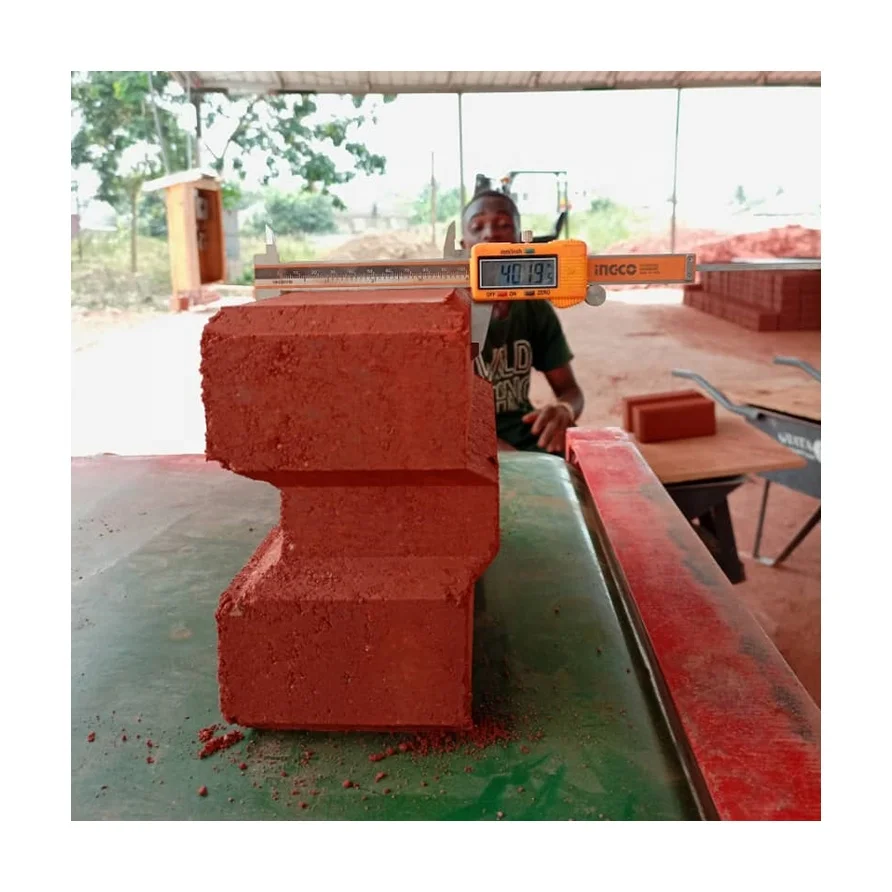
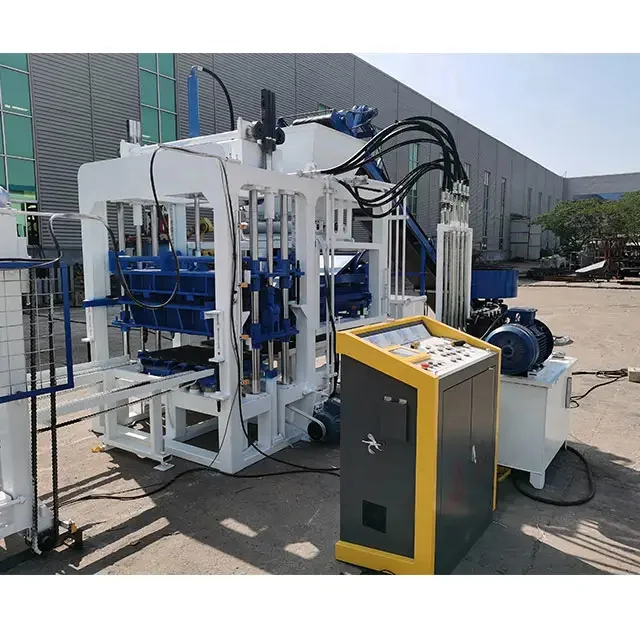 Semi automatic block