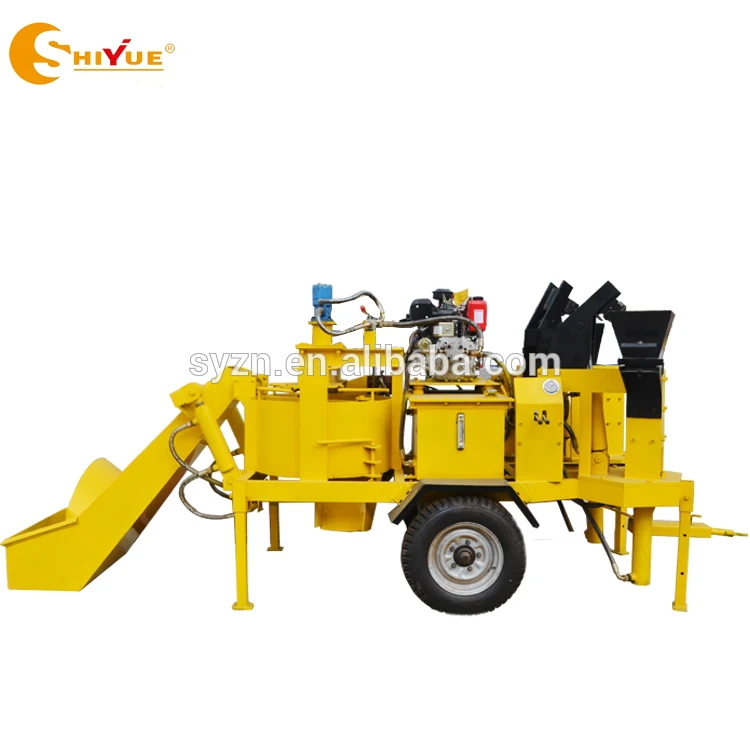
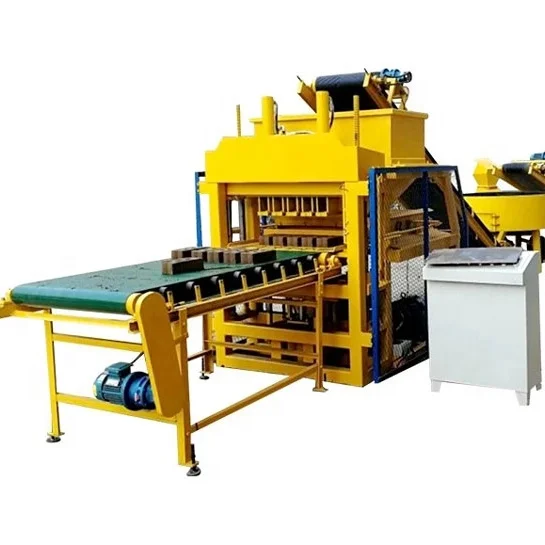
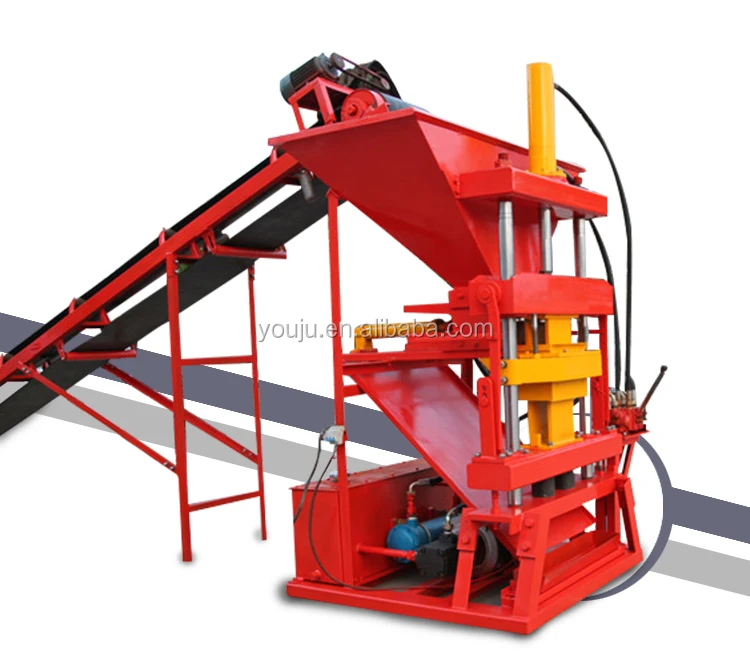
Hydraulic and mould matching — every LY4-10 configuration is set against the buyer’s clay sample and target interlocking brick format before the machine is built, not pulled from a catalogue default.
Technical Specifications
| Parameter |
Value |
| Model |
LY4-10 |
| Product Type |
Clay Interlocking Brick Making Machine |
| Rated Power |
11 kW |
| Voltage & Frequency |
Configurable to buyer’s local supply (basis to be confirmed) |
| Control System |
Automatic operation with PLC (brand and language to be confirmed) |
| Overall Dimensions (L×W×H) |
2260 × 1500 × 2380 mm |
| Net Weight |
1500 kg |
| Hydraulic Pressure |
25–32 MPa |
| Moulding Cycle |
7–10 seconds (basis to be confirmed) |
| Mould Format |
Interlocking brick, four pieces per cycle (brick dimensions to be confirmed) |
| Output per Cycle |
Four pieces (basis to be confirmed) |
| Automation Level |
Automatic material feeding, mould pressing and mould lifting |
| Warranty |
1 year (excluding wearing parts) |
Application Suitability
| Application |
Material or Output |
| Interlocking clay brick production |
Local red soil, laterite and sandy clay mixed with stabiliser |
| Cement interlocking brick production |
Cement, crushed stone dust and fine aggregate blends |
| Ecological brick for housing projects |
On-site soil stabilisation for low-cost wall construction |
| Building material distribution |
Clay and cement interlocking formats added to existing product ranges |
Why "Four Bricks per Cycle" Is Only Half the Story
Cycle time and brick format together determine what the LY4-10 actually delivers on a working day.
When a clay interlocking brick making machine manufacturer quotes output in cycles per hour, the number looks reassuring until you ask which brick format that figure assumes. I once watched a buyer in West Africa receive a machine rated for a seven-second cycle, only to find that the local red clay required a longer press dwell to reach acceptable density. The real cycle stretched well beyond the quoted range, and daily output dropped to roughly half what the proforma invoice implied. The rainy season did not wait for the commissioning engineer. [NEED_CITE:]
Where the LY4-10 Sits in the Block Machine Range
The LY4-10 occupies the mid-tier of our automatic clay interlocking brick machine range. Below it, semi-automatic models demand manual pallet handling and suit smaller workshops with lower daily targets. Above it, higher-capacity lines add automatic stacking, pallet circulation and cubing for buyers running continuous shifts. The LY4-10 is positioned for entrepreneurs establishing a dedicated interlocking brick plant or contractors producing on-site to cut transport costs.
How Automation Level Shapes the Plant Layout
On this clay interlocking brick making machine, automatic material feeding, mould pressing and mould lifting remove the heaviest manual steps from the operator’s routine. The machine still requires someone to move cured bricks and manage the raw material supply. Buyers who later need higher throughput can add pallet feeding and stacking modules, but the upgrade path depends on the original frame and hydraulic specification chosen at order stage. [NEED_CITE:]

Reading the Hydraulic Pressure and Cycle Time Together
Hydraulic pressure in the 25–32 MPa range is the force that compresses the clay or cement mix into the interlocking profile. Pressure alone does not guarantee brick strength; the moulding cycle of 7–10 seconds must be long enough for the material to consolidate under that pressure. Dense laterite clay may need the upper end of the pressure range and a longer dwell, while a cement-rich mix can reach target density faster. The rated power of 11 kW must sustain both the hydraulic pump and the feeding mechanism simultaneously, which is why voltage stability at the site matters as much as the pressure rating itself. The interlocking profile depth and lug geometry further influence how much pressure the mould can tolerate before flash appears on the brick edges.
The Cost of Skipping the Soil Sample
I have seen buyers confirm an order based on a brochure cycle time, then discover during commissioning that their local clay shrinks differently from the test sample the factory used. Moulds designed for one shrinkage rate produce interlocking lugs that either jam during demoulding or leave gaps too wide for mortar. Re-cutting the mould after shipment means weeks of downtime and airfreight charges that erase any savings from the original purchase. [NEED_CITE:] Matching the mould to the buyer’s actual soil before production begins is the single step that prevents this.
Why Buyers Choose This Configuration Source
The LY4-10 is specified as part of a matched system — machine, mould, and pallet are selected together rather than sourced from separate suppliers. The mould format and interlocking profile are designed against the buyer’s brick drawings, not a generic catalogue shape. Voltage and frequency are confirmed before the electrical panel is wired, avoiding the commissioning delays that occur when a 50 Hz motor arrives at a 60 Hz site. Automation level is selectable at order, so a buyer can start with the standard automatic cycle and plan a future stacking upgrade on the same frame.
Documentation & Verification
- Line layout drawing showing LY4-10 footprint with interlocking brick format assumed
- Machine specification sheet confirming hydraulic pressure range per selected mould
- Mould drawing listing interlocking lug dimensions and profile tolerances
- Voltage, frequency and PLC language confirmation signed before production starts
- Factory test record run on buyer’s specified clay or cement mix ratio
Installation, Commissioning & Support
- Foundation pad sized to the 2260 × 1500 mm footprint with anchor bolt plan
- Dedicated circuit matching the confirmed voltage and 11 kW rated power draw
- Machine arrives as a single skid; hydraulic and electrical connections on site
- First-run cycle timed against the agreed moulding cycle for the chosen brick format
- Operator training covers mould change procedure and daily hydraulic fluid checks
- Wear parts list identifies seals, hydraulic hoses and mould liner replacement intervals
What to Include in Your Enquiry
Tell us the interlocking brick dimensions your market demands and the clay or cement mix you intend to use. Share your local voltage and frequency so the control panel is wired correctly before dispatch. If you have an existing curing yard or forklift, note the pallet size that fits your handling equipment so the line is specified around it.
Frequently Asked Questions
Q: How is daily output calculated for the LY4-10 and which brick format does it assume?
A: Output depends on the moulding cycle and the number of cavities per mould. For the LY4-10, four interlocking bricks are produced per cycle. The cycle time varies with mix density and brick thickness. We provide a capacity calculation sheet that states the exact brick format and mix assumed, so buyers see realistic daily throughput before confirming the order.
Q: Where does the LY4-10 sit in the full machine range compared to other models?
A: The LY4-10 is a mid-tier automatic press in our clay interlocking brick machine range. Semi-automatic models below it require more manual handling and suit smaller plants. Higher-tier models above it include automatic stacking and pallet circulation for continuous-shift operations. The LY4-10 fits buyers setting up a dedicated interlocking brick line with room to add automation later.
Q: What plant footprint and utility requirements does a complete LY4-10 line need?
A: The machine itself measures 2260 × 1500 × 2380 mm and draws 11 kW. Beyond the press footprint, you need space for raw material storage, a mixing station, a curing area sized to your daily output, and clear pathways for pallet movement. We supply a line layout drawing that maps every station to your site dimensions.
Q: Can the LY4-10 be upgraded later to include automatic stacking?
A: The frame and hydraulic system can accommodate add-on modules for pallet feeding and stacking, provided the original specification reserved the necessary mounting points and electrical capacity. We discuss the upgrade path during the initial configuration so the machine is built ready for future expansion without a full rebuild.
Q: What voltage and frequency options are available before shipment?
A: Voltage and frequency are configured to the buyer’s local supply. This is confirmed in writing before the electrical panel is assembled. The PLC display language is set at the same stage. Confirming these details early prevents commissioning delays that arise when the wrong motor or control transformer arrives on site.

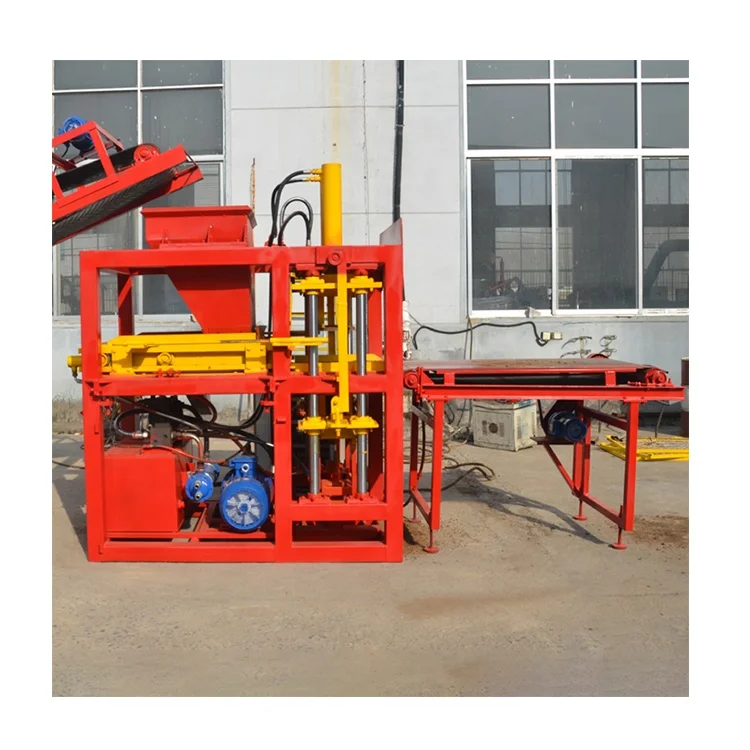 Clay interlocking brick