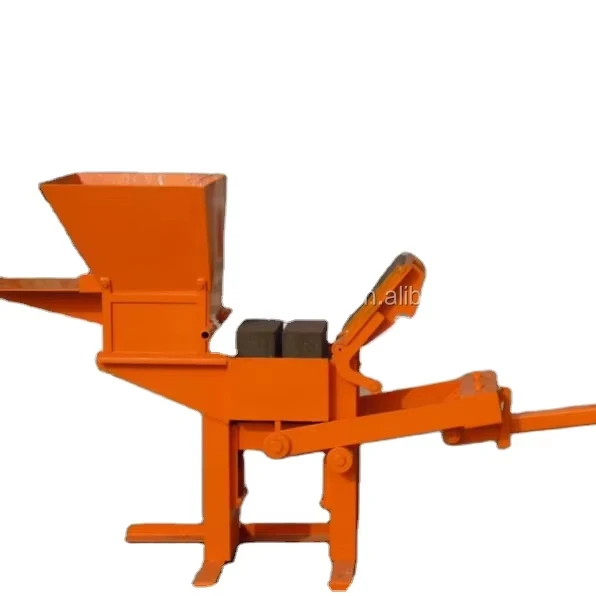
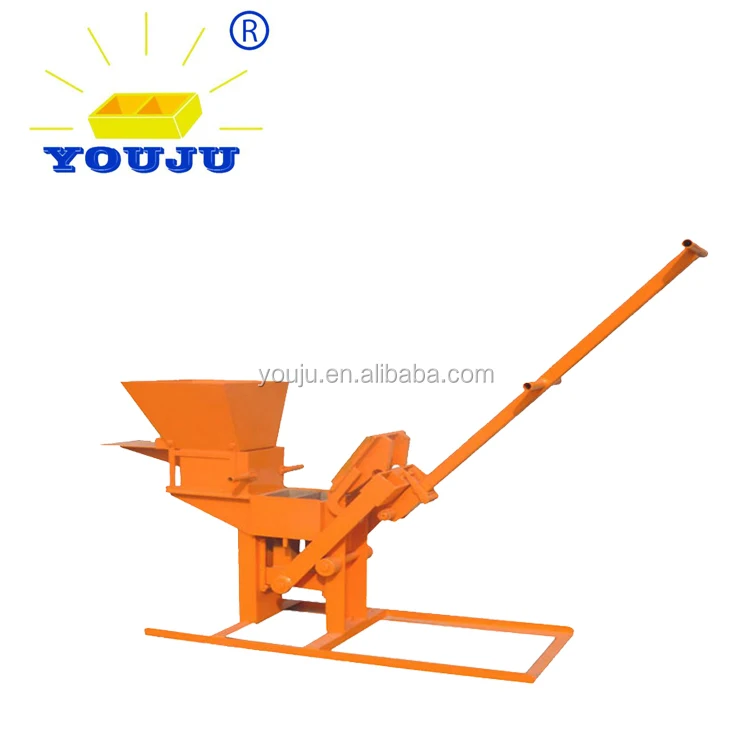
Matched System Design — The LY2-40 manual clay interlocking brick making machine is specified with compatible moulds, pallets and mixers as one verified line, not sourced from separate suppliers.
Technical Specifications
| Parameter |
Value |
| Model |
LY2-40 |
| Product Type |
Manual Clay Interlocking Brick Making Machine |
| Automation Level |
Fully manual operation (no electrical or hydraulic power) |
| Overall Dimensions (L×W×H) |
1600 × 700 × 1200 mm |
| Net Weight |
200–240 kg |
| Mould Format |
Interlocking brick (changeable moulds for various formats available) |
| Mobility |
Steel wheels, egg-laying type |
| Recommended Mixer Pairing |
JFA-1 or JQ350 Mixer |
| Warranty |
1 Year |
Application Suitability
| Application Scenario |
Typical Material or Environment |
| Off-grid rural housing projects |
Soil-cement mix without grid electricity |
| Community development initiatives |
Local clay/soil with high sand content |
| First-time entrepreneur brick plants |
Minimal capital, no fixed curing racks |
| Remote contractor on-site production |
Mobile egg-laying on leveled ground |
What "400 to 1000 Pieces per Day" Leaves Out for Manual Presses
Daily output is entirely dependent on the operator’s physical pace, the soil-cement mix consistency, and the specific interlocking brick dimensions being formed.
When buyers see a capacity range like 400–1000 pcs/day for a manual clay interlocking brick making machine, the missing context is the exact block format and the human labor variable. A small interlocking paver can be cycled much faster than a large, thick structural block. Furthermore, the "1000" figure assumes optimal soil moisture, perfect material flow from the mixer, and zero operator fatigue over an eight-hour shift [NEED_CITE: realistic daily output calculations for manual brick presses]. In my experience deploying equipment across African job sites, the actual sustainable output of a manual press usually settles in the lower third of the quoted range once the local red soil’s specific clay-to-sand ratio is factored into the cycle time.
Positioning the Entry-Level Manual Tier
Within the complete block machine range, the LY2-40 manual clay interlocking brick making machine represents the foundational, zero-infrastructure tier. It is designed for buyers who are either validating a new market for interlocking bricks or operating in regions where electrical reliability is nonexistent. This machine requires no PLC configuration, no hydraulic maintenance, and no three-phase power installation, making it the most accessible entry point for decentralized production.
The Egg-Laying Production Footprint
Unlike stationary presses that require a pallet return system and a dedicated stacking station, this mobile unit operates on an egg-laying principle. The operator pushes the machine forward on its steel wheels after each compaction cycle, leaving the newly formed interlocking brick directly on the curing ground. This eliminates the need for wooden or PVC pallets, significantly reducing the initial capital outlay and the ongoing replacement cost for small-scale operations [NEED_CITE: comparison of pallet-based versus egg-laying brick production costs].
Understanding Compaction Without Vibration
Because this machine lacks a vibration motor or hydraulic ram, the density and structural integrity of the interlocking brick rely entirely on the manual force applied to the lever and the quality of the soil-cement mix. A 30–40 second molding cycle is typical, but achieving consistent interlocking profiles requires a well-graded soil where the clay acts as a binder and the sand provides the skeleton. If the local aggregate is too sandy, the manual pressure alone may not generate enough green strength for the brick to hold its interlocking shape when the mould is lifted.

The Hidden Cost of Ignoring Soil Mechanics
Ordering a manual press based on catalogue output figures without testing the local soil-cement mix is a frequent error. If the clay content in the local soil is insufficient, the interlocking bricks will crumble during the curing process, regardless of the machine’s build quality. This leads to abandoned projects and a local market that distrusts interlocking technology, effectively killing the buyer’s business before it scales to a powered line.
Why Specify From a Single Source
We treat block machinery as a single focus, meaning the LY2-40 is not just a standalone press but the center of a matched system. The recommended JFA-1 or JQ350 mixers are selected to ensure the batch size aligns with the manual press cycle, preventing the operator from standing idle while waiting for the next mix. Our mould design process accounts for the specific wear patterns caused by abrasive local soils, and our documentation includes a factory test record using a specified soil-cement ratio.
Documentation & Verification
- Line layout showing curing area required for egg-laying production at target daily volume.
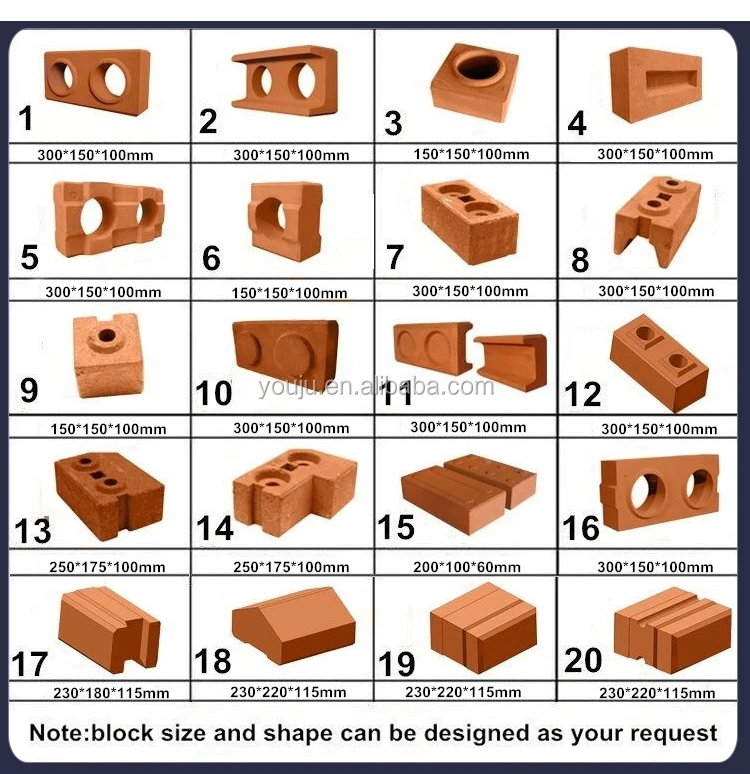
- Mould drawing and format list confirming included interlocking profiles and optional custom designs.
- Factory test record demonstrating cycle times with a specified soil-cement mix ratio.
- Operation manual covering manual lever maintenance and mould changeover procedures.
- Packing photographs verifying machine condition and component completeness before dispatch.
Installation, Commissioning & Support
- Requires a leveled, hard-packed dirt or concrete floor for consistent egg-laying brick formation.
- No electrical connection needed; verify local availability of manual grease for lever pivot points.
- Arrives partially assembled; two operators can reposition the 200–240 kg unit using the steel wheels.
- Initial commissioning focuses on adjusting the mix water content to achieve clean mould release.
- Includes training on identifying soil-cement consistency by hand to maintain brick density.
- Wear parts list focuses on the mould cavity liners and manual linkage pins subject to friction.
Planning Your First Manual Production Run
To properly configure a manual clay interlocking brick making machine for your site, we need to understand your local raw materials and market targets. Please provide the results of a basic soil sieve analysis or describe the typical clay and sand composition in your area. We also need to know the specific interlocking brick dimensions your local builders prefer and the total curing area you have available for ground-level drying. This information allows us to confirm if the manual tier is the correct starting point for your project.
Frequently Asked Questions
Q: How do I verify the daily output claim for the LY2-40 manual clay interlocking brick making machine?
A: The 400–1000 pcs/day range must be validated against your specific interlocking brick format and the soil-cement mix ratio. We calculate the realistic capacity based on a sustainable 30–40 second cycle and the physical limits of manual operation over a standard shift, ensuring the quote matches your actual site conditions.
Q: Where does this manual press fit if I plan to expand later?
A: The LY2-40 sits at the entry point of our range. Many buyers use it to establish a local market for interlocking bricks with minimal risk. Once demand is proven, the transition to a semi-automatic or fully automatic stationary line is planned as a separate phase, utilizing different mould and pallet systems.
Q: Can I get custom interlocking profiles for the LY2-40?
A: Yes, we supply moulds for various formats, including custom designs based on buyer drawings. The manual mould change system allows you to switch between standard interlocking profiles and specialized shapes as your market requirements evolve, provided the manual leverage can generate sufficient compaction for the new geometry.
Q: What curing area is needed for egg-laying production?
A: Egg-laying machines require a flat, prepared ground area where the bricks are left to cure in place. The required footprint depends on your daily target output and the curing time needed for your specific soil-cement mix, which can vary based on local humidity and temperature.
Q: How does the mixer choice affect the manual press operation?
A: The recommended JFA-1 or JQ350 mixers are sized to match the manual cycle. If the mixer batch is too large, the mix will dry out before the manual operator can press it all; if too small, the operator spends too much time waiting for the next batch, reducing the daily output.

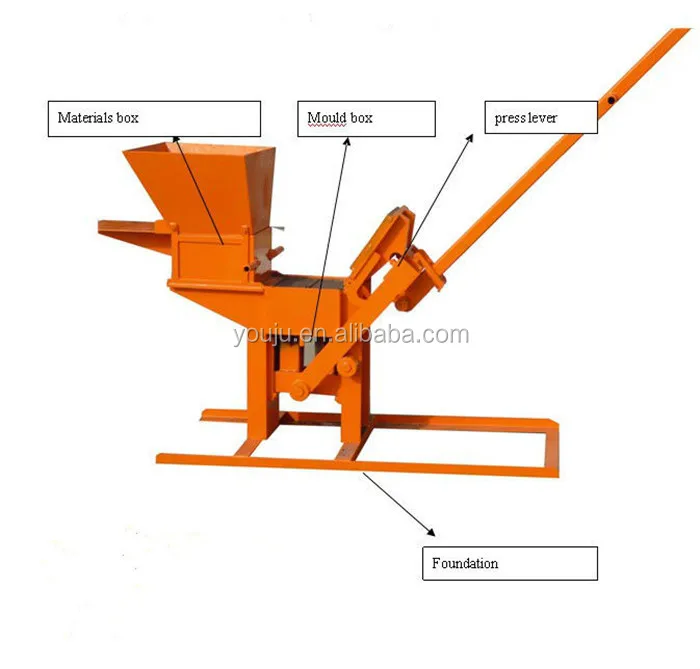
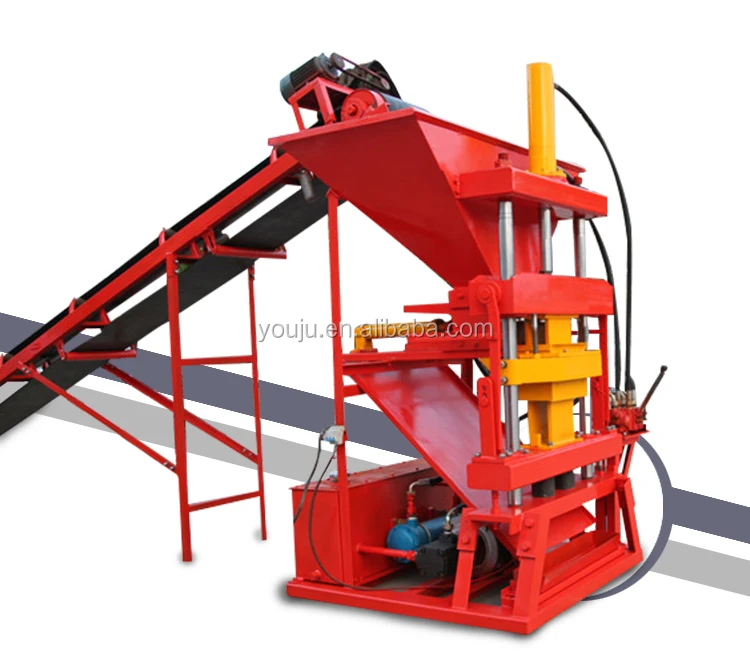 Clay interlocking brick