Fully Matched Production Line — Every LY2-40 is configured against your actual soil-cement mix and target interlocking brick profile before shipment, preventing the output gaps that happen when machines run on catalogue defaults.
Technical Specifications
| Parameter |
Value |
| Model |
LY2-40 |
| Product Type |
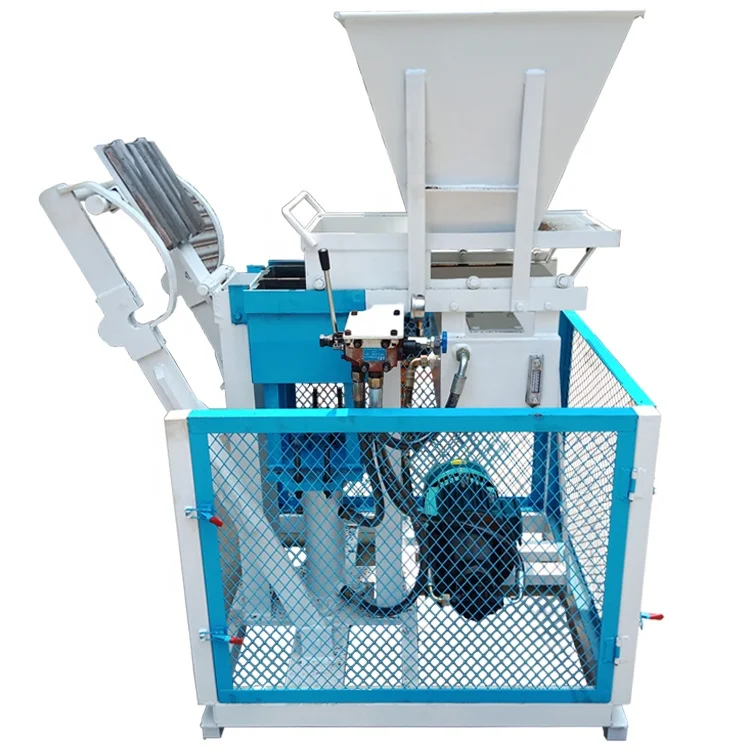
Manual Clay Interlocking Brick Making Machine |
| Total Power |
No Power, Completely Manual |
| Molding Cycle |
30-40s (basis not stated in source — confirm block format / material / thickness) |
| Capacity |
400-1000 pcs/day (basis not stated in source — confirm block format / material / thickness) |
| Overall Dimensions (L×W×H) |
1600 x 700 x 1200 mm |
| Net Weight |
200-240 kgs |
| Lifting System |
Manually operated |
| Mobile Device |
Steel wheels |
| Mould Change |
Moulds changeable for various blocks |
| Basic Equipment (Optional) |
JFA-1 Mixer or JQ350 Mixer |
| Warranty |
1 Year |
Application Suitability
| Application |
Material or Output |
| Off-grid interlocking brick production |
Local clay, laterite, or red soil blended with cement |
| On-site housing project construction |
Soil-cement mix prepared and molded directly at the building location |
| Small-scale community block plant |
Interlocking pavers and wall blocks from locally sourced earth |
| First-time entrepreneur block venture |
Low-volume clay brick output with zero electrical infrastructure |
Why "400 to 1000 Bricks a Day" Means Nothing Without the Format
The daily output of any Manual Clay Interlocking Brick Making Machine manufacturer quotes depends entirely on the brick dimensions and the soil-cement mix behavior.
I once watched a buyer in West Africa plan a full construction schedule around a quoted daily capacity figure. When the machine arrived and started running local laterite, the molding cycle stretched well beyond what had been assumed, and the daily count fell far short of the plan. The problem was not the machine. The problem was that the capacity number had been stated without specifying which interlocking brick size it assumed or what moisture content the local soil carried [NEED_CITE: importance of stating block format assumptions in capacity calculations]. The LY2-40 produces at a cycle that varies with your specific block profile, soil type, and operator rhythm. We state the format and shift hours alongside any capacity figure so your planning rests on real numbers.

Where the LY2-40 Sits in the Full Block Machine Range
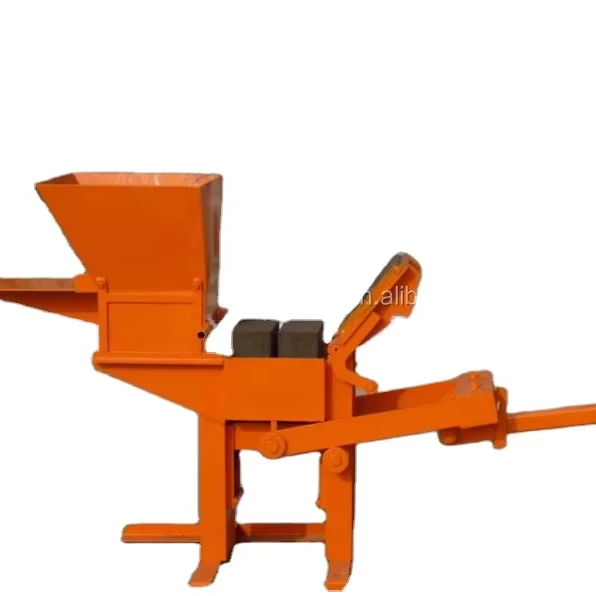
The LY2-40 occupies the zero-power entry tier of our block machinery lineup. It exists for buyers who need interlocking clay brick production in locations where electricity is unreliable or entirely absent. Unlike semi-automatic or fully automatic tiers that depend on hydraulic pressure and PLC-controlled cycles, this machine relies on manual lever force and gravity-assisted demolding. That makes it the most accessible starting point for entrepreneurs and field contractors who want to produce interlocking bricks without investing in generators or grid connections.
Mobility and On-Site Production Logic
Steel wheels integrated into the LY2-40 frame allow a single operator to relocate the unit across a construction site or between curing areas. This mobility matters when the production point needs to follow the building activity rather than the other way around. Contractors producing interlocking bricks for a housing development can position the machine near the mixing area in the morning and shift it closer to the laying crew by afternoon. The manual design eliminates the cable routing and power distribution that fixed-plant machines demand [NEED_CITE: site logistics for mobile block production in developing regions].
How Mould Dimensions and Soil Consistency Drive the Real Cycle Time
The 1600 x 700 x 1200 mm frame houses a mould chamber that accepts interchangeable moulds for different interlocking brick profiles. The 30-40 second cycle figure only holds when the soil-cement mix has the right moisture content and the operator maintains a steady compression rhythm. Clay with high moisture content requires longer dwell time in the mould before the interlocking brick holds its shape during demolding. The 200-240 kg net weight provides enough mass to resist shifting during lever compression, but the operator must still ensure a stable ground surface for consistent block geometry across every cycle.
The Cost of Skipping the Sample Test Before Ordering
I have seen buyers commit to a machine configuration based on a brochure capacity figure, only to discover during commissioning that their local clay requires a different mould release angle or a longer stabilization period. When soil behavior is not verified before the mould is finalized, the interlocking bricks crack during demolding or fail to achieve the compressive strength the construction specification demands [NEED_CITE: soil-cement compatibility testing for interlocking brick production]. The result is weeks of lost production while replacement moulds are manufactured and shipped. Sending a soil sample and specifying your exact target brick dimensions before the order is placed eliminates this risk entirely.
Why Sourcing the Machine and Mould From One Supplier Matters
When the press, mould, and optional mixer come from separate vendors, nobody takes responsibility for the output quality at the end of the line. Our approach with the LY2-40 treats the machine, its interchangeable moulds, and the paired JFA-1 or JQ350 mixer as a single matched system. The mould profiles are designed to work with the manual compression force this specific frame delivers, not borrowed from a hydraulic machine catalogue. We configure the mould to your market’s interlocking brick format based on drawings you approve before production begins. Installation guidance and operator training cover the full workflow from soil preparation through curing, and wear parts along with replacement moulds remain available through a single supply chain rather than requiring you to coordinate multiple vendors.
Documentation & Verification
- Line layout with capacity calculation stating your exact interlocking brick format and shift duration
- Mould drawing and format list confirming the interlocking profile approved for your market
- Factory test record showing cycle performance on your specified soil-cement mix ratio
- Operation manual covering manual lever maintenance and mould change procedures
- Voltage and control language confirmation for any paired JQ350 automated mixer
Installation, Commissioning & Support
- Stable ground surface preparation for the 1600 x 700 mm footprint with no foundation bolts required
- No electrical circuit needed for the LY2-40 itself; dedicated supply for optional JQ350 mixer
- Machine arrives fully assembled on steel wheels; ready for production after positioning
- On-site commissioning includes first-run mould adjustment for your soil-cement consistency
- Operator training on manual compression rhythm and interlocking brick demolding technique
- Wear parts list covering lever pivot points and mould liner replacement intervals
What to Include in Your Inquiry
Tell us the specific interlocking brick dimensions your market demands and the type of soil available at your site. Share your target daily output based on the number of working hours you plan to run. Let us know whether your location has reliable electricity for an optional JQ350 mixer or if fully manual operation with a JFA-1 mixer is the only viable configuration.
Frequently Asked Questions
Q: How is the 400-1000 pcs/day capacity calculated for different interlocking brick dimensions?
A: The daily output range depends on the specific brick size, soil-cement mix moisture content, and operator cycle consistency. A smaller interlocking profile with fast-setting soil may approach the upper range, while a larger format with high-clay material extends the molding cycle. We calculate your realistic daily figure based on your confirmed brick dimensions and shift hours before quoting.
Q: What soil and cement mix design is required for optimal interlocking brick strength?
A: The ideal ratio depends on your local clay composition, particularly its sand-to-clay ratio and natural moisture content. Typically, laterite or red soil blended with cement at a controlled moisture level produces interlocking bricks that hold their profile during demolding and cure to structural strength. We recommend sending a soil sample so the mix design can be verified before mould finalization.
Q: How long does it take to manually change the mould on the LY2-40?
A: Mould changeover involves releasing the retaining mechanism and swapping the mould insert within the frame. For an experienced operator, this takes a moderate amount of time and requires no specialized tools. The exact duration depends on the mould complexity and the interlocking profile being installed. We include the changeover procedure in the operator training during commissioning.
Q: What pallet size or curing surface is needed for this mobile machine?
A: The LY2-40 demolds interlocking bricks directly onto the ground or a prepared flat surface rather than onto pallets. The curing area needs to be level and accessible from the machine’s steel-wheel position. The required surface area depends on your daily output volume and the curing duration your local climate demands before the bricks can be stacked or laid.
Q: Where does the LY2-40 sit in your full machine range compared to semi-automatic options?
A: The LY2-40 is the zero-power entry tier, designed for off-grid locations and low-investment startups. Semi-automatic machines in our range add hydraulic compression, electric vibration, and pallet-based handling for higher daily throughput. The right tier depends on your site’s electricity availability, target output volume, and whether your project justifies the higher investment of an automated line.

 Clay interlocking brick