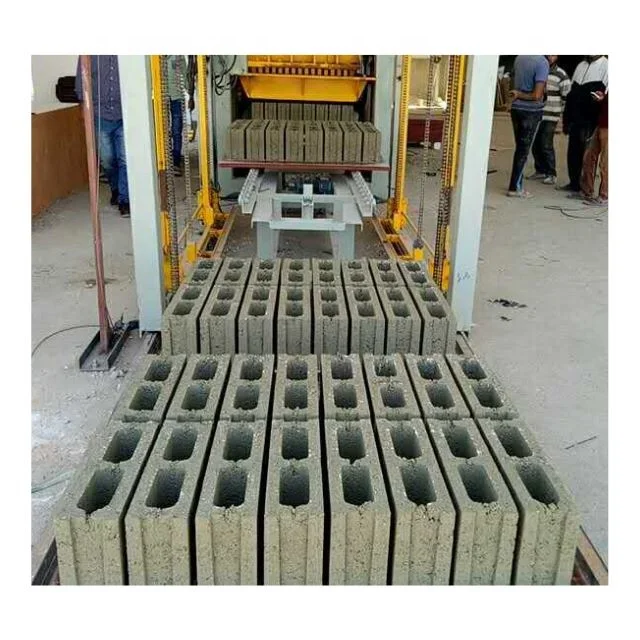
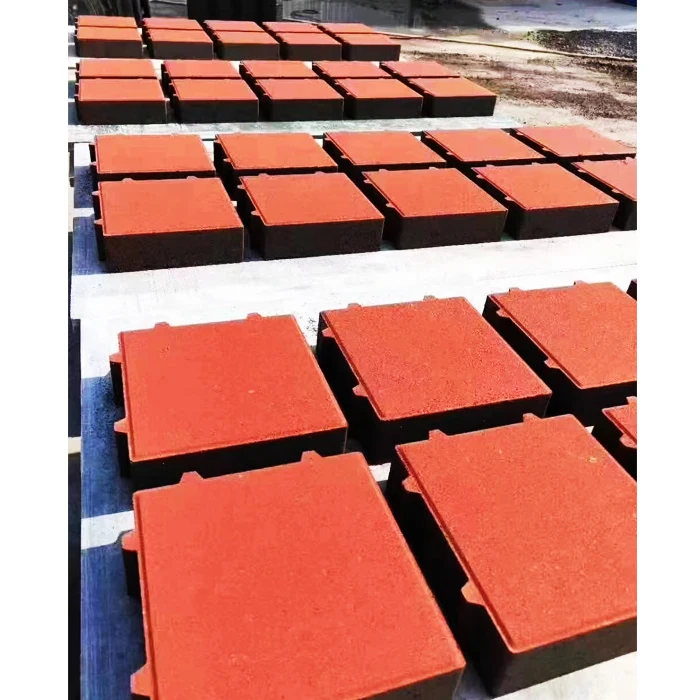
Matched System Sizing — The QTJ4-25 kerb stone brick making machine manufacturer configures press, mould, pallet, and handling as one verified set, so capacity figures reflect the actual block format you intend to produce.
Technical Specifications
| Parameter |
Value |
| Model |
QTJ4-25 |
| Product Type |
Kerb Stone Brick Making Machine |
| Overall Dimensions (L×W×H) |
3060 × 1730 × 2580 mm |
| Rated Pressure |
16–21 MPa |
| Main Vibration Form |
Platform Vibration |
| Vibration Frequency |
4200 r/min |
| Vibration Force |
45.5 kN |
| Pallet Size |
850 × 550 mm |
| Molding Cycle |
25–30 s (basis not stated in source — confirm block format and material) |
| Overall Power |
14.9 kW (source value — verify against manufacturer catalog) |
| Total Mass |
4 T |
| Demolding Method |
Vibration |
| Factory Area Requirement |
200 m² |
| Applied Products |
Kerbstone, hollow/solid blocks, pavers, interlocking blocks, colored pavers |
| Raw Materials |
Crushed stone, sand, cement, fly ash, gravel, slag |
| Warranty |
1 year |
Application Suitability
| Application |
Material or Output |
| Kerbstone production for road and highway projects |
Crushed stone and cement mix with low-slump consistency |
| Hollow block manufacturing for building walls |
Sand, cement, and fly ash blends |
| Paving block and interlocking brick for walkways |
Gravel, sand, and cement with pigment additives |
| Solid block output for load-bearing structures |
Dense aggregate and cement at higher pressure settings |
| On-site block production for housing developments |
Locally sourced river sand or slag with cement |
What the Molding Cycle Figure Leaves Out for the QTJ4-25 Kerb Stone Brick Making Machine Manufacturer
A 25–30 second cycle means different daily outputs depending on which block format sits on the pallet.
I worked with a contractor in Shandong who ordered this class of machine based on a single cycle time number. He planned to run kerbstones in the morning and hollow blocks in the afternoon, expecting the same throughput across both. Kerbstones are thicker, heavier, and require longer vibration dwell to reach target density. His actual daily output for kerbstones was noticeably lower than the hollow block figure he had budgeted for. The quotation never broke down cycle time per format, so the gap only showed up after commissioning. [NEED_CITE: cycle time variation by block format and density requirement]

Where the QTJ4-25 Sits in the Full Machine Range
The QTJ4-25 occupies the entry-to-mid tier of the Shiyue block machine lineup. It suits buyers setting up a first production plant or contractors who need kerbstone and standard block output without investing in a fully automatic line. The machine runs semi-automatic operation with manual pallet handling at its base configuration, and it can be paired with automatic pallet feeding and stacking as the plant scales. This tier positions the QTJ4-25 kerb stone brick making machine manufacturer offering between small mobile units and high-capacity automatic presses.
How Output Tiers Relate to Plant Footprint and Investment
A 200 m² factory area requirement keeps the QTJ4-25 accessible for entrepreneurs and project-based contractors who do not have large industrial plots. The footprint includes space for the press, raw material batching, and a basic curing zone. Buyers moving up from manual block production find this tier covers their initial volume targets without overcommitting capital. The range allows a buyer to start at this level and add automation stations — pallet feeders, stackers, cubing systems — as demand grows. [NEED_CITE: typical block plant layout planning for small to medium operations]
Reading the Vibration and Pressure Specs for Kerbstone Density
Kerbstone production demands higher compaction than standard hollow blocks because the product must withstand impact and weather exposure over decades. The platform vibration at 4200 r/min delivers 45.5 kN of vibration force across the 850 × 550 mm pallet surface. Combined with 16–21 MPa rated hydraulic pressure, this pairing determines how tightly the aggregate particles lock together during molding. If the vibration force is insufficient for a dense kerbstone mix, the finished product shows surface crumbling and lower compressive strength. The pallet size also matters: it must align with the buyer’s existing curing racks and forklift capacity, or the entire handling chain slows down. A mismatch here means workers搬运 pallets by hand, cutting actual daily throughput.
The Cost of Skipping Voltage and Control Language Confirmation
One buyer in West Africa received a block machine wired for 380V/50Hz when the local grid runs 415V/60Hz. The motor overheated within the first week, and the PLC display showed error codes in a language the operators could not read. Commissioning stalled for several weeks while replacement components shipped. These delays are avoidable when voltage, frequency, and control display language are confirmed before production starts. The QTJ4-25 specs do not state these values in the source documentation, which means they must be locked in during the inquiry stage. [NEED_CITE: voltage and frequency standards by export market]
Why Source from This QTJ4-25 Kerb Stone Brick Making Machine Manufacturer
The machine, mould, pallet, and handling equipment are specified as one matched system rather than assembled from separate suppliers. Each QTJ4-25 configuration is set against the buyer’s actual mix design and local aggregate, not a catalogue default. Mould design covers the specific kerbstone profiles and block dimensions the buyer’s market requires, including custom drawings. Automation level is selectable, so a buyer can begin with semi-automatic pallet handling and add stacking automation later. Installation includes on-site commissioning with operator training, and wear parts lists are provided before the first production run.
Documentation & Verification
- Line layout and capacity calculation stating which block format the 25–30 s cycle assumes
- Mould drawing and format list confirming kerbstone profiles included in the quotation
- Pallet specification matched to buyer’s curing rack dimensions and forklift capacity
- Voltage, frequency, and PLC display language confirmation sheet before dispatch
- Factory test record on buyer’s target block format and mix design
- Operation and maintenance manual with wear parts replacement schedule
Installation, Commissioning & Support
- Foundation must support 4 T machine mass with level concrete pad across 3060 × 1730 mm footprint
- Dedicated power circuit sized for 14.9 kW total draw with correct voltage and frequency
- Machine ships partially dismantled for container loading; reassembly on-site with alignment checks
- First-run commissioning includes vibration frequency tuning to buyer’s aggregate and mix design
- Operator training covers mould change procedure and daily platform vibration inspection
- Wear parts list provided at delivery with sourcing guidance for hydraulic seals and vibration components
What to Include in Your Inquiry
Send the specific kerbstone profile dimensions and block formats your market requires, along with the daily output target per format. Include details on your local raw materials — sand type, aggregate grading, cement source — so the mix design can be verified before configuration. Confirm your site voltage, frequency, and preferred PLC display language. If you have existing curing racks or forklifts, share their dimensions and load ratings so the pallet specification aligns from day one.
Frequently Asked Questions
Q: How is the QTJ4-25 molding cycle verified per block format, and what daily output can I realistically expect?
A: The 25–30 second cycle figure varies depending on block thickness, mix density, and kerbstone profile complexity. A capacity calculation should state which specific format was used as the basis. Request a per-format breakdown showing kerbstone versus hollow block cycle times, then multiply by your planned shift hours to get realistic daily output.
Q: Where does the QTJ4-25 sit in the full machine range, and what upgrade path exists?
A: The QTJ4-25 is positioned as an entry-to-mid tier semi-automatic press within the Shiyue range. Buyers can start with manual pallet handling and later add automatic pallet feeding, stacking, and cubing stations. The press itself remains the same; automation modules are added around it as production volume grows.
Q: What voltage, frequency, and control language options are confirmed before dispatch?
A: These parameters are not preset in the standard specification and must be confirmed during the inquiry stage. The buyer provides local grid voltage, frequency, and preferred PLC display language. A confirmation sheet is signed before production begins to prevent commissioning delays upon arrival.
Q: Is the 200 m² factory area sufficient for curing and pallet handling with the QTJ4-25?
A: The 200 m² figure covers the press, raw material batching area, and a basic curing zone. Actual sufficiency depends on your pallet size, stacking height, and curing duration. Share your site layout and curing requirements so the line plan can verify whether additional outdoor curing space is needed.
Q: Which moulds and wear parts are included, and how are replacements sourced?
A: The quotation specifies which kerbstone profiles and block format moulds are included, along with a wear parts list covering hydraulic seals and vibration components. Replacement parts are sourced through the manufacturer with lead times stated upfront. Custom mould designs can be produced from buyer-provided drawings.

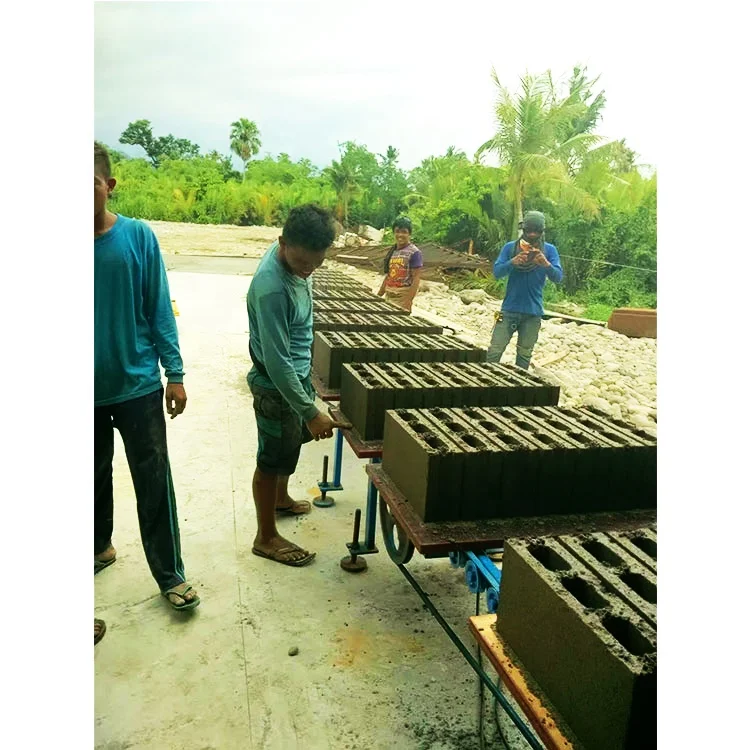
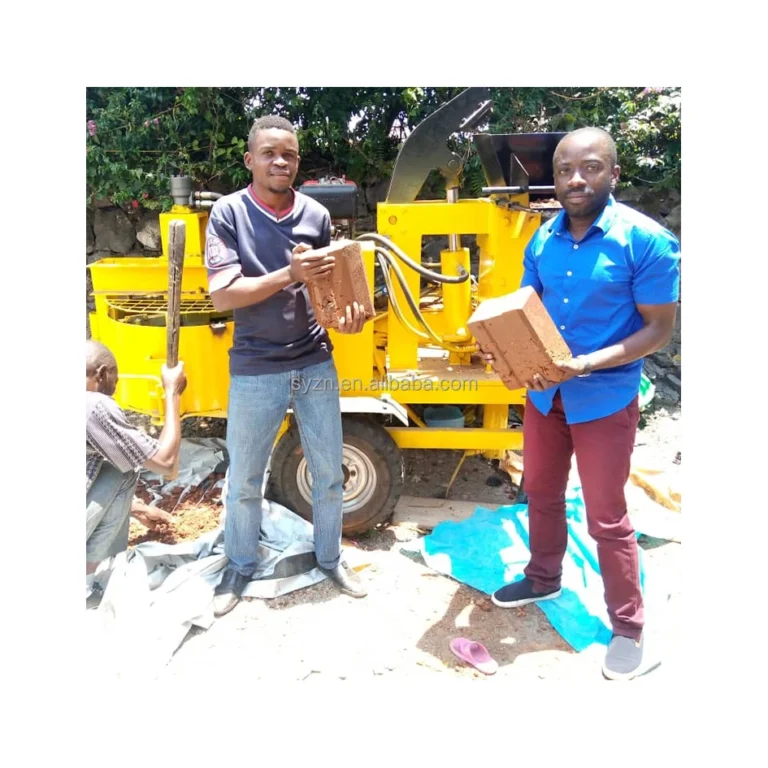 High quality block machine