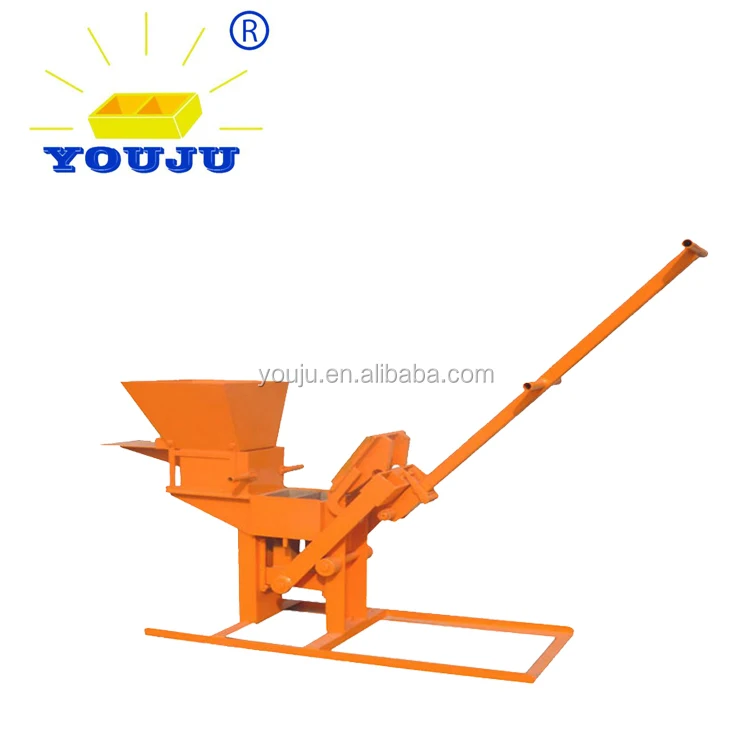
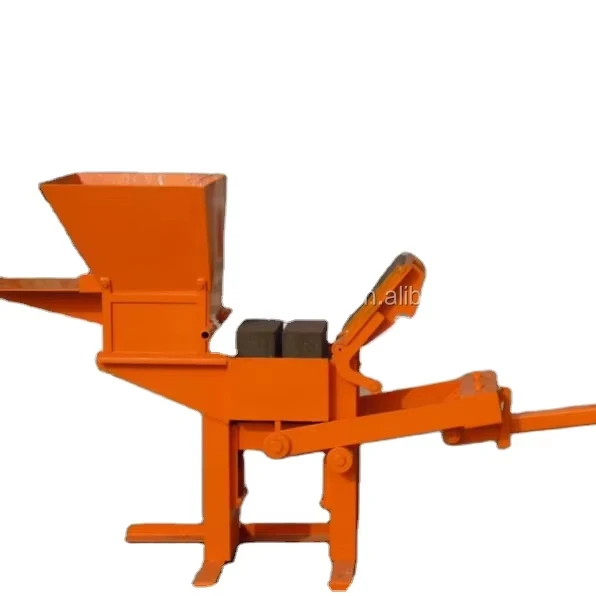
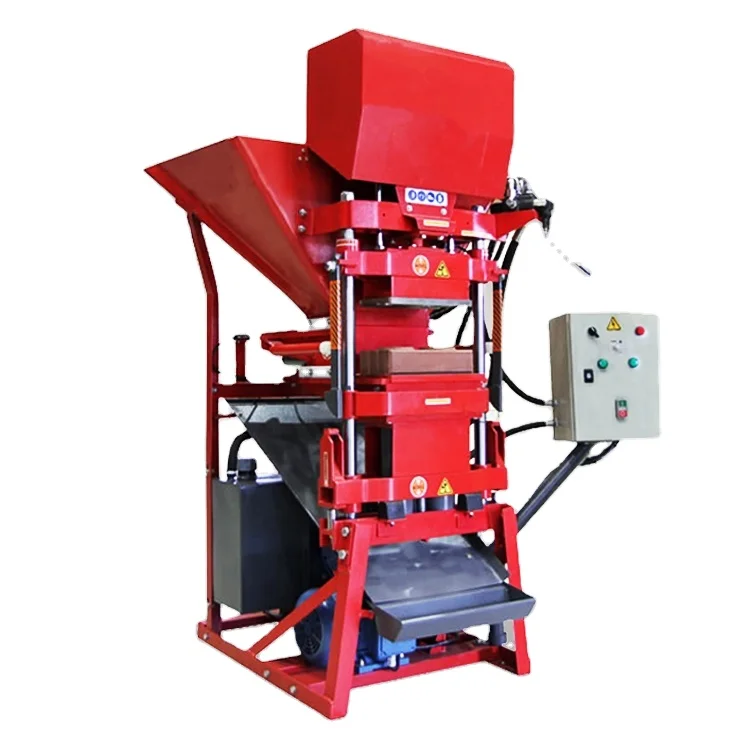
Matched System Supply — machine, mould and handling specified together so the ECO BRAVA interlocking clay brick making machine manufacturer delivers what the capacity sheet actually promises.
Technical Specifications
| Parameter |
Value |
| Product Type |
Interlocking Clay Brick Making Machine |
| Overall Dimensions (L×W×H) |
1200 x 800 x 1750 mm |
| Net Weight |
500 kgs |
| Engine Option |
Electric or Diesel |
| Molding Cycle |
15-20 s |
| Output Capacity |
1600 pcs/day (8 hours) (basis not stated in source) |
| Basic Production Line |
soil crusher, soil screen, conveyor belt (6M) and JQ350 mixer |
| Mould Format |
interlocking lego bricks, circled lego bricks, pavers, solid bricks |
| Block Strength |
more than 16 MPa (comprehensive strength for interlock) |
| Raw Materials |
cement, sand, soil, fly ash, lime |
| Automation Level |
manual / hand power assisted hydraulic press |
Application Suitability
| Application |
Material or Output |
| On-site interlocking brick production |
Local soil, sand and cement mixes for housing projects |
| Small workshop solid brick manufacturing |
Fly ash, lime and sand blends for building construction |
| Environmental construction projects |
Stabilized soil and cement for permeable or interlock formats |
| Paver production for local infrastructure |
Sand and cement mixes for circled lego and paving profiles |
What "1600 Bricks Per Day" Leaves Out About This Interlocking Clay Brick Making Machine Manufacturer
Real daily output depends on the exact block format and the soil-cement mix you can actually source.
Capacity figures on manual presses often assume an ideal material and a single brick profile, leaving buyers to discover on site that their local red clay or high-sand soil cuts the actual run rate significantly [NEED_CITE: soil-cement stabilization ratios for compressed earth blocks]. When I once recommended this class of machine for a laterite-rich site without first testing the clay plasticity, the bricks cracked at the interlocking legs during demoulding, and daily output dropped by half before we adjusted the mix and moisture. The ECO BRAVA is a hand-power assisted hydraulic press, meaning the operator’s rhythm and the material’s behaviour directly govern the 15-20 s molding cycle. Any interlocking clay brick making machine manufacturer should confirm capacity against your specific block drawing and material test before the order is placed.

Where the ECO BRAVA Sits in the Block Machine Range
This machine occupies the entry-mobile tier, designed for buyers who need on-site clay brick production without committing to a fixed plant. It sits below semi-automatic lines that add powered pallet feeding and below fully automatic systems with stacking and cubing. The manual hydraulic operation keeps the initial investment and maintenance complexity low, making it a practical starting point for entrepreneurs or project contractors who want to validate a local market before scaling. An interlocking clay brick making machine manufacturer typically positions this tier for daily volumes where a single operator can manage the press, mixer and curing area without bottlenecks.
Mould Flexibility and Format Changeover
One ECO BRAVA frame accepts moulds for interlocking lego bricks, circled lego bricks, pavers and solid bricks, giving a small producer the ability to serve different buyer requests from one asset. Mould change on a manual press involves unbolting the current die, fitting the replacement and adjusting the press stroke to the new cavity depth. This process requires deliberate time, and a buyer planning frequent format switches should factor that into the daily schedule [NEED_CITE: manual mould change procedures on hydraulic interlock presses]. The value here is range, not speed — the machine offers format diversity at an investment level that a fixed-plant automatic line cannot match for a first-time producer.
Reading the Specs That Actually Govern Brick Quality
The 16 MPa comprehensive block strength is achievable when hydraulic pressure, soil-cement ratio and moisture are correctly matched. On a manual hydraulic press, the operator controls the press force and dwell time, so consistency depends heavily on training and a standardized mix recipe. The 15-20 s molding cycle sets the theoretical pace, but the actual cycle includes filling the mould, pressing, demoulding and pallet handling, all performed by hand. The choice between electric and diesel engine affects site flexibility rather than pressing force — a diesel option removes dependency on grid stability in remote construction locations. The basic production line (soil crusher, soil screen, 6 m conveyor and JQ350 mixer) defines the upstream preparation capacity, and any bottleneck there will idle the press regardless of its own cycle speed.
The Hidden Cost of Skipping the Soil Test
Ordering a manual interlocking brick press without first running a soil-cement trial is one of the most common ways small producers lose money. If the local clay has high sand content and low plasticity, the interlocking legs and mortise joints will chip during demoulding, producing bricks that fail the 16 MPa strength target and cannot be sold [NEED_CITE: compressed earth block failure modes related to soil gradation]. The remedy is not a different machine but a different mix — and discovering that after the press has arrived means weeks of lost production while sourcing alternative binders or aggregates. This is why a material test should always precede model selection.
Why Source This Machine Here
Our single focus on block machinery means the ECO BRAVA is never sold as a standalone press — it is specified alongside the matching mould, pallet and basic line components as one system. We configure against the buyer’s actual soil test result and target block format rather than shipping a catalogue default. Mould design covers the interlocking profiles that sell in the buyer’s market, including custom drawings when a project specifies a non-standard leg geometry. The automation level is selectable, so a buyer can begin with the manual ECO BRAVA and later move to a semi-automatic line without discarding the knowledge gained from the first machine. Installation support includes on-site commissioning and operator training so the crew understands how mix moisture and press rhythm affect brick density from the first day.
Documentation & Verification
- Line layout showing the soil crusher, screen, conveyor and JQ350 mixer positions relative to the ECO BRAVA press footprint.
- Machine specification sheet confirming engine type, molding cycle and overall dimensions against your site constraints.
- Mould drawing and format list specifying every interlocking lego, circled lego, paver and solid brick profile included.
- Factory test record run on a soil-cement mix matching your local material, not a generic standard blend.
- Operation and maintenance manual covering press stroke adjustment, mould change procedure and daily lubrication points.
Installation, Commissioning & Support
- Floor space planning for the 1200 x 800 x 1750 mm machine footprint plus mixer, conveyor and curing area clearance.
- Electrical supply confirmation for the electric engine option, matching local voltage and frequency before dispatch.
- Diesel engine start-up procedure and fuel specification for sites operating the off-grid configuration.
- First-day commissioning with mix proportion trials to dial in the correct moisture for clean demoulding on your soil.
- Operator training on press rhythm, mould change sequence and daily hydraulic system inspection.
- Wear parts list identifying the high-friction components in the manual hydraulic press and recommended replacement intervals.
Tell Us What You Are Working With
To size the ECO BRAVA correctly, share the soil type and any available gradation or plasticity test result from your site. Confirm the interlocking brick profile your market requires and the daily volume you are targeting. Let us know whether grid power is stable or if the diesel engine option is necessary, and describe any existing equipment such as mixers or crushers already on site so we can match the basic line configuration without duplication.
Frequently Asked Questions
Q: How is the 1,600 pcs/day capacity calculated and which interlocking block format does it assume?
A: That figure is based on an 8-hour shift with the molding cycle at 15-20 s, but the source does not state which specific block format, wall thickness or material mix was used. Real output varies with the interlocking profile complexity, soil-cement ratio and operator pace. We confirm capacity per format against your actual material before the order is finalized.
Q: Electric versus diesel engine — which is right for my site conditions?
A: The electric option suits workshops with a stable three-phase supply, while the diesel option is for remote construction sites or regions where grid interruptions are frequent. Engine choice does not change the pressing force, only the power source driving the hydraulic pump. Your site’s power reliability should determine the selection.
Q: What interlocking brick profiles can one ECO BRAVA machine produce by changing moulds?
A: One machine frame accepts separate moulds for interlocking lego bricks, circled lego bricks, pavers and solid bricks. Each format change involves removing the current mould and fitting the replacement, then adjusting the press stroke. This gives a small producer format range without buying multiple machines, though changeover requires planned time.
Q: Where does the ECO BRAVA sit in the range compared to semi-automatic and automatic block machines?
A: The ECO BRAVA is the entry-mobile tier with manual hydraulic operation, positioned below semi-automatic lines that add powered pallet feeding and below fully automatic systems with stacking and cubing. It suits buyers starting with limited capital or producing on a construction site, who can later scale to higher automation as demand grows.
Q: What supporting equipment do I need for a complete basic line?
A: The basic line includes a soil crusher, soil screen, a 6-metre conveyor belt and a JQ350 mixer to prepare the soil-cement blend before it reaches the ECO BRAVA press. You will also need pallets for demoulding, a level curing area and basic hand tools for mould maintenance. The exact layout depends on your available floor space and production flow.

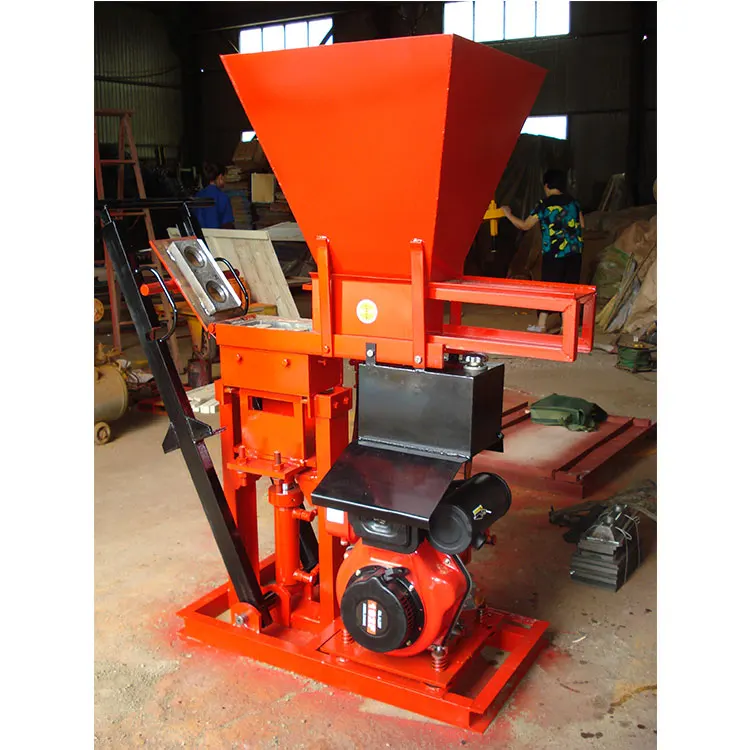
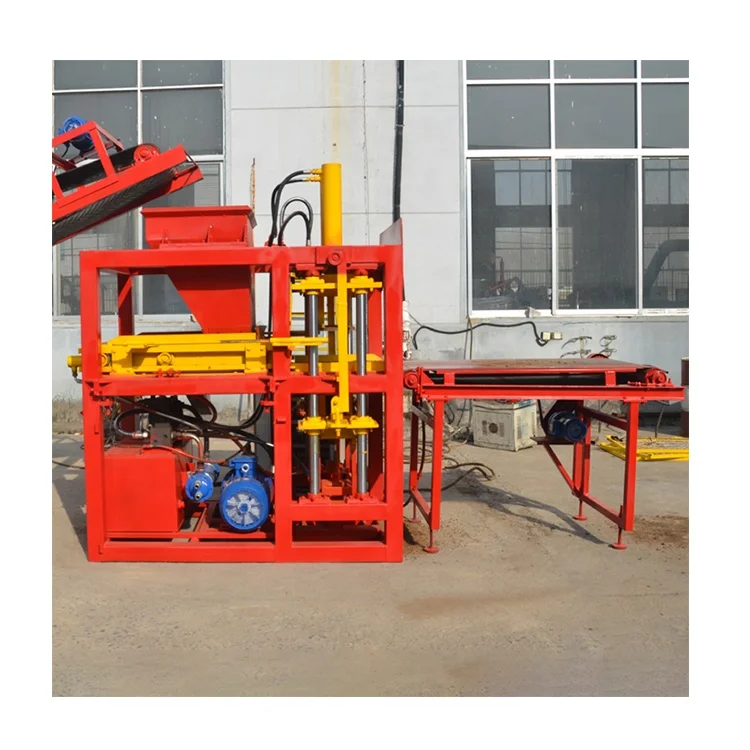 Clay interlocking brick