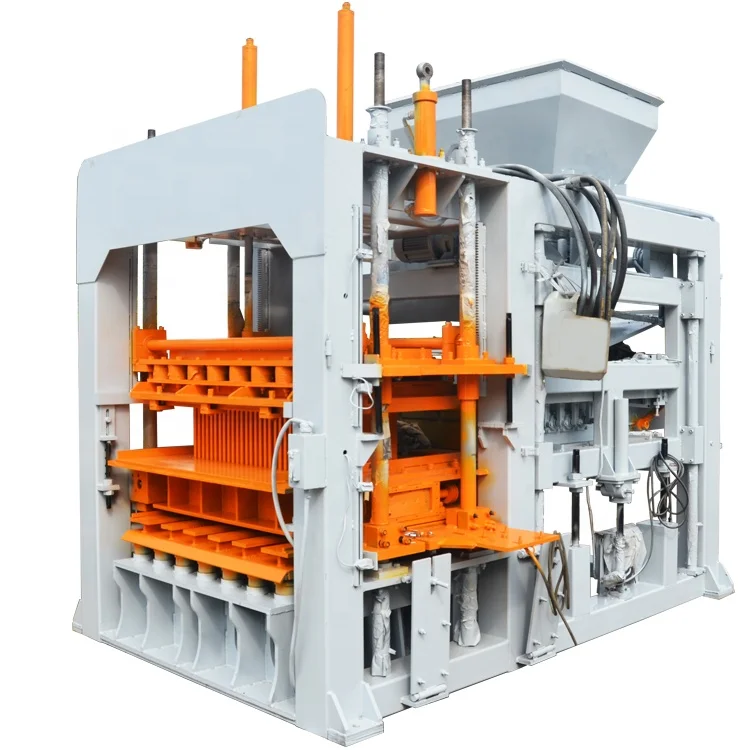
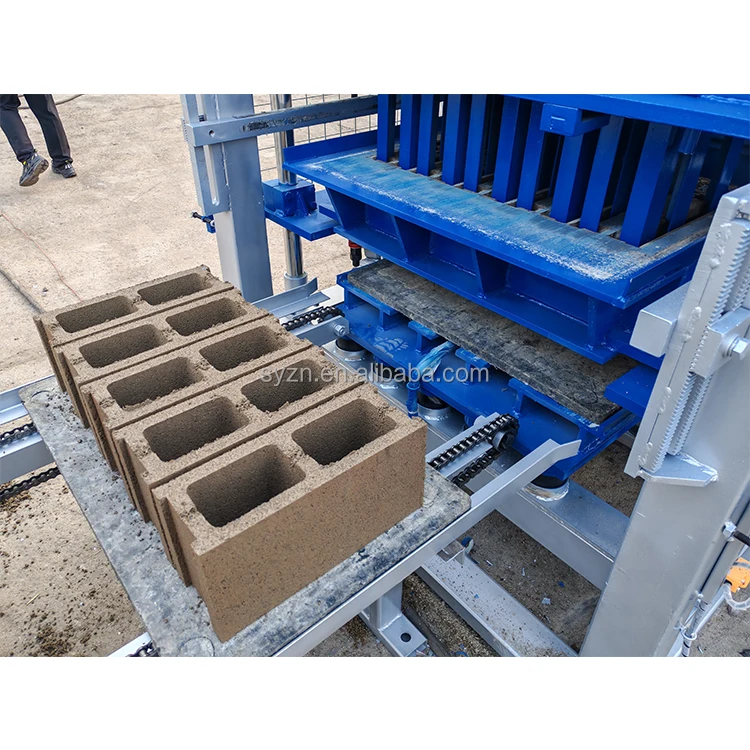
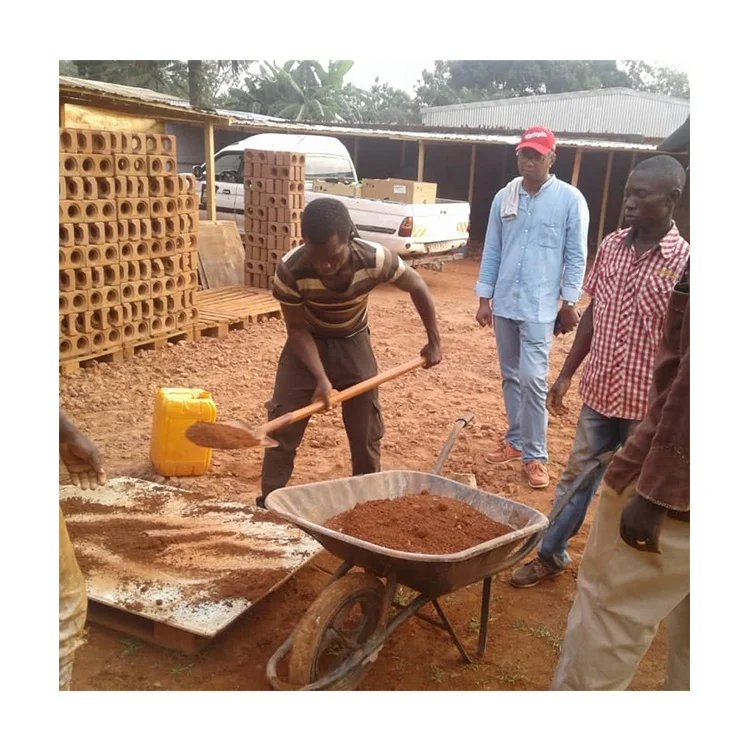
Matched system supply — we configure the press, mould, pallet and handling together so the line runs at its stated cycle time rather than waiting on a mismatched station.
Technical Specifications
| Parameter |
Value |
| Model |
QTJ4-40 |
| Product Type |
Semi-Automatic Concrete Block Making Machine |
| Rated Power |
9.5 kW |
| Molding Cycle |
40 s |
| Theoretical Output (400×200×200 mm hollow block, 4 pcs/mould) |
360 pcs/h, 2800 pcs/day |
| Theoretical Output (400×150×200 mm block, 5 pcs/mould) |
450 pcs/h, 3600 pcs/day |
| Theoretical Output (225×112.5×60 mm block, 9 pcs/mould) |
800 pcs/h, 6400 pcs/day |
| General Output Reference |
2000–2500 pcs/8 hours (basis to be confirmed) |
| Raw Materials |
Concrete, sand, cement, fly ash, lime, gypsum |
| Overall Dimensions |
1350 × 1460 × 1800 mm |
| Pallet Size |
850 × 450 mm |
| Machine Weight |
1 T (source value — verify against manufacturer catalog) |
| Vibration System |
Bed mould vertical vibration + upper mould compression vibration |
| Automation Level |
Semi-automatic (top die push-pull, automatic scraper, manual pallet handling) |
| Voltage |
Configurable to buyer local voltage and frequency |
Application Suitability
| Application |
Material or Output |
| Hollow block production for small masonry contractors |
Crushed stone, sand, cement at standard mix ratios |
| Solid block manufacturing for local building supply |
Fly ash, lime, gypsum blends with local aggregate |
| Interlocking brick runs for paving and retaining walls |
Fine aggregate with cement binder |
| Paver block production for driveway and walkway projects |
High-density concrete mix on 850 × 450 mm pallets |
| First-plant entrepreneur setups with limited floor space |
Multi-format output from a single press footprint |
Why "Pieces per Hour" Means Nothing Without the Block Format
A cycle time only becomes real output once you know what the mould is actually producing.
I once watched a buyer in the Middle East plan an entire construction schedule around a quoted hourly figure, only to discover the number assumed a small solid brick while his contract required 400 mm hollow blocks. The gap between the two formats was more than half the expected daily volume, and his crew was suddenly racing against a deadline they could not meet. With the QTJ4-40 semi-automatic concrete block making machine for sale, we always break capacity down per format — 360 pieces per hour on 400×200×200 mm hollow blocks, 450 on the 150 mm width, and 800 on the smaller 225×112.5×60 mm solid. [NEED_CITE: block format impact on line capacity planning]

Where the QTJ4-40 Sits in the Range
The QTJ4-40 occupies the entry tier of our semi-automatic concrete block making machine for sale lineup, aimed at buyers who need consistent block density without the floor space or capital outlay of a fully automatic plant. Its 1350 × 1460 × 1800 mm footprint fits inside a standard workshop bay, and the 9.5 kW rated power draws from a modest supply circuit. You place pallets by hand, but the top die push-pull and automatic scraper handle the mould precision work, keeping block height and face finish consistent across a shift.
Scaling From One Format to a Full Catalogue
This machine accepts moulds for hollow blocks, solid blocks, interlocking bricks, and pavers on the same 850 × 450 mm pallet. A buyer can start with the hollow block their local market demands, then add paver and interlocking formats later without replacing the press. The dual vibration system — vertical bed vibration combined with upper mould compression — compacts each mix to a uniform density regardless of which mould is mounted. [NEED_CITE: vibration and compression matching for block strength consistency]
Reading the Specs That Actually Matter on Site
The 40-second molding cycle sets the pace for everything upstream and downstream: your mixer must deliver a fresh batch within that window, and your pallet handler must clear the finished block before the next cycle starts. The 9.5 kW motor covers both the vibration and hydraulic circuits, meaning a single dedicated breaker is typically sufficient for the press itself. Pallet size at 850 × 450 mm must align with your curing racks and the forklift tines you already have — ordering pallets that do not stack on your existing racks wastes curing area and slows turnover. Voltage and frequency are confirmed to your local grid before production, because a 50 Hz motor running on 60 Hz supply will overspeed the vibration system and shorten bearing life.
What Happens When the Pallet and Curing Area Do Not Match
Buyers who skip the pallet conversation often discover, weeks after commissioning, that their curing racks were built for a different size. Pallets pile up on the floor, blocks cure unevenly, and forklift operators spend extra trips moving stacks that should have fit in one rack bay. The 850 × 450 mm pallet on the QTJ4-40 is a deliberate mid-range size, but it only works if your curing infrastructure and handling equipment were planned around it. [NEED_CITE: pallet and curing area coordination in block plants]
Why Buyers Source This Press Here
Block machinery is our single focus, so the QTJ4-40 arrives as a matched system — press, mould, pallet, and handling specified together rather than assembled from unrelated suppliers. We configure the vibration force and hydraulic pressure against your actual mix design and local aggregate, not a catalogue default. Moulds are built for the formats your market sells, including custom drawings when your product list falls outside the standard range. Automation is selectable: you can start with the semi-automatic tier and add pallet feeding or stacking stations later. Our documentation package includes a capacity calculation that states the block format behind every output figure, so there is no ambiguity when you plan your production schedule.
Documentation & Verification
- Line layout and capacity sheet stating output per block format for the QTJ4-40
- Machine specification with confirmed voltage, frequency, and control language
- Mould drawing and format list for every block size in your quotation
- Pallet specification matched to your curing rack dimensions and forklift
- Factory test record run on your target block format before dispatch
- Operation and maintenance manual with wear parts and mould replacement list
Installation, Commissioning & Support
- Foundation pad sized to the 1350 × 1460 mm footprint with vibration isolation
- Dedicated 9.5 kW circuit with breaker rating confirmed to your local voltage
- Press shipped as a single skid unit for straightforward placement in tight workshops
- On-site mould alignment and cycle timing verification across your first block format
- Operator training covering semi-automatic pallet loading, scraper adjustment, and mould change
- Wear parts list identifying high-wear vibration mounts and scraper blades for reorder
Before You Request a Quote
Tell us the block formats you need to produce, the daily volume your market absorbs, and the raw materials available in your area. We also need your local voltage and frequency, plus the pallet size your existing curing racks accept. With those details, we can return a configuration and capacity calculation that matches your actual production plan.
Frequently Asked Questions
Q: How is the 2000–2500 pieces per 8 hours figure calculated for the QTJ4-40?
A: That reference range appears in source data without a stated block format, so we treat it as a general indicator only. Our quotation includes a per-format capacity sheet: 360 pcs/h on 400×200×200 mm hollow blocks, 450 pcs/h on the 150 mm width, and 800 pcs/h on 225×112.5×60 mm solids. Your actual daily output depends on which mould you run and how your mixer and pallet handling keep pace with the 40-second cycle.
Q: Which voltage and frequency options are confirmed before the QTJ4-40 ships?
A: We confirm your site voltage and frequency before production begins. The motor and control circuit are then wound and wired to match, because running a 50 Hz rated vibration motor on 60 Hz supply changes the amplitude and risks premature bearing wear. Control panel labeling and any PLC display language are also locked in at this stage to avoid delays during commissioning.
Q: What block formats can the QTJ4-40 produce on the same pallet?
A: The 850 × 450 mm pallet accepts hollow blocks, solid blocks, interlocking bricks, and paver moulds. Cycle time stays at 40 seconds across formats, but pieces per cycle vary: four on the large hollow, five on the 150 mm block, and nine on the smaller solid brick. This means format selection directly determines your hourly and daily throughput.
Q: Does the quotation include pallets, mixer, and stacking equipment?
A: The QTJ4-40 is quoted as a semi-automatic press with manual pallet handling. Pallets, mixer, and stacking equipment are listed as separate line items so you can match them to your existing infrastructure or add them as needed. We specify pallet size and material to fit your curing area, and the mixer capacity to keep pace with the 40-second cycle.
Q: How does this semi-automatic tier compare to the fully automatic and mobile options?
A: The QTJ4-40 gives you the same dual vibration and compression system found on larger models, inside a compact footprint and at a lower investment entry point. You trade automatic pallet feeding and stacking for manual handling, which keeps the machine simple and the initial cost contained. Buyers who outgrow manual pallet loading can add automation stations to the same press later.

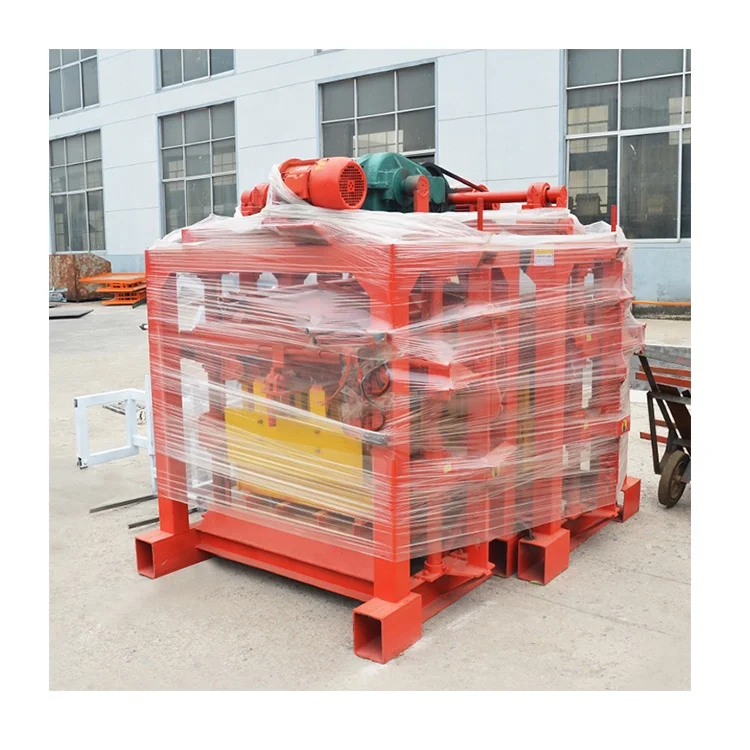
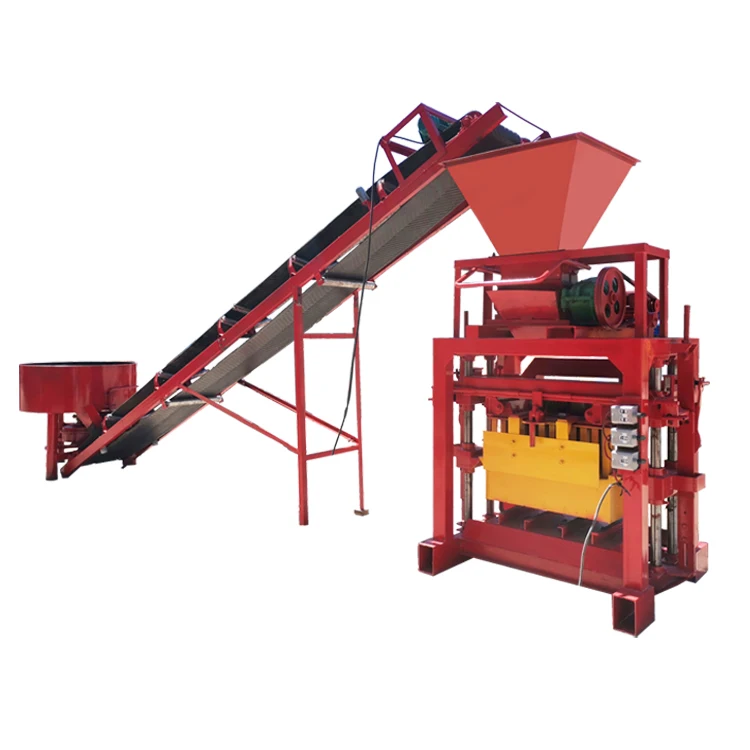 High quality block machine