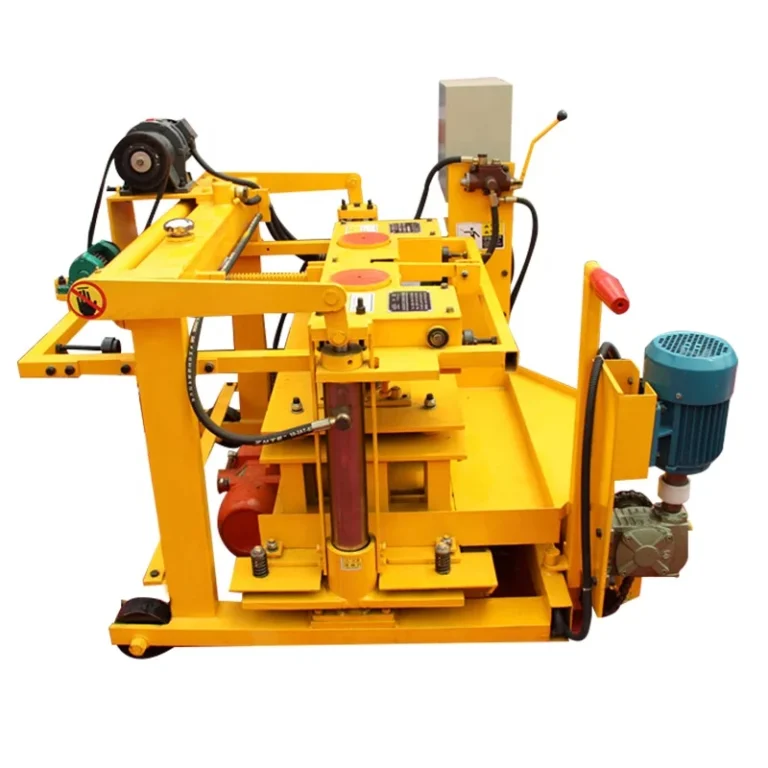
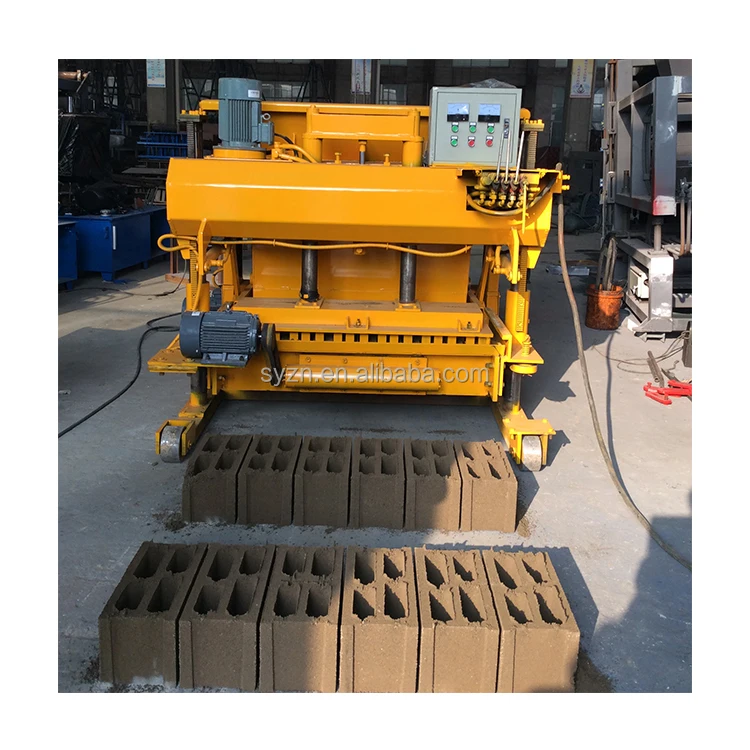
Configuration matched to your site conditions — the QMY4-30 mobile block machine is specified against your actual raw materials and ground conditions, not a generic brochure setting.
Technical Specifications
| Parameter |
Value |
| Model |
QMY4-30 |
| Product Type |
Mobile Concrete Block Making Machine |
| Rated Power |
5 kW |
| Overall Dimensions (L×W×H) |
1200 × 1200 × 1100 mm |
| Net Weight |
950 kg |
| Cycle Time |
30 seconds |
| Output Capacity |
480 pcs/hour based on 400×200×200 mm hollow block, 4 pcs/mould |
| Output Capacity |
600 pcs/hour based on 400×150×200 mm hollow block, 5 pcs/mould |
| Output Capacity |
840 pcs/hour based on 400×100×200 mm hollow block, 7 pcs/mould |
| Shift Output (8-hour) |
3,840 pcs based on 400×200×200 mm hollow block |
| Shift Output (8-hour) |
4,800 pcs based on 400×150×200 mm hollow block |
| Shift Output (8-hour) |
6,720 pcs based on 400×100×200 mm hollow block |
| Mould Formats |
Hollow block, solid brick (changeable) |
| Raw Materials |
Cement, sand, crushed stones, slag |
| Automation Level |
Mobile / egg-laying (no fixed plant required) |
| Pallet Size |
Not applicable (produces directly on ground) |
| Voltage & Frequency |
To be confirmed per target market |
| Control System |
To be confirmed per buyer requirement |
| Hydraulic Pressure |
To be confirmed based on block format and material |
| Vibration Force |
To be confirmed based on block format and material |
Application Suitability
| Application |
Material or Output |
| On-site housing project block production |
Hollow blocks from cement, sand, and crushed stone directly at the construction site |
| Small-scale brick yard startup |
Solid bricks and hollow blocks from locally sourced aggregate and slag |
| Remote infrastructure contractor runs |
Mobile egg-laying production on prepared ground without a fixed batching plant |
| Supplementary output for existing producers |
Temporary or off-site hollow block runs to meet project deadline overflows |
Why "Output per Hour" Means Nothing Without the Block Format Stated
A single headline capacity number hides the mould, cycle time, and block size behind it.
Many mobile block making machine manufacturer catalogues advertise a peak output figure and leave the buyer to assume it applies to whatever block they intend to sell. The QMY4-30 produces 480 pieces per hour on a 400×200×200 mm hollow block but reaches 840 pieces per hour on a 400×100×200 mm hollow block — the same machine, the same cycle time, entirely different daily revenue. I have watched buyers on project sites discover this gap only after the first week of production, when the block count on the ground fell far short of what they promised their contractor [NEED_CITE: capacity calculation methods for mobile block machines]. When you evaluate any mobile block machine, the first question is always which block format the quoted capacity assumes, followed by the mould cavity count and realistic cycle time under your actual mix.

Placing the QMY4-30 Within the Mobile Range
The QMY4-30 sits at the entry tier of mobile egg-laying machines, built for buyers who need on-site production without investing in a fixed block plant. Its 1200 × 1200 mm footprint and 950 kg weight allow relocation across a project site with basic lifting equipment, making it suitable for contractors who move between housing developments. As a mobile block making machine manufacturer, we position this model for first-time plant owners and project-based producers who want to validate their market before committing to a stationary line. The thirty-second cycle time across all supported formats gives predictable output planning regardless of whether you are running hollow blocks or solid bricks.
Where Mobile Machines Fit Alongside Stationary Lines
Some buyers already operating a semi-automatic or automatic plant add a mobile block making machine manufacturer unit like the QMY4-30 for remote jobs that cannot justify relocating a full production line. The egg-laying principle eliminates pallets entirely — the machine deposits each block directly on a prepared ground surface and moves forward, curing happens in place [NEED_CITE: mobile egg-laying block production ground preparation requirements]. This removes pallet investment, pallet handling labour, and curing rack infrastructure from the equation. The trade-off is that ground flatness and surface preparation become the operator’s responsibility, and output per shift depends on how much level ground your site can provide.
Reading the Specification Sheet for Real Production Impact
The 5 kW rated power reflects a machine designed for sites where generator capacity may be limited, though voltage and frequency must be confirmed against your local supply before the machine leaves the factory. The 30-second cycle time is consistent across the three documented block formats, meaning throughput differences come entirely from mould cavity count — four cavities for 200 mm thick blocks, five for 150 mm, and seven for 100 mm. Raw material flexibility across cement, sand, crushed stone, and slag means the mix design should be validated with your local aggregate before assuming standard cycle times will hold. Hydraulic pressure and vibration force settings, which directly determine block density and compressive strength, are configured once your target block format and mix design are confirmed rather than set to a default value that may not match your material.
The Cost of Skipping Ground Preparation and Mix Validation
When a mobile egg-laying machine operates on uneven or poorly compacted ground, the blocks settle unevenly during curing and breakage rates climb noticeably during handling and transport. I have seen project sites where the ground was simply cleared without levelling, and the resulting warped blocks were rejected by the site engineer, wasting an entire week of production [NEED_CITE: on-site block quality rejection causes in construction projects]. Equally, a mix designed for a stationary vibration press often contains aggregate gradations that do not compact properly under the lighter vibration force of a mobile unit, producing blocks that look right but fail compressive strength tests. Both problems are preventable with a ground preparation checklist and a trial batch using your actual site material before full production begins.
What Purchasing From This Source Actually Means
Block machinery is the single focus here, so the QMY4-30 machine, its moulds, and the operating method are specified as one system rather than assembled from mismatched suppliers. The configuration is set against your actual mix design and target block format, meaning the vibration and pressure settings are matched to what your local aggregate can produce. Mould design covers the hollow block and solid brick formats your market actually sells, with custom drawings available if your buyers require non-standard sizes. You can start with this mobile unit and add a semi-automatic or automatic line later, because the automation path is designed to scale rather than lock you into one tier. Installation support and operator training ensure the crew on your site understands ground preparation, mix adjustment, and mould change procedures from the first production day.
Documentation & Verification
- Line layout showing mobile operating area and ground preparation requirements
- Capacity calculation sheet stating output per block format with mould cavity count
- Mould drawing and format list for every hollow block and solid brick size supported
- Machine specification sheet confirming power, dimensions, and cycle time
- Voltage, frequency, and control language confirmation record before dispatch
- Factory test record on your specified block format before shipment
Installation, Commissioning & Support
- Ground surface must be level and compacted across the full mobile operating area
- Power supply matching confirmed voltage and frequency with a dedicated circuit for the 5 kW load
- Machine arrives fully assembled, requiring only mould installation and electrical connection
- First-day production trial with your local mix to validate cycle time and block density
- Operator training covering mould change, ground movement technique, and mix adjustment
- Wear parts and mould replacement inventory list provided for ongoing production planning
What to Prepare Before Requesting a Quotation
Share your target block formats with exact dimensions, the daily output you need per format, and the raw materials available at your project site including aggregate type and grading. Provide your local voltage and frequency so the electrical system is built correctly before the machine ships.
Frequently Asked Questions
Q: How is daily output calculated for each block format on the QMY4-30?
A: Daily output is calculated from the 30-second cycle time and the number of cavities in the mould for that specific block size. For example, a 400×200×200 mm hollow block mould has four cavities, yielding 480 pieces per hour and 3,840 pieces in an eight-hour shift. Each format has its own stated figure so buyers can plan production honestly.
Q: What voltage and frequency options are available for export markets?
A: Voltage and frequency are configured to match the buyer’s local electrical grid standard and confirmed before production begins. This prevents commissioning delays that occur when a machine arrives with incompatible electrical specifications. Buyers should provide their site voltage, phase, and frequency at the inquiry stage.
Q: Which block formats and mould sizes does the QMY4-30 support?
A: The machine supports hollow block and solid brick formats with changeable moulds. Documented configurations include 400×200×200 mm, 400×150×200 mm, and 400×100×200 mm hollow blocks. Custom mould designs are available based on buyer drawings for formats required by the local construction market.
Q: What ground conditions are required for mobile egg-laying block production?
A: The production surface must be level, compacted, and free of debris across the entire operating path. Ground quality directly affects block dimensional accuracy and breakage rates during handling. Site preparation typically involves grading and compacting the soil before the first production cycle begins.
Q: How does the mobile range compare to semi-automatic and automatic lines?
A: Mobile machines like the QMY4-30 require no fixed plant, pallets, or curing racks, keeping initial investment and site infrastructure minimal. Semi-automatic and automatic lines offer higher output per shift through pallet-based production and automated stacking but require a dedicated facility. Many buyers start mobile and add stationary capacity as their market grows.

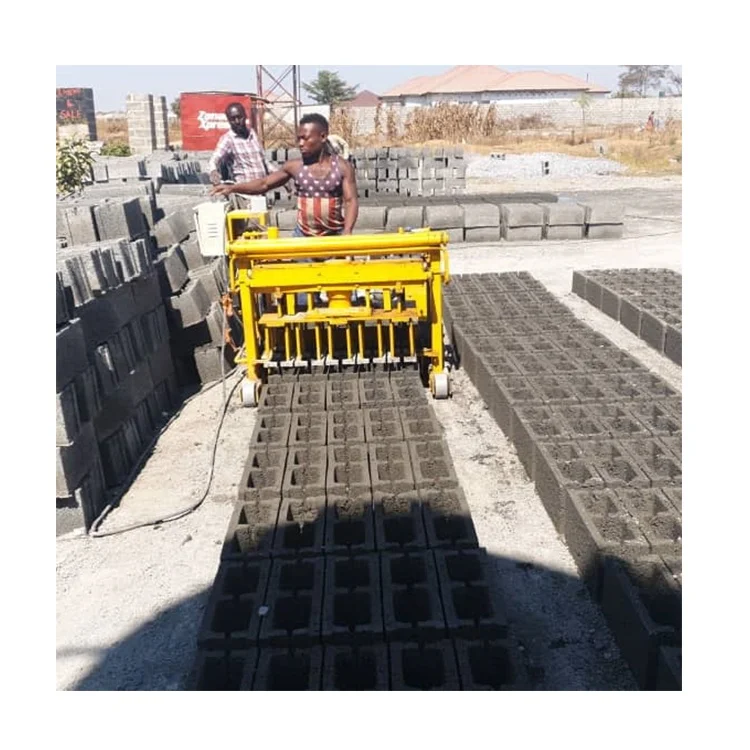
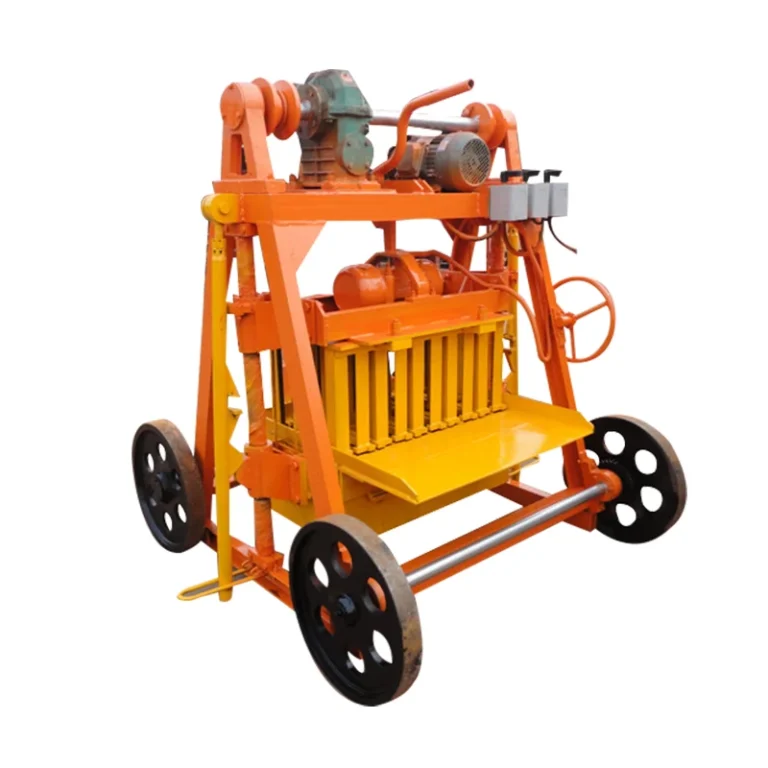 Mobile block machine
![【记录ID】数字之和:8+5+9+8+2 = 32 第一层:shiyueblockmachine.com 对应全品类目录类角色 → Manufacturer / Factory Supply / Full Range 第三层:32 模 3 = 2 → Full Range 第二层:32 模 6 = 2 → [品类词] [机型号] | [站点修饰词] Mobile Block Machine QMY6-25 | Full Range](https://shiyueblockmachine.com/wp-content/uploads/2026/04/H33ac52e014fa4009b9d4ce432dae9553Q.webp)