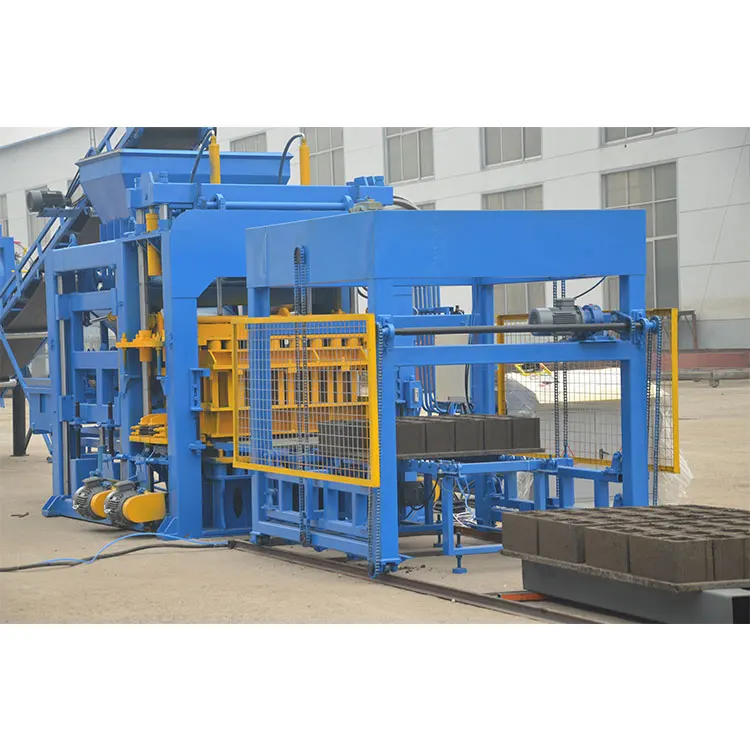
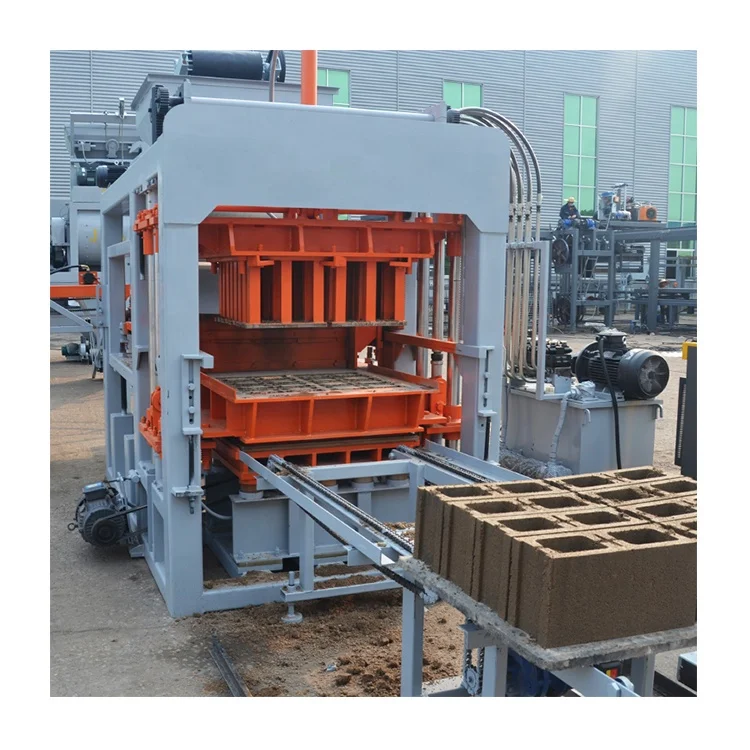
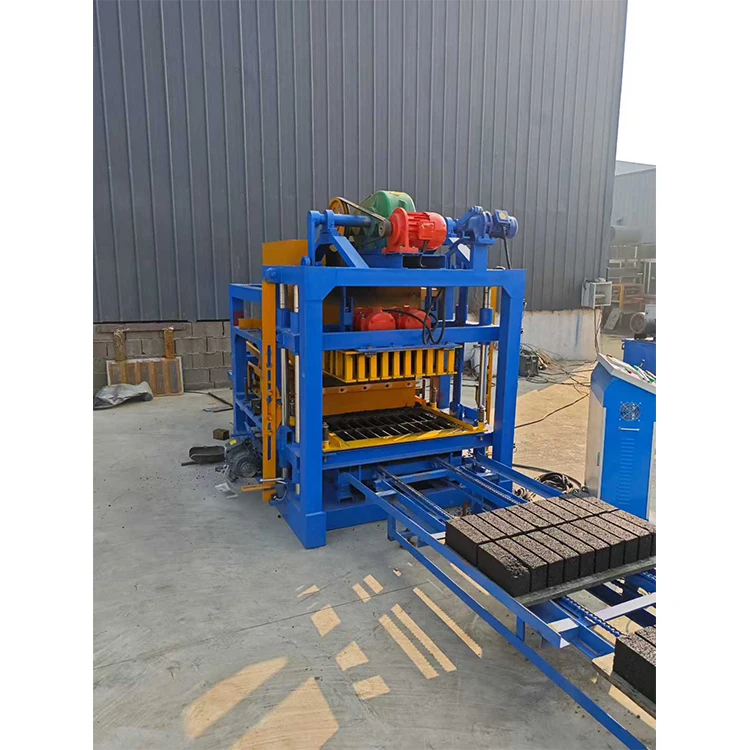
Matched System Sizing — the QT6-15 is specified against your actual mix design, block format, and site conditions rather than quoted from a generic capacity chart.
Technical Specifications
| Parameter |
Value |
| Model |
QT6-15 |
| Product Type |
Automatic Concrete Block Making Machine |
| Molding Way |
Vibration and hydraulic pressing |
| Rated Pressure |
21 MPa |
| Molding Cycle |
15s–20s (basis not stated in source — confirm block format / material / thickness) |
| Pallet Size |
900 × 700 mm |
| Main Machine Weight |
6000 kg |
| Output — Hollow Block 400×200×200 mm |
6 pcs/pallet, 1440 pcs/h, 11520 pcs per 8 hours (theoretical; verify against actual mix and cycle) |
| Output — Paving Brick 200×100×60 mm |
21 pcs/pallet, 5040 pcs/h, 40320 pcs per 8 hours (theoretical; verify against actual mix and cycle) |
| Output — Solid Brick 240×115×53 mm |
32 pcs/pallet, 7680 pcs/h, 61440 pcs per 8 hours (theoretical; verify against actual mix and cycle) |
| Automation Level |
Automatic; color pigment feeding optional for paving bricks |
| Line Configuration |
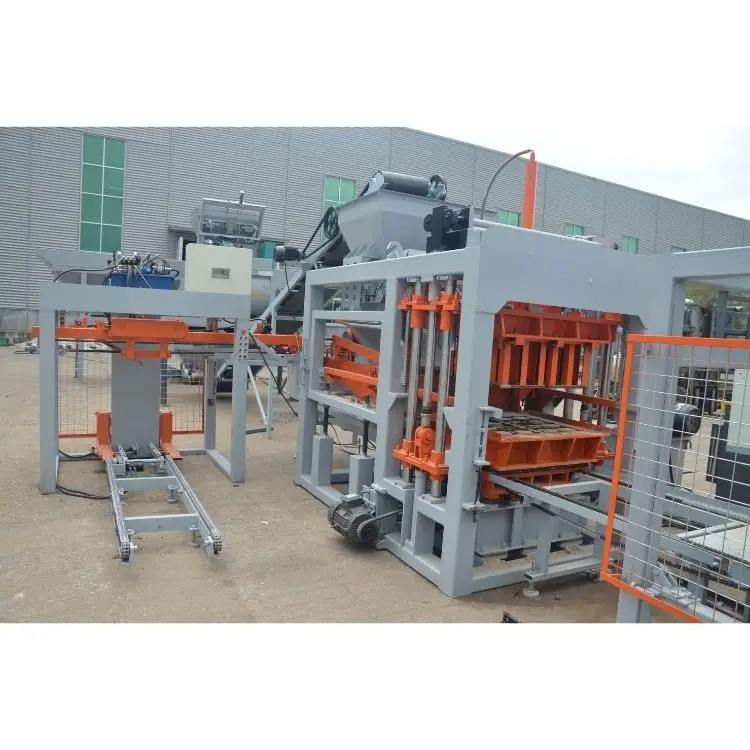
Simple line (JS500 mixer, 8 m belt conveyor, automatic stacker) or full line (cement silo, screw conveyor, cement scale, batching machine, pallet loader, block & pallet separator) |
| Voltage & Frequency |
Configurable to buyer’s local supply |
| Assembly Note |
Top cylinder removed for container loading due to transport height |
| Warranty |
1 year (excluding wearing parts) |
Application Suitability
| Application |
Material or Output |
| Hollow block production for building walls |
Cement, sand, fly ash, crushed stone, slag blends |
| Paving brick manufacturing for sidewalks and plazas |
Cement with fine aggregate; optional color pigment feeder |
| Solid brick production for load-bearing and infill masonry |
Cement, stone powder, fly ash mixes |
| Kerbstone and color pavement brick |
Dense aggregate blends with hydraulic consolidation |
| Infrastructure block supply for development projects |
Locally sourced aggregate matched to mix design |
What the Theoretical Output Figures Leave Out
The cycle time only becomes real output once your specific block format, raw material moisture, and local aggregate are factored in.
A common source of disappointment in block plant projects is the gap between catalog capacity and daily production. The QT6-15 is listed with a molding cycle of 15 to 20 seconds, but that range assumes a particular block format and material consistency that may not match your operation. I have seen buyers in Shandong order an automatic block machine based on a brochure number, then discover their fly ash fineness and moisture content extended the cycle well beyond what was quoted. The automatic concrete block machine QT6-15 manufacturer you work with should provide a capacity calculation that names the exact format and mix used for each output figure. [NEED_CITE: block output variance caused by raw material moisture and aggregate gradation]

Where the QT6-15 Sits in the Machine Range
The QT6-15 occupies the mid-to-high tier of a broader automatic block machine lineup. Below it, semi-automatic models suit smaller plants where investment is constrained and manual pallet handling is acceptable. Above it, higher-capacity lines serve large-volume producers running multiple shifts. This tier is where first-time plant entrepreneurs and expanding contractors often land — enough automation to reduce labor dependence, without the footprint and capital commitment of a fully automated cubing and racking system.
Choosing Between Simple and Full Line Configurations
Two line configurations are offered with the QT6-15. The simple line pairs the press with a JS500 mixer, an 8-meter belt conveyor, and an automatic stacker — a practical starting point for buyers who handle raw material feeding and pallet circulation manually. The full line adds a cement silo, screw conveyor, cement scale, batching machine, pallet loader, and block-and-pallet separator. The choice depends on your existing infrastructure and how much of the material flow you want automated from day one. Upgrading from simple to full configuration later is feasible, but planning the floor layout for the full line at the outset avoids costly repositioning. [NEED_CITE: block plant layout planning for future automation expansion]
Pressure, Vibration, and Pallet Sizing
The 21 MPa rated hydraulic pressure works in tandem with the vibration table to consolidate the mix into a dense, consistent block. Pressure alone compresses; vibration distributes that force through the mold cavity so the block achieves uniform density from face to core. The 900 × 700 mm pallet size determines how many cavities each mold can hold and, consequently, how the output figures translate across different formats — six hollow blocks per pallet versus thirty-two solid bricks, for instance. This pallet dimension also dictates the curing rack spacing and forklift capacity you need on the floor. Confirming pallet compatibility with your existing handling equipment before production avoids a mismatch that would force you to replace racks or rearrange the curing yard after arrival.
When the Wrong Configuration Costs More Than the Machine
Buying a press configured for a mix design you cannot source locally forces a material substitution that alters block strength and cycle behavior. I have walked into plants where the aggregate specified at the factory test was unavailable within a reasonable freight distance, and the local alternative changed the water demand enough to produce crumbly edges or extended curing times. Equally costly is selecting a pallet size that does not align with the buyer’s curing area or forklift — the output stacks up on the wrong racks, and manual rehandling erodes whatever labor savings the automatic stacker was supposed to deliver. [NEED_CITE: impact of aggregate substitution on block compressive strength]
Why Buyers Source the QT6-15 Here
Block machinery is the single focus of this operation, which means the press, mold, pallet, and handling equipment are specified as one matched system rather than assembled from unrelated suppliers. Configuration decisions are made against your actual mix design and target block format, not a default catalog entry. Mold design covers the formats your market sells, with custom drawings available when a standard mold does not fit. Automation level is selectable — start with the simple line and add batching, pallet loading, and separation as production grows. Installation support includes operator training on the specific controls and mold change procedure of the machine you receive.
Documentation & Verification
- Line layout and capacity calculation stating the block format assumed for each output figure
- Machine specification sheet with hydraulic and electrical schematics
- Mold drawing and format list for your ordered cavity set
- Voltage, frequency, and PLC display language confirmation before production
- Factory test record on your specified mix before dispatch
Installation, Commissioning & Support
- Top cylinder is removed for container loading; reassembly and alignment verified on-site during commissioning
- Foundation pad must support the 6000 kg main machine weight plus dynamic vibration loads
- Voltage and frequency confirmed before build to avoid rewiring after arrival
- PLC display language set to your operator preference prior to factory test
- Mold change procedure and cycle adjustment covered during operator training
- Wear parts list and hydraulic seal schedule provided for first-year maintenance planning
Starting the Conversation
To size the QT6-15 correctly for your project, share your target block formats with dimensions, your daily output requirement, and the raw materials you have access to locally. Confirm your site voltage, frequency, and preferred control language so the electrical package is built right the first time. If you have an existing curing yard or forklift fleet, provide those details so the pallet and handling specification aligns with what is already on the ground.
Frequently Asked Questions
Q: How do I verify the real daily output of the QT6-15 for my block format?
A: Provide your exact block dimensions, mix recipe, and local aggregate sample. The manufacturer runs a cycle test on that material and returns a capacity calculation per format, not a single blanket number. Theoretical figures based on generic mixes serve as a starting range, but your actual output depends on how your material behaves under the 21 MPa pressure and vibration cycle.
Q: Where does the QT6-15 fit compared to semi-automatic and mobile machines?
A: The QT6-15 sits in the mid-to-high tier of the automatic range. Semi-automatic models below it reduce capital cost but require more manual pallet handling. Mobile egg-laying machines produce blocks on-site without fixed pallets. The QT6-15 suits stationary plants that want consistent output across multiple formats with automated stacking.
Q: Can I start with the simple line and upgrade automation later?
A: Yes. The simple line with mixer, conveyor, and stacker can be expanded to include batching, pallet loading, and block separation. Planning the full line footprint at the outset is advisable so that adding stations later does not require relocating the press or redoing the foundation work.
Q: How is the machine adapted to my local raw materials?
A: Configuration starts with your mix design and aggregate sample. The vibration force and hydraulic pressure are set to compact your specific material to target density. If your fly ash fineness or sand gradation differs from standard test materials, the cycle time and mold fill sequence are adjusted before the factory test runs on your recipe.
Q: What plant footprint does the QT6-15 require versus other tiers?
A: The press itself occupies a moderate footprint, but the total area depends on whether you install the simple or full line configuration, plus curing rack space for the 900 × 700 mm pallets. Higher-tier automatic lines require longer conveyors and cubing stations; semi-automatic tiers need less equipment space but more manual handling room.

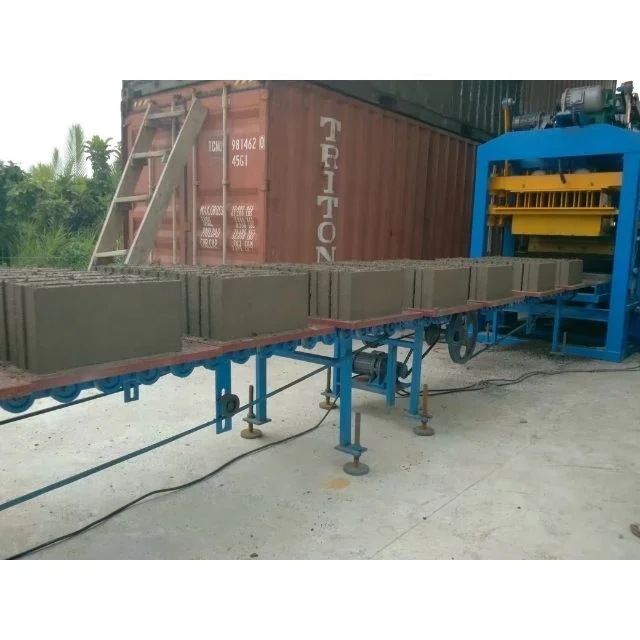 Automatic block machine