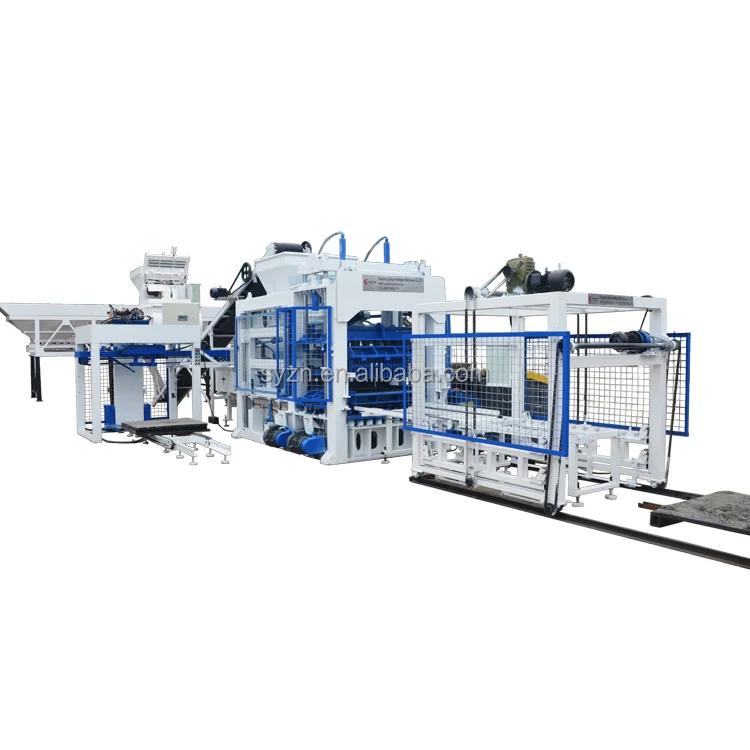
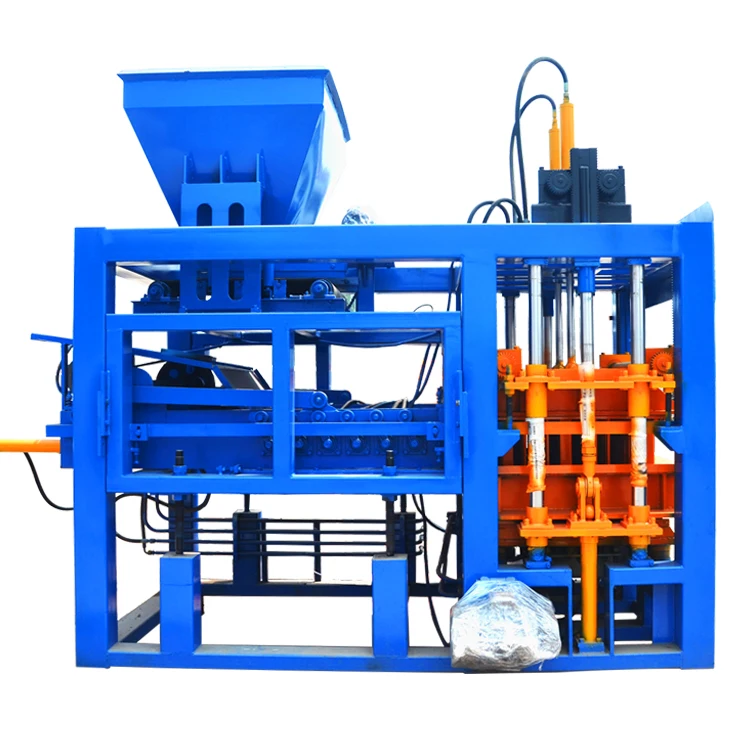
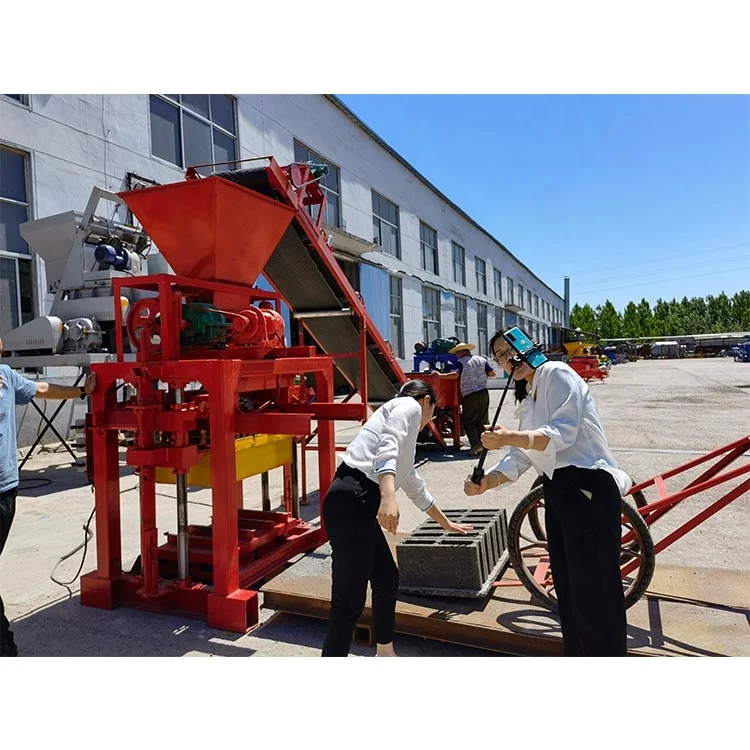
Matched system specification — the QTJ4-25 is quoted with host machine, mould, pallet and mixer specified as one coordinated set rather than assembled from separate suppliers.
Technical Specifications
| Parameter |
Value |
| Model |
QTJ4-25 |
| Product Type |
Semi-Automatic Concrete Block Making Machine |
| Rated Power |
17.9 kW |
| Overall Dimensions (L×W×H) |
6400 × 1500 × 2700 mm |
| Net Weight |
2500 kg |
| Molding Cycle |
25 s |
| Pallet Size |
850 × 550 × 20 mm |
| Vibration Frequency |
2800 r/min |
| Vibration Force |
60 kN |
| Output Capacity |
960 pcs/h, 7680 pcs/day (based on 400×200×200 mm hollow block, 4 pcs/mould) |
| Mould Format |
Hollow, solid, paver, curbstone (mould change required) |
| Automation Level |
Semi-automatic |
| Configuration Included |
Host machine 1 set, block mould 1 set, JQ350 mixer |
| Voltage & Frequency |
Configurable per destination market (basis to be confirmed) |
| Standards |
CE (verify per shipment) |
Application Suitability
| Application |
Material or Output |
| Hollow block production for load-bearing walls |
Crushed stone, cement, sand mix |
| Solid block manufacturing for partition walls |
Fly ash or gravel aggregate blends |
| Paving block for walkways and driveways |
High-strength concrete with fine aggregate |
| Curbstone for road and landscape edging |
Dense concrete mix with coarse aggregate |
| On-site block production for housing projects |
Locally sourced river sand or quarry dust |
What "7680 Pieces per Day" Actually Means for Your Site
Every output figure on a semi-automatic concrete block making machine manufacturer datasheet must name the block format it assumes, or the number is meaningless to your planning.
I have watched buyers sign off on a daily capacity figure and then discover, once the semi-automatic concrete block making machine manufacturer starts commissioning, that the quoted number was based on a small solid brick while the buyer’s market actually moves hollow blocks. The same machine then runs a longer cycle, uses a larger pallet area, and needs more curing time — cutting real output well below the printed claim. That gap is not a defect; it is a specification that was never tied to the buyer’s format. [NEED_CITE: block format assumptions in capacity quotation standards]

Where the QTJ4-25 Sits in the Full Machine Range
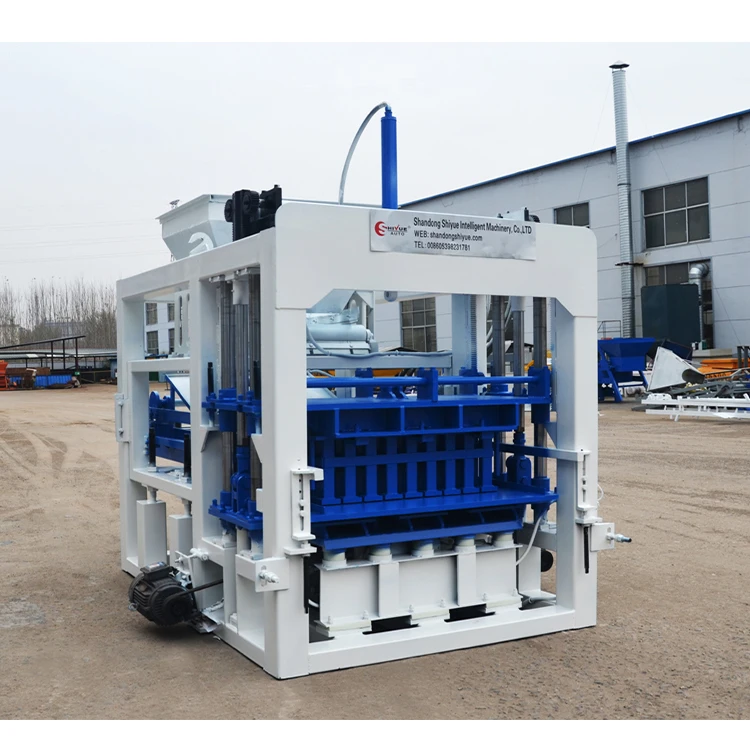
The QTJ4-25 occupies the semi-automatic tier of the Shiyue stationary block machine lineup. It delivers mechanized vibration and hydraulic pressure while the operator handles pallet feeding and block removal manually. This positions it as a lower-investment entry point for buyers surveying the semi-automatic concrete block making machine manufacturer range before committing to a fully automatic line with stacker and cubing stations.
Stepping Through the Output Tiers
Above this tier, Shiyue offers automatic machines that integrate pallet feeders, stackers, and PLC-controlled batching, raising both capacity and capital outlay. Below it, mobile and egg-laying machines eliminate the fixed plant entirely but cap format variety. The QTJ4-25 bridges the gap: it requires a prepared floor and curing yard, yet keeps initial spend modest enough for a first block plant or a contractor producing on their own site. [NEED_CITE: stationary block machine tier classification by automation level]
Reading the Numbers That Matter on the Shop Floor
Vibration force at 60 kN paired with hydraulic station pressure determines whether the block reaches the density your local standard demands. The 25-second molding cycle only holds if the mix design and aggregate grading match what was used during factory testing; a coarser river sand will extend the cycle. Pallet dimensions of 850 × 550 × 20 mm must align with the curing racks and forklift tines already on site, or you will be replacing one or the other before the first shift ends. Mould change across hollow, solid, paver and curbstone formats requires manual bolting, so plan that downtime into your production schedule.
When a Mismatched Pallet Specification Stops the Line
Choosing a pallet material or size without checking the buyer’s existing curing area and forklift creates a bottleneck that has nothing to do with the press itself. Bamboo pallets may warp in high-humidity curing yards, and PVC pallets may crack under forklift tines that were sized for a thicker board. Either way, the semi-automatic concrete block making machine manufacturer output piles up on the floor because there is nowhere to rack it. [NEED_CITE: pallet material selection for block curing environments]
Why Buyers Stay with a Single Equipment Source
Block machinery is the only product line Shiyue builds, so the host machine, mould, pallet and JQ350 mixer arrive as one matched set rather than separate purchases coordinated by the buyer. Configuration is based on the buyer’s actual mix design and target block format instead of a catalogue default. Mould design covers the formats the local market sells, with custom drawings available. The automation level can be set at semi-automatic now and upgraded to automatic stacking later. Installation support includes operator training at the buyer’s site.
Documentation & Verification
- Line layout drawing showing pallet flow from QTJ4-25 to curing rack area
- Capacity calculation sheet stating 400×200×200 mm hollow block as the basis format
- Mould drawing and format list for hollow, solid, paver and curbstone types
- Pallet specification matched to 850 × 550 × 20 mm with material recommendation
- Voltage and control language confirmation signed before production release
- Factory test record on buyer’s specified block format before dispatch
Installation, Commissioning & Support
- Floor slab must support 2500 kg net weight plus dynamic vibration loads at 2800 r/min
- Dedicated power circuit required for 17.9 kW total draw; confirm voltage and frequency before wiring
- Machine ships in assembled state; pallet guide and hopper bolted on site
- First-run parameter setting covers vibration time and hydraulic pressure per block format
- Operator training covers mould change procedure across all supplied formats
- Wear parts list provided with hydraulic seals and vibration motor brushes
Before You Send the Inquiry
To size the QTJ4-25 correctly, share the block formats your market actually sells, the daily volume you need per format, and a sample description of your local sand or aggregate. Confirm your site voltage, frequency, and preferred PLC display language so the control cabinet is wired for your market before shipment. Mention the pallet size and curing rack setup you already use so the pallet specification matches.
Frequently Asked Questions
Q: How is daily output calculated and which block format is assumed?
A: The 7680 pieces per day figure is based on a 400×200×200 mm hollow block running 4 pieces per mould at a 25-second cycle. If your primary format differs, the cycle time and pieces per mould change, so request a revised capacity table that lists your actual formats before placing the order.
Q: Where does the QTJ4-25 sit compared to the automatic and mobile tiers?
A: It sits in the semi-automatic tier, requiring manual pallet handling but delivering mechanized vibration and pressure. Automatic tiers add pallet feeding and stacking; mobile tiers eliminate the fixed plant. The QTJ4-25 suits buyers who want a stationary press with room to scale up later.
Q: What voltage, frequency and control language options are available for my market?
A: Voltage and frequency are configured per destination market, and the motor-driven control panel can carry labels in the buyer’s preferred language. These details must be confirmed and signed off before production starts, or commissioning will be delayed on arrival.
Q: Can I start with the QTJ4-25 semi-automatic and upgrade later?
A: Yes. The host machine frame and mould mounting pattern remain compatible with add-on pallet feeders and stackers. Upgrading later means adding those stations rather than replacing the press, which preserves the initial capital you put into the QTJ4-25 and its moulds.
Q: What plant footprint and site conditions does this tier require?
A: The machine itself measures 6400 × 1500 × 2700 mm, but you also need space for the JQ350 mixer, raw material storage, pallet staging and a curing yard sized for 850 × 550 mm pallets. A level concrete slab and a dedicated power circuit for the 17.9 kW load are minimum requirements.

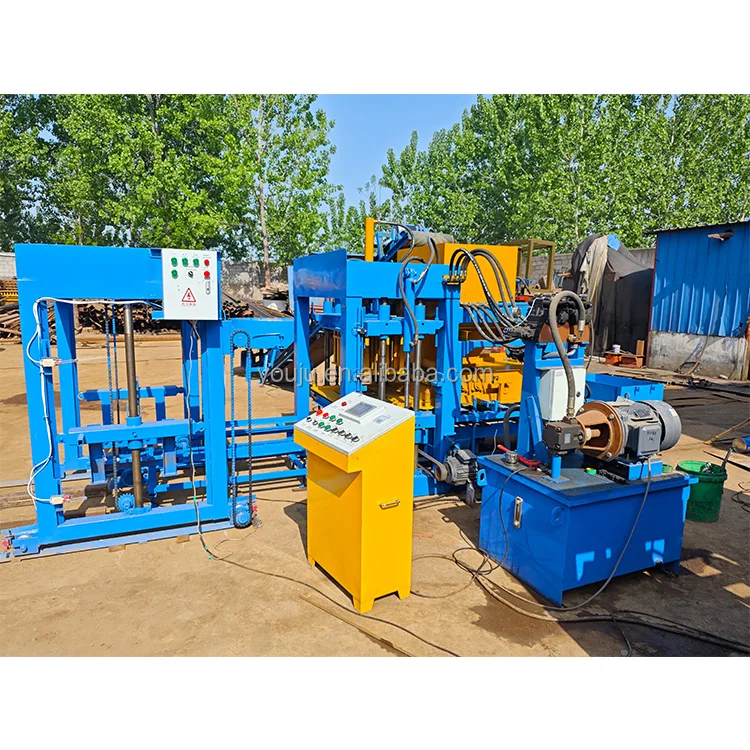
 Stationary block machine