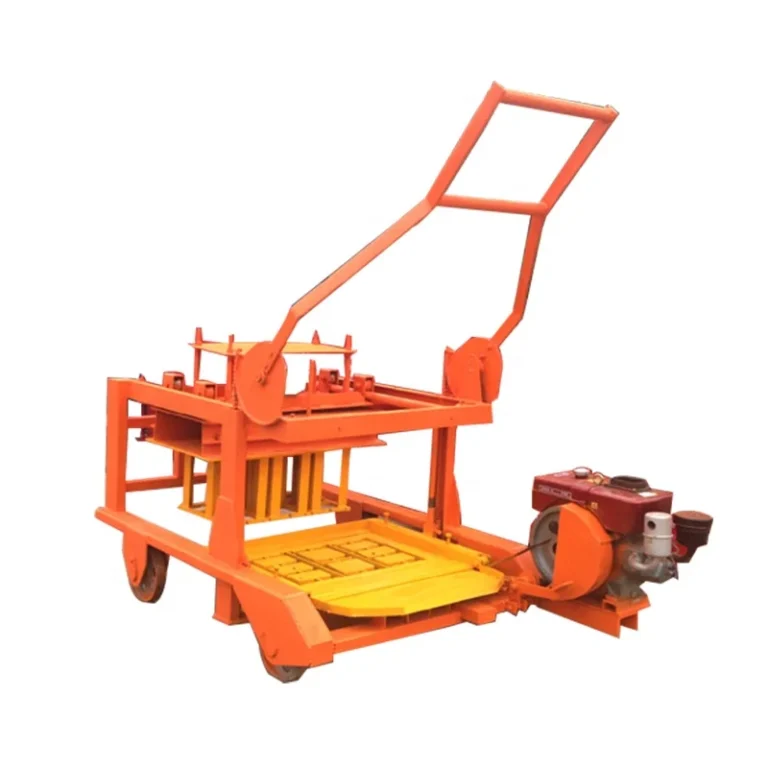
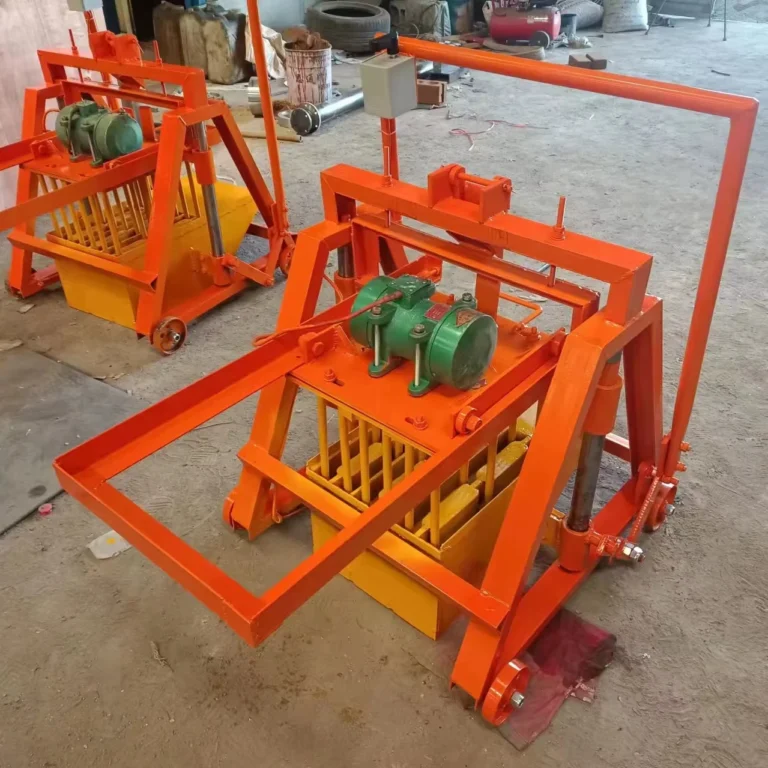
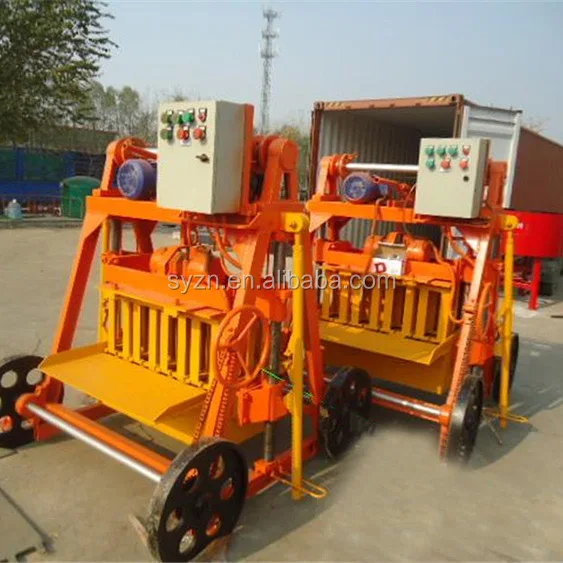
Matched System Approach — Every mobile egg-laying unit leaves the factory configured against the buyer’s actual block format, raw material sample and site electricity condition, not a catalogue default.
Technical Specifications
| Parameter |
Value |
| Model |
QMR4-45 |
| Product Type |
Mobile Egg Laying Block Making Machine |
| Overall Dimensions (L×W×H) |
2420×1320×1650 mm |
| Net Weight |
810 kg |
| Moulding Cycle |
40-45 s |
| Pallet Size |
No pallet required (egg-laying design) |
| Rated Power |
6 kW |
| Diesel Engine Option |
6 kW or 6-8 HP |
| Voltage |
220 V / 380 V or configurable to client local voltage (frequency to be confirmed) |
| Output Capacity |
3000 pcs/day on 400×200×200 mm hollow block, 4 pcs/mould (8-hour shift) |
| Alternate Format Output |
3500 pcs/day on 400×150×200 mm, 5 pcs/mould; 4500 pcs/day on 400×120×200 mm, 6 pcs/mould (8-hour shift) |
| Mould Format |
Hollow block in multiple sizes via mould change |
| Automation Level |
Semi-automatic |
| Stacking Method |
Manual — blocks laid directly on ground |
| Warranty |
One year for the whole machine |
| Certification |
CE |
Application Suitability
| Application |
Material or Output |
| On-site hollow block production without a fixed plant |
Crushed stone, sand, cement and local aggregate |
| Contractor-led housing projects with temporary work yards |
Standard cementitious mixes, diesel-powered where grid is unreliable |
| Startup block ventures with minimal capital |
Hollow blocks in 200 mm, 150 mm and 120 mm wall thicknesses |
| Remote construction sites lacking three-phase electricity |
Diesel engine option maintains production continuity |
| Paving brick and standard brick runs on existing cement yards |
Format change via mould swap on the same chassis |
What "3000 Blocks per Day" Actually Means on Site
Every output figure here names the block size, mould cavity count and shift length behind it.
Capacity claims that quote a single daily number without naming the format leave buyers disappointed when production starts. A mobile block machine manufacturer worth working with will always tie the output to a specific block dimension and mould cavity layout. The QMR4-45 produces 3000 pieces of 400×200×200 mm hollow block in an 8-hour shift because the mould holds four cavities and the cycle runs at 40-45 seconds. Switch to a 120 mm wall thickness with six cavities and the same machine reaches 4500 pieces in the same shift. Knowing these numbers before you order means the business plan matches the machine, not the other way around. [NEED_CITE: common causes of output shortfalls in small-scale block production]

Where the QMR4-45 Sits in the Full Machine Range
This model occupies the entry tier of a broader line that stretches from compact egg-laying units through semi-automatic stationary presses up to fully automatic stacking and cubing lines. A buyer choosing the QMR4-45 is typically running a first plant, a remote site or a contractor yard where a fixed installation is impractical. Understanding this position helps you decide whether the mobile format is the right starting point or whether a higher tier better matches your volume target.
Diesel or Electric — Matching Power to Site Reality
The diesel engine option exists because grid electricity on many construction sites cannot sustain the 6 kW draw during the vibration and pressing phase. Where three-phase power is stable, the electric motor keeps running costs lower and noise down. The decision must be made before production begins, because the motor mount, wiring harness and control panel differ between the two configurations. Confirming your site voltage and available amperage early prevents a machine arriving with the wrong electrical package. [NEED_CITE: voltage and frequency standards by export market]
Reading the Specs That Matter for Block Density
The moulding cycle of 40-45 seconds governs how long vibration and pressure act on each charge of concrete — shorten it and block walls lose compressive strength, extend it and daily output drops. Because the QMR4-45 lays blocks directly on the ground without pallets, the curing surface must be level and firm; soft or uneven ground causes blocks to slump before initial set. The 810 kg machine weight is low enough for two workers to reposition, yet heavy enough to resist walking during vibration. The absence of a stated hydraulic pressure rating means buyers should request test data on their specific mix before committing to a production run.
The Cost of Skipping the Raw Material Test
Sending a sample of your local aggregate and sand before the machine ships allows the factory to adjust vibration time and confirm that the mix achieves adequate green strength for egg-laying. Buyers who skip this step often discover on site that high clay content in local stone dust causes cracking or that the sand grading leaves blocks too friable to move. By then the machine is already overseas and a return visit for adjustment costs time and money. [NEED_CITE: aggregate properties affecting concrete block compressive strength]
Why Buyers Source This Tier Here
Block machinery is the sole product focus, so the QMR4-45 arrives as a matched unit — machine, mould and diesel or electric drive specified together rather than assembled from separate vendors. Configuration is set against the buyer’s submitted mix design and target block format, not pulled from a catalogue default. Mould design covers the hollow block sizes that the buyer’s local market actually sells, with cavity counts stated upfront. The automation level is selectable within the wider range, so a buyer who starts with egg-laying can move to a stationary semi-automatic press later without changing suppliers. Installation support includes operator guidance on cycle adjustment and mould change procedure.
Documentation & Verification
- Line layout showing the QMR4-45 working area and curing zone footprint
- Capacity calculation sheet naming block format, cavity count and shift hours
- Mould drawing with dimensional tolerances for each hollow block size
- Voltage and control language confirmation signed before production
- Factory test record on the buyer’s submitted raw material sample
Installation, Commissioning & Support
- Level, compacted ground area of at least 3×2 m needed for the 2420×1320 mm machine footprint
- Dedicated 6 kW circuit at confirmed voltage and frequency for electric motor option
- Diesel engine serviced and fuel lines bled before first start on site
- Vibration time and cycle length adjusted during commissioning to match local mix
- Mould change procedure demonstrated for all included block formats
- Wear parts list covering vibration springs and mould liner plates
What to Prepare Before Requesting a Quotation
Share the exact hollow block dimensions your market demands, the daily volume you plan to run and whether your site has reliable three-phase power or needs the diesel option. Provide a sample or lab report of your local sand and aggregate so the factory can confirm mix compatibility. State your destination country’s voltage and frequency so the electrical package is built correctly the first time.
Frequently Asked Questions
Q: How is the daily output of the QMR4-45 calculated for each block format?
A: Each figure ties to a specific mould cavity count and an 8-hour shift. The 400×200×200 mm hollow block uses a 4-cavity mould yielding 3000 pieces, while the 400×120×200 mm uses a 6-cavity mould reaching 4500 pieces. The 40-45 second cycle is constant across formats.
Q: Where does this egg-laying model fit compared to semi-automatic and automatic tiers?
A: The QMR4-45 is the entry point for buyers who need production without a fixed plant or pallet system. Semi-automatic stationary models add pallet feeding and higher cycle speeds, while fully automatic lines include stacking and cubing for larger daily volumes.
Q: What ground conditions does a mobile block machine require?
A: A flat, compacted surface free of debris is essential because blocks are laid directly on the ground. Soft soil causes slumping before initial set. A separate curing area with shade or covering protects blocks during the first 24 hours.
Q: How should I choose between the diesel engine and electric motor?
A: If your site has stable three-phase power matching the machine voltage, the electric motor lowers running costs. Where grid supply is unreliable or absent, the 6-8 HP diesel engine keeps production running independently of electrical infrastructure.
Q: Can I upgrade from this mobile unit to a higher-output line later?
A: The range includes semi-automatic and fully automatic tiers that share mould formats and control logic. Moving up means adding pallet handling, higher vibration force and automated stacking while keeping familiarity with the same supplier and documentation standards.

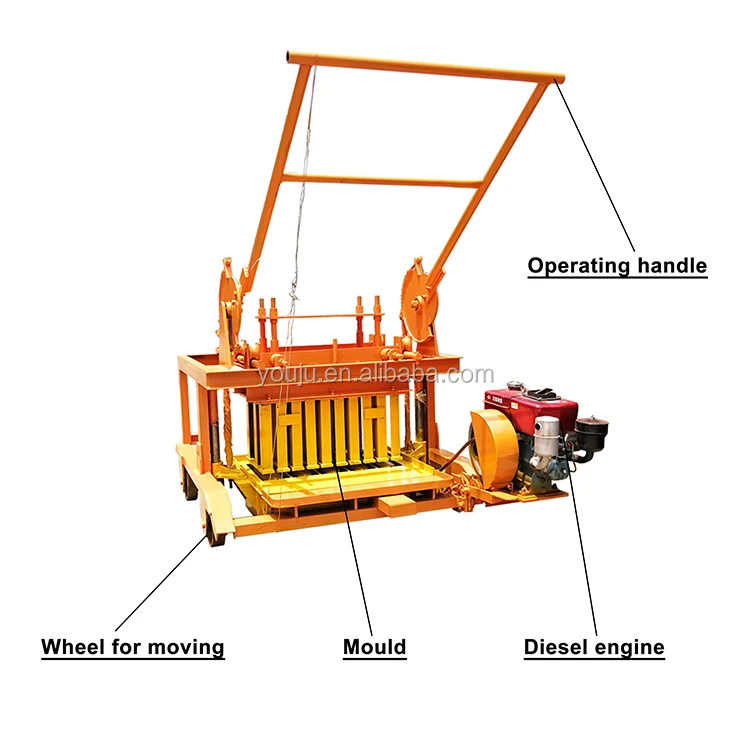
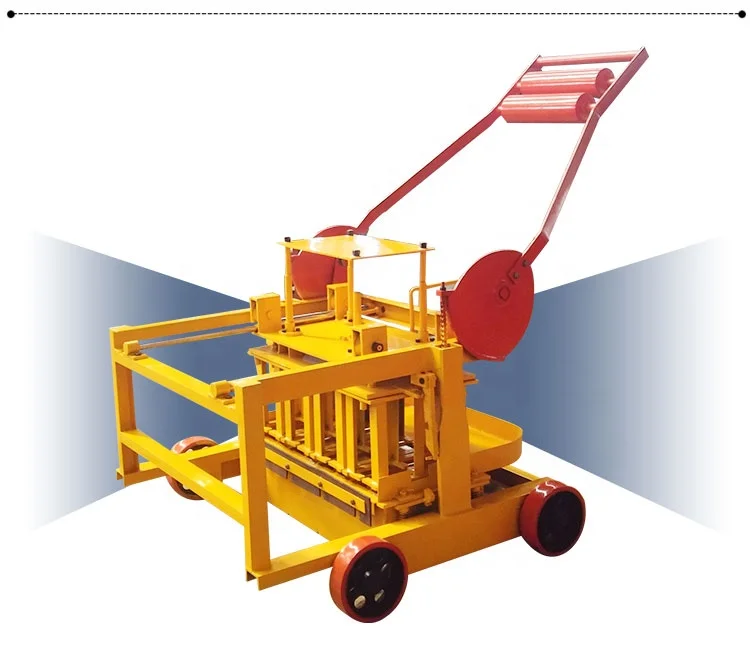 Mobile block machine