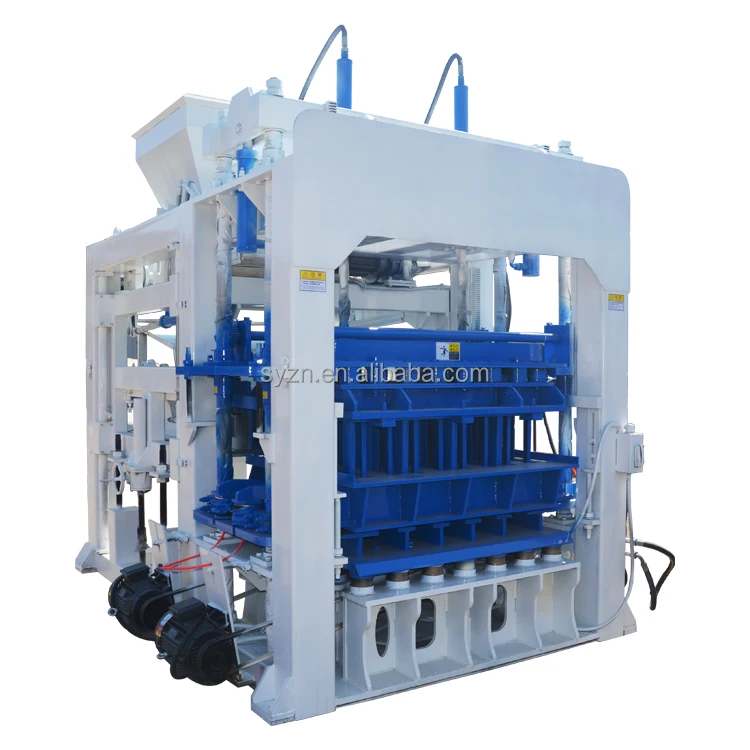
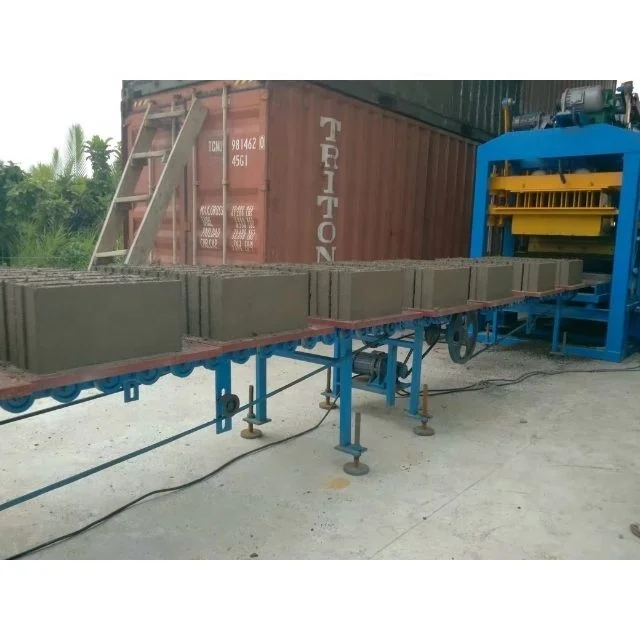
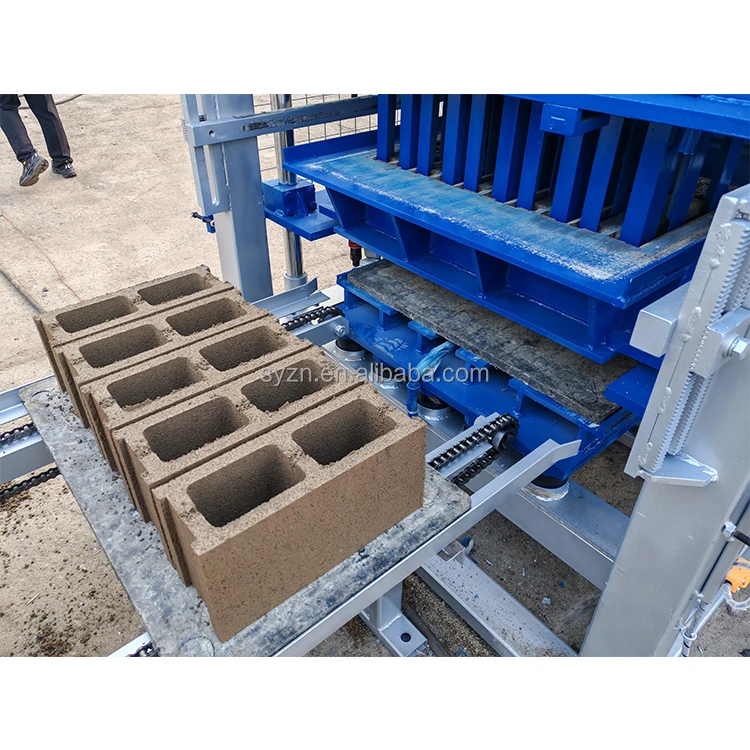
Matched System Sizing — the ECO 7000 is positioned within a full compressed earth block lineup where press, mould, pallet and handling are specified as one coordinated unit rather than sourced separately.
Technical Specifications
| Parameter |
Value |
| Model |
ECO 7000 |
| Product Type |
Automatic Compressed Earth Block Making Machine |
| Power Source |
Electric Powered |
| Block Format |
Compressed Earth / Clay Ecological Brick |
| Automation Level |
Automatic |
| Hydraulic Pressure |
basis not stated in source — confirm block format / material / thickness |
| Vibration Force |
basis not stated in source — confirm block format / material / thickness |
| Pallet Size |
basis not stated in source — confirm block format / material / thickness |
| Mould Format |
Ecological brick / compressed earth block |
| Mould Change Time |
basis not stated in source — confirm block format / material / thickness |
| Cycle Time per Format |
basis not stated in source — confirm block format / material / thickness |
| Output Capacity |
basis not stated in source — confirm block format / material / thickness |
| Control System |
basis not stated in source — confirm PLC / MCC type |
| Voltage & Frequency |
basis not stated in source — confirm target market standard |
| Stacking Method |
basis not stated in source — confirm manual or automatic |
| Assembly State |
basis not stated in source — confirm fully assembled or SKD |
| Language Options |
basis not stated in source — confirm PLC display language |
| Color Options |
basis not stated in source — confirm available colors |
Application Suitability
| Application |
Material or Output |
| Compressed earth block production |
Local clay and soil with stabilizer blends |
| Ecological brick manufacturing |
Laterite, red soil, and sandy loam mixes for sustainable housing |
| On-site earth block production |
Contractor-grade soil for building projects without a fixed plant |
| Fixed-plant ecological brick supply |
Stabilized clay mixes for material distributors and block yards |
What "Cycle Time Per Hour" Actually Means for Earth Blocks
The number only holds when the block format, soil moisture, and stabilizer ratio are all stated together.
I once watched a buyer sign off on a capacity figure that assumed a dry sand-clay blend, only to find his local soil ran at a higher moisture content that slowed compaction noticeably. The automatic compressed earth block machine for sale still ran, but the real daily output fell well short of the quoted cycle count. Soil is not like concrete aggregate — it varies from one pit to the next, and even rainfall from the previous week changes how the material behaves under pressure [NEED_CITE: soil moisture variability in compressed earth block production].

Where the ECO 7000 Sits Across Output Tiers
Buyers surveying a first compressed earth block plant need to understand where an automatic unit lands relative to semi-automatic and mobile options. The ECO 7000 occupies the automatic tier, meaning the press cycle, mould advancement, and block ejection run without manual intervention at each step. Smaller operations or housing projects with lower daily targets often start at the semi-automatic level, where pallet handling still involves operators. Mobile and egg-laying machines serve a different purpose entirely — they produce blocks directly on the ground without pallets, suited for on-site work where a fixed plant footprint is not available.
Plant Footprint and Line Layout Considerations
An automatic compressed earth block machine for sale requires more surrounding space than the press frame alone suggests. Raw material feeding, soil mixing, stabilizer dosing, pallet circulation, and wet block stacking each occupy a station, and the distances between them must allow smooth transit without the press waiting idle. Soil preparation in particular demands a mixing zone large enough to condition material to a consistent moisture level before it reaches the hopper. Contractors planning a fixed plant should map the curing yard alongside the press line, because compressed earth blocks cure differently from concrete — they typically dry under cover rather than in a steam chamber [NEED_CITE: curing methods for compressed earth blocks versus concrete masonry].
Pressure, Vibration, and Soil Density — The Relationship That Matters
Hydraulic pressure and vibration force work together to determine the final density of a compressed earth block. Higher pressure compacts the soil particles closer, but without adequate vibration the fine clay fraction does not redistribute evenly through the mould cavity, leaving density variations within the same block. The mould format — whether an interlocking ecological brick or a standard rectangular compressed earth block — also changes how pressure distributes across the block face, since interlocking profiles create uneven thickness zones. Pallet size must align with the curing yard dimensions and the handling equipment the buyer already operates; specifying pallets without checking forklift compatibility causes stacking delays once production begins. The control system governs cycle timing and pressure hold duration, both of which influence block consistency from one batch to the next.
The Hidden Cost of Skipping Soil Analysis Before Configuration
When a machine is configured for a soil blend the buyer cannot actually source at the project site, the result is either a costly material substitution or a machine that runs below its intended pressure setting. Soil with higher clay content requires different compression force than sandy loam, and running a press calibrated for one material on another produces blocks that crumble at the edges or crack during drying [NEED_CITE: relationship between soil gradation and compressed earth block strength]. Buyers who skip the raw material report before ordering often discover the mismatch during commissioning, when the first production run fails strength tests and the entire batch must be scrapped.
Why Source the ECO 7000 Through This Range
Block machinery is the sole focus here, so the ECO 7000 is specified alongside its mould, pallet, and handling equipment as one matched system rather than assembled from separate suppliers. Configuration starts from the buyer’s actual soil test results and target ecological brick format, not a catalogue default. Mould design covers the compressed earth block formats the buyer’s market actually sells, including custom drawings when standard profiles do not match local building codes. Automation level is selectable, so a buyer can begin with semi-automatic pallet handling and move to full automatic stacking later. Installation support includes operator training specific to compressed earth production, where soil conditioning and moisture control differ from standard concrete block work.
Documentation & Verification
- Line layout showing ECO 7000 station spacing matched to your soil preparation workflow
- Capacity calculation stating the exact ecological brick format and soil mix assumed
- Mould drawing and format list for every compressed earth block profile available
- Hydraulic and electrical schematic with voltage and frequency confirmed per destination
- Factory test record run on your soil blend before dispatch
- Operation manual covering soil moisture adjustment and stabilizer dosing procedures
Installation, Commissioning & Support
- Foundation plan reflecting the ECO 7000 footprint and vibration isolation requirements
- Electrical supply specification with dedicated circuit sizing for the electric powered drive system
- SKD or fully assembled dispatch confirmed against your site access and crane availability
- First-run commissioning with soil moisture calibration and pressure hold adjustment
- Operator training covering mould change sequence for ecological brick formats
- Wear parts list identifying high-friction surfaces in the soil compression chamber
- Preventive maintenance schedule tied to hydraulic fluid intervals and mould inspection cycles
What We Need to Size Your Line Correctly
Send your soil test report showing particle size distribution and plasticity index, along with the ecological brick dimensions your market requires. Confirm the daily output target and whether your site has an existing mixing and curing area or needs a full line layout. Specify the local voltage and frequency standard so the control system ships configured for your power supply [NEED_CITE: voltage and frequency standards by export market].
Frequently Asked Questions
Q: How is the ECO 7000’s capacity verified, and which compressed earth block format is assumed?
A: Capacity is calculated per block format and soil type, not quoted as a single figure. The line layout document states the exact ecological brick dimensions, soil moisture range, and stabilizer ratio used in the calculation, so daily output estimates match your actual production conditions rather than a generic benchmark.
Q: Where does the ECO 7000 sit in the full machine range compared to semi-automatic and mobile tiers?
A: The ECO 7000 occupies the automatic tier, where press cycling and block ejection run without operator intervention. Semi-automatic models in the range require manual pallet handling, and mobile egg-laying machines produce blocks on the ground without pallets, serving on-site contractors who do not need a fixed plant.
Q: What voltage and frequency options are available for different target markets?
A: The electrical system is configured to match the destination country’s standard before shipment. Buyers confirm voltage, frequency, and phase during the quotation stage so the motor, control panel, and any auxiliary equipment arrive ready for connection without on-site transformers.
Q: What plant footprint and installation conditions does the ECO 7000 require?
A: The footprint extends beyond the press frame to include soil mixing, pallet circulation, and stacking stations. A covered curing yard is necessary since compressed earth blocks air-dry rather than steam-cure. The line layout provided before order maps every station to your available floor area.
Q: How does the ECO 7000’s automation level compare, and is there an upgrade path from semi-automatic?
A: The automatic configuration handles press cycling and block ejection without manual steps. Buyers starting with a semi-automatic model in this range can later add automatic pallet feeding and stacking modules, allowing investment to grow alongside production volume without replacing the core press.

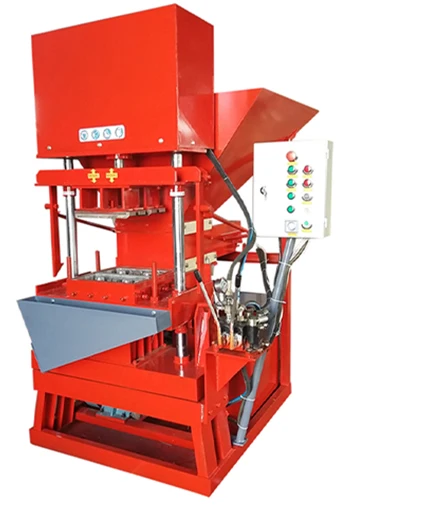
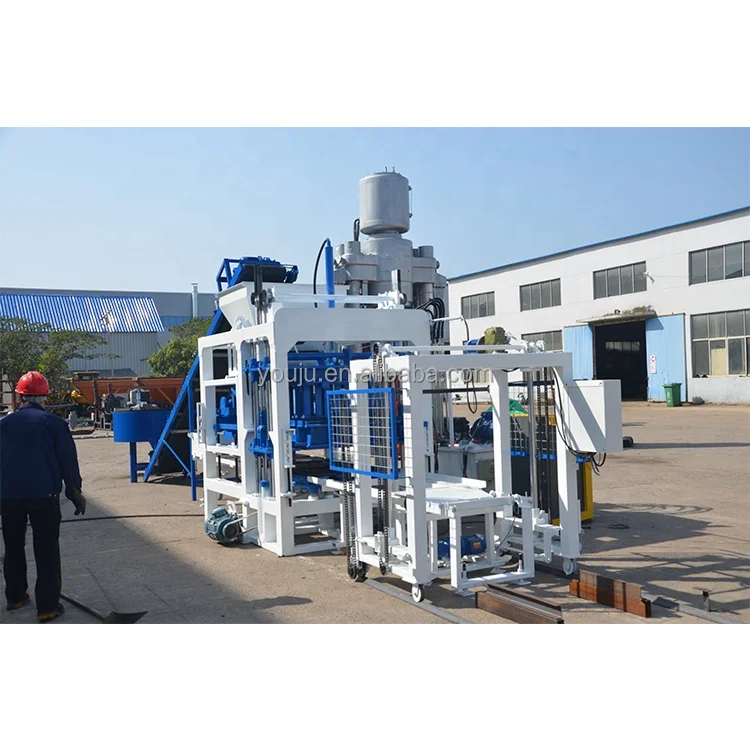 Automatic block machine