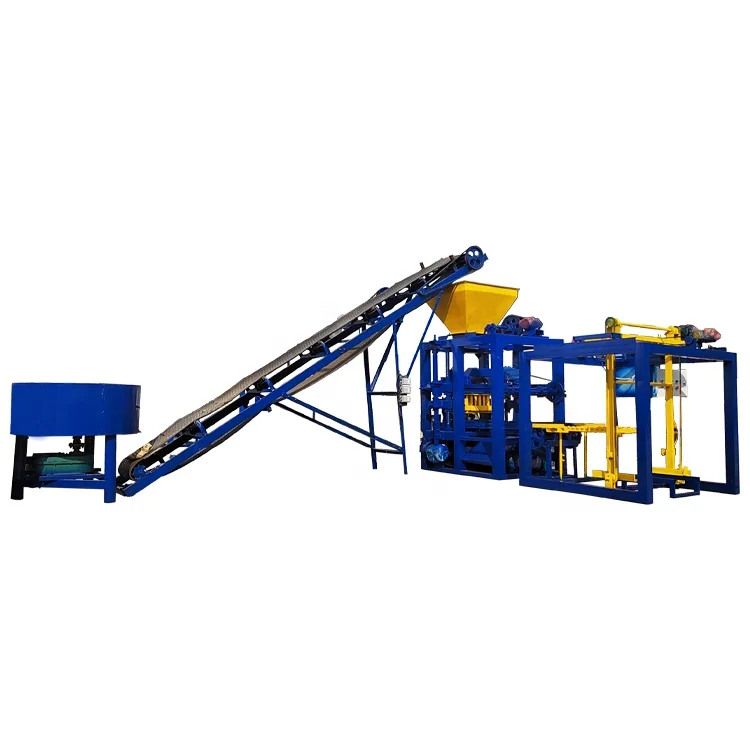
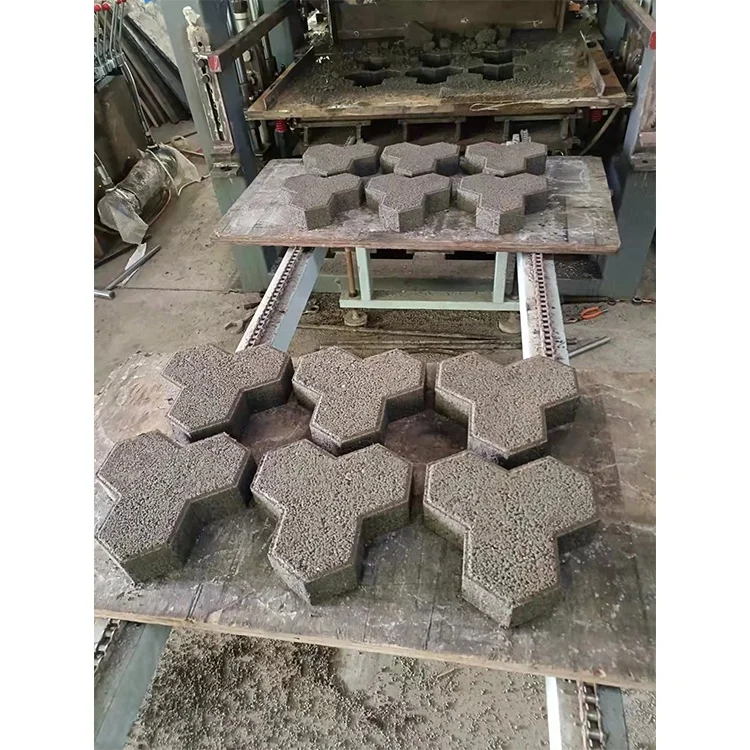
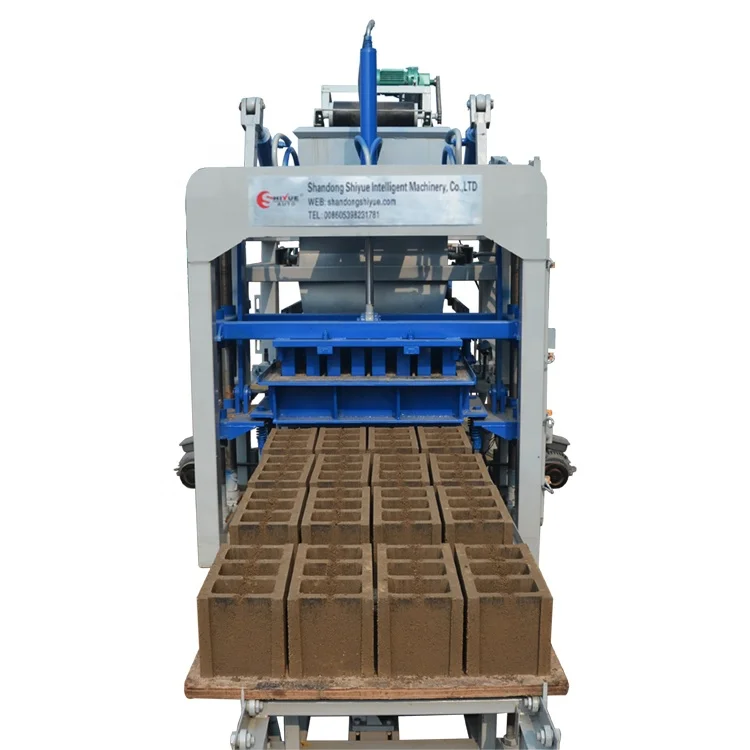
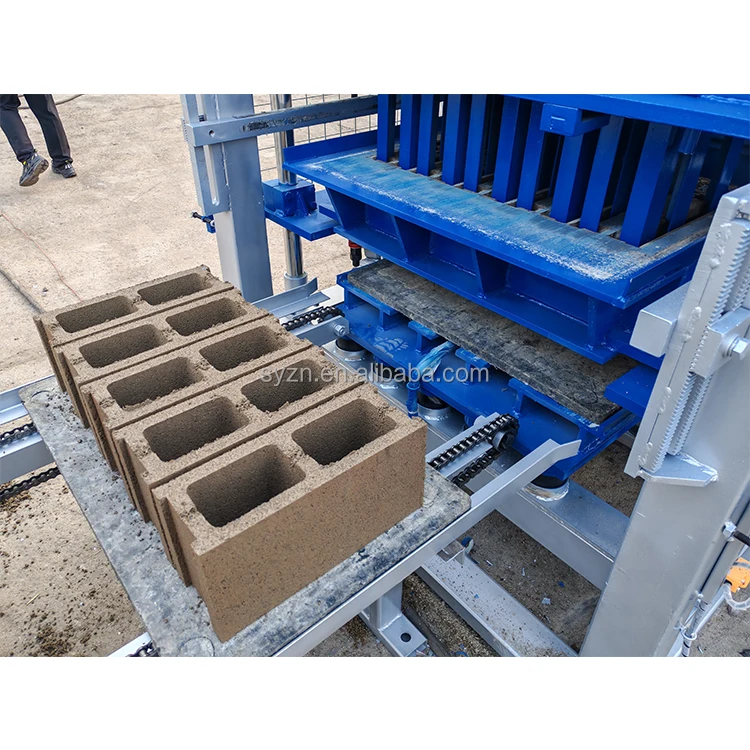
Matched System Integration — Machine, mould, pallet and handling specified as one coordinated unit rather than assembled from separate suppliers, ensuring the QT7-15 block machine delivers rated output without bottlenecks between stations.
Technical Specifications
| Parameter |
Value |
| Model |
QT7-15 |
| Product Type |
Hydraulic Concrete Block Making Machine |
| Pallet Size |
1150x700mm |
| Overall Power |
45KW |
| Vibration Force |
100KN |
| Vibration Frequency |
0-60HZ |
| Vibration Form |
Platform Vibration |
| Molding Cycle |
15-25s (varies by block format and material) |
| Demolding Method |
Hydraulic |
| Control System |
PLC (Programmable Logic Controller) with touch screen |
| Total Mass |
8T |
| Output Capacity (Hollow block 400x200x200mm) |
7 pcs/mould, 1260-1680 pcs/hour, 10080-13440 pcs/8hr |
| Output Capacity (Hollow block 400x150x200mm) |
8 pcs/mould, 1440-1920 pcs/hour, 11520-15360 pcs/8hr |
| Output Capacity (Rectangular brick 200x100x60mm) |
27 pcs/mould, 3888-4860 pcs/hour, 31104-38880 pcs/8hr |
| Components |
Pallet feed machine, block making machine, storage hopper, conveyor, hydraulic unit, PLC control cabinet |
Application Suitability
| Application |
Material or Output |
| Hollow Block Production (400x200x200mm) |
Crushed stone, river sand, cement, fly ash, and local aggregate blends |
| Hollow Block Production (400x150x200mm) |
Lightweight aggregate, pumice, standard concrete mixes |
| Rectangular Paving Brick (200x100x60mm) |
High-density concrete mixes for interlocking pavement systems |
| Block and Paver Production Plants |
High-volume automatic tier for commercial block manufacturing |
| Construction Project Sites |
On-site production for development and housing contractors |
What "10,000 Blocks per Day" Actually Means for Your Plant
Every capacity figure must be tied to a specific block format and cycle time, or it is meaningless for your daily planning.
When I was evaluating equipment in Southeast Asia, suppliers would quote impressive hourly numbers without mentioning which block size those numbers assumed. The reality on site was always different. A concrete block making machine manufacturer should provide a line layout and capacity calculation document that explicitly states the block format for every output figure. With the QT7-15, the 10080-13440 pieces per 8-hour shift applies specifically to 400x200x200mm hollow blocks at 15-20 second cycles. Switch to 200x100x60mm paving bricks, and you are looking at 31104-38880 pieces per shift at 20-25 second cycles [NEED_CITE: cycle time variation by block thickness and material density]. These are not interchangeable numbers, and your business plan depends on knowing which one applies to your market.

Positioning Within the Full Machine Range
The QT7-15 occupies the high-capacity automatic tier of the Shiyue block machine lineup. Buyers surveying options for a first or replacement machine need to understand where this model sits before narrowing down. It delivers significantly higher output than semi-automatic workshop models while maintaining format flexibility through mould changes. The 45KW overall power and 100KN vibration force place it in a category suitable for commercial block and paver production plants rather than small-scale operations.
Automation Level and Plant Footprint Considerations
This QT7-15 block machine for sale includes PLC intelligent control with touch screen interface, automatic pallet feeding, and hydraulic demolding. However, the degree of automation remains selectable — you can configure supporting equipment from manual pallet handling through to fully automatic stacking and cubing depending on your labour availability and budget. The 1150x700mm pallet size determines your curing area layout and forklift requirements, so these decisions must be made together rather than treating the press as an isolated purchase [NEED_CITE: pallet size impact on curing rack spacing and material handling].
Understanding the Vibration and Hydraulic System Match
The platform vibration system operates at 0-60Hz adjustable frequency with 100KN vibration force. This is not a one-size-fits-all setting. Different block formats and mix designs require different vibration profiles — a dense paving brick needs sustained high-frequency vibration to achieve compaction, while a hollow block with lightweight aggregate requires a different approach to avoid segregation. The hydraulic demolding system must coordinate precisely with vibration timing to release blocks without damage. When these systems are mismatched, you get inconsistent block strength across your production run.
The Hidden Cost of Ignoring Local Aggregate Properties
I remember commissioning a QT7-15 in India where the local river sand had high clay content. The moulds clogged constantly, daily output dropped dramatically, and the buyer blamed the machine. The real issue was that the equipment had been configured for a standard mix design that did not match what was actually available on site. Block strength becomes inconsistent when vibration force and hydraulic pressure are not matched to the buyer’s actual mix design and local aggregate. This forces costly material changes or acceptance of substandard product quality [NEED_CITE: aggregate properties affecting concrete block compaction].
Why This Manufacturer Approaches Configuration Differently
The QT7-15 is specified as part of a matched system — machine, mould, pallet, and handling equipment are coordinated rather than sourced separately and hoped to work together. Configuration decisions are made against your actual mix design, local aggregate characteristics, and target block format, not pulled from a catalogue default. Mould design covers the formats your market actually sells, including custom drawings when needed. The automation level remains upgradeable, so you can start semi-automatic and expand later. Installation support includes on-site commissioning and operator training to ensure the machine performs as specified from day one.
Documentation & Verification
- Line layout showing capacity calculation per block format with cycle times stated
- Machine specification sheet confirming voltage, frequency, and control language before production
- Mould drawing and format list detailing included and optional block sizes
- Hydraulic and electrical schematic for maintenance and troubleshooting reference
- Factory test record demonstrating performance on your specified block format
- CE declaration and compliance documentation where applicable to your market
Installation, Commissioning & Support
- Foundation requirements based on 8T total mass and 100KN vibration force transmission
- Dedicated power circuit sized for 45KW overall load with voltage and frequency confirmation
- Machine arrives dismantled for container shipment with reassembly guidance provided
- PLC control system configured with your preferred display language before commissioning
- Operator training covers mould change procedure, cycle time optimization, and fault diagnosis
- Wear parts list and mould maintenance schedule provided for long-term operation
What Information Shapes Your Configuration Proposal
To provide a meaningful quotation rather than a generic catalogue price, we need to understand your specific production requirements. Please share your target block formats and daily output targets, the local raw materials available including aggregate type and cement grade, your site dimensions and existing infrastructure such as curing area and forklift capacity, and your local voltage and frequency standards. If you have an existing block plant, tell us what is working and what is not so we can address actual problems rather than assume them.
Frequently Asked Questions
Q: How do I verify the QT7-15 output capacity for my specific block format?
A: Request a line layout and capacity calculation document that explicitly states which block format each output figure assumes. The QT7-15 delivers 10080-13440 pieces per 8-hour shift for 400x200x200mm hollow blocks, but this number changes completely when you switch to other formats. Every capacity claim must be tied to a specific block size and cycle time.
Q: What voltage, frequency, and PLC language options are available?
A: These specifications must be confirmed before production begins, not discovered when the machine arrives. The concrete block making machine manufacturer should provide a specification sheet documenting your exact voltage and frequency requirements along with the PLC display language. This prevents commissioning delays and ensures operators can actually use the control system.
Q: Where does the QT7-15 sit compared to semi-automatic and mobile models?
A: The QT7-15 is positioned in the high-capacity automatic tier, suitable for commercial block plants rather than small workshops or temporary project sites. It requires more investment and plant footprint than semi-automatic models but delivers substantially higher output. Mobile egg-laying machines serve different applications entirely, producing blocks on-site without a fixed plant infrastructure.
Q: How long does mould change take, and what formats are included?
A: Mould change time depends on the quick-change system configuration and operator training. The standard package includes moulds for your specified block formats, with custom mould design available to your drawings. Request a mould drawing and format list that clearly shows which block sizes are included in your quotation and which are optional add-ons.
Q: What installation and training support is provided after delivery?
A: On-site installation and commissioning support includes machine assembly, system testing, and operator training covering the PLC control interface, mould change procedures, and daily maintenance routines. The 45KW power requirement and 8T mass mean proper foundation preparation and electrical infrastructure must be ready before the machine arrives to avoid delays.

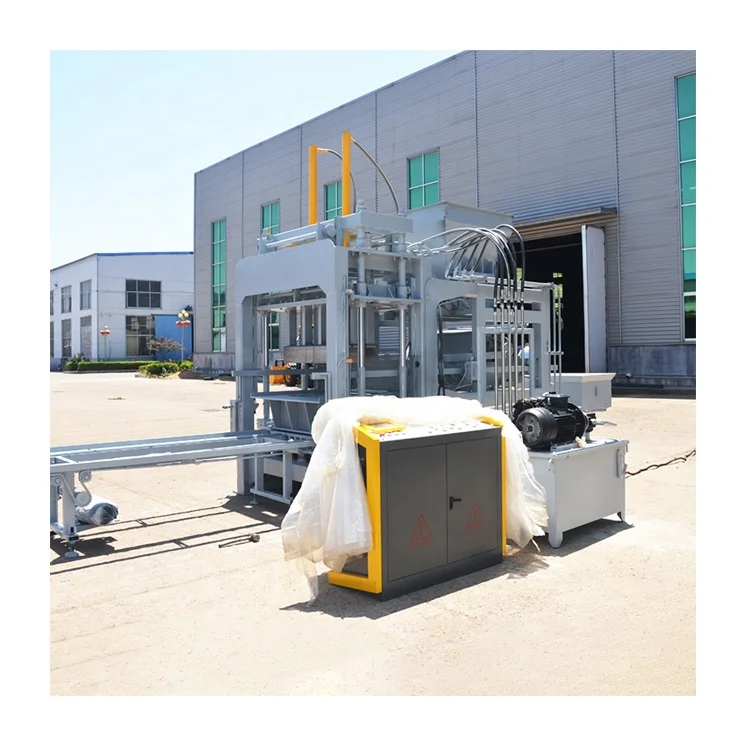
 High quality block machine