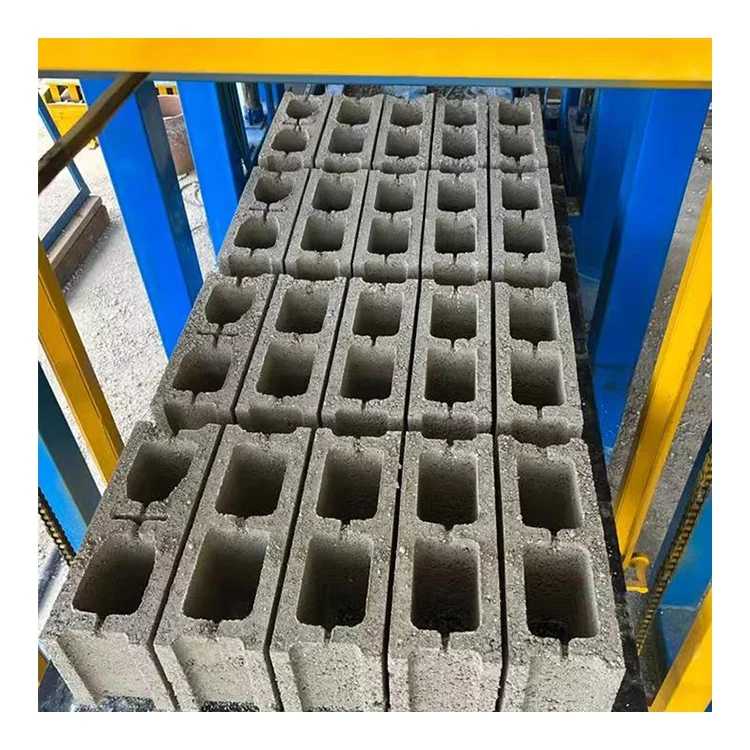
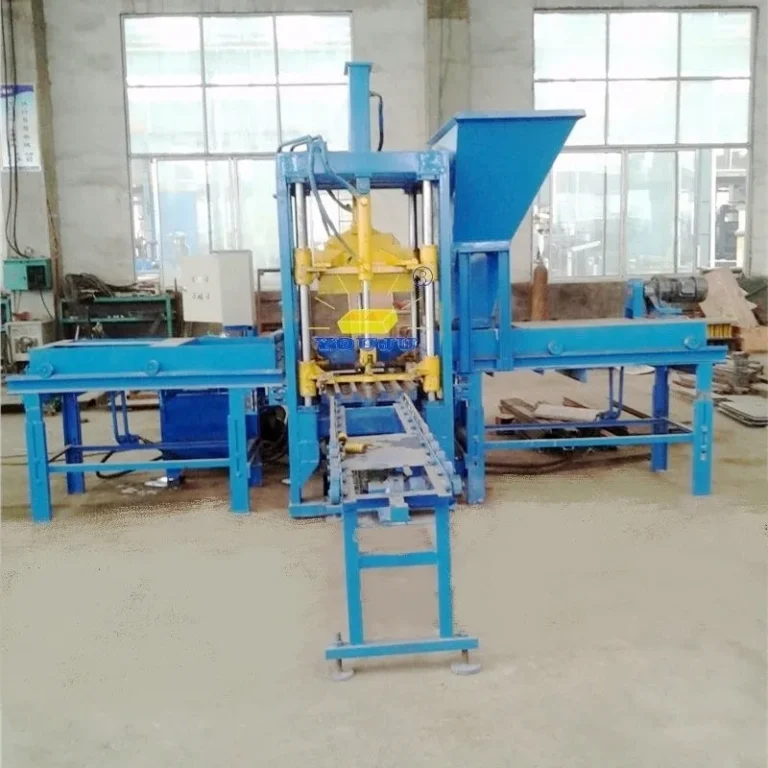
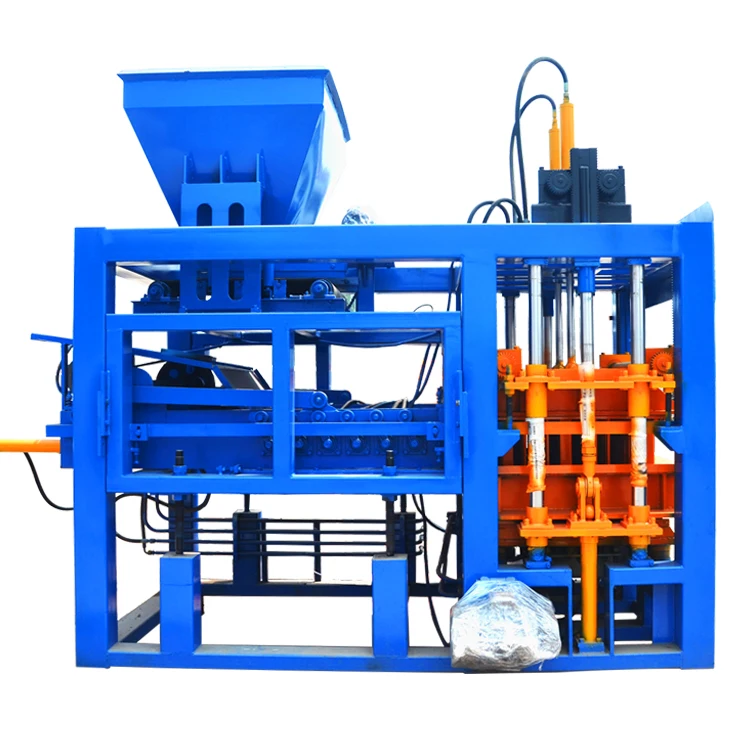
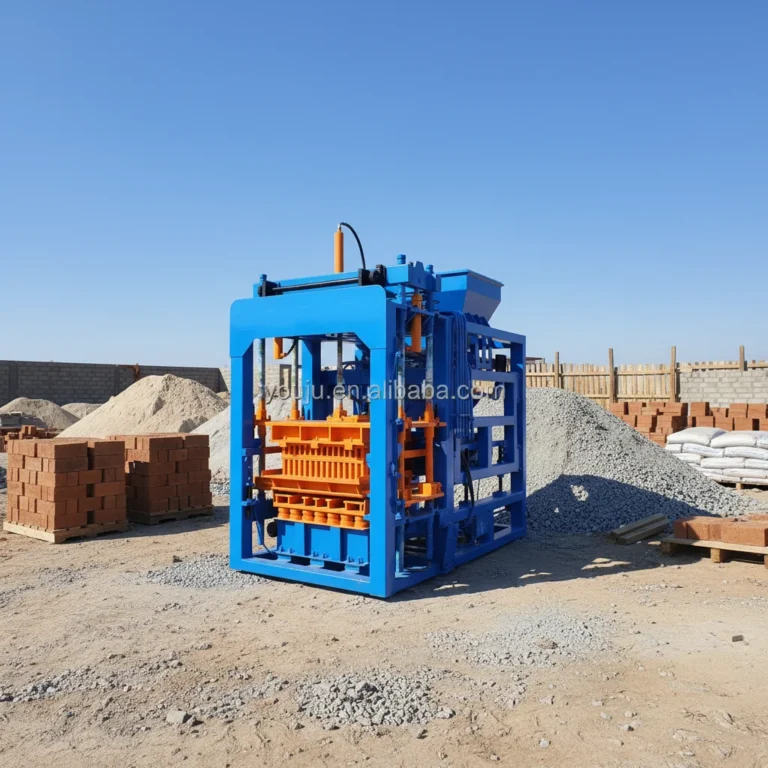
Matched System Design — The QTJ4-24 semi-automatic block machine is specified alongside its mould, pallet, and handling equipment as one coordinated production unit, eliminating the mismatch risks that arise when sourcing the press separately from its supporting stations.
Technical Specifications
| Parameter |
Value |
| Product Type |
Semi-Automatic Stationary Concrete Block Making Machine |
| Model |
QTJ4-24 |
| Molding Type |
Platform Vibration (lower and upper vibration) |
| Vibration System |
Lower platform: two 3 kW motors driving vibration box; Upper platform: 1.5 kW attached vibration device |
| Overall Power |
14.25 kW |
| Overall Dimensions (Working State) |
3600 mm × 1700 mm × 2560 mm |
| Total Mass |
1750 kg |
| Pallet Size |
850 mm × 450 mm |
| Mould Format (Hollow Block) |
390 mm × 190 mm × 190 mm — 4 pcs/mould |
| Mould Format (Solid Brick) |
240 mm × 115 mm × 53 mm — 21 pcs/mould |
| Output Capacity |
4 hollow blocks per cycle / 21 solid bricks per cycle (basis to be confirmed) |
| Elevating System |
Cone-shape motor with JZQ250 speed reducer, V-belt drive |
| Delivery Device |
Cycloidal pin wheel speed reducer with chain and V-belt drive |
| Material System |
Material releasing hopper + material storing hopper (bolted to frame) |
| Machine Frame |
Dragon gate style, super steel construction, four wear-resisting vertical guide shafts |
| Automation Level |
Semi-automatic (mechanical and electronic combined control) |
| Production Line Configuration |
Pairs with JQ350 pan mixer and 6 m belt conveyor |
| Optional Equipment |
Auto stacker (3–6 layers depending on block height), trolley for curing yard transfer |
Application Suitability
| Application |
Material or Output |
| Hollow concrete block production |
Standard concrete mix with crushed stone aggregate, 390 × 190 × 190 mm format |
| Solid concrete brick production |
Cement, sand, and fine aggregate blends, 240 × 115 × 53 mm format |
| Paving block and kerbstone production |
High-density concrete mixes with mould change, format-dependent |
| Small to medium block plant setups |
First-time production environments requiring moderate output and low initial investment |
| On-site block production for housing projects |
Contractor-operated yards using locally sourced aggregates and cement |
| Building material distributor expansion |
Facilities adding block formats to an existing concrete product range |
What "4 Blocks per Cycle" Leaves Out for Your Daily Target
The cycle output figure is only meaningful once the block format, mix design, and curing logistics are defined together.
Many quotations list a per-cycle number without naming the block format that figure assumes. A buyer expecting that rate across every format soon discovers that larger pavers or interlocking bricks require longer vibration and extended cure times, shrinking the daily total. I have watched contractors in Latin America plan a housing project around a cycle count that only applied to standard hollow blocks, leaving them short on delivery deadlines when the site switched to solid bricks. A semi-automatic block machine manufacturer should clarify which format each capacity figure references before you commit. [NEED_CITE: block format assumptions in equipment capacity claims]

Positioning the QTJ4-24 Within the Full Machine Range
Buyers entering the block production market face a spread of options from mobile egg-laying units to fully automatic stacking lines. The QTJ4-24 occupies the semi-automatic stationary tier, suited for operations that need consistent output beyond what a mobile machine delivers but are not yet ready for the investment and footprint of a fully automatic plant. This positioning helps a first-time buyer or a contractor expanding an existing yard identify where this model sits before scaling up or down within the range.
How the Semi-Automatic Tier Bridges Workshop and Plant Scale
A small workshop might start with manual pallet handling and add an auto stacker as volume grows. The QTJ4-24 supports this path: the mechanical-electronic control system handles the pressing cycle while operators manage pallet transfer, and the optional stacker reduces labour at the curing yard. This semi-automatic block machine manufacturer approach lets a buyer match the automation level to current demand rather than paying for capacity that sits idle. [NEED_CITE: automation upgrade paths in block production equipment]
Reading the Vibration and Frame Specs for Real Production Impact
The dual 3 kW lower vibration motors and the 1.5 kW upper vibration device work together to compact concrete evenly from both directions. Lower vibration settles the mix into the mould cavity, while upper vibration densifies the surface. The dragon gate frame with four wear-resisting vertical guide shafts keeps the mould aligned through thousands of cycles, preventing uneven block walls that lead to rejection. Pallet size at 850 × 450 mm is chosen to align with standard curing rack spacing and common forklift tine widths, so blocks can move from press to yard without rehandling. The overall power of 14.25 kW reflects a moderate draw that most small-plant electrical supplies can accommodate without dedicated transformer upgrades.
The Cost of Skipping the Pallet and Curing Yard Check
A buyer who confirms the press specification but overlooks pallet size and curing yard layout often discovers the mismatch after the machine arrives. Pallets that do not fit the existing forklift or curing racks force a secondary purchase or manual re-stacking, slowing the line. I have seen plants where the curing area was too small for the daily output, leaving fresh blocks stacked on the floor and damaging edges before they reached adequate strength. These issues trace back to treating the press as a standalone purchase rather than one station in a coordinated line. [NEED_CITE: pallet and curing yard coordination in block production]
Why Source the QTJ4-24 as Part of a Matched System
Block machinery is the single focus here, so the QTJ4-24 press, its moulds, pallets, and handling equipment are specified together rather than assembled from unrelated suppliers. Configuration starts from the buyer’s actual mix design and local aggregate, not a catalogue default. Mould design covers the formats the buyer’s market demands, including custom drawings when standard formats do not match. The automation level is selectable, allowing a buyer to begin at semi-automatic and move to a higher tier as volume justifies the investment. Installation and commissioning support includes operator training so the crew is productive from the first shift.
Documentation & Verification
- Line layout and capacity calculation stating the block format assumed for each output figure
- Machine specification sheet confirming pallet size, vibration force ratings, and overall power
- Mould drawing and format list showing every compatible block type for the QTJ4-24
- Voltage, frequency, and control language confirmation documented before production begins
- Factory test record on the buyer’s target block format before dispatch
Installation, Commissioning & Support
- Foundation pad sized to the 3600 × 1700 mm working footprint with anchor bolt template provided
- Electrical supply verified against the 14.25 kW total draw with dedicated circuit breaker sizing
- Pre-assembled main frame reduces on-site assembly to pallet system and hopper attachment
- First-run vibration tuning matched to the buyer’s concrete mix density and aggregate gradation
- Operator training covering mould change procedure and daily guide shaft lubrication schedule
- Wear parts list identifying vibration motor brushes and guide shaft bushings for initial stocking
What to Prepare Before Requesting a Quotation
To size the QTJ4-24 correctly within the range, share your target block formats and the daily output you need for each. Confirm the voltage, frequency, and control display language your site requires so the electrical panel and PLC are configured before the machine leaves the factory. If you already have curing racks and a forklift, provide the pallet dimensions those systems accept so the pallet specification matches your yard from day one.
Frequently Asked Questions
Q: How do I verify the real daily output of the QTJ4-24 for my specific block format?
A: Request a capacity calculation that states the exact block format, cycle duration, and shift length assumed for each output figure. A single per-cycle number without a format reference does not translate reliably to daily production. Compare the calculated output against your project delivery schedule before confirming the machine tier.
Q: Where does the QTJ4-24 sit compared to fully automatic and mobile tiers in the range?
A: The QTJ4-24 is a stationary semi-automatic model positioned above mobile egg-laying machines in output consistency and below fully automatic lines in investment and footprint. It suits buyers who need reliable daily volume without the complexity and cost of a fully automated stacking and cubing system.
Q: What plant footprint and curing area do I need for this semi-automatic setup?
A: The machine occupies a 3600 × 1700 mm working envelope, and the curing yard must accommodate daily output on 850 × 450 mm pallets with adequate spacing for air circulation. Plan for pallet return logistics and forklift access paths around the curing racks to keep the press cycle uninterrupted.
Q: Can I start with the QTJ4-24 and upgrade to a higher automation tier later?
A: The semi-automatic control system is designed within a machine family that supports higher automation levels. Adding an auto stacker or upgrading pallet feeding can be phased as production volume grows, allowing you to scale investment in step with market demand rather than committing to a full line upfront.
Q: How do I confirm voltage, frequency, and control language match my site before shipment?
A: Provide your site electrical specification and preferred control display language during the inquiry stage. The voltage and frequency are configured during production, and the control language is set before factory testing, avoiding commissioning delays caused by mismatched panels or unreadable displays after arrival.

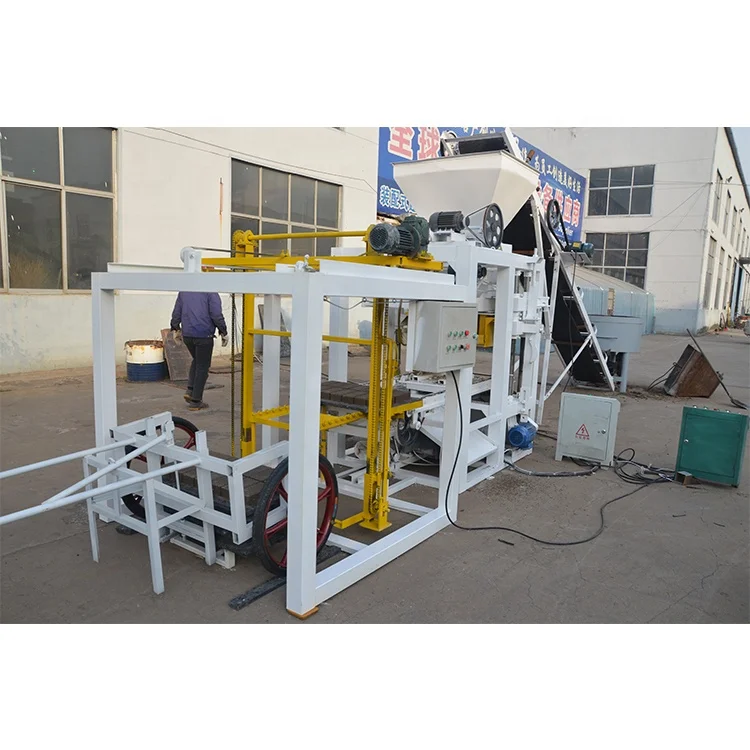
 Stationary block machine