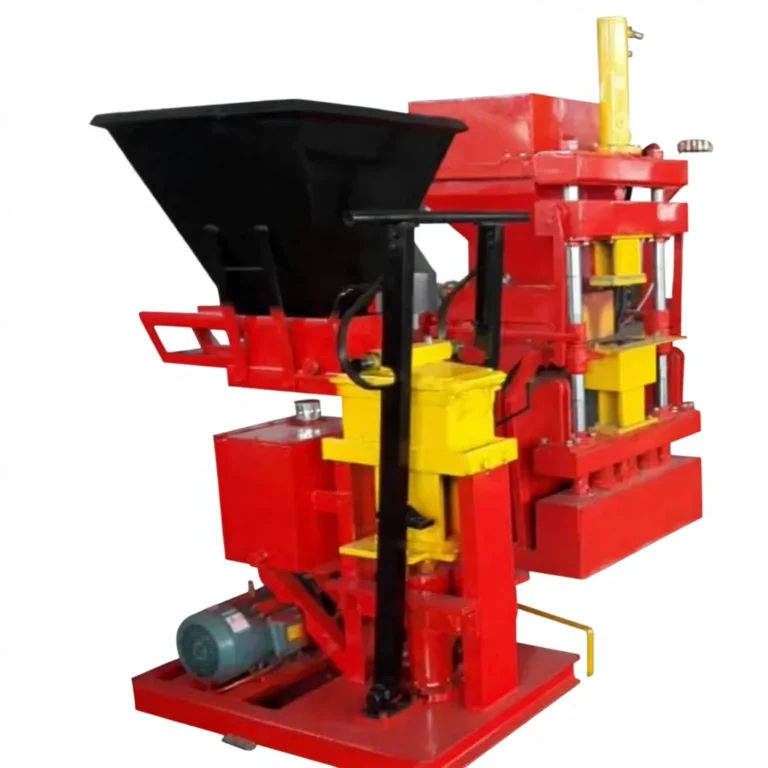
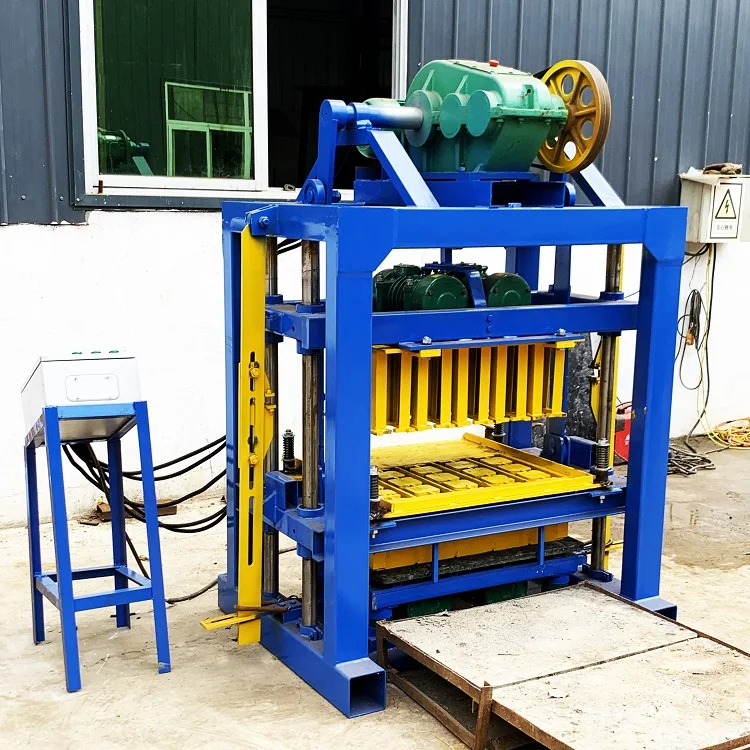
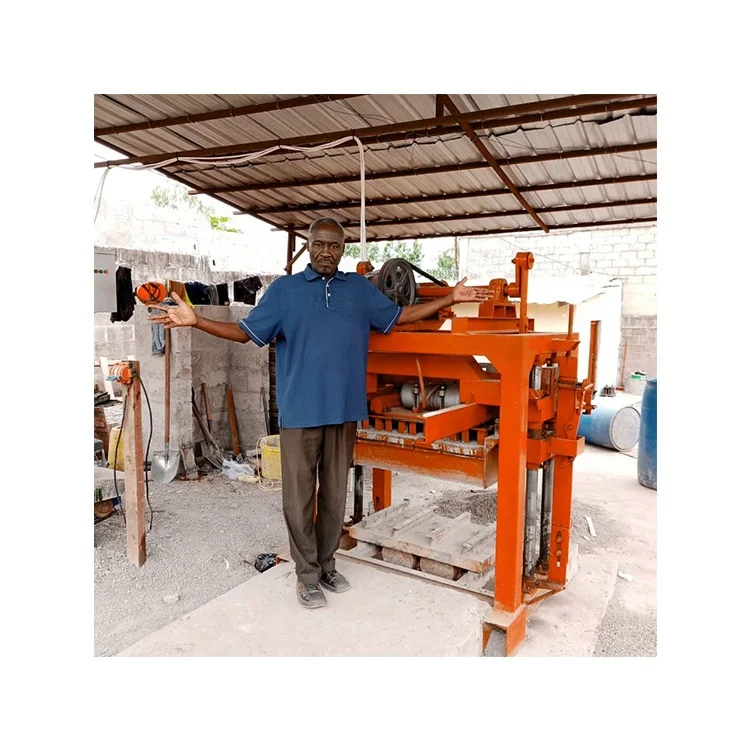
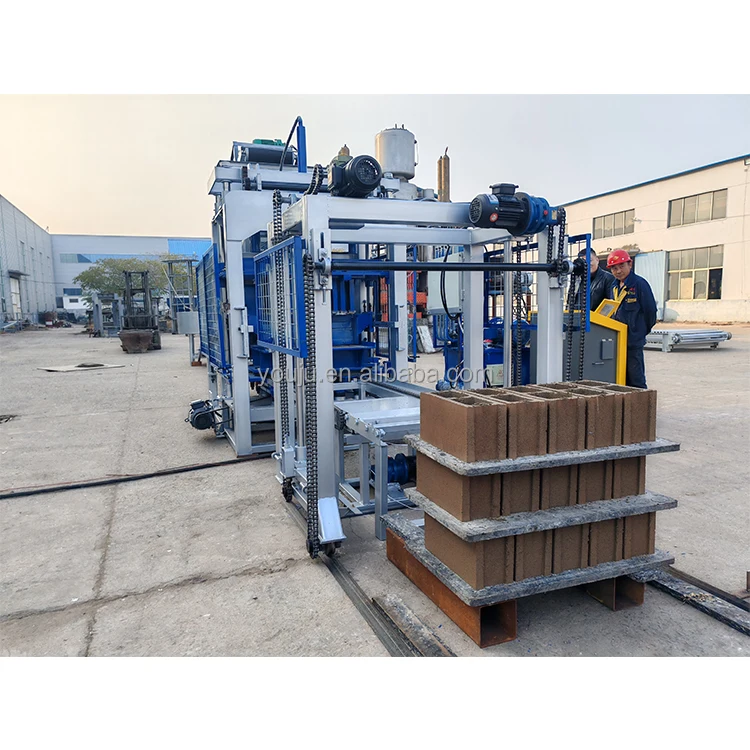
Matched System Approach — the QT5-15 stationary block machine, moulds, pallets and handling equipment are specified together against your local aggregate and block format, avoiding the mismatched supplier assembly that causes vibration and pressure problems on site.
Technical Specifications
| Parameter |
Value |
| Model |
QT5-15 |
| Product Type |
Stationary Hydraulic Block Making Machine |
| Overall Dimensions (L×W×H) |
7400 × 1950 × 2800 mm |
| Rated Hydraulic Pressure |
21 MPa |
| Main Vibration Form |
Hydraulic platform vibration |
| Vibrating Frequency |
2800–4500 rolls/minute (adjustable) |
| Cycle Time |
15–20 seconds |
| Motors Power |
26.5 kW |
| Pallet Size |
1100 × 550 mm |
| Net Weight |
6 T |
| Voltage |
According to buyer requirement (confirm voltage and frequency before production) |
| Control System |
PLC with fault diagnosis and remote monitoring capability |
| Output (240×115×90 mm brick) |
16 pcs/mould, 23,040–28,800 pcs/8h |
| Output (400×115×53 mm brick) |
32 pcs/mould, 61,440–70,400 pcs/8h |
| Output (400×200×200 mm hollow block) |
5 pcs/mould, 7,200–9,600 pcs/8h |
| Automation Level |
Full automatic |
Application Suitability
| Application |
Material or Output |
| Hollow Block Production |
400×200×200 mm blocks using crushed stone, cement, and fly ash |
| Solid Brick Production |
240×115×90 mm standard bricks from local sand and cement mixtures |
| Paving Brick Manufacturing |
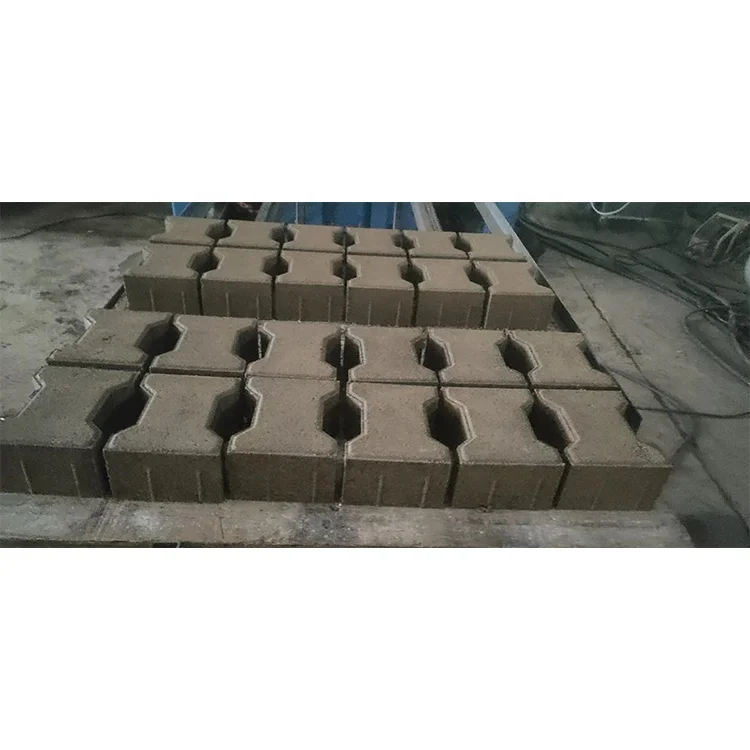
High-density interlocking pavers requiring 21 MPa compaction |
| Multi-Cellular Brick Lines |
Specialized formats for lightweight wall systems |
Why "Cycles Per Hour" Fails to Tell the Whole Story
Capacity figures are meaningless unless they state exactly which block format was used to calculate them.
Many stationary block machine manufacturer catalogs quote a single "pieces per hour" number based on the smallest brick in their range. When a buyer intends to produce large hollow blocks, actual daily output can fall drastically short of the quoted expectation, leading to missed project deadlines and cash flow shortfalls. Verifying the cycle time against your specific target format is the only way to get a realistic production baseline [NEED_CITE: realistic block plant capacity calculation methods].

Navigating the Stationary Block Machine Range
The QT5-15 occupies the mid-to-high tier of our stationary range, designed for buyers who have moved past mobile egg-laying production but may not yet require a high-capacity automatic line. As a stationary block machine manufacturer, we position this model for plants needing consistent output across multiple formats. It provides the hydraulic force necessary for engineering-grade pavers while remaining accessible for first-time plant owners.
Matching Automation to the Operator
This full automatic configuration removes the pallet handling and stacking variables from the operator’s workflow. The PLC system manages the sequence, allowing the operator to focus on material feed and quality checks rather than manual pallet movement. This level of automation provides a clear upgrade path for those currently running semi-automatic setups, ensuring batch-to-batch consistency without requiring a complete retraining of the plant workforce.
Vibration, Pressure, and Local Mix Design
The 21 MPa rated pressure and adjustable vibration frequency (2800–4500 rolls/minute) must be calibrated to the specific density requirements of your local aggregate. Using a high frequency for compaction is effective for fine sand, whereas coarser aggregates like volcanic ash or crushed granite require a different vibration profile to achieve structural integrity. The 1100 × 550 mm pallet size also dictates the curing rack dimensions and the forklift capacity needed in the yard [NEED_CITE: concrete mix design for stationary block production].
The Cost of Unconfirmed Site Conditions
When the voltage and frequency are not locked in before production, the machine may arrive with a motor configuration incompatible with the local grid, requiring costly rewinding or transformer installation. Similarly, if the PLC display language does not match the operator’s fluency, basic fault diagnosis becomes a barrier. These oversights lead to commissioning delays that can stretch a planned two-day setup into a multi-week troubleshooting exercise [NEED_CITE: industrial machinery export voltage and language standards].
Specified as a Single Integrated System
We configure the QT5-15 alongside the pallets and handling equipment to ensure the cycle times of the press match the speed of the stacker and the curing area capacity. Our approach involves testing the machine with your actual mix design rather than a factory default, ensuring the block strength meets local building codes. This prevents the common issue where the press is capable, but the supporting line bottlenecks the entire operation.
Documentation & Verification
- Line layout showing the block format assumed for each output calculation.
- Factory test record demonstrating cycle time and density per requested format.
- Voltage, frequency, and PLC language confirmation sheet signed before production.
- Hydraulic and electrical schematics matching the installed components.
- Pallet specification sheet matching the curing rack and forklift requirements.
Installation, Commissioning & Support
- Foundation must support the 7400 × 1950 mm footprint and 6 T operating weight.
- Power supply must meet the 26.5 kW load with the confirmed voltage and frequency.
- Commissioning includes tuning the 21 MPa pressure to the local aggregate mix.
- Training covers the PLC fault diagnosis system and remote monitoring interface.
- Wear parts list provided for the hydraulic seals and mould liner plates.
Preparing Your Inquiry
To receive a configuration that reflects your actual site conditions, please provide the specific block formats you intend to produce and the target daily output for each. Include details on your local raw materials, including aggregate type and moisture content, as well as your site voltage and preferred control language.
Frequently Asked Questions
Q: How is capacity verified and what block format is each output number based on?
A: Every output figure in our proposal states the specific block size it applies to, such as 5 pcs/mould for 400×200×200 mm hollow blocks. We do not provide a single generic capacity number. Verification happens during the factory test using your target format before shipment.
Q: Where does the QT5-15 sit on the range — and when should I step up to a higher tier?
A: The QT5-15 is a mid-tier stationary unit for buyers past the mobile stage who need consistent multi-format output. You should consider a higher tier only if your daily volume requirements exceed the 7,200–9,600 hollow block capacity or if you require a larger pallet size for specialized paving formats.
Q: What voltage, frequency and control language do I need to confirm before shipment?
A: You must confirm your local grid voltage (e.g., 380V/50Hz or 440V/60Hz) and the preferred language for the PLC display. We require written confirmation of these parameters to ensure the motors and control interface are ready for immediate commissioning upon arrival.
Q: Can I start with a semi-automatic configuration and upgrade the QT5-15 later?
A: Yes, the machine is designed with an upgrade path. You can initially operate with manual pallet handling and later add automatic stacking and cubing systems as your production volume increases and labor availability changes.
Q: What is included in the plant footprint — does the quotation cover pallet handling?
A: We specify the entire line, including raw material feeding, pallet circulation, and stacking. This ensures the quotation reflects the total investment required for a functioning plant, rather than leaving auxiliary equipment as an unexpected cost after the main press arrives.

 Stationary block machine