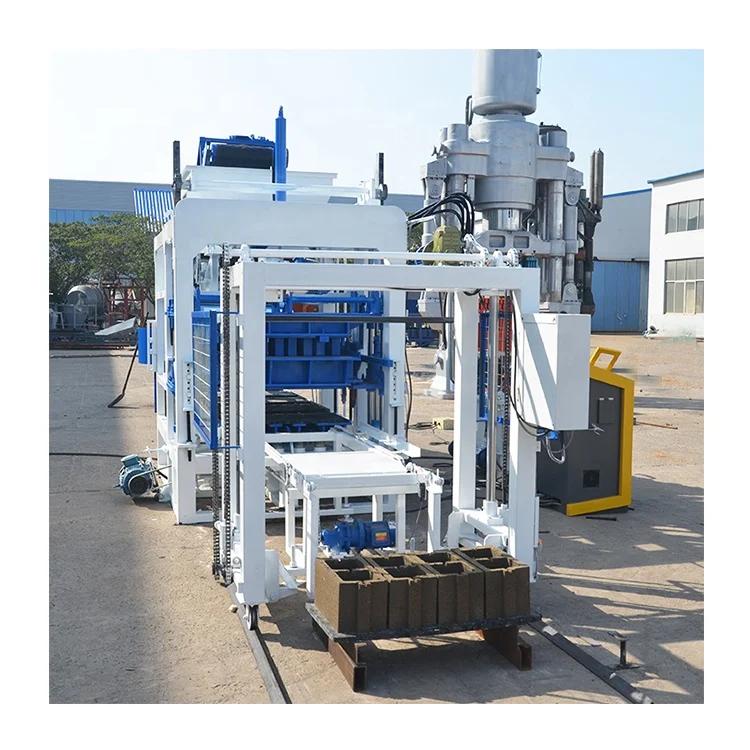
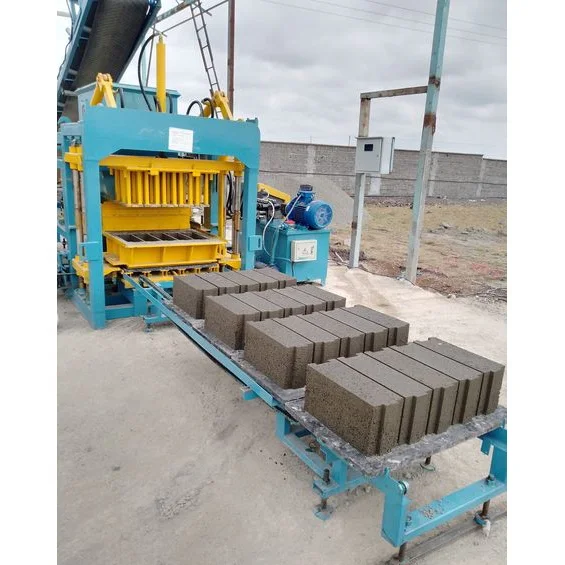
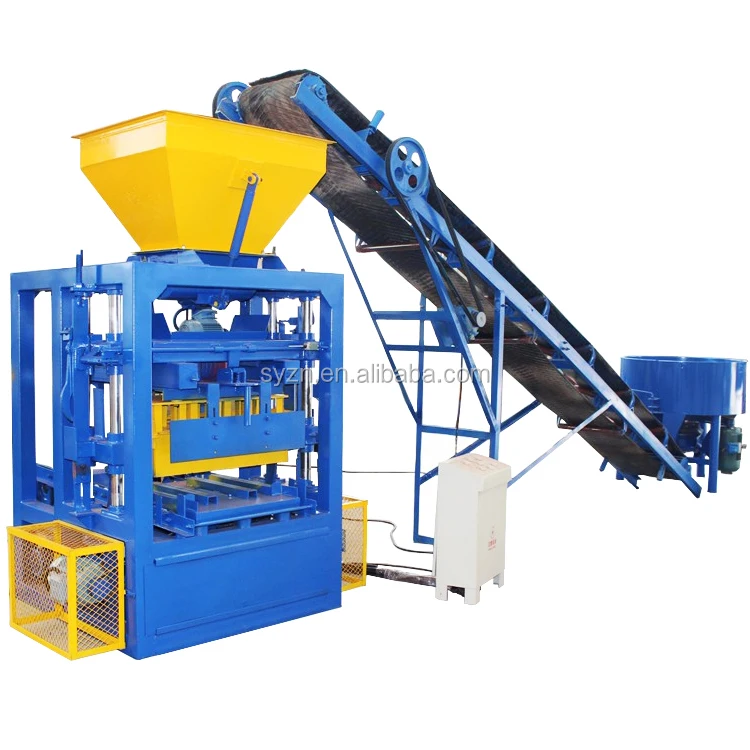
Mid-tier automatic output — the QT6-15 balances press capacity and plant footprint so buyers scaling up from semi-automatic lines can match their daily format mix without over-investing in floor space.
Technical Specifications
| Parameter |
Value |
| Model |
QT6-15 |
| Product Type |
Automatic Concrete Block Making Machine |
| Productivity per Mold (Standard Hollow Block 390×190×190mm) |
6 pcs/mold |
| Productivity per Mold (Solid Block 240×115×53mm) |
30 pcs/mold |
| Productivity per Mold ("S" Shape Interlock Paver 225×112.5×60mm) |
15 pcs/mold |
| Overall Dimension |
7100×1500×3000 mm |
| Weight (simple production line) |
10 t |
| Pallet Size |
850×680 mm |
| Motor Power |
31.25 kW |
| Rated Pressure |
21 MPa |
| Vibration Force |
60 KN |
| Control System |
PLC (Siemens electronics) |
| Motor Brand |
Siemens |
| Mould Material Treatment |
Wire cutting and carburizing heat treatment |
| Stacker |
Included (lifting pallets with finished blocks) |
| Remote Control System |
Applicable |
| Warranty |
1 year for the whole machine (without spare parts) |
Application Suitability
| Application |
Material or Output |
| Hollow block production for commercial and residential walls |
Crushed stone, sand, cement, and fly ash blends |
| Solid facing block manufacturing |
Dense aggregate mixes requiring high compaction |
| Interlocking paver runs for driveways and walkways |
Fine aggregate with color oxide additives |
| Kerbstone and grass block formats for infrastructure |
Standard concrete mixes with coarser aggregate |
Why the Voltage Question Must Come Before the Quote
Every automatic block machine manufacturer ships units that sit idle on-site because the local supply voltage was never confirmed.
I have walked onto Middle East project sites where a QT6-15 had been sitting under a tarp for three weeks, waiting for a step-down transformer that nobody ordered before shipment. The contractor was paying crew to stand around while the block line gathered dust [NEED_CITE: common causes of commissioning delays in imported concrete equipment]. Locking in voltage, frequency, and PLC display language at the inquiry stage is the single most effective way to prevent that kind of downtime.

Where the QT6-15 Sits in a Complete Block Plant
The QT6-15 occupies the mid-to-high output tier, meaning it pairs naturally with a full supporting line rather than operating as a standalone press. Raw material batching, pallet circulation, and the included stacker all need to match its cycle rhythm so the machine is never left waiting for the next pallet or a cleared curing rack. Buyers evaluating this automatic block machine manufacturer should look at the entire layout, not just the press head.
Matching Automation to Your Current Crew
Siemens PLC control handles batching sequences and vibration timing, removing those decisions from the operator’s hands. The stacker lifts loaded pallets to curing height, cutting the manual pallet carrying that typically limits semi-automatic plants. For buyers who currently run smaller machines, this is the automation step that lets one crew manage higher daily volumes without adding headcount [NEED_CITE: labour allocation in semi-automatic versus automatic block plants].
Reading the Specs That Actually Shape Block Quality
Rated hydraulic pressure at 21 MPa and vibration force at 60 KN together determine the green density of every block that leaves the press. Higher compaction means blocks can be de-moulded sooner and moved to the curing yard without corner damage. The 850×680 mm pallet size dictates the curing rack spacing you will build and the forklift tine width you already own — change the pallet spec and you may find yourself replacing yard equipment too. Moulds undergo wire cutting and carburizing heat treatment, which extends tooling life when running abrasive local aggregates such as crushed river gravel.
The Hidden Cost of a Mismatched Configuration
When a machine is configured around a catalogue default rather than your local aggregate, the vibration settings that produce strong blocks in the factory test will not translate to your yard. Mould changes that take most of a shift erase the format flexibility you paid for, and pallet dimensions that ignore your existing curing racks force you to rebuild the yard from scratch [NEED_CITE: pallet and curing area coordination in block production]. These are not engineering flaws — they are specification gaps that surface only after the machine is bolted to the floor.
Why Source This Machine Through Us
Block machinery is our single product focus, so the QT6-15 press, its moulds, pallets, and the stacker are specified as one matched system rather than assembled from separate suppliers. We set the configuration against your actual mix design and target block format, not a generic catalogue page. Mould drawings are produced for the formats your local market sells, including custom shapes from buyer-supplied drawings. The automation level is selectable, so you can start with the included stacker and add full cubing later. Installation support and operator training are part of the commissioning scope, not an optional extra.
Documentation & Verification
- Line layout showing QT6-15 footprint with pallet flow and stacker clearance zones
- Capacity calculation per block format you intend to produce
- Mould drawing pack with format list matching your local market
- Factory test record covering cycle times and block density on your mix
- Voltage, frequency, and PLC display language confirmation sheet
- Hydraulic and electrical schematic for on-site maintenance reference
Installation, Commissioning & Support
- Foundation pad must accommodate the 7100×1500 mm footprint plus stacker travel
- Dedicated electrical circuit rated for 31.25 kW with confirmed local voltage and frequency
- Machine arrives dismantled for container loading; reassembly supervised on-site
- First-run commissioning includes PLC parameter tuning for your specific mould set
- Operator training covers mould change procedure and daily maintenance checkpoints
- Wear parts list and mould inventory provided before shipment for your spares planning
What to Share Before Requesting a Quote
Send the exact block formats your market requires, along with the daily output target for each format. Include your local aggregate type and any existing mix proportions you already run. Confirm your site voltage, frequency, and the language you need on the PLC display. If you already have curing racks and forklifts, share their dimensions so the pallet and stacker configuration can be aligned before production starts.
Frequently Asked Questions
Q: How is daily output calculated for different block formats on the QT6-15?
A: We calculate output per mold for each specific format — for example, 6 pieces per mold for 390×190×190 mm hollow blocks and 15 pieces per mold for "S" shape interlock pavers. Daily totals then factor in your shift length, mix preparation time, and pallet circulation speed rather than quoting a single generic figure.
Q: Can the QT6-15 automation level be expanded after initial installation?
A: Yes. The PLC platform and mechanical interfaces allow you to add automatic cubing or upgraded pallet return systems later. The included stacker handles pallet lifting from day one, and further automation modules can be integrated without replacing the core press or control cabinet.
Q: How do you confirm voltage and PLC language before shipment?
A: We request your site voltage, frequency, and preferred display language during the inquiry stage and lock them into the production order. A confirmation sheet is signed off before the machine enters assembly, so the electrical cabinet and PLC firmware match your facility when the container arrives.
Q: What footprint does the QT6-15 require with its stacker and pallet system?
A: The press itself measures 7100×1500×3000 mm. You also need clearance for pallet feed on the infeed side, stacker travel on the outfeed side, and aisle space for forklift access to the curing racks. A full line layout drawing is provided showing every station and its clearance zone.
Q: How long does a mould change take, and is operator training included?
A: Mould change time depends on the format and whether your crew has been trained on the clamping system. Operator training is included during commissioning and covers the full change sequence, tooling alignment checks, and PLC parameter recall for each registered mould set.

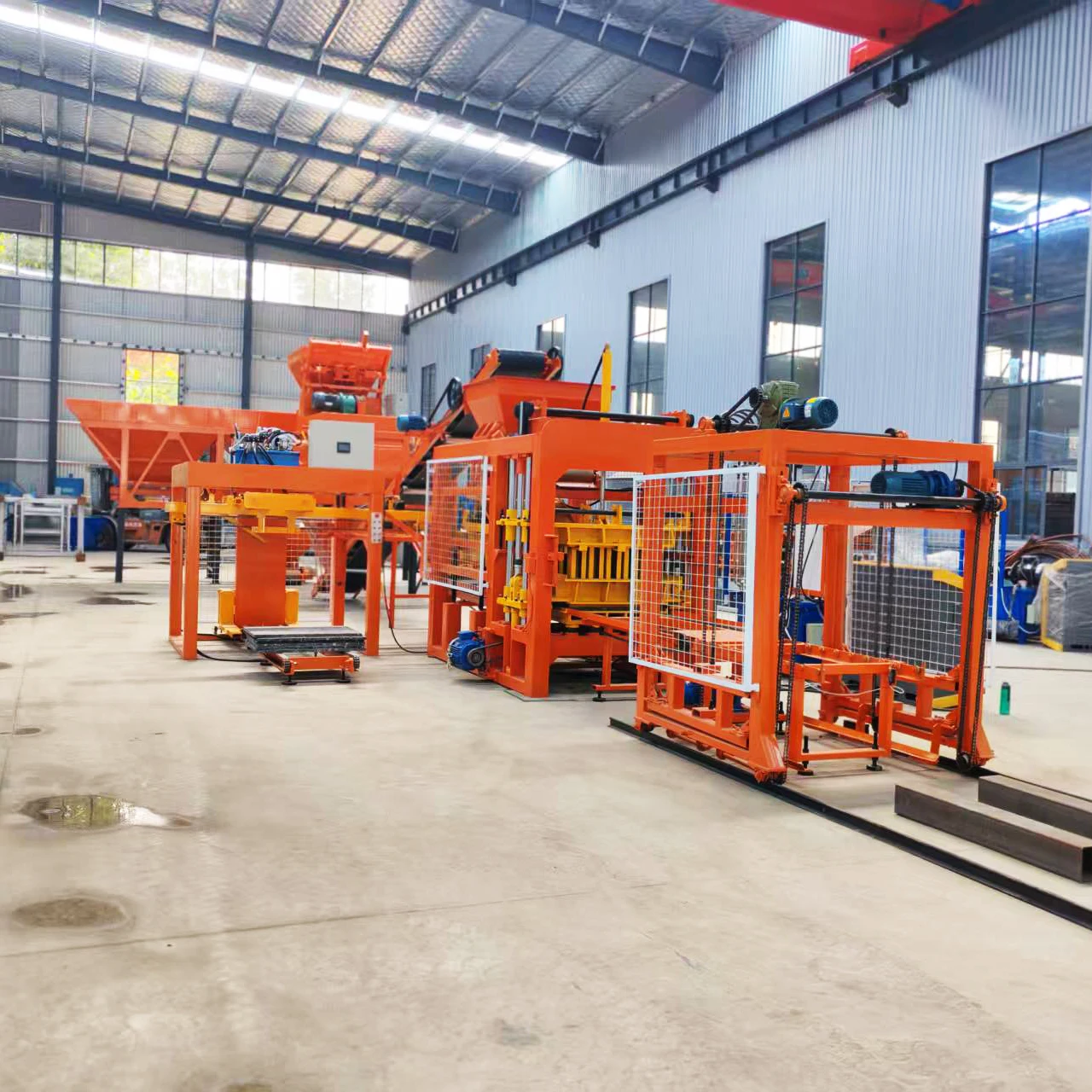
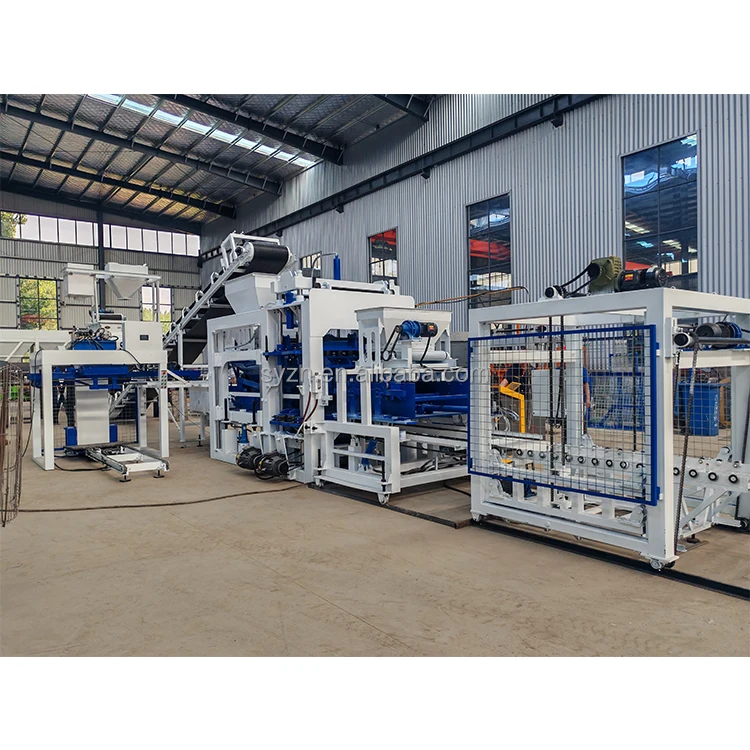 Automatic block machine