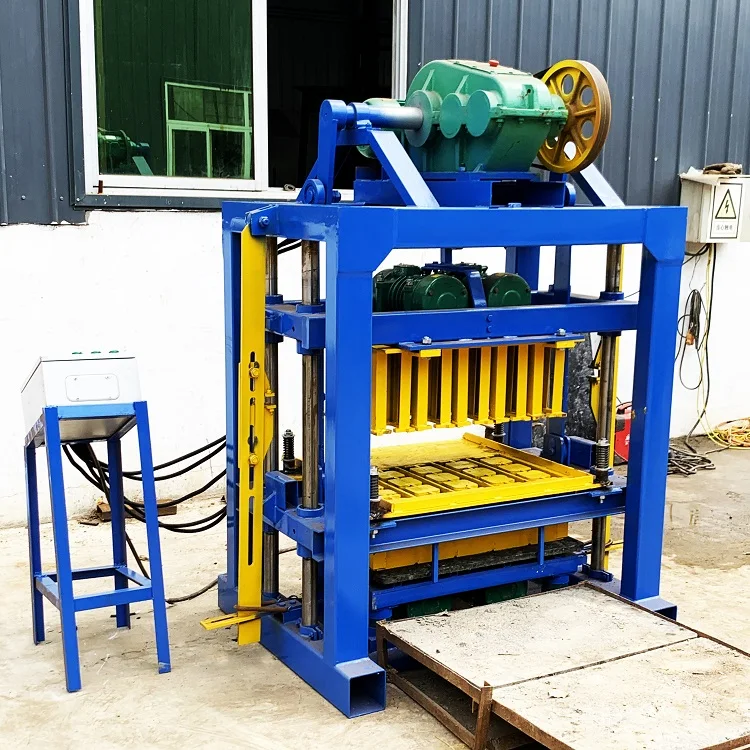
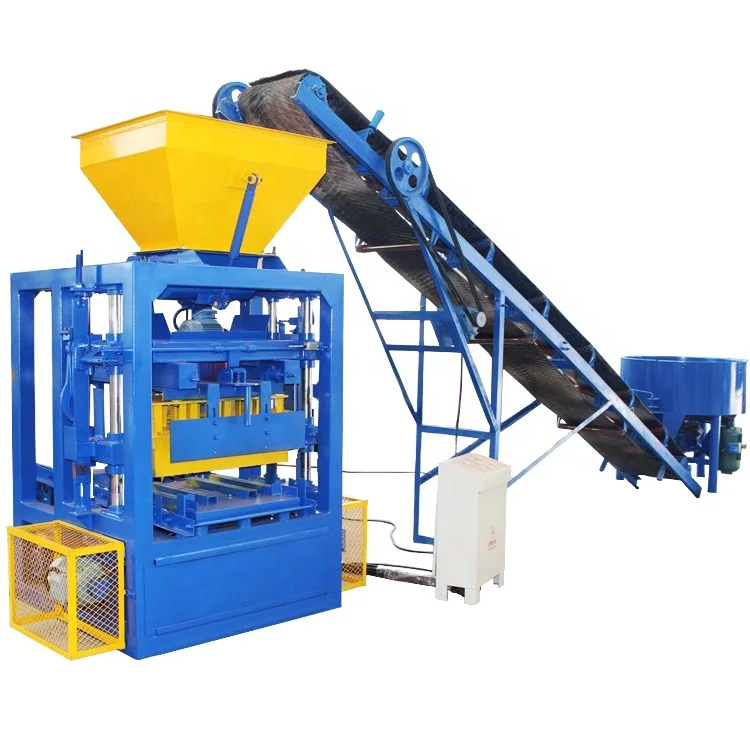
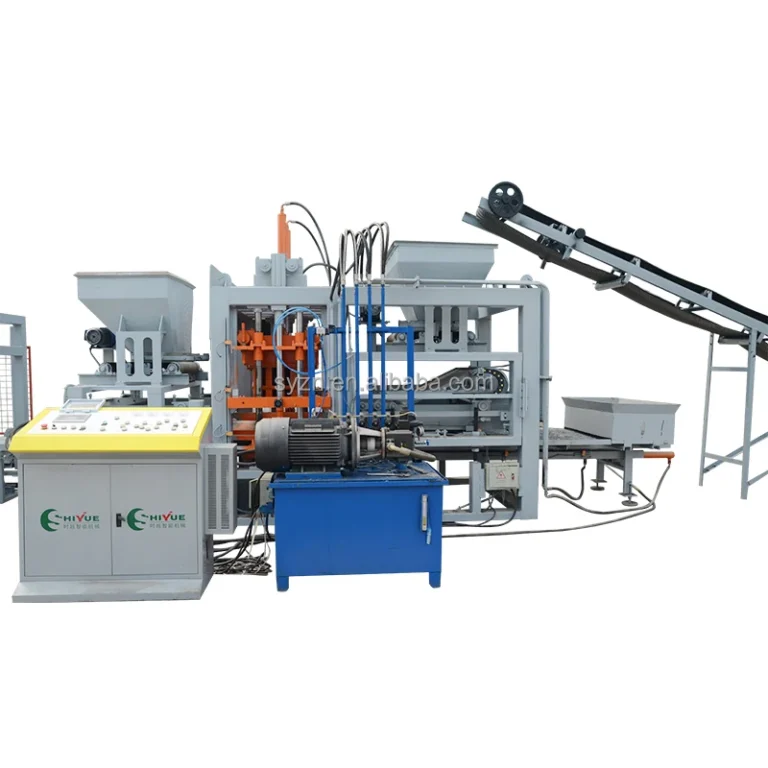
Compact Footprint Entry Tier — the QTJ4-35 anchors the Shiyue stationary range so first-time buyers can start production within a 260 m² workshop and later upgrade without replacing the core press and pallet system.
Technical Specifications
| Parameter |
Value |
| Model |
QTJ4-35 |
| Product Type |
Stationary Block Making Machine |
| Overall Dimensions (L×W×H) |
2050 × 1660 × 1900 mm |
| Total Mass |
1500 kg |
| Rated Exciting Force |
35 kN |
| Main Vibration Form |
Platform Vibration |
| Vibration Frequency |
2800 r/min |
| Pallet Size |
850 × 450 mm |
| Molding Cycle |
35 s (basis to be confirmed per block format) |
| Overall Power |
9.7 kW |
| Demolding Method |
Vibration |
| Factory Area Required |
260 m² |
| Control System |
Available with manual relay or PLC (confirm before order) |
| Voltage & Frequency |
Configurable to buyer’s local supply (confirm before production) |
| Automation Level |
Semi-automatic with manual pallet handling |
| Stacking Method |
Manual |
| Applicable Raw Materials |
Crushed stone, sand, cement, fly ash, gravel, slag, stone dust |
Application Suitability
| Application |
Material or Output |
| Hollow block production for residential walls |
Crushed stone, sand, cement blends |
| Solid block manufacturing for load-bearing structures |
Gravel, cement, stone dust mixes |
| Interlocking paver production for walkways and driveways |
Fine aggregate, cement, color pigment |
| Curbstone forming for roadside and landscaping projects |
Coarse aggregate, cement, slag blends |
| On-site block production at housing project locations |
Locally sourced aggregate and cement |
What "35-Second Cycle" Actually Means on the Shop Floor
The cycle figure only matters when tied to a specific block format and local mix — everything else is brochure filler.
Many small-plant buyers have seen a single cycle number quoted and assumed it applies equally to every mould they plan to run. In practice, a 35-second press cycle on a standard hollow block does not translate directly to a paver or a tall curbstone, because the vibration duration and hydraulic hold differ by geometry and material density. When a QTJ4-35 block machine manufacturer quotes output, the format assumed must appear on the capacity document, or daily production targets will fall short before the first week ends. I have watched operators stand around a running machine wondering why the pallet count at lunch did not match the morning promise, simply because the quoted cycle was measured on a format they were not producing. [NEED_CITE: block format effect on actual cycle time in vibration pressing]
Where the QTJ4-35 Sits in the Stationary Range
The Shiyue stationary line spans from this semi-automatic entry tier up through fully automatic stacking and cubing configurations. The QTJ4-35 occupies the first rung, designed for buyers who need a working plant inside a limited footprint and budget before committing to higher automation. The pallet size — 850 × 450 mm — is shared across tiers, which means a buyer who starts here can add automatic pallet feeding and stacking equipment later without swapping the press or re-tooling the curing racks. This continuity matters because changing pallet dimensions mid-stream forces a reconfiguration of the entire curing area, forklift paths, and stacking logic.
The Pallet and Handling Reality at This Tier
At the semi-automatic level, pallets are placed and removed by hand, and freshly pressed blocks move to the curing zone on those same pallets via manual cart or trolley. This keeps initial investment contained but sets a ceiling on how many cycles one operator can sustain across a shift. The 260 m² factory area figure includes the press, raw material staging, and a basic curing footprint — it does not assume conveyor-linked stacking. Buyers who plan to run two shifts or scale volume within the same site should confirm the pallet quantity and curing rack layout early, because pallet availability becomes the bottleneck long before the press itself reaches its mechanical limit. [NEED_CITE: manual pallet handling effect on shift output in semi-automatic block plants]
Vibration Force, Pallet Size, and What They Decide Together
The 35 kN exciting force delivered through platform vibration at 2800 r/min is tuned to the 850 × 450 mm pallet area. This pairing determines how evenly the concrete mix compacts across the mould cavity — too little force on a wide pallet leaves soft edges, while excessive force on a small pallet can fracture the block before demolding. For buyers working with lightweight aggregates like volcanic stone or expanded clay, the vibration frequency and duration may need adjustment from the default settings, which is why sharing the actual aggregate type and gradation before finalizing the machine configuration prevents a costly on-site recalibration period. The 9.7 kW total power draw covers the vibration motor, hydraulic pump, and control panel within a single three-phase supply, keeping the electrical infrastructure straightforward for a small workshop. Mould change on a platform-vibration machine involves unbolting the mould box from the platform and aligning the new unit to the vibration table — confirming the changeover procedure and tool requirements with the supplier avoids losing most of a shift the first time a format switch is needed.

The Cost of Skipping Mix-Design Verification Before Shipment
When a machine leaves the factory tested on standard river sand and arrives at a site where the only available aggregate is crushed volcanic rock or locally crushed coral stone, the compaction behavior changes entirely. Blocks may crack during demolding, show inconsistent density, or fail a compressive strength test — none of which appear during the factory acceptance run. This mismatch is the most common reason a new plant spends its first weeks producing scrap instead of saleable product, and it is entirely preventable by sending the supplier a sample of the intended aggregate and the planned mix ratio before the machine is finalized. [NEED_CITE: aggregate variation effect on block density and compressive strength]
Why Buyers Source This Tier Through Shiyue
Block machinery is the single focus here, so the press, mould, pallet, and handling accessories are specified as a matched set rather than pulled from separate vendors who may not communicate on tolerances. Machine configuration is set against the buyer’s actual mix design and local aggregate, not a default catalogue setting that assumes standard sand. Mould design covers the hollow, solid, paver, interlocking, and curbstone formats the buyer’s market actually demands, including custom drawings when a project specifies a non-standard dimension. The automation path is selectable — a buyer can start with manual pallet handling on the QTJ4-35 and add automatic stacking onto the same pallet size when volume justifies it. Installation support includes on-site commissioning and operator training so the first production run happens with someone who knows the machine standing beside the team.
Documentation & Verification
- Line layout showing press, curing area, and pallet flow within the 260 m² footprint
- Capacity calculation stating the exact block format behind the 35-second cycle figure
- Mould drawing pack listing included and optional formats with dimensional tolerances
- Voltage, frequency, and control language confirmation signed before production begins
- Factory test record run on the buyer’s specified block format before crate packing
- Pallet specification sheet covering size, material, and quantity shipped with the machine
Installation, Commissioning & Support
- Level concrete floor required across the 2050 × 1660 mm press footprint with anchor bolt provisions
- Dedicated three-phase circuit sized for the 9.7 kW total load with isolator at the control panel
- Machine ships partially assembled; vibration platform and hopper are bolted on-site to the main frame
- First-run parameter tuning covers vibration duration and pressure matched to the buyer’s aggregate sample
- Operator training session covers mould change procedure, daily greasing points, and pallet inspection routine
- Wear parts list identifies vibration springs, platform rubbers, and hydraulic seals with reorder intervals
What to Share With Your Inquiry
To size the QTJ4-35 correctly and avoid configuration surprises after arrival, send the intended block formats with dimensions, the target daily output per format, and photographs of the local aggregate you plan to use. Include the site supply voltage and frequency, the control panel language preference, and a sketch of the available workshop area so the line layout can be drafted around your existing space. If you already have pallets, curing racks, or a forklift on-site, share those dimensions as well — pallet and handling compatibility is easier to solve on paper than after the container arrives.
Frequently Asked Questions
Q: How is the QTJ4-35 daily output calculated, and which block format does the cycle assume?
A: The 35-second molding cycle is a base figure that shifts depending on block geometry, material density, and wall thickness. Daily output is calculated by multiplying confirmed cycles per format by the number of blocks per pallet and the planned shift hours. Always request the capacity sheet that states the format behind the quoted number before comparing machines.
Q: Where does the QTJ4-35 sit compared with automatic and mobile tiers in the Shiyue range?
A: This model is the entry semi-automatic tier — manual pallet handling, compact footprint, lower initial investment. Automatic tiers add pallet feeding, stacking, and cubing on the same pallet size. Mobile tiers eliminate the fixed plant entirely for on-site production. The shared pallet dimension means upgrading later keeps your curing area intact.
Q: What plant footprint and utility connections does this model need?
A: The press itself occupies roughly 2050 × 1660 mm, but the full working area including raw material staging and curing space totals around 260 m². Power requirement is 9.7 kW on a three-phase supply. Voltage and frequency must be confirmed before production so the motor and control panel match the local grid.
Q: Can I start semi-automatic and add automatic stacking later on the same pallet size?
A: Yes. The 850 × 450 mm pallet is standard across the Shiyue stationary range. Adding automatic pallet feeding and stacking equipment later does not require replacing the press, moulds, or existing curing racks — the upgrade bolts onto the same line layout.
Q: Which mould formats come with the machine, and how long does a change take?
A: Standard included formats depend on the quotation package. Hollow, solid, paver, interlocking, and curbstone moulds are all available for this platform. Mould change time varies by operator familiarity and tooling prepared — confirm the changeover procedure and required tools with the supplier so your first format switch does not consume an unplanned shift.

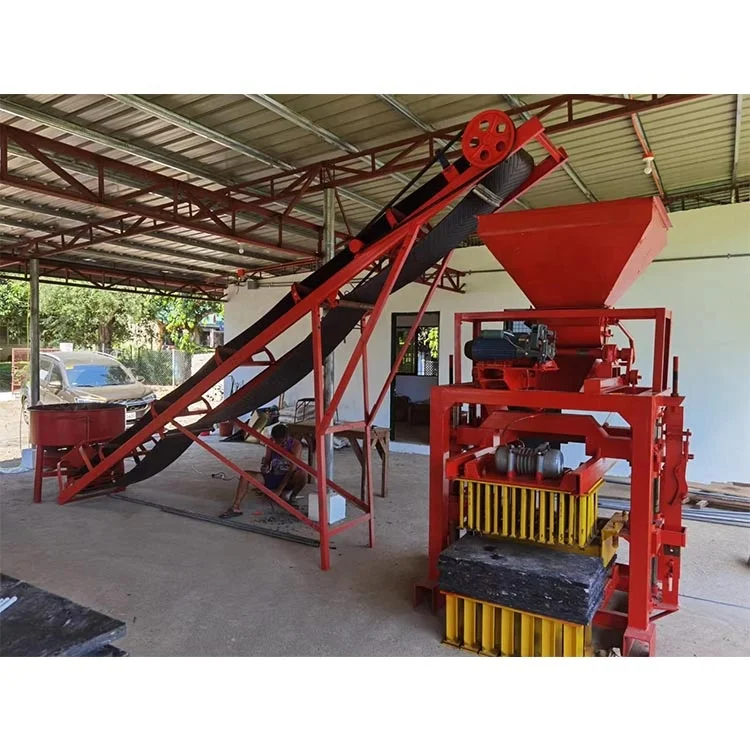
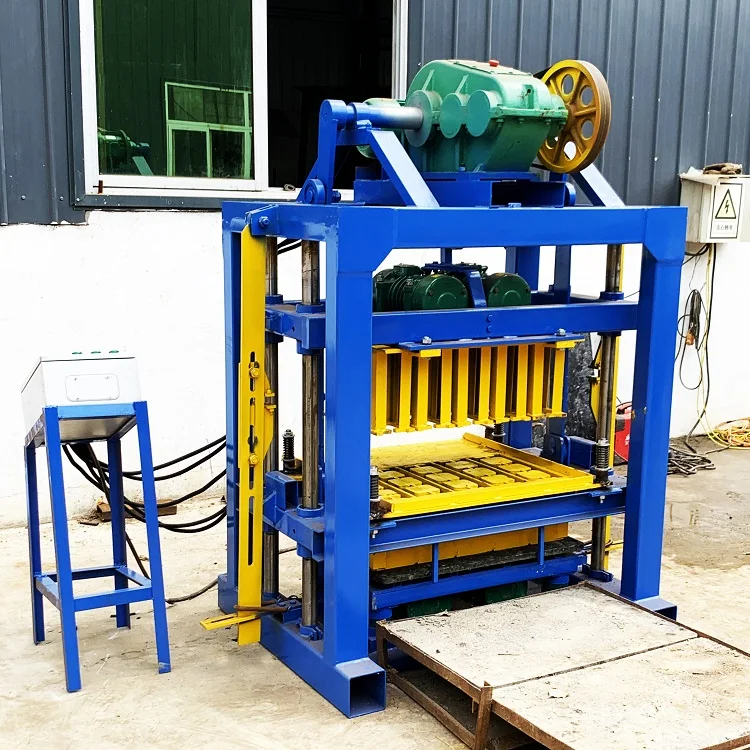 Stationary block machine