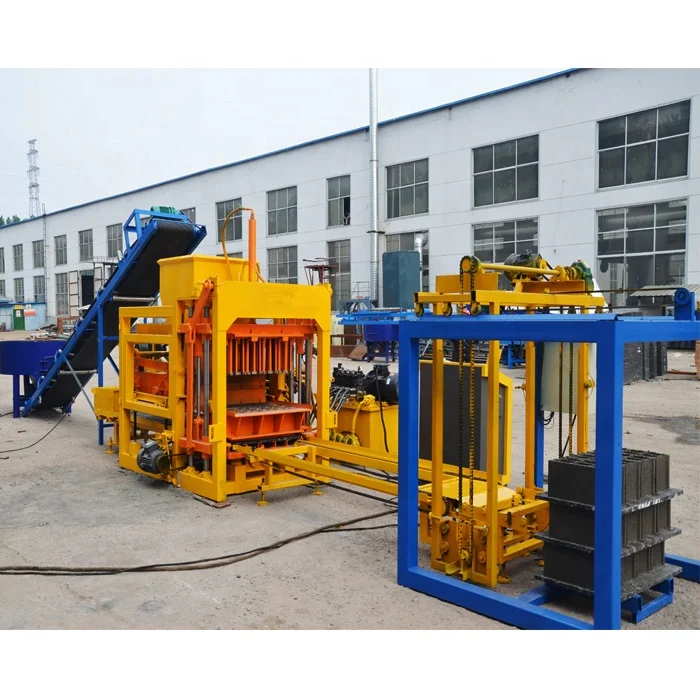
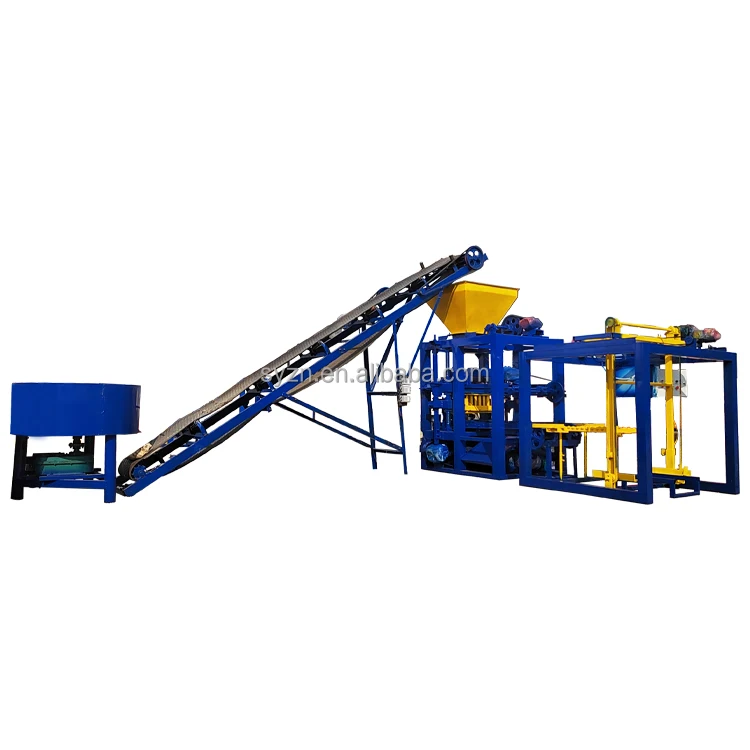
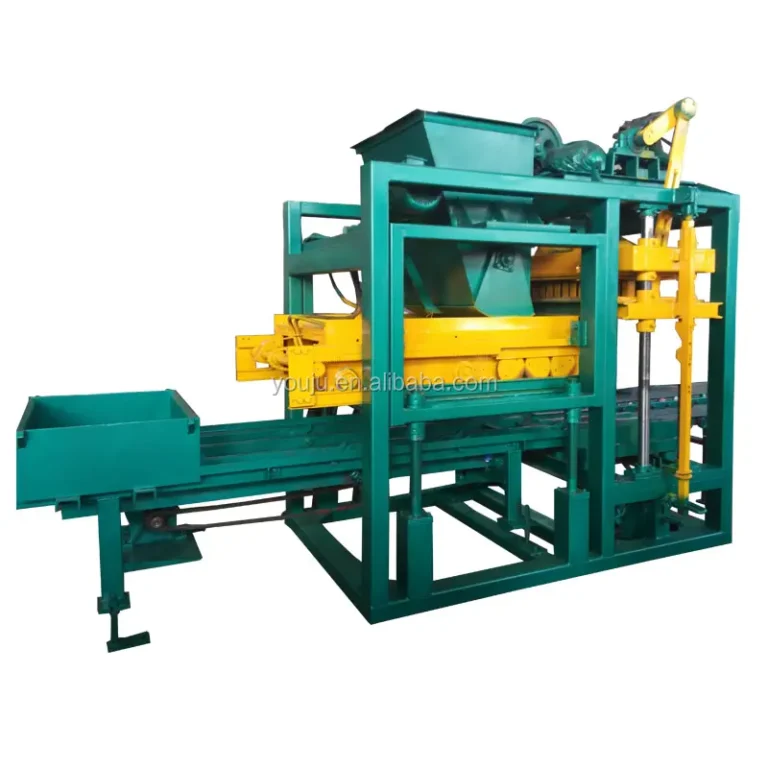
Single-Focus Machinery Match — every QTJ4-25 configuration we ship is validated against the buyer’s actual aggregate, block format, and curing logistics before production begins.
Technical Specifications
| Parameter |
Value |
| Model |
QTJ4-25 |
| Product Type |
Semi-Automatic Concrete Block Making Machine |
| Overall Dimensions (L×W×H) |
3060×1730×2580 mm |
| Total Weight |
4T (source value — verify against manufacturer catalog) |
| Vibration Force |
45 KN |
| Cycle Time |
25s (basis not stated in source — confirm block format / material / thickness) |
| Pallet Size |
850×550 mm |
| Block Height Range |
40-280 mm |
| Workshop Area |
50-150 m² |
| Material Storage Area |
300-500 m² |
| Belt Conveyor Length |
8m |
| Mixer Model |
JQ500 |
| Motor Brand |
Germany SIEMENS or ABB |
| Control System |
Electric control (PLC availability to be confirmed) |
| Voltage & Frequency |
380V, 3-phase, 50HZ (customizable to local voltage) |
| Automation Level |
Semi-automatic |
| Mould Format Capability |
Hollow block, solid block, interlocking block, paver, kerbstone, colored paver, grassed brick, revetment brick (via mould change) |
| Warranty |
1 year (excluding wearing parts) |
Application Suitability
| Application |
Material or Output |
| Small to medium concrete block production plants |
Crushed stone, sand, cement, and fly ash blends for hollow and solid block runs |
| On-site block production for construction contractors |
Local aggregate and cement mixed on project sites within a compact 50–150 m² workshop footprint |
| Entrepreneurs establishing a first block plant |
Standard masonry formats including 400×200×200mm hollow blocks and 240×115×53mm solid bricks |
| Building material distributors expanding format range |
Pavers, kerbstones, interlocking blocks, and grassed bricks via mould change on existing lines |
What "25 Seconds per Cycle" Actually Means for Your Daily Output
Cycle time only matters when tied to the exact block format you intend to sell.
A semi-automatic block machine manufacturer quoting a single cycle time without naming the block format is giving you a number that cannot translate into a production plan. The QTJ4-25 operates on a 25-second cycle, but that figure shifts depending on whether you are pressing a 400×200×200mm hollow block, a 400×150×200mm variant, or a standard solid brick. I spent two weeks on-site in West Africa recalibrating vibration parameters because the local volcanic aggregate behaved nothing like the test sand we used in the workshop [NEED_CITE: aggregate shape and grading impact on vibration transfer in block presses]. Without that upfront material check, the rated cycle time would have been meaningless in actual production.

Where the QTJ4-25 Sits in the Machine Range
The QTJ4-25 occupies the semi-automatic tier of the Shiyue stationary block machine lineup. It is positioned for buyers who need dependable daily output without the capital commitment of a fully automatic stacking and cubing line. This semi-automatic block machine manufacturer designs the QTJ4-25 to fit workshops between 50 and 150 m², meaning a first-time plant owner or a contractor producing on a job site can install it without major civil works.
Understanding the Semi-Automatic Workflow
Semi-automatic operation means the press cycle — vibration, pressure, mould release — runs on electric control, while pallet feeding and product removal involve manual or assisted handling. This keeps the initial investment contained and gives operators direct oversight of each cycle. Buyers who later require higher throughput can transition to a higher automation tier within the same system architecture, protecting the original capital outlay [NEED_CITE: semi-automatic to automatic upgrade paths in block production].
Vibration Force, Pallet Size, and Motor Selection
The 45 KN vibration force must be evaluated against your specific mix design. Dense aggregate requires different vibration amplitude and duration than lightweight materials like fly ash or pumice, and an unmatched setting leads to inconsistent block density across a single batch. The 850×550 mm pallet size dictates how many blocks are formed per cycle and must align with your existing curing racks and forklift capacity — specifying a pallet dimension that your curing area cannot accommodate creates a bottleneck immediately downstream of the press. Motor selection between SIEMENS and ABB ensures continuous-duty reliability, but the choice should also account for local service availability in your region.
The Hidden Cost of Skipping Configuration Verification
When a block machine arrives with voltage, frequency, or control language that does not match the buyer’s facility, commissioning stalls before the first block is pressed. I have seen machines sit idle for weeks because the PLC display language was never confirmed during order processing, and the local electrician could not interpret fault codes [NEED_CITE: electrical commissioning delays in exported industrial machinery]. Pallet handling and stacking equipment left out of the quotation forces the buyer to source these components separately, often resulting in mismatched cycle times between the press and the downstream line. Mould change procedures that were not reviewed before shipment can consume most of a shift, negating the format flexibility the buyer invested in.
Why Source the QTJ4-25 Through This Channel
Block machinery is our single focus, so the QTJ4-25 is specified as a matched system — machine, mould, pallet, and handling equipment evaluated together rather than assembled from separate suppliers. Every configuration is set against the buyer’s actual mix design and local aggregate, not a catalogue default. Mould design covers the formats the buyer’s market actually sells, with custom drawings available when standard moulds do not match local demand. Automation level is selectable, allowing a buyer to begin with semi-automatic operation and plan a future upgrade without replacing the core press. Installation and commissioning support includes operator training so the crew can manage mould changes and daily maintenance independently.
Documentation & Verification
- Line layout with capacity calculation stating the block format assumed for each output figure
- Machine specification sheet confirming vibration force, pallet size, and motor brand selection
- Mould drawing and format list showing included formats and custom mould options
- Voltage, frequency, and control language confirmation record signed before production
- Factory test record demonstrating cycle time against the buyer’s specified mix design
Installation, Commissioning & Support
- Workshop floor must accommodate the 3060×1730 mm footprint with clearance for pallet movement on all sides
- Dedicated 3-phase 380V circuit required, with voltage customization confirmed before winding the motors
- Machine ships partially assembled; on-site bolting of the vibration table and hopper frame takes a typical shift
- First commissioning run includes vibration parameter adjustment matched to your local aggregate sample
- Operator training covers mould change procedure for all specified block formats within the 40-280 mm height range
- Wear parts list supplied with recommended reorder intervals for vibration springs and hydraulic seals
Preparing Your Inquiry
To receive an accurate configuration proposal for the QTJ4-25, share the block formats your market requires along with target daily output and the raw materials available locally. Include your workshop dimensions, existing curing rack specifications, and local voltage and frequency standards so the supporting equipment can be matched before quotation.
Frequently Asked Questions
Q: How is the QTJ4-25 output capacity verified, and which block format does each figure assume?
A: The 25-second cycle time is a baseline that varies by format. Capacity is calculated per specific block dimension — for example, 400×200×200mm hollow blocks versus 240×115×53mm solid bricks yield different pieces per hour. Every proposal states the assumed format so daily output projections remain realistic.
Q: Where does the QTJ4-25 fit compared to automatic and mobile tiers in investment and footprint?
A: The QTJ4-25 sits in the semi-automatic tier, requiring a 50–150 m² workshop and lower capital outlay than fully automatic lines. Mobile egg-laying machines need no fixed plant but produce lower volumes. This tier suits buyers starting production or adding capacity without a full automation commitment.
Q: Can I start with the QTJ4-25 and upgrade to full automation later?
A: Yes. The system architecture allows a buyer to begin with semi-automatic pallet handling and add automatic stacking and cubing modules later. The core press and mould inventory carry over, protecting the initial investment while scaling output.
Q: What voltage, frequency, and control language options are confirmed before shipment?
A: The standard configuration is 380V, 3-phase, 50Hz, but voltage and frequency are customizable to match local supply standards. Control display language is confirmed during the order stage to avoid commissioning delays. All electrical specifications are documented and signed off before production begins.
Q: What supporting equipment is included, and what must be sourced separately?
A: The QTJ4-25 package includes the JQ500 mixer and an 8m belt conveyor. Pallets, curing racks, and stacking equipment are specified based on buyer requirements. Items not included in the base quotation are listed explicitly so there are no surprises at installation.

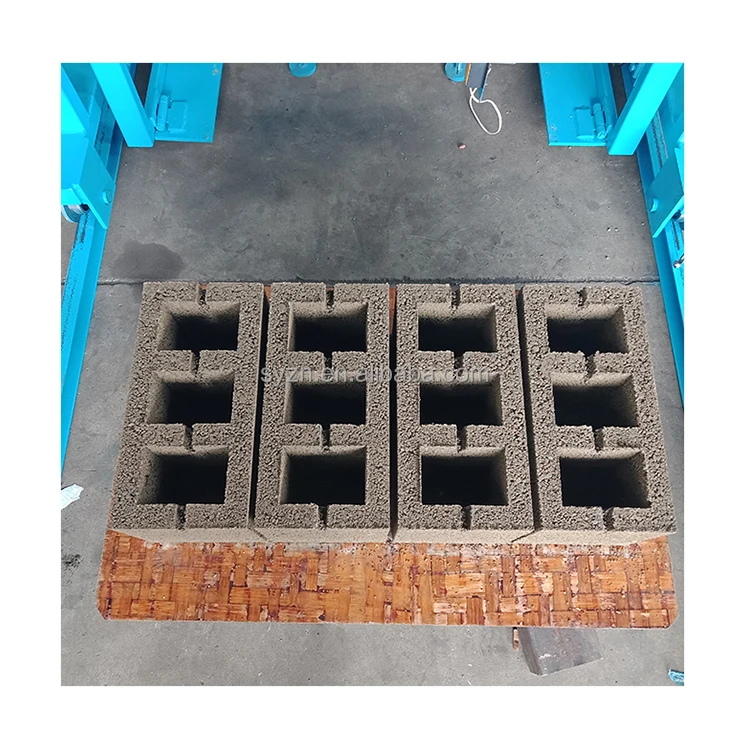
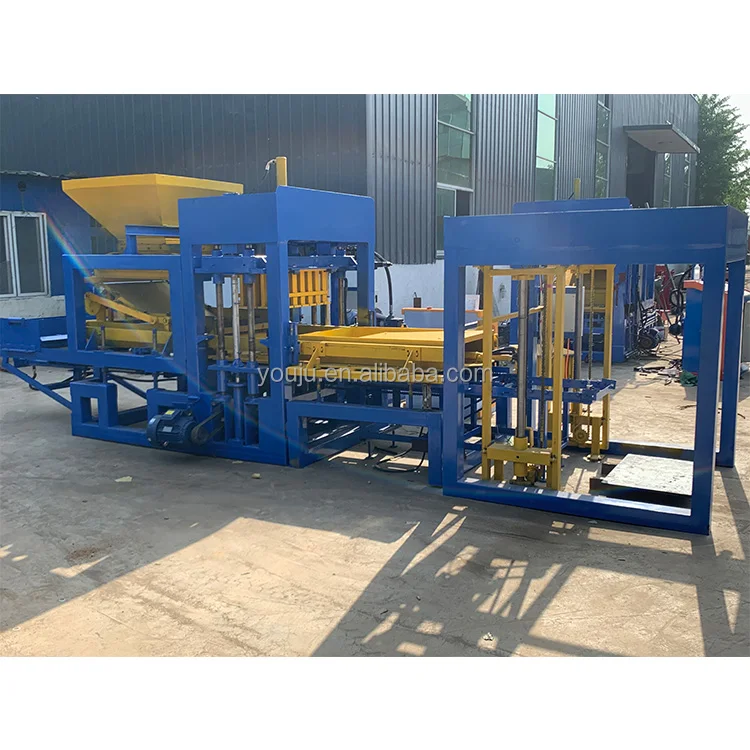 Stationary block machine