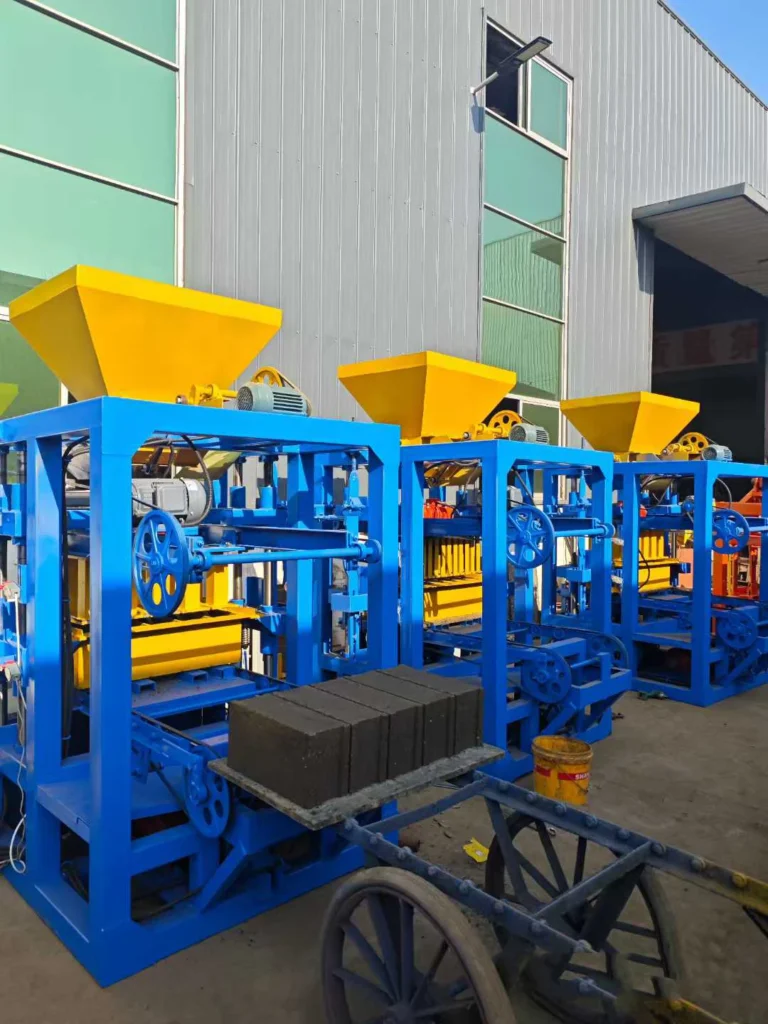
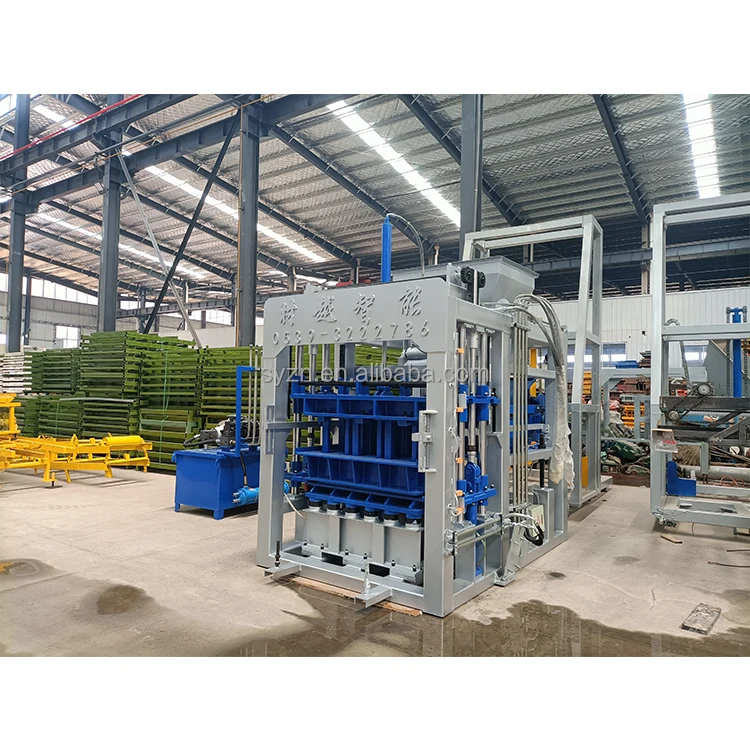
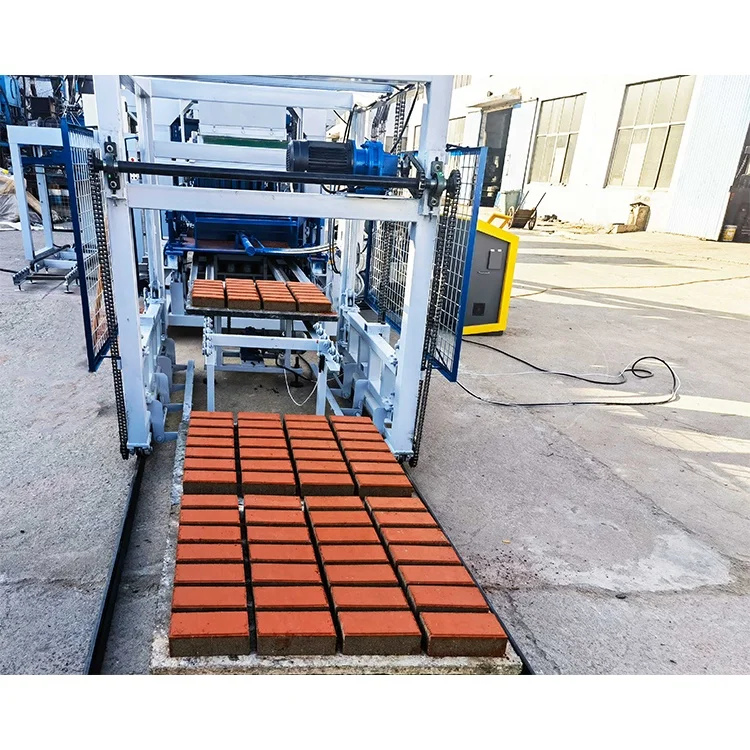
Matched System Design — the QTF3-20 press, moulds, pallets, and line stations are specified together against your actual mix and block format, not pulled from separate catalogues.
Technical Specifications
| Parameter |
Value |
| Model |
QTF3-20 |
| Product Type |
Automatic Hydraulic Hollow Block Machine |
| Overall Dimensions (L×W×H) |
4000 × 3500 × 2300 mm |
| Total Mass |
2870 kg |
| Total Power |
17.5 kW |
| Vibration Form |
Platform Vibration |
| Control Style |
Semi-Automatic |
| Host Frame |
#12 U-bar welded structure |
| Vibration System Components |
Vibration motor, vibration table, vibration box, rubber block, spring |
| Mould Type |
Up mold and down mold with demold cylinder |
| Line Options |
Material feeder, color material machine, pallet feeder, block conveyor, hydraulic station, electricity box |
| Recommended Mixer |
JQ350 with 8 m conveyor belt |
| Output Capacity |
4320 pcs/day (basis not stated in source — confirm block format) |
| Compatible Raw Materials |
Cement, sand, fly ash, coarse aggregate, slag |
| Voltage & Frequency |
Configurable to buyer site requirements |
| PLC / MCC Control |
Available with PLC or MCC control |
Application Suitability
| Application |
Material or Output |
| Hollow block production |
Cement, sand, and fly ash blends for structural walling |
| Solid standard brick |
Cement and crushed stone for load-bearing masonry |
| Color paving slabs |
Cement with pigment and fine aggregate for walkways and plazas |
| Interlocking brick |
Cement and coarse aggregate for retaining walls and slopes |
| Park grass brick |
Cement and sand for permeable parking and landscaping |
| Porous brick |
Lightweight aggregate and cement for drainage applications |
What "4320 Pieces per Day" Leaves Out for a QTF3-20 Block Machine Manufacturer
Daily output means nothing without the block format that produced it.
I have watched buyers receive a machine rated for thousands of pieces, then watch their crew struggle to hit half that number once production starts. The reason is almost always the same: the quoted capacity assumed a thin paver or a small solid brick, while the buyer actually needed 200 mm hollow blocks that take a longer cycle and cure differently. When you are evaluating a QTF3-20 block machine manufacturer, the first question should never be about price — it should be which format the capacity figure assumes and whether that format matches the product your market actually buys [NEED_CITE: capacity calculation standards for block forming equipment].

Where the QTF3-20 Sits in a Stationary Range
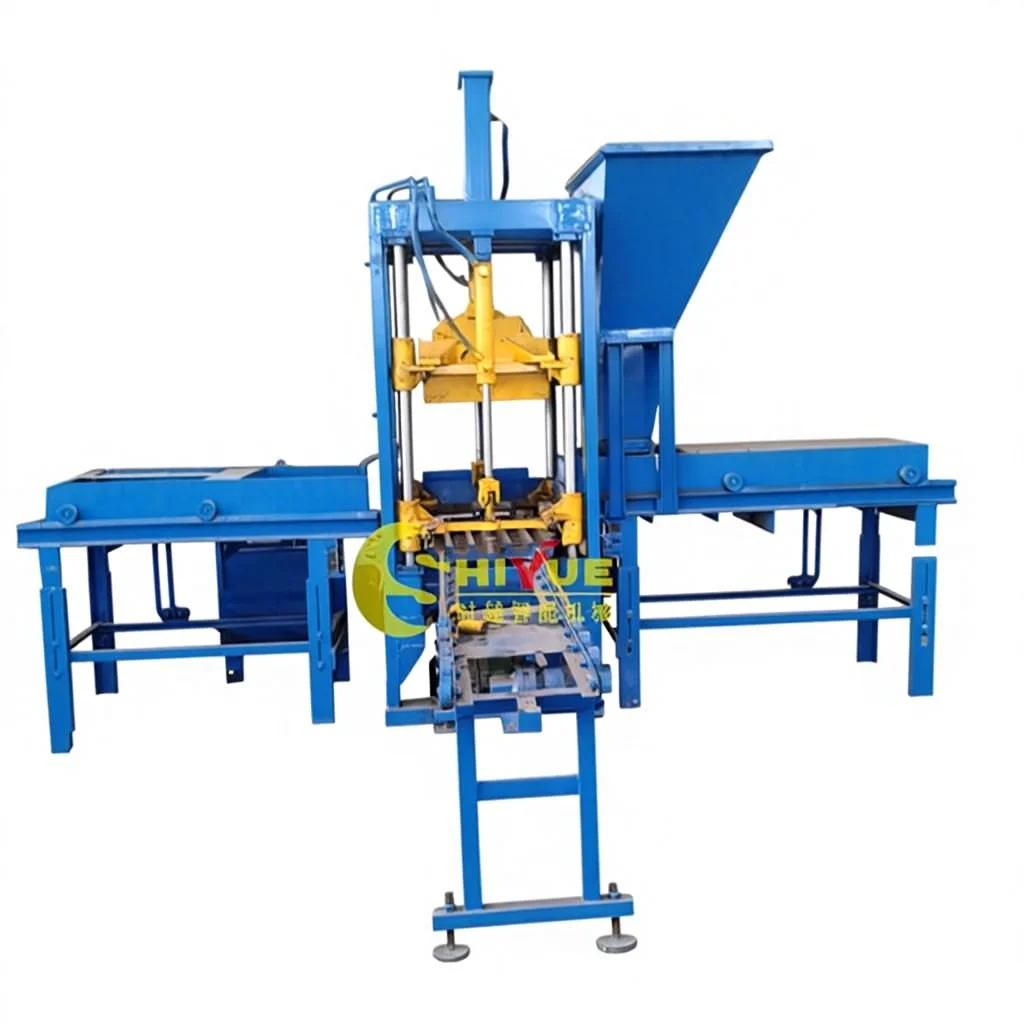
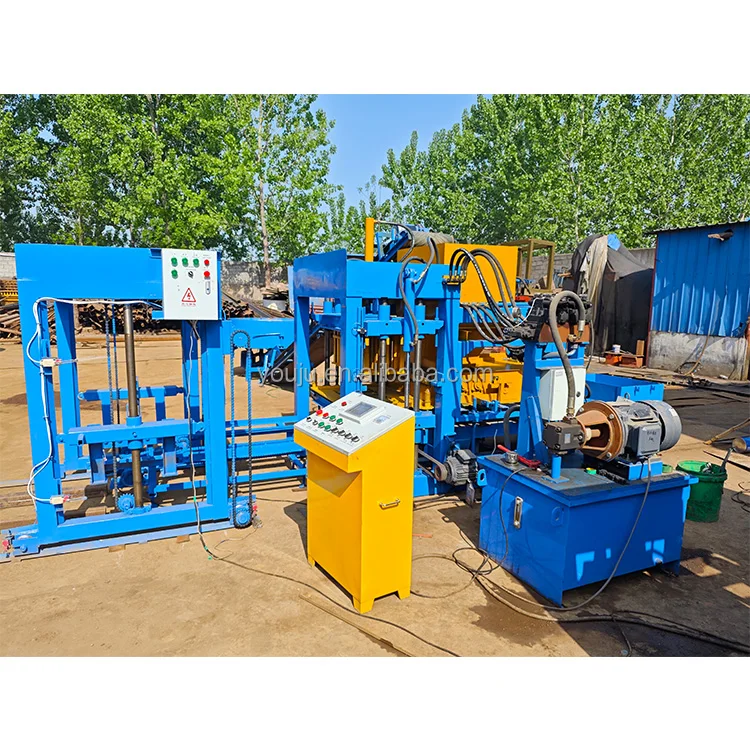
The QTF3-20 occupies the mid-entry tier of a stationary block machine lineup, targeting buyers who have moved past mobile egg-laying machines but are not yet ready for a fully automatic high-capacity line. Its semi-automatic control style keeps the initial investment contained while leaving room for later automation additions. For a first-time plant entrepreneur or a contractor replacing an aging workshop press, this tier offers a predictable daily rhythm without the staffing demands of a manual pallet-handling setup. A QTF3-20 block machine manufacturer should present this model alongside higher and lower tiers so buyers can see exactly where they land.
Matching the Tier to Your Product Mix
A stationary machine earns its keep only when the vibration force and hydraulic pressure are matched to the block format and local aggregate you run. Platform vibration on the QTF3-20 distributes energy across the mould area, giving consistent density whether you are pressing hollow blocks or thin pavers. The #12 U-bar welded frame absorbs the continuous cyclic loading so the vibration table does not drift out of alignment over weeks of production [NEED_CITE: vibration fatigue behaviour in welded steel press frames]. If your market sells a wide mix of formats, the demold cylinder system lets you switch between up-mould and down-mould tooling without dismantling the press.
Reading the Specs That Actually Matter on Site
Total power of 17.5 kW tells you the electrical supply the site must provide — undersize the transformer and the vibration motor will trip the breaker mid-cycle. The 4000 × 3500 × 2300 mm footprint defines the minimum bay width and headroom; curing racks and pallet circulation still need clearance on at least two sides. Platform vibration rather than mould-only vibration means the entire table resonates, which suits coarser aggregate mixes but demands a level concrete foundation to avoid uneven compaction. The recommended JQ350 mixer with an 8 m conveyor belt sets the upstream feed rate; if the mixer cannot keep pace, the press sits idle between batches. Semi-automatic control leaves pallet feeding and block removal partly manual, so your labour plan should reflect that reality rather than assume full automation.
The Hidden Cost of Skipping Voltage Confirmation
I once saw a block press sit under a tarpaulin for three weeks because the buyer’s site ran 380 V / 50 Hz while the machine arrived wired for 440 V / 60 Hz. No one had asked the question before shipment. The transformer had to be air-freighted, the contractor’s deadline was missed, and the relationship between buyer and supplier never fully recovered. Voltage and frequency confirmation is not paperwork — it is the single step that decides whether the machine runs the day the container opens [NEED_CITE: voltage and frequency standards by export market]. For a QTF3-20 block machine manufacturer, confirming these details before production starts is non-negotiable.
Why Source This Tier Here
Block machinery is our single focus, so the QTF3-20 press, its moulds, pallets, and handling stations are specified as one matched system rather than assembled from separate suppliers. The configuration is set against your actual mix design and local aggregate, not a catalogue default. Mould design covers the formats your market sells, with custom drawings available when standard tooling does not fit. Automation level is selectable — you can start semi-automatic and add pallet feeders or stackers later without replacing the press. Installation and commissioning include operator training on your specific block format, and a wear parts and mould list is provided before the machine leaves the factory.
Documentation & Verification
- Line layout stating the exact block format assumed for daily output
- Machine specification sheet with confirmed voltage, frequency, and control language
- Mould drawing and format list matched to your product range
- Hydraulic and electrical schematic for on-site troubleshooting
- Factory test record on your target block format before dispatch
- Packing photographs and customs documentation support
Installation, Commissioning & Support
- Level reinforced concrete slab sized to the 4000 × 3500 mm footprint with anchor bolt provisions
- Dedicated 17.5 kW circuit with breaker rated for vibration motor inrush current
- Machine shipped partially dismantled to fit a standard container, reassembled on arrival
- First-run commissioning with cycle timing adjusted to your block format and mix
- Operator training covering mould change, pallet loading, and daily greasing points
- Wear parts and mould list supplied for your first reorder cycle
What to Prepare Before Inquiry
Send the block format your market sells most, the daily volume you need for that format, and the raw materials available locally. Include your site voltage and frequency so the QTF3-20 block machine manufacturer can confirm electrical compatibility up front. If you already have curing racks or a forklift, share the pallet dimensions you are using so the new line integrates without re-racking your entire yard.
Frequently Asked Questions
Q: How is the 4320 pcs/day figure calculated for the QTF3-20?
A: That number is a reference output and the block format behind it must be confirmed before it can be compared to your production target. A small solid brick cycles faster than a 200 mm hollow block, so the realistic daily figure changes with format. Always request a capacity sheet that names the exact block and cycle time used.
Q: Where does the QTF3-20 sit compared to higher-output automatic lines?
A: It occupies the semi-automatic entry-to-mid tier, suited to buyers who want stationary production without the staffing and capital demands of a fully automatic stacking and cubing line. Higher tiers add automatic pallet feeders and stackers for larger daily volumes and reduced manual handling.
Q: Can I upgrade from semi-automatic to more automation later?
A: Yes. The QTF3-20 can accept a pallet feeder, color material machine, and block conveyor as add-on stations. Starting semi-automatic lets you learn the press behaviour on your mix before committing to a fully automatic stacking system.
Q: Which block formats run on this machine without needing a larger press?
A: Hollow brick, solid standard brick, color pavers, interlocking brick, park grass brick, and porous brick are all supported through mould changes. The platform vibration and demold cylinder handle both thin and deep formats within the pallet size range.
Q: How do I pick the right tier for my site footprint?
A: Measure the bay width and headroom available, then compare that against the 4000 × 3500 × 2300 mm machine envelope plus space for pallet circulation and curing racks. A site with limited room may favour this mid-entry tier over a larger automatic line that needs a longer conveyor run.

 Stationary block machine