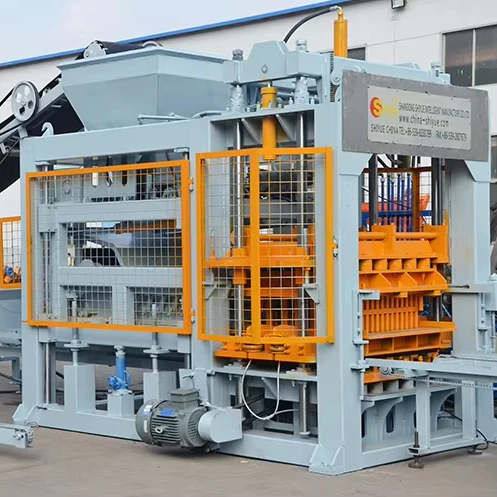
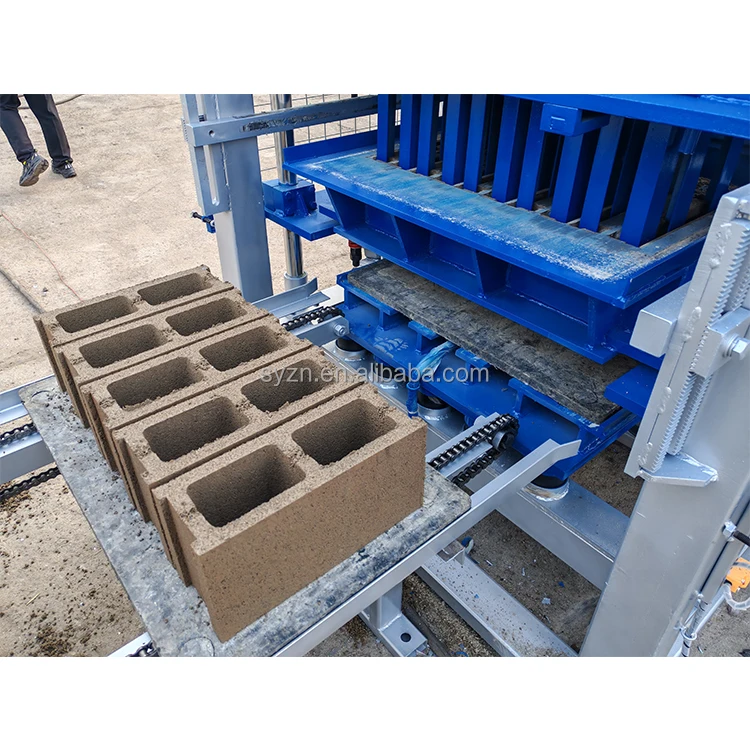
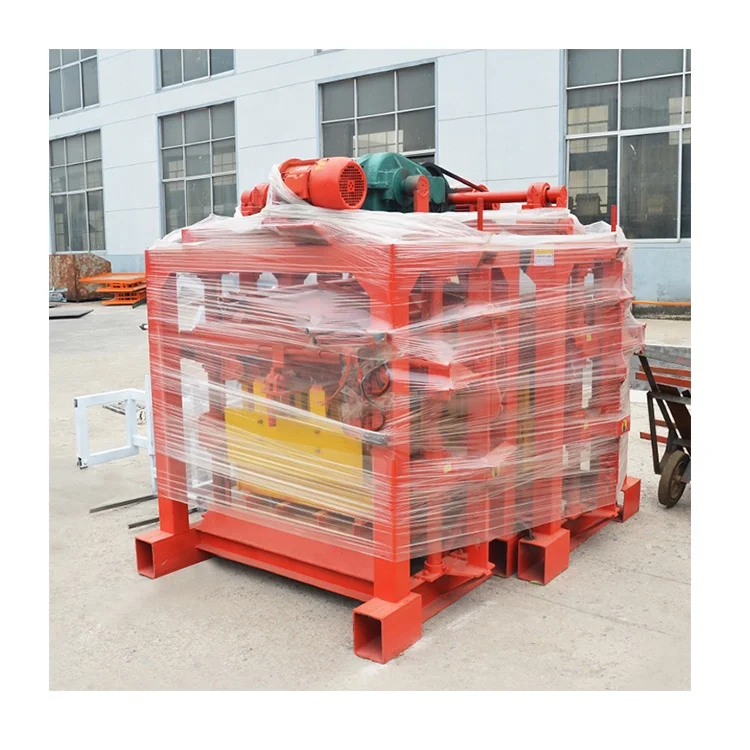
Complete range placement — the QT8-15 hydraulic block making machine sits in the mid-to-high output tier of our lineup, bridging small workshop models and fully automatic high-capacity plants for buyers mapping their investment against daily throughput targets.
Technical Specifications
| Parameter |
Value |
| Model |
QT8-15 |
| Product Type |
Hydraulic Block Making Machine |
| Overall Dimensions (L×W×H) |
8300 × 1860 × 3000 mm |
| Rated Pressure |
21 MPa |
| Vibration Form |
Platform Vibration |
| Vibration Frequency |
2800–4500 r/min |
| Vibration Force |
45 KN |
| Pallet Size |
950 × 900 mm |
| Molding Cycle |
15–20 s |
| Overall Power |
55.5 kW |
| Demolding Method |
Hydraulic |
| Total Mass |
8 T |
| Recommended Factory Area |
300 m² |
| Raw Materials |
Crushed stone, sand, cement, fly ash, gravel, slag, dust |
| Applied Products |
Hollow/solid blocks, pavers, interlocking blocks, curbstone, colored pavers |
| Output Capacity |
(basis not stated in source — confirm block format, material and thickness) |
| Voltage & Frequency |
(to be confirmed with supplier based on buyer’s local grid) |
| Control System |
(PLC brand and display language to be confirmed) |
| Automation Level |
(degree of automation selectable — confirm semi-automatic or automatic) |
| Warranty |
1 year (whole machine, excluding spare parts) |
| Loading |
1 × 40HQ container (basic equipment) |
Application Suitability
| Application |
Material or Output |
| Hollow block production for residential and commercial walls |
Crushed stone, sand, cement, fly ash blends |
| Solid block manufacturing for load-bearing structures |
Gravel, sand, cement mixes with higher compression demand |
| Interlocking paver production for driveways and walkways |
Colored concrete with fine aggregate finishes |
| Kerbstone and curb units for road and sidewalk edging |
High-density concrete with coarse aggregate |
| Porous and permeable paver runs for drainage systems |
Open-graded aggregate with controlled cement ratios |
What "Cycles Per Hour" Actually Means for Your Daily Output
A molding cycle of 15–20 seconds does not translate into a single daily figure — it depends entirely on which block format you run.
Many buyers receive quotations stating a QT8-15 block machine manufacturer cycles per hour number, only to discover on the production floor that a 400×200×200mm hollow block and a 200×100×60mm interlocking paver yield vastly different daily totals from the same press. The pallet size of 950×900mm determines how many units fit per cycle, and the block height dictates vibration dwell time. [NEED_CITE: block format impact on daily output calculation] Without a capacity sheet that names the exact format, pallet count, and shift length, any output claim remains an estimate rather than a guarantee. I have watched plants in East Africa fall behind schedule because the production plan was built on a hollow block cycle time while the actual market order was for interlocking pavers requiring longer press cycles.

Where the QT8-15 Sits Across the Investment Spectrum
The QT8-15 occupies a mid-to-upper tier in the full range of block making machinery. Below it, smaller semi-automatic models suit entrepreneurs launching a first plant with limited capital and a 150–200 m² workspace. Above it, high-capacity automatic lines with integrated stacking and cubing serve large-scale concrete product manufacturers running multiple shifts. This model bridges those zones — it fits a 300 m² factory area and can be specified from semi-automatic pallet handling through to higher automation levels depending on the buyer’s labour conditions and budget.
Matching the Machine Tier to Your Project Horizon
Contractors evaluating a housing development with a defined block count need to know whether this tier delivers enough volume within the project timeline, or whether stepping up to a larger model shortens the production window. Plant owners replacing an ageing press compare this tier’s footprint and power draw — 55.5 kW overall — against their existing electrical infrastructure. [NEED_CITE: industrial power supply sizing for block plants] The decision often comes down to whether the buyer’s market justifies the next tier’s capital outlay or whether starting at the QT8-15 level with an upgrade path makes more sense.
How Pressure, Vibration, and Pallet Size Shape Block Quality
The 21 MPa rated pressure and 45 KN vibration force work together to compact the concrete mix inside the mould cavity. Insufficient vibration on a stiff, low-slump mix leaves voids and weak corners, while excessive pressure on a wetter mix can squeeze out cement paste and reduce surface finish quality. The adjustable vibration frequency of 2800–4500 r/min allows the operator to tune the energy input to the specific aggregate gradation — coarser crushed stone generally requires higher amplitude at lower frequency, while finer sand-fly ash blends respond better to higher frequency. The 950×900mm pallet size must align with the curing racks and forklift tines already on site; ordering a pallet dimension that does not match existing handling equipment forces a separate capital spend on new racks or modified forks. Hydraulic demolding ensures the green block lifts cleanly from the mould without edge damage, which matters especially for interlocking profiles where a chipped tongue or groove rejects the entire unit.
The Hidden Cost of a Misconfigured Line
A buyer who selects the QT8-15 without confirming pallet material and curing area layout may find that bamboo pallets warp in high-humidity climates, causing uneven block bases and increased rejection. [NEED_CITE: pallet material selection in tropical block production] Similarly, specifying a mould set for formats the local market does not actually purchase ties up capital and extends mould change time without generating revenue. When voltage and frequency are assumed rather than confirmed before production, the motor winding may not match the local grid, leading to overheating and premature failure within the first weeks of operation. These configuration gaps rarely appear in the quotation — they surface only after the machine is installed and running.
Why Source This Tier Through a Dedicated Block Machinery Supplier
Block machinery as a single focus means the QT8-15 is specified alongside its mould, pallet, and handling equipment as one matched system rather than assembled from separate vendors. Configuration is set against the buyer’s actual mix design and local aggregate, not a catalogue default — I have seen machines configured for graded quartz sand fail when the buyer’s available material was volcanic tuff. [NEED_CITE: aggregate variability effects on block compaction] Mould design covers the formats the buyer’s market actually sells, with custom drawings accepted. The automation level is selectable, so a plant can start semi-automatic and add stacking or cubing modules later. Installation includes commissioning support with operator training on the specific mould set and control configuration delivered with the machine.
Documentation & Verification
- Line layout and capacity calculation stating the block format assumed for each output figure
- Machine specification sheet with confirmed voltage, frequency, and PLC display language
- Mould drawing and format list showing compatible block types for the 950×900mm pallet
- Hydraulic and electrical schematic for local maintenance team reference
- Factory test record run on the buyer’s specified mould set before dispatch
- Operation and maintenance manual with wear parts and mould replacement list
Installation, Commissioning & Support
- 300 m² minimum factory area with level concrete floor to support the 8T machine mass
- 55.5 kW total power requirement with dedicated circuit and confirmed voltage and frequency
- Machine ships in 1×40HQ container and requires on-site reassembly of vibration platform and hydraulic unit
- First-run commissioning includes vibration frequency tuning to match local aggregate gradation
- Operator training covers mould change procedure, hydraulic pressure adjustment, and PLC navigation
- Wear parts list provided with recommended reorder intervals for hydraulic seals and vibration motor brushes
Preparing Your Inquiry
To receive a configuration proposal that reflects your actual production scenario, share your target block formats with dimensions, the daily output you need per format, and your available raw materials with a sample if possible. Specify your site’s voltage and frequency, the control display language your operators require, and whether you need the line at semi-automatic or a higher automation level. Include your existing curing area dimensions and forklift specifications so the pallet and handling package aligns with what you already have.
Frequently Asked Questions
Q: What output tier does the QT8-15 occupy compared to smaller and larger models in the range?
A: The QT8-15 sits in the mid-to-upper tier of the complete block machine lineup. Below it are small workshop models for lower investment and limited daily volume. Above it are high-capacity automatic lines designed for multi-shift continuous production. This model bridges those zones, fitting a 300 m² factory and offering selectable automation levels to match different labour and budget conditions.
Q: What plant footprint and investment level should a buyer expect at this tier?
A: The QT8-15 requires approximately 300 m² of factory space including the press, pallet circulation area, and room for raw material batching. The 8300×1860×3000mm machine footprint is only part of the total layout. Investment level depends on the automation configuration chosen — semi-automatic setups with manual pallet handling require less capital than fully automatic lines with stacking and cubing.
Q: Is the QT8-15 available as semi-automatic with an upgrade path to full automatic?
A: Yes, the automation level is selectable at the time of order. A buyer can start with semi-automatic operation where pallet handling and stacking are managed manually, then add automatic pallet feeding, stacking, or cubing modules as production volume and labour conditions justify the investment. Confirming the upgrade path at the inquiry stage ensures the base machine is wired and plumbed to accept future modules.
Q: How does the 950×900mm pallet size affect my curing area and forklift choice?
A: The pallet dimension determines the spacing of curing rack slots and the minimum fork width of the forklift used to move stacked pallets. If your existing curing racks or forklift were sized for a different pallet dimension, you will need to either adjust the rack layout or source compatible handling equipment. Confirming this at the quotation stage avoids unexpected infrastructure costs after delivery.
Q: What block formats and mould options are covered within this machine tier?
A: The QT8-15 can produce hollow blocks, solid blocks, interlocking pavers, kerbstones, colored pavers, and porous bricks using the 950×900mm pallet. Specific mould designs are matched to the buyer’s market requirements, including custom mould drawings. The mould drawing and format list provided with the quotation details exactly which block types and dimensions are included in the package.

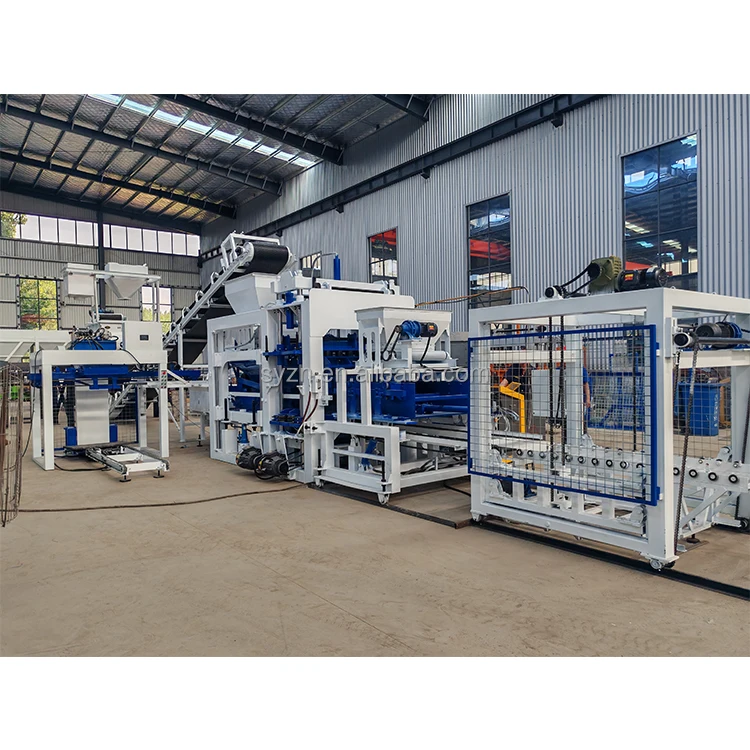
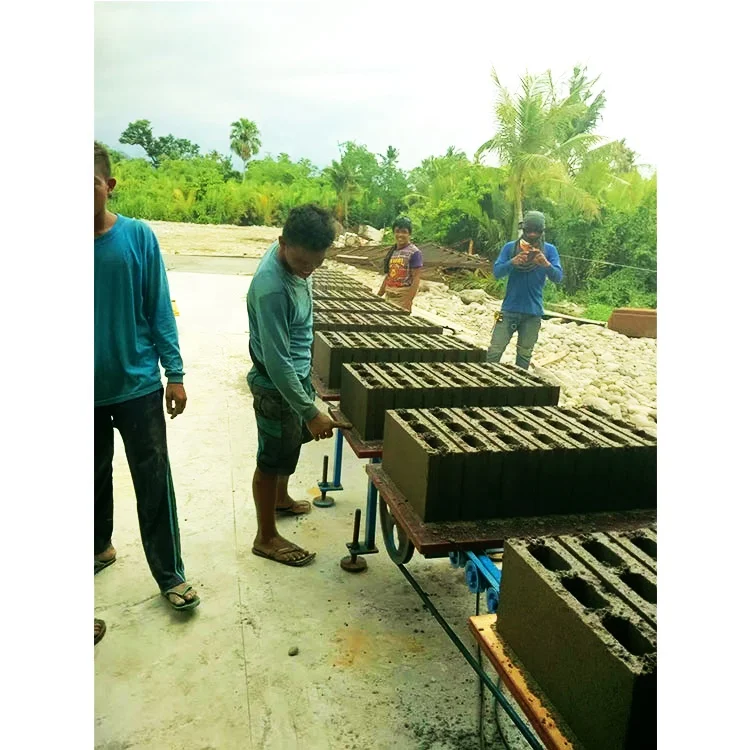 High quality block machine