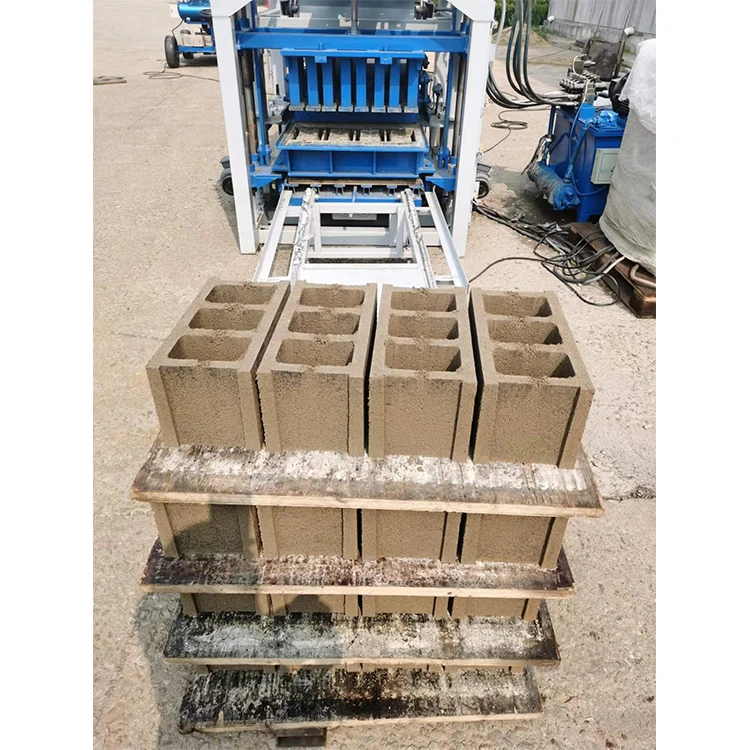
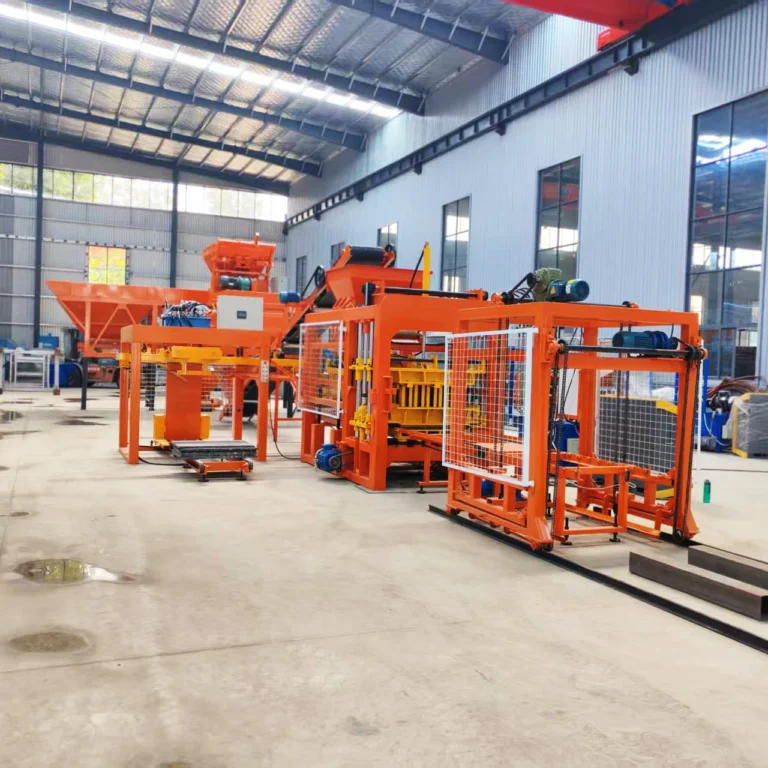
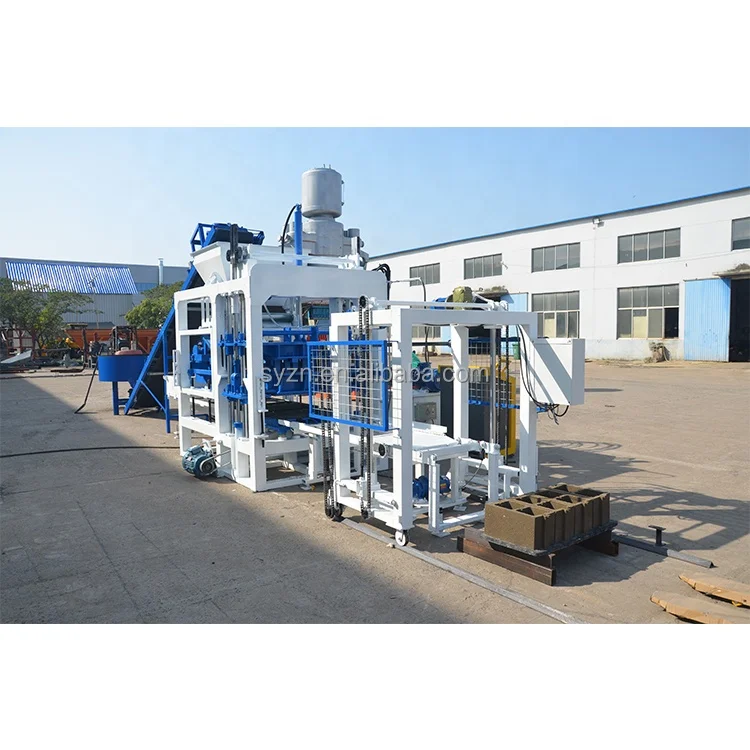
Matched System Supply — QT8-15 block machine, moulds, pallets and handling configured together so the press is never waiting on an upstream or downstream mismatch.
Technical Specifications
| Parameter |
Value |
| Model |
QT8-15 |
| Product Type |
Hydraulic Block Making Machine |
| Overall Dimensions (L×W×H) |
8300 × 1860 × 3000 mm |
| Rated Pressure |
21 MPa |
| Main Vibration Form |
Platform Vibration |
| Vibration Frequency |
2800–4500 r/min |
| Pallet Size |
950 × 900 mm |
| Molding Cycle |
15–20 s (basis not stated in source — confirm block format / material / thickness) |
| Overall Power |
55.5 kW |
| Vibration Force |
45 kN |
| Total Mass |
8 T |
| Demolding Method |
Hydraulic |
| Factory Area Required |
300 m² |
| Raw Materials |
Crushed stone, sand, cement, dust, fly ash, gravel, slag |
| Applied Products |
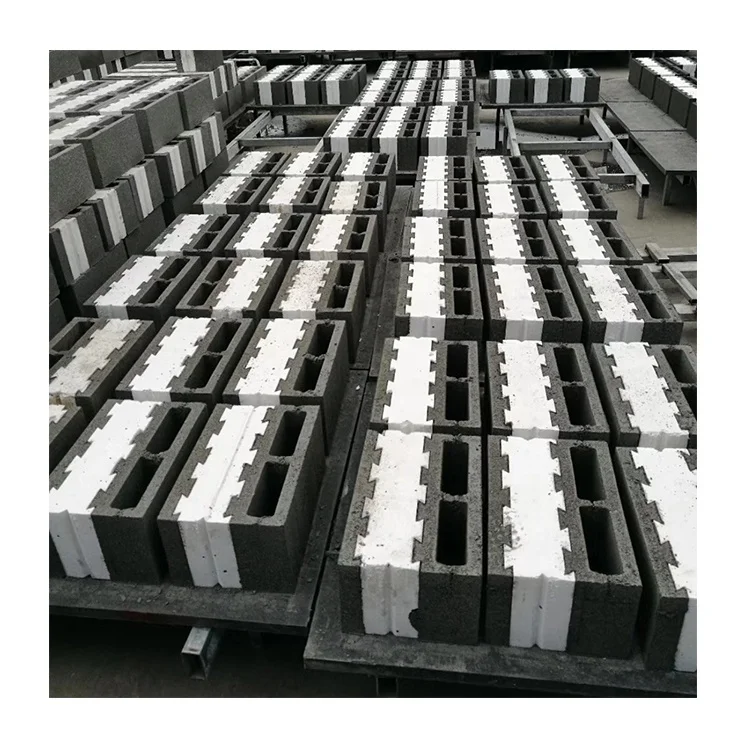
Hollow/solid blocks, pavers, interlocking blocks, curbstone, colored pavers |
| Loading |
1 × 40HQ container (basic equipment) |
| Warranty |
1 Year |
| Payment Terms |
T/T 30% deposit, 70% balance before delivery |
Application Suitability
| Application |
Material or Output |
| Hollow Block Production Plants |
Crushed stone, sand, cement, fly ash mixes for structural and non-load-bearing hollow blocks |
| Paver and Interlocking Brick Lines |
Colored concrete mixes for driveways, walkways, and municipal paving |
| On-Site Construction Block Making |
Local aggregate and cement for large housing project contractors producing blocks on-site |
| Concrete Product Manufacturers |
Expanding existing product range to include kerbstones, solid blocks, and porous bricks |
What "Cycles Per Hour" Leaves Out About the QT8-15 Block Machine
Capacity figures mean nothing unless the block format behind the number is stated explicitly.
I spent four days on a Middle East site watching a block machine fail to hit quoted output because the capacity was calculated on a standard 400×200×200 mm hollow block, but the buyer’s market demanded a thinner 150 mm wall format that required a different vibration profile and longer cycle. The machine was fine; the expectation was wrong from day one. When evaluating any QT8-15 block machine manufacturer, the first document you should request is a capacity calculation that names the exact block format, mix design, and curing assumption behind every output number. [NEED_CITE: common block machine capacity misrepresentation in export quotations]
Where the QT8-15 Sits in the Complete Block Machine Range
The QT8-15 occupies the mid-tier position within the full automatic block machine lineup. It bridges the gap between smaller workshop-scale machines and high-capacity automatic lines, making it a practical choice for established plants that need to scale production without committing to the footprint and power demands of the largest presses. Buyers surveying the complete block machine range should view the QT8-15 as the threshold where platform vibration and hydraulic demolding become standard rather than optional.
How Machine, Mould, Pallet, and Handling Must Align
A block press does not operate in isolation. The 950 × 900 mm pallet size on the QT8-15 must match the curing rack dimensions and forklift capacity already present at your plant. If your existing pallets are a different size, the entire stacking and handling chain must be re-evaluated before the press is ordered. This is where a single-focus supplier matters: the machine, mould, pallet, and handling equipment are specified as one matched system rather than assembled from separate vendors who each assume the other has covered the interface. [NEED_CITE: pallet and handling system integration requirements for block plants]
Reading the Specs That Actually Determine Block Quality
The 21 MPa rated pressure and 45 kN vibration force on the QT8-15 work together to compact the concrete mix into the mould cavity. Higher hydraulic pressure alone will not produce a dense block if the vibration frequency is not matched to the aggregate particle size in your local mix. The 2800–4500 r/min vibration frequency range allows the operator to tune the platform vibration to different materials — coarser crushed stone typically requires lower frequency with longer duration, while fine sand and fly ash mixes respond better to higher frequency. The hydraulic demolding method ensures clean block release across multiple formats, reducing edge chipping that plagues mechanical demolding systems. Mould change time directly determines how many different block formats you can realistically produce in a single shift; a system that takes most of a shift to swap moulds negates the format flexibility you paid for.

The Hidden Cost of Configuring for the Wrong Mix
I once watched a client burn through an entire week of production because the machine was configured for standard river sand, but the only locally available aggregate was a high-absorption crushed limestone that changed the water-to-cement ratio entirely. Block strength was inconsistent, and the vibration settings that worked in the factory test produced crumbling output on-site. This is not a machine defect; it is a configuration failure. Every QT8-15 block machine manufacturer should demand a sample of your actual raw material before finalizing the vibration force, pressure, and cycle settings. [NEED_CITE: impact of local aggregate variation on block machine performance]
Why Source This Machine From a Single-Focus Supplier
Block machinery is the only product line here, which means the QT8-15 is not a catalog item pulled from a general construction equipment portfolio. The machine, mould, pallet, and handling equipment are specified together against your actual mix design and target block format. Automation level is selectable, allowing a buyer to start with semi-automatic pallet handling and upgrade to full automatic stacking and cubing as production volume justifies the investment. Mould design covers the formats your local market actually sells, including custom drawings when standard moulds do not match your product requirements. Installation support includes operator training so your crew understands mould change procedure, vibration tuning, and daily maintenance before the commissioning engineer leaves the site.
Documentation & Verification
- Line layout and capacity calculation stating the specific block format assumed for each output figure
- Machine specification sheet with voltage, frequency, and PLC display language confirmed before production
- Mould drawing and format list showing which block types the quoted capacity applies to
- Pallet specification matched to your existing curing rack and forklift dimensions
- Factory test record run on your confirmed block format before dispatch
- Hydraulic and electrical schematic for local maintenance team reference
Installation, Commissioning & Support
- 300 m² factory area requirement with level concrete foundation to support 8 T total mass and vibration loads
- 55.5 kW overall power demand requiring dedicated three-phase circuit matching your local voltage and frequency
- 1 × 40HQ container loading for basic equipment with dismantling plan for site reassembly
- On-site commissioning with vibration frequency and hydraulic pressure tuning to your confirmed mix design
- Operator training covering mould change procedure, pallet feeding, and daily hydraulic system inspection
- Wear parts and mould list provided with first replacement order timeline based on your production volume
What to Prepare Before Requesting a Quotation
To configure the QT8-15 accurately, we need your target block format and dimensions, the daily output you are planning to achieve, and a sample or laboratory analysis of your local raw materials including aggregate type and particle size distribution. Confirm your site voltage, frequency, and preferred PLC display language so the electrical system is built correctly before shipment. If you already have curing racks, forklifts, or upstream mixing equipment on-site, provide their specifications so the pallet size and handling interfaces are matched from the start.
Frequently Asked Questions
Q: How is QT8-15 daily output calculated, and which block format does the capacity figure assume?
A: Output is calculated based on molding cycle time per specific block format. The 15–20 second cycle must be confirmed against your target block dimensions, mix design, and required strength. We provide a written capacity calculation that names the exact format behind every number, so you can compare realistic daily output across different block types you plan to produce.
Q: Where does the QT8-15 sit in your complete block machine range compared to other models?
A: The QT8-15 is the mid-tier automatic option, positioned between smaller workshop machines and high-capacity lines. It suits established plants scaling production or contractors setting up dedicated on-site block making for large projects. Buyers evaluating the complete block machine range use it as the point where full platform vibration and hydraulic demolding become standard.
Q: What automation level does the QT8-15 provide, and can I expand later?
A: Automation is selectable from semi-automatic pallet handling through to fully automatic stacking and cubing. You can start at a level that matches your current labor and budget, then add automatic pallet feeding or stacking modules as production volume grows, without replacing the core press.
Q: How do you match the machine to my local aggregate and mix design?
A: We require a sample of your actual raw material — aggregate type, particle size, and absorption characteristics — before finalizing vibration frequency, hydraulic pressure, and cycle settings. The 2800–4500 r/min range and 21 MPa pressure are tuned to your specific mix, not left at factory defaults.
Q: What supporting equipment must be included to reach quoted output?
A: Raw material feeding, mixing, pallet feeding, and stacking must all match the press cycle time. If any station is slower, the QT8-15 sits idle between cycles. We specify the complete line as one system so throughput is balanced from mixer to curing rack.

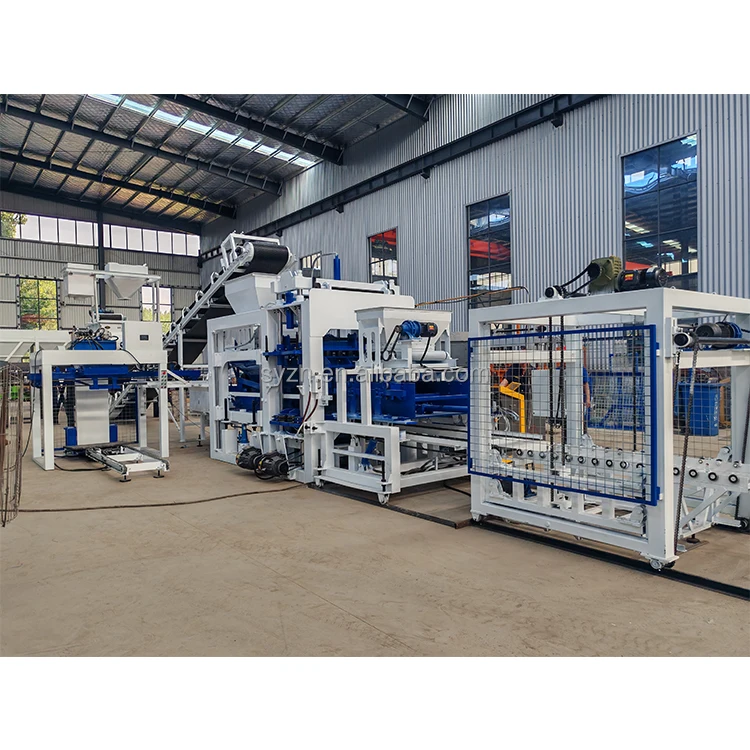
 High quality block machine