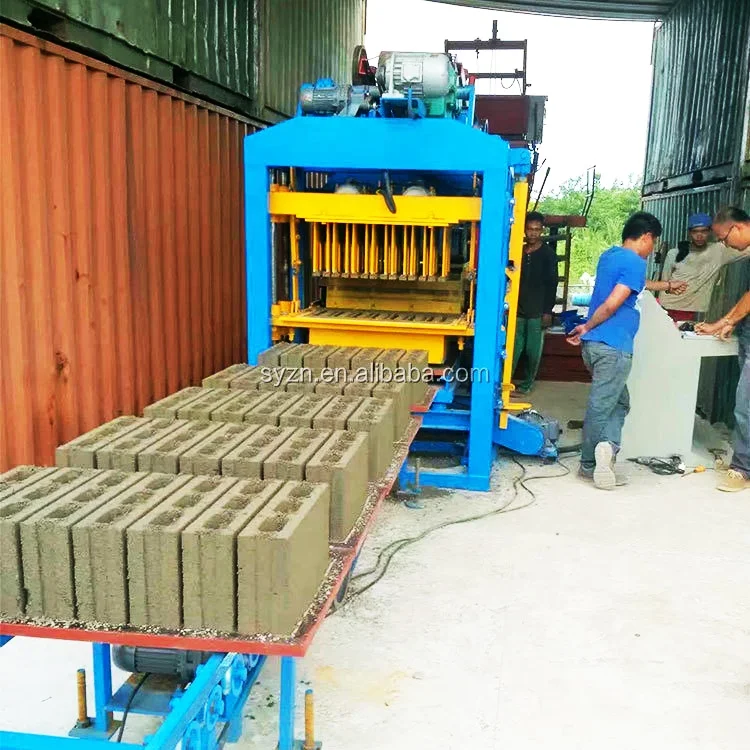
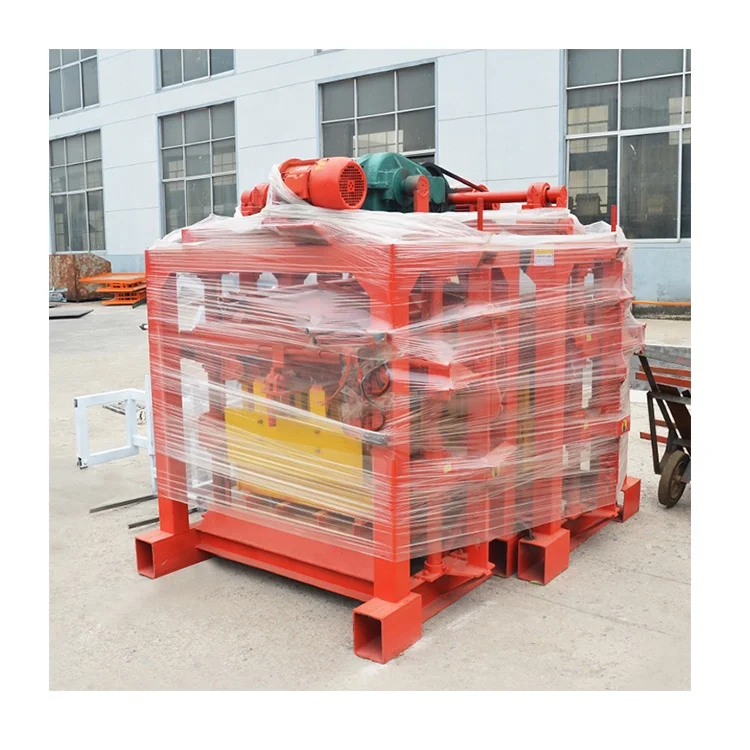
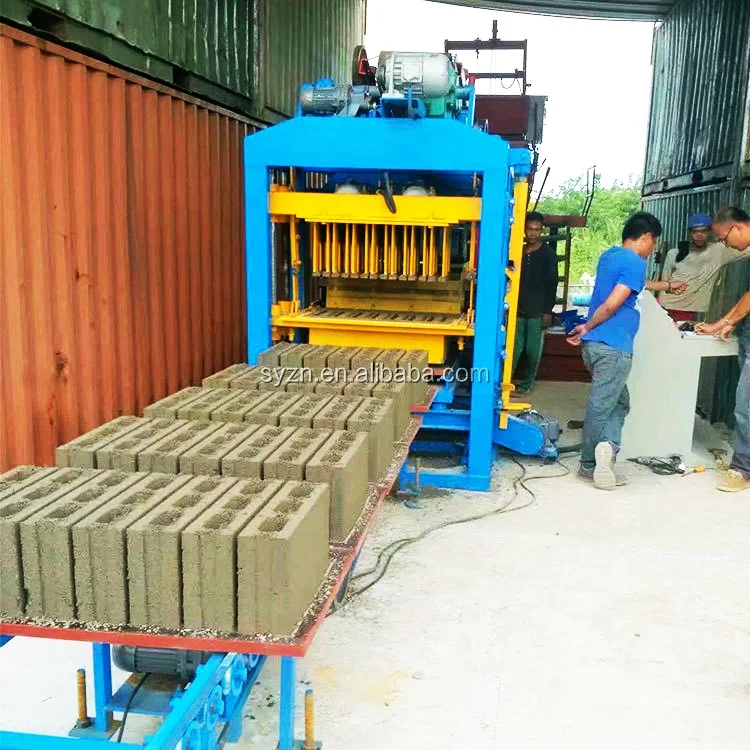
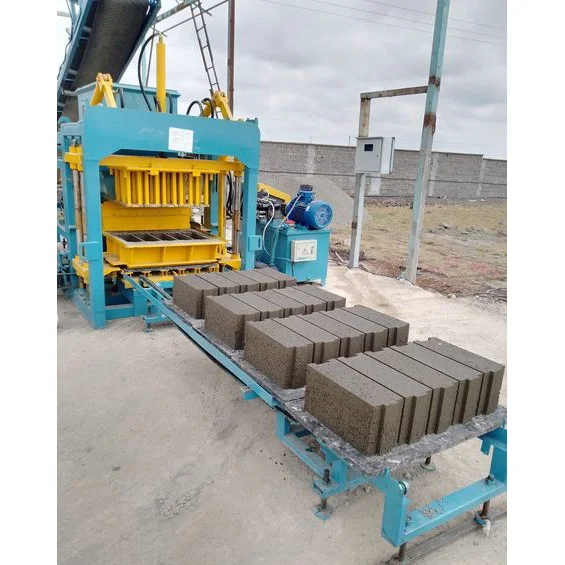
Mid-Range Automation — the QT8-15 occupies the step between workshop presses and high-capacity lines, configured around your block format and local aggregate rather than a default catalogue build.
Technical Specifications
| Parameter |
Value |
| Model |
QT8-15 |
| Product Type |
Hydraulic Concrete Block Making Machine |
| Overall Dimensions |
8300 × 1860 × 3000 mm |
| Rated Pressure |
21 MPa |
| Main Vibration Form |
Platform Vibration |
| Vibration Frequency |
2800–4500 r/min |
| Vibration Force |
45 kN |
| Pallet Size |
950 × 900 mm |
| Molding Cycle |
15–20 s (basis not stated in source — confirm block format and material) |
| Overall Power |
55.5 kW |
| Demolding Method |
Hydraulic |
| Total Mass |
8 T |
| Factory Area Required |
300 m² |
| Applied Products |
Hollow blocks, solid blocks, pavers, interlocking blocks, curbstone, colored pavers |
| Raw Materials |
Crushed stone, sand, cement, fly ash, gravel, slag, dust |
| Warranty |
1 year |
Application Suitability
| Application |
Material or Output |
| Mid-scale hollow block plant |
Crushed stone, sand, and cement blends |
| Paver and interlocking brick production |
Fine aggregate with cement and color pigment |
| On-site contractor block production |
Local gravel, fly ash, and available sand |
| Kerbstone and solid block runs |
Coarse aggregate with higher cement content |
What a "15-Second Cycle" Actually Means on the QT8-15
Cycle time is meaningless unless the block format and mix are stated alongside it.
Every QT8-15 block making machine manufacturer quotes a molding cycle, but few tell you which block that number assumes. A 400 mm hollow block with a thick web takes longer to compact than a 60 mm paver. I have seen buyers on Middle Eastern job sites discover that their daily output was barely half the brochure figure because the cycle was based on a format they never intended to produce. The vibration frequency range of 2800–4500 r/min exists precisely because different formats and aggregate blends demand different energy inputs, and the machine must be tuned to your actual product before the cycle number holds any real value. [NEED_CITE: block format assumptions in cycle time declarations]
Where the QT8-15 Sits in the Full Machine Range
Buyers surveying options often start at either end — a small semi-automatic press for a first workshop or a high-capacity line for an established plant. The QT8-15 block making machine manufacturer positions this model in the middle tier, bridging the gap between low-investment entry machines and full automatic lines with stacking and cubing. Its 8 T mass and 55.5 kW power draw reflect a press built for sustained daily production without the footprint and electrical demand of the largest tier. For a buyer replacing a smaller machine or adding format flexibility to an existing plant, the QT8-15 offers a step up in output while keeping the factory area requirement at a manageable 300 m².
How Automation Levels Scale Around This Press
The QT8-15 itself is a hydraulic press with platform vibration, but the line built around it can range from manual pallet handling to fully automatic stacking and curing rack transfer. A buyer starting with semi-automatic operation can run pallets by hand and add an automatic pallet feeder later. This upgrade path matters because it lets the investment grow with demand instead of requiring a complete line replacement. The PLC control language, voltage, and frequency are confirmed before production so that commissioning on arrival is not delayed by a language mismatch or a transformer that was never ordered. [NEED_CITE: PLC display language and voltage confirmation before shipment]
Reading the Specs That Shape Real Output
The rated pressure of 21 MPa and vibration force of 45 kN together determine the density and compressive strength of every block that leaves the press. Higher pressure alone will not compensate for weak vibration, and strong vibration without sufficient hydraulic hold produces blocks that crumble at the edges. The 950 × 900 mm pallet size must align with the curing racks and forklifts already in the buyer’s yard — a mismatch here means either building new racks or handling pallets by hand. The adjustable vibration frequency from 2800 to 4500 r/min allows the operator to match energy input to the mix: coarser aggregate with larger stone needs higher amplitude at lower frequency, while fine sand and fly ash blends compact better at the upper end of the range. The hydraulic demolding system lifts the mould cleanly off green blocks, reducing edge damage that would otherwise show up as breakage during curing.

The Cost of Skipping the Format Conversation
When a buyer orders on cycle time alone and the machine arrives configured for a different block format, the first weeks of production become a series of expensive adjustments. Moulds must be redesigned, the vibration table retuned, and pallets reordered to match a format the press was never set up for. I have watched contractors lose an entire curing cycle because the blocks cracked during demolding — the hydraulic pressure was fine, but the vibration frequency had not been matched to the local sand’s high clay content. These are not warranty issues; they are configuration gaps that a proper pre-order discussion would have eliminated. [NEED_CITE: effect of local aggregate clay content on block strength]
Why Source the QT8-15 Through This Range
Block machinery is the single focus here, so the QT8-15 is specified as one matched system — press, mould, pallet, and handling — rather than assembled from unrelated suppliers. Configuration is set against the buyer’s actual mix design and target block format, not a catalogue default. Mould design covers the formats the buyer’s market actually sells, including custom drawings when standard moulds do not fit. The automation level is selectable, allowing a semi-automatic start with a defined upgrade path. Installation support includes operator training so the crew understands mould change procedure and vibration tuning from day one.
Documentation & Verification
- Line layout with capacity calculation stating the assumed block format for each figure
- Machine specification sheet confirming vibration force, hydraulic pressure, and pallet size
- Mould drawing and format list showing all available block types and change procedure
- Voltage, frequency, and PLC display language confirmation document before production
- Factory test record run on the buyer’s specified block format before dispatch
- Operation and maintenance manual with wear parts and mould replacement list
Installation, Commissioning & Support
- Foundation plan matched to the 8 T machine mass and 8300 mm frame length
- Electrical supply verified for 55.5 kW total load with dedicated circuit breaker rating
- Machine arrives dismantled for container loading with reassembly guide on site
- First-run commissioning includes vibration frequency tuning to the buyer’s mix design
- Operator training covers mould change, pallet feeding, and PLC fault reading
- Wear parts list and hydraulic seal kit supplied for the first replacement cycle
What to Prepare Before Requesting a Quote
To size the QT8-15 correctly within the range, share your target block formats with dimensions, the daily output you need for each format, and the raw materials available locally including aggregate type and any fly ash or slag. Confirm your site voltage, frequency, and preferred PLC display language. If you already have curing racks and forklifts, provide the pallet dimensions they accept so the 950 × 900 mm pallet can be verified or adjusted before the line is configured.
Frequently Asked Questions
Q: How is QT8-15 capacity calculated and which block format is assumed?
A: Capacity depends on the block format, mix design, and vibration setting used. The molding cycle of 15–20 seconds is a range that shifts depending on whether you are pressing hollow blocks, pavers, or interlocking bricks. A proper capacity calculation states the exact format and dimensions assumed so your daily output expectation matches reality.
Q: Where does the QT8-15 sit compared to smaller and larger tiers?
A: It occupies the mid-to-high tier, above workshop-scale semi-automatic presses and below the largest fully automatic lines. Buyers choose it when they need more output and format variety than a small machine offers but are not yet ready for the footprint and investment of a high-capacity plant.
Q: What plant footprint and factory area does the QT8-15 require?
A: The machine itself measures 8300 × 1860 × 3000 mm, and the recommended factory area is around 300 m² to accommodate raw material storage, the press, pallet return, and space for green block handling before curing. Actual layout depends on the automation level selected.
Q: Which automation level comes standard and what is the upgrade path?
A: The QT8-15 can be configured from semi-automatic with manual pallet handling through to fully automatic stacking and cubing. A buyer can start at a lower automation level and add pallet feeders, stackers, and curing rack handlers as production volume grows.
Q: How are voltage, frequency, and control language confirmed for the target market?
A: These are confirmed during the quotation stage before production begins. The buyer provides the local supply voltage and frequency, and the PLC display language is set accordingly so the machine is ready for commissioning on arrival without electrical or interface delays.

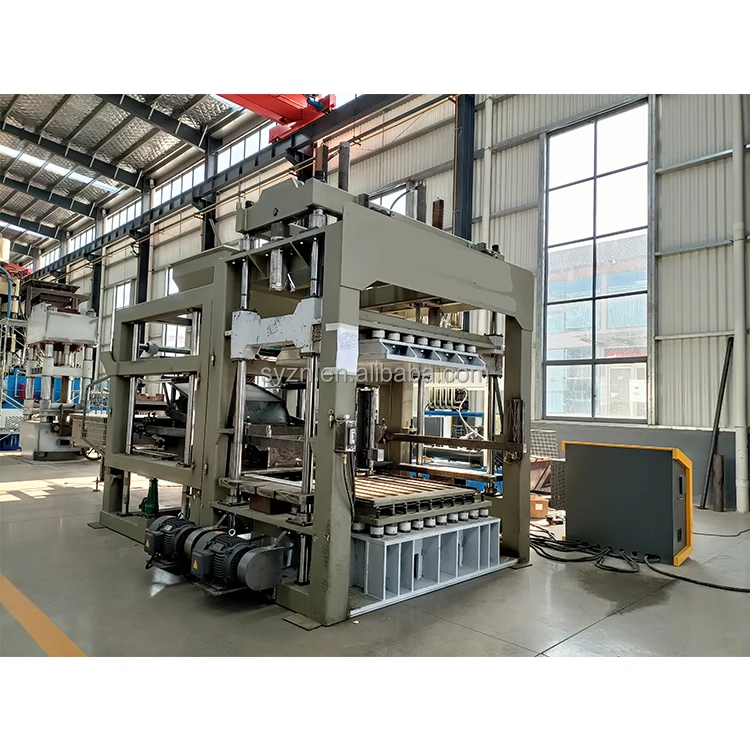
 High quality block machine