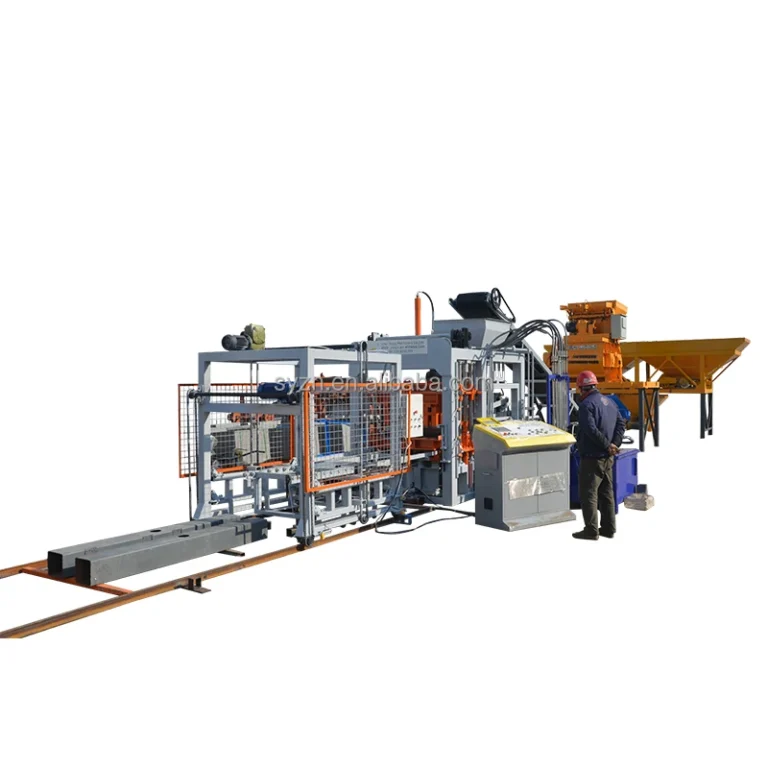
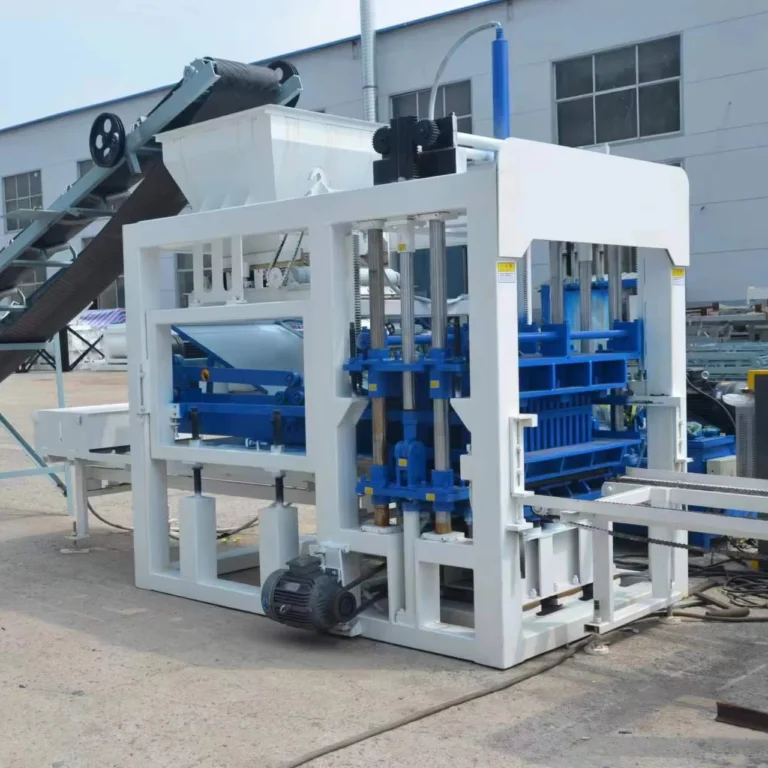
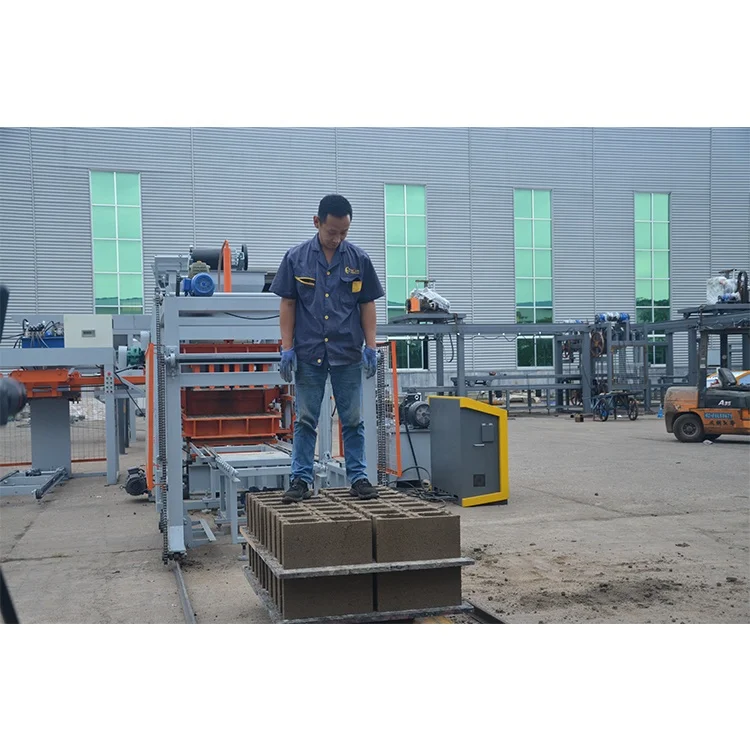
Hydraulic-Vibration Match — the 21MPa pressure and 45KN vibration force on the QT8-15 are tuned together against the buyer’s actual mix design, not pulled from a generic table.
Technical Specifications
| Parameter |
Value |
| Model |
QT8-15 |
| Product Type |
Hydraulic Concrete Block Making Machine |
| Overall Dimension |
8300 × 1860 × 3000 mm |
| Total Mass |
8 T |
| Rated Pressure |
21 MPa |
| Main Vibration Form |
Platform Vibration |
| Vibration Frequency |
2800–4500 r/min |
| Vibration Force |
45 KN |
| Pallet Size |
950 × 900 mm |
| Molding Cycle |
15–20 s (basis not stated in source — confirm block format, material, and thickness) |
| Overall Power |
55.5 kW |
| Demolding Method |
Hydraulic |
| Factory Area Required |
300 m² |
| Applied Products |
Hollow blocks, solid blocks, pavers, interlocking blocks, curbstone, colored pavers |
| Raw Material |
Crushed stone, sand, cement, fly ash, gravel, slag, dust |
| Warranty |
1 year |
| Loading |
1 × 40HQ container (basic equipment) |
Application Suitability
| Application |
Material or Output |
| Hollow block production |
Crushed stone, sand, cement, fly ash blends |
| Solid block manufacturing |
Gravel, sand, cement, slag mixes |
| Paving brick output |
Cement, dust, fine aggregate combinations |
| Interlocking brick forming |
Sand, cement, crushed stone with color pigment |
| Curbstone pressing |
Coarse aggregate, cement, gravel compositions |
What the QT8-15 Cycle Time Actually Means for Your Daily Tally
A 15–20 second molding cycle only translates to real daily output once the block format, wall thickness, and mix design are locked in.
Buyers often see a cycle number and multiply it by operating hours, arriving at a daily figure that never materializes on the factory floor. The QT8-15 block machine manufacturer provides the 15–20 s range, but that span covers everything from a thin paver to a tall hollow block. A thicker hollow block needs longer vibration to consolidate the mix properly, pushing the cycle toward the upper end and reducing hourly counts [NEED_CITE: block format effect on vibration dwell time].
When I first helped a plant owner who had sized his entire curing rack layout around the faster end of the cycle, his actual output of standard hollow blocks landed closer to the slower figure because his local sand carried extra moisture. The QT8-15 concrete block making machine for sale still ran fine — the mismatch was in expectation, not hardware.

Where the QT8-15 Sits in the Automatic Range
The QT8-15 occupies the mid-to-high tier of automatic hydraulic presses, positioned above small workshop machines and below the highest-capacity lines that run fully continuous stacking and cubing. Buyers stepping up from semi-automatic setups usually land here because the pallet size and hydraulic pressure handle commercial volumes without demanding the footprint of a large-scale plant. The 55.5 kW overall power draw keeps electrical infrastructure requirements within reach for most expanding operations.
Choosing Between Investment Tiers on the Block Machine Range
A first-time plant buyer comparing the QT8-15 against a smaller model should weigh the 300 m² factory area requirement against available land and the 8 T total mass against foundation costs. The 950 × 900 mm pallet dictates forklift size and curing rack dimensions, so existing handling equipment must be checked before committing. Buyers replacing an older line already know their market’s block format; the question becomes whether the QT8-15’s output tier matches the volume their distributors can absorb [NEED_CITE: block market demand sizing methodology].
Reading the Core Numbers Beyond the Spec Sheet
The 21 MPa rated hydraulic pressure and 45 KN vibration force work as a pair — pressure compacts the mix from above while platform vibration settles aggregate from below, and both must be present in adequate measure for consistent block density. A mix with high fly ash content responds differently than one relying on crushed stone, which is why the vibration frequency range of 2800–4500 r/min exists: the operator tunes it to the material at hand rather than running a fixed setting. The 8300 × 1860 × 3000 mm overall dimension tells you the machine footprint, but the real spatial planning starts with the 950 × 900 mm pallet — wet blocks on pallets need curing space that is many times the press footprint, and forklift aisle width must match the pallet dimension.
The Cost of Skipping the Pallet and Voltage Conversation
I once worked on a QT8-15 concrete block making machine for sale shipment where the buyer confirmed voltage only after the control panel was already wired. The PLC display language and frequency did not match the destination country’s standard, so commissioning paused while components were swapped [NEED_CITE: voltage and frequency standards by export market]. Similarly, choosing a pallet material without considering the local climate can shorten pallet life noticeably, and a pallet size mismatched to the curing yard forklift means workers handle every pallet twice. These are not machine faults — they are specification gaps that surface after arrival.
Why Source the QT8-15 Through a Matched-System Approach
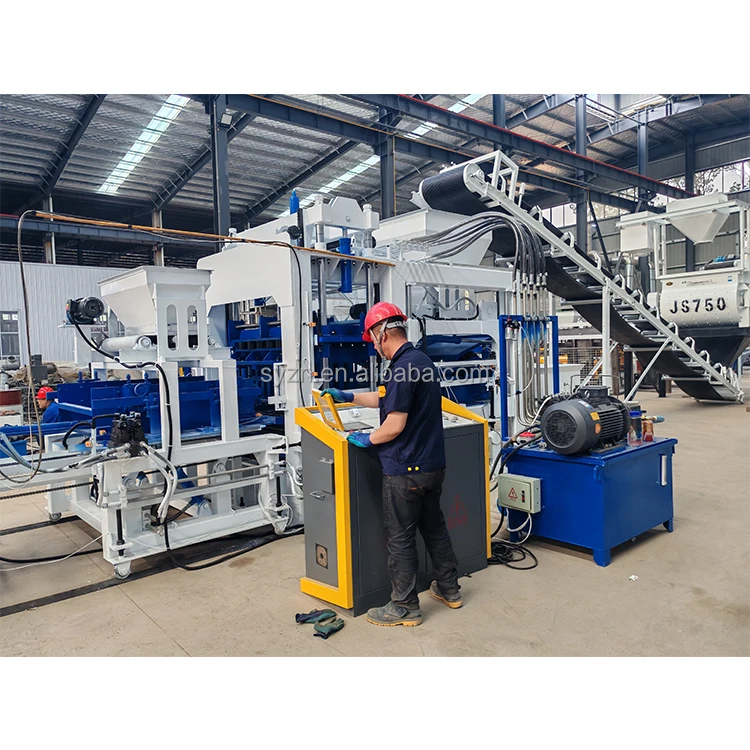
Block machinery as a single focus means the press, mould, pallet, and handling equipment are specified together so cycle times align across stations. Configuration is set against the buyer’s actual mix design and local aggregate, not a catalogue default — the vibration frequency range and hydraulic pressure are dialed to produce consistent density with available materials. Mould design covers the formats the buyer’s market actually sells, and custom drawings are available when standard moulds do not match. Automation level is selectable, so a buyer can begin with manual pallet handling and add automatic stacking later. Installation support includes operator training so the crew understands how to adjust the platform vibration for different mix batches.
Documentation & Verification
- Line layout showing QT8-15 footprint with capacity calculation per confirmed block format
- Machine specification sheet listing hydraulic pressure, vibration force, and pallet size
- Mould drawing and format list matching buyer’s target product range
- Factory test record demonstrating molding cycle on buyer’s specific block type before dispatch
- Voltage, frequency, and PLC display language confirmation sheet signed before production
Installation, Commissioning & Support
- Foundation must support 8 T total mass across the 8300 × 1860 mm base footprint
- Dedicated electrical circuit rated for 55.5 kW overall power with confirmed voltage and frequency
- Machine arrives dismantled for 40HQ container loading; reassembly requires overhead clearance above 3000 mm
- Commissioning includes vibration frequency tuning across 2800–4500 r/min to match local aggregate
- Operator training covers hydraulic demolding sequence and pallet feed timing
- Wear parts list and mould maintenance schedule provided at handover
What to Include in Your Inquiry
Send the block format and dimensions your market sells, along with the daily output you need to sustain. Include a raw material report — even a basic sieve analysis and moisture reading of your local sand or crushed stone — so the vibration parameters can be set correctly from the start. Confirm your site voltage, frequency, and preferred PLC display language to avoid delays once the QT8-15 block machine manufacturer begins production.
Frequently Asked Questions
Q: How do I calculate realistic daily output from the QT8-15 molding cycle?
A: The 15–20 second cycle range must be narrowed to your specific block format, wall thickness, and mix design. Share your target product dimensions and raw material report, and the capacity calculation will state the output per format. Multiplying the fastest cycle by operating hours without this step leads to overestimating daily production.
Q: Where does the QT8-15 sit compared to smaller or larger models in the range?
A: It occupies the mid-to-high automatic tier, requiring roughly 300 m² of factory area and a 55.5 kW power supply. Smaller machines suit workshop volumes with lower investment, while larger lines add fully automatic stacking and cubing for high-volume plants. Your market’s daily demand and available space determine which tier fits.
Q: Is the voltage and control language configurable for my market?
A: Voltage, frequency, and PLC display language are confirmed before production starts. Provide your local electrical standards and preferred operator language during the inquiry stage so the control panel is built to match. This step prevents commissioning delays after the machine arrives at your site.
Q: What equipment is included in a QT8-15 quotation?
A: The scope typically covers the hydraulic press, specified moulds, pallets, and agreed handling stations. Pallet feeding, stacking, and curing rack handling are configurable, so the quotation states exactly which stations are included. Confirming this scope upfront prevents surprise manual handling tasks after installation.
Q: How long does dispatch take after order confirmation?
A: Lead time depends on whether the chosen configuration is in stock or requires production. Standard models may ship within typical multi-week lead times, while custom mould designs or specific voltage builds add time. Container loading for the basic QT8-15 equipment fits a single 40HQ.

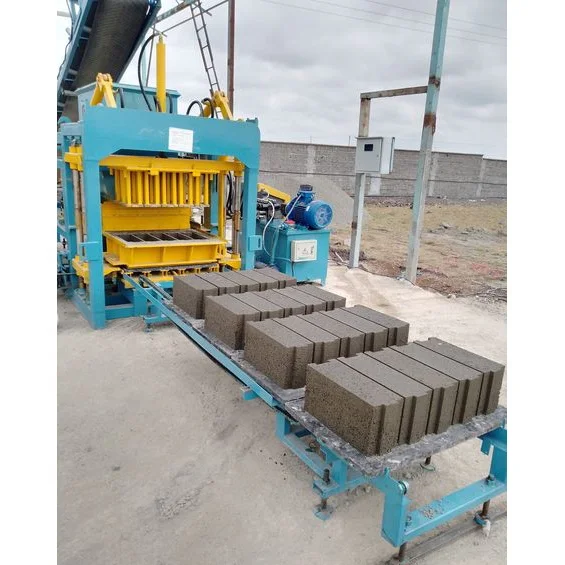 High quality block machine