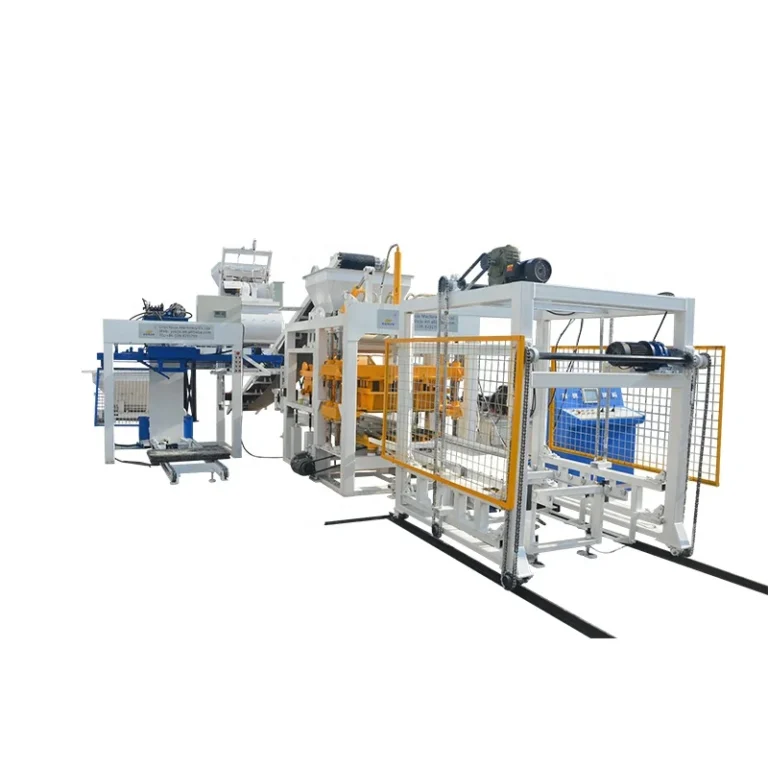
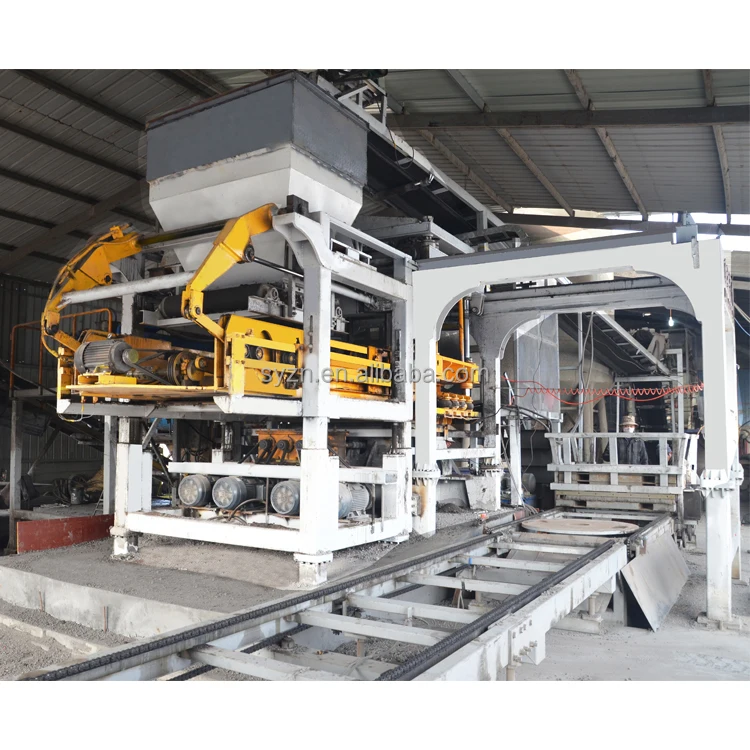
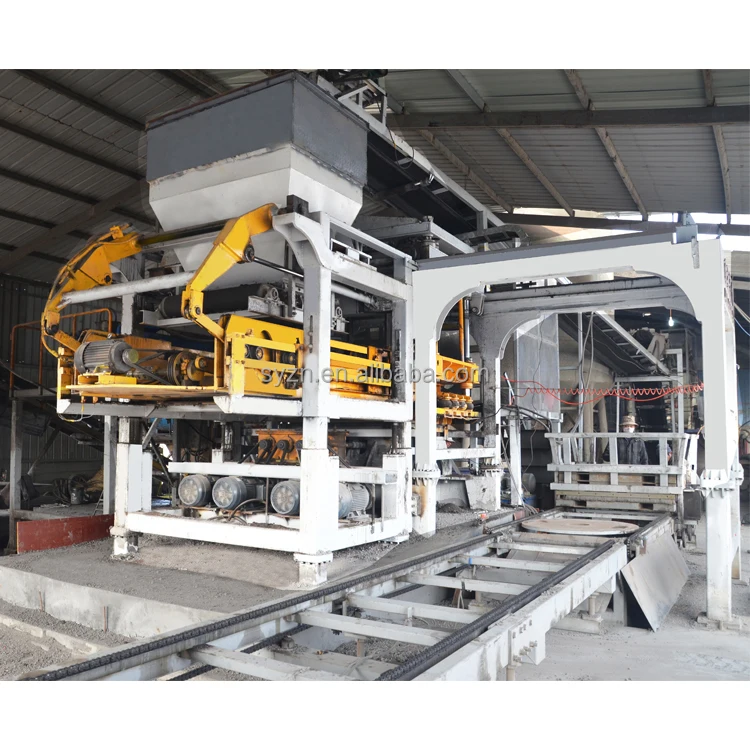
Matched System Design — The QT7-15 automatic block making machine is specified as a complete line with pallet feeder, stacker, batching, and mixer so capacity figures align with your actual block format and local aggregate.
Technical Specifications
| Parameter |
Value |
| Model |
QT7-15 |
| Product Type |
Automatic Concrete Block Making Machine |
| Dimension of Host Machine |
3200 × 2300 × 2750 mm |
| Weight of Host Machine |
6 Tons |
| Molding Area |
1150 × 700 mm |
| Workshop Area |
200 m² |
| Host Machine Power |
45 kW |
| Vibration Force |
100 kN |
| Vibration Method |
Hydraulic + Platform Vibration |
| Vibration Frequency |
2800–4500 Times/Minute |
| Molding Period |
15 Seconds (basis to be confirmed by block format) |
| Pallet Size |
1150 × 700 × 25 mm |
| Voltage |
220/380/415/440V (Customized) |
| Control System |
Siemens PLC with independently developed control program |
| Motor |
Germany Siemens or CE standard brand |
| Travel Switch |
France Schneider and Japan Omron |
| Mould Heat Treatment |
Carburizing treatment, hardness 54–58 HRC, lifespan over 100,000 cycles |
| Welding |
Carbon dioxide protection welding, CE standard materials |
| Grouped Equipment |
QT7-15 Brick Machine, Pallet Feeder, Brick Receiver, Hydraulic Station, PLD1200 Batching Machine, JS500 Mixer, Conveyor Belt, Hydraulic Trolley, SY-4 Stacker (3 kW, 600 kg) |
| Batching Machine Capacity |
PLD1200, theoretical productivity 56 m³/h, ingredient precision ±2% |
| Mixer Discharge Volume |
JS500, 500 L per batch, production capacity 25 m³/h |
| Optional |
Color feeding system for color paver production |
| Standards |
CE (materials and spare parts selected per CE standards) |
Application Suitability
| Application |
Material or Output |
| Hollow block production |
Crushed stone, sand, cement, fly ash with standard aggregate gradation |
| Solid block production |
Dense aggregate mixes requiring high vibration force and hydraulic pressure |
| Paving block and color paver |
Fine aggregate with optional color feeding system for layered finishes |
| On-site construction block |
Local quarry material tested for clay content and moisture compatibility |
| First block plant setup |
Semi-automatic configuration with upgrade path to full stacking automation |
What "15-Second Cycle Time" Actually Means for Your Daily Output
The cycle time only translates to real capacity when the block format, mix design, and pallet handling are all factored in.
Catalogue sheets often quote a single cycle figure without naming which block size it assumes. I have seen buyers receive their QT7-15 automatic block making machine and discover the 15-second cycle applies to a specific standard hollow block, while their main product — a thicker interlocking paver — needs longer vibration and a different pressure profile. The daily output then drops because the press waits on the mixer or the pallet feeder cannot keep pace [NEED_CITE: common mismatch between quoted cycle time and actual block format output]. Before we lock in a configuration, we run your actual aggregate through a trial to confirm what cycle time your specific format requires.

Where the QT7-15 Sits on the Stationary Range
The QT7-15 occupies the mid-to-high output tier in our stationary block machine lineup. Below it, semi-automatic models serve smaller workshops where investment and floor space are limited. Above it, higher-capacity lines add faster pallet cycling, larger molding areas, and fully automatic cubing systems. The decision between tiers comes down to your target daily volume and how many block formats you plan to rotate through a shift. The QT7-15 automatic block making machine is the point where automation begins to justify itself through consistent output rather than operator endurance.
Matching Automation Level to Your Workforce and Shift Pattern
This model ships with Siemens PLC control and an independently developed program that manages the full press cycle. The grouped equipment includes a pallet feeder, brick receiver, hydraulic trolley, and SY-4 stacker, which removes most manual pallet handling from the operator’s workload. For buyers starting with a smaller crew, the line can be configured at a semi-automatic level — manual pallet feeding with the press and mixer running automatically — and upgraded later as volume grows [NEED_CITE: automation upgrade paths in stationary block production]. The key is matching the automation tier to the labor you can reliably staff, not the maximum the machine can theoretically support.
How Vibration Force and Hydraulic Pressure Interact with Your Mix
The 100 kN vibration force works in combination with hydraulic pressure and adjustable frequency between 2800 and 4500 cycles per minute. Higher frequency suits fine aggregate mixes like those used for paving blocks, where surface finish matters. Lower frequency with longer dwell time compacts coarser crushed stone more effectively for structural hollow blocks. The carburized moulds at 54–58 HRC hardness withstand repeated format changes without losing dimensional accuracy. The PLD1200 batching machine holds ingredient precision at ±2%, which keeps mix consistency tight enough for the vibration parameters to produce uniform block density across a shift.
The Cost of Skipping the Material Trial
When a buyer orders based on catalogue capacity without providing local aggregate samples, the machine arrives configured for a mix that may not be available at their site. High clay content in local sand forces the vibration parameters to be recalibrated on arrival, which delays production and produces blocks that fail strength tests. I handled several cases where the entire first week was spent re-tuning pressure and frequency because the actual material behaved nothing like the standard test mix [NEED_CITE: impact of local aggregate variation on block compressive strength]. A trial run with your material before shipment avoids this entirely.
Why Buyers Source This Machine Here
Block machinery is our single focus, which means the press, mould, pallet, and handling equipment are specified as one matched system rather than assembled from separate suppliers. Configuration is set against your actual mix design and target block format, not pulled from a catalogue default. Mould design covers the formats your market sells, and custom drawings are available when standard options do not fit. The automation level is selectable so you can start where your budget allows and expand later. Installation support includes operator training so your crew can run the QT7-15 independently from the first week.
Documentation & Verification
- Line layout and capacity calculation stating which block format each output figure assumes
- Machine specification sheet with hydraulic pressure, vibration force, and pallet size matched to your mix
- Voltage, frequency, and PLC display language confirmation signed off before production begins
- Factory test record with photographs showing the QT7-15 running your block format before packing
- Mould drawing and format list covering every block type included in your order
- Operation and maintenance manual with wear parts list for the specific configuration shipped
Installation, Commissioning & Support
- Foundation plan based on the 3200 × 2300 mm host machine footprint and 200 m² workshop requirement
- Dedicated power circuit sized for the 45 kW host machine plus batching and mixer loads at your confirmed voltage
- Host machine dismantled for container loading with reassembly guide and bolt-torque specifications on site
- First-run commissioning covering vibration frequency tuning against your actual aggregate and block format
- Operator training on PLC controls, mould changeover procedure, and daily lubrication points
- Wear parts and mould list provided with recommended reorder intervals based on the 100,000-cycle mould lifespan
What We Need to Build Your Configuration
To prepare an accurate line proposal, share your target block formats with dimensions, your expected daily volume per format, and the source of your local aggregate including any test reports you have. Confirm your site voltage and frequency, the language you need on the PLC display, and the curing area and forklift you already operate so we can match the pallet specification. If you are replacing an existing press, tell us what pallet size you are currently using so the transition does not disrupt your curing racks.
Frequently Asked Questions
Q: How is the QT7-15 output capacity calculated and which block format does it assume?
A: The 15-second molding period is measured on a specific standard block format. Real daily output depends on which block you produce, your mix design, and how fast the batching and pallet handling can keep up. We provide a capacity calculation for each format you plan to run, not a single headline number.
Q: Where does the QT7-15 sit on the range and when should I step up?
A: It occupies the mid-to-high tier between entry-level semi-automatic machines and high-capacity fully automatic lines. If your daily volume exceeds what this molding area supports or you need faster format rotation, the next tier adds larger pallets and automated cubing.
Q: What voltage, frequency, and PLC language options are available?
A: Voltage is configurable across 220, 380, 415, and 440V at 50 or 60 Hz. The Siemens PLC display language is confirmed before production so your operators see instructions in their working language on arrival.
Q: Can I start semi-automatic and upgrade later?
A: Yes. The line can ship with manual pallet handling while the press and mixer run automatically. The pallet feeder, stacker, and hydraulic trolley can be added as your volume and crew grow without replacing the host machine.
Q: What workshop area does the full QT7-15 line require?
A: The host machine needs a 200 m² workshop footprint. Beyond that, you must account for curing rack space, pallet return area, and raw material storage. We provide a line layout showing every station before production so there are no surprises on site.

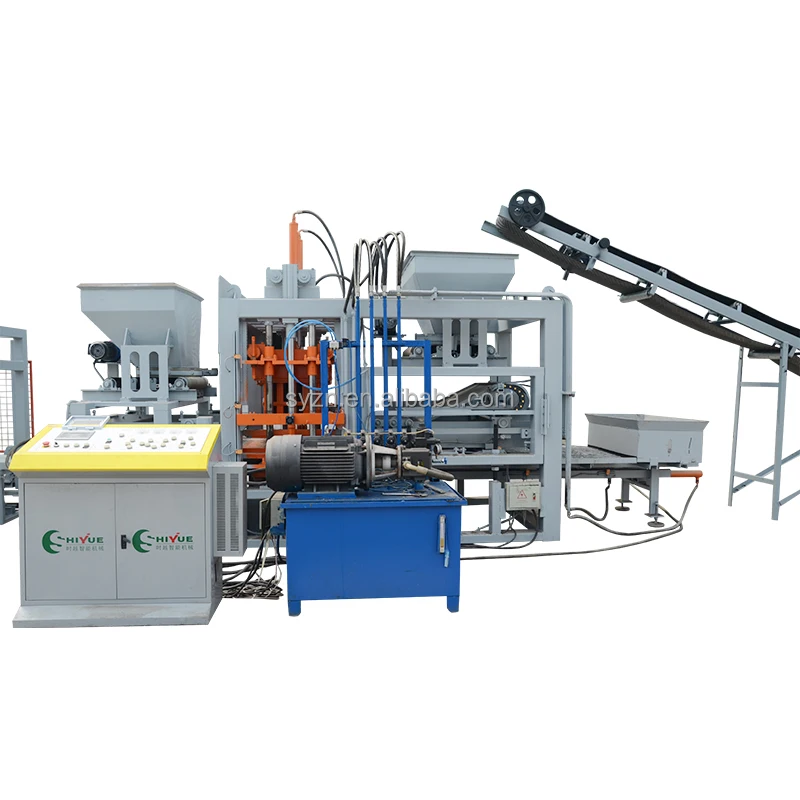
 Stationary block machine