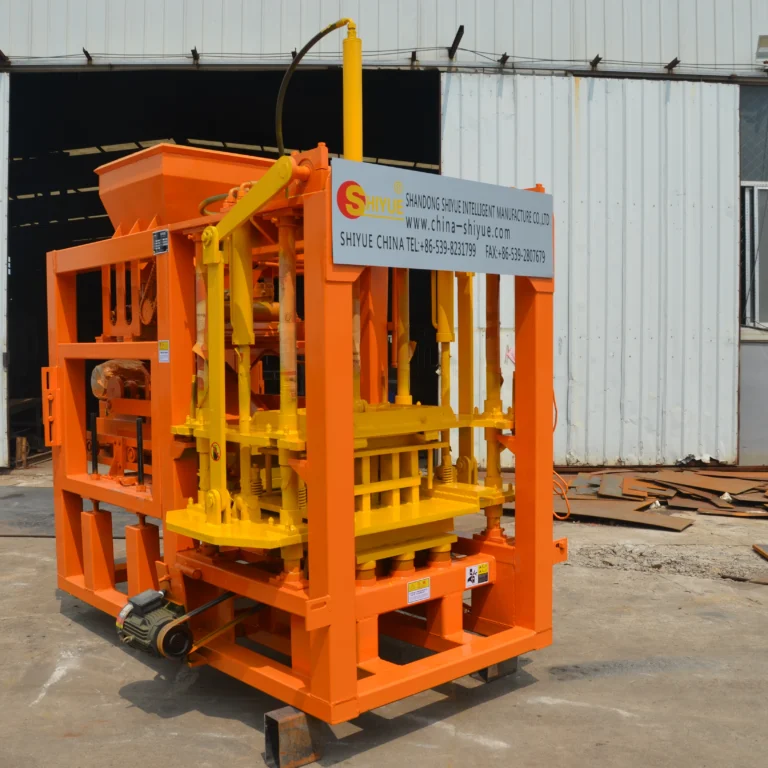
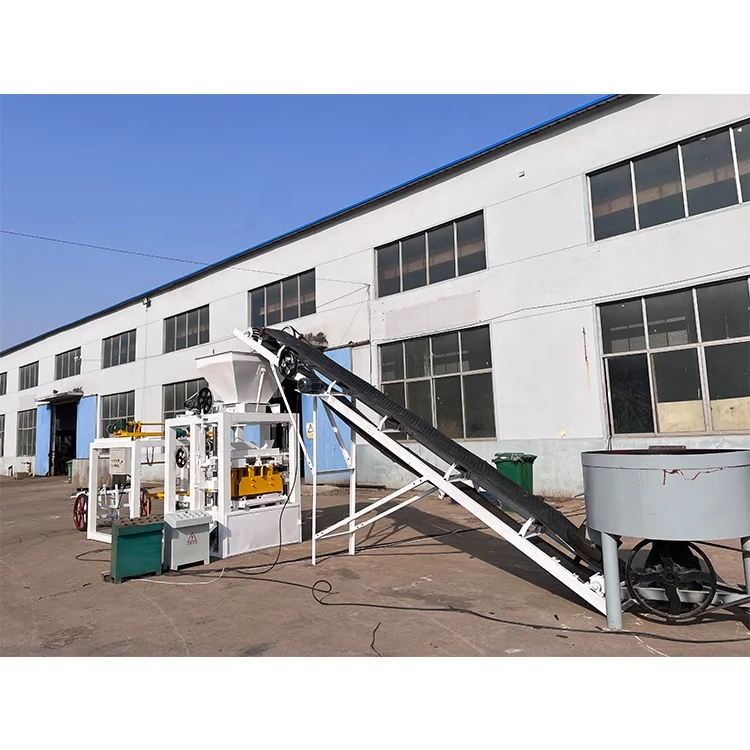
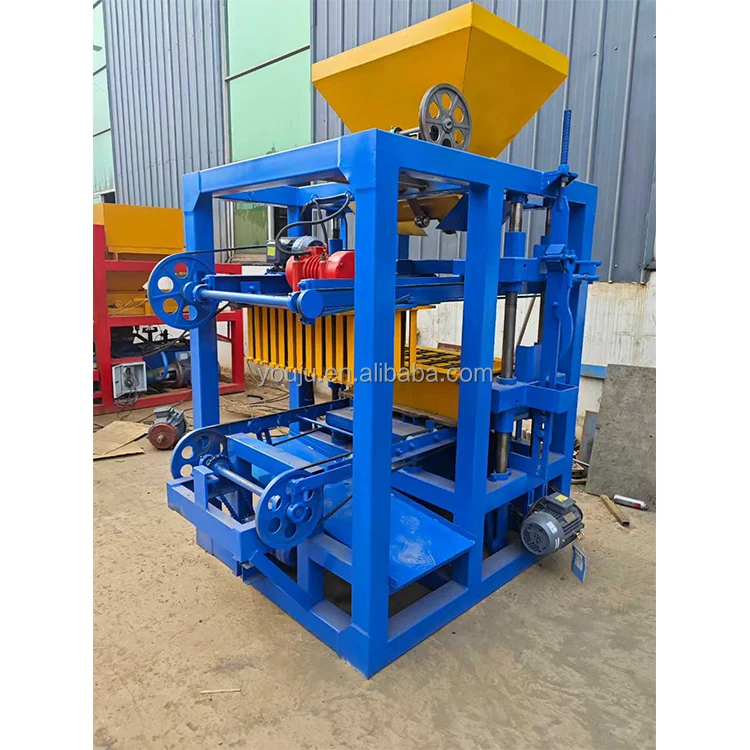
Matched System Configuration — machine, mould, pallet, and handling specified together against your actual block format and local aggregate, not pulled from separate catalogue defaults.
Technical Specifications
| Parameter |
Value |
| Model |
QT6-15 |
| Product Type |
Hydraulic Block Making Machine |
| Overall Dimensions (L×W×H) |
7100 × 1500 × 3000 mm |
| Rated Hydraulic Pressure |
21 MPa |
| Main Vibration Form |
Platform vibration |
| Vibration Frequency |
4500–5100 r/min |
| Pallet Size |
880 × 850 mm |
| Moulding Cycle |
15–25 s (basis not stated in source — confirm block format / material / thickness) |
| Overall Power |
31.25 kW |
| Net Weight |
8700 kg |
| Drive Type |
Hydraulic drive |
| Control System |
PLC intelligent control with human-machine dialogue |
| Automation Level |
Fully automatic |
| Raw Material Ratio |
Cement 8–10 %, Sand 30–40 %, Stone 50–60 % (approx. 1:4:5) |
| Block Strength (Hollow) |
8–10 MPa (basis not stated in source — confirm mix and format) |
| Block Strength (Solid) |
10–20 MPa (basis not stated in source — confirm mix and format) |
| Mould Change |
Interchangeable moulds for different concrete brick sizes |
| Voltage & Frequency |
To be confirmed before shipment |
| PLC Display Language |
To be confirmed before commissioning |
Application Suitability
| Application |
Material or Output |
| Hollow block production for building walls |
Crushed stone, sand, cement (approx. 1:4:5 ratio) |
| Solid brick production for load-bearing structures |
Local aggregate blended with 8–10 % cement |
| Paver and interlocking brick production |
Sand, stone dust, cement with hydraulic pressing |
| On-site production for housing projects |
Locally sourced aggregate matched to available curing area |
| First-plant entrepreneur setup |
Standard hollow and solid formats with 880 × 850 mm pallets |
What "Cycles Per Hour" Actually Means for Your Daily Output
A cycle time is only meaningful when the block format it assumes is stated alongside it.
Every hydraulic block making machine manufacturer quotes a moulding cycle, and the QT6-15 lists 15–25 seconds. But 15 seconds on a thin paver and 25 seconds on a 200 mm hollow block produce vastly different daily totals. I have seen buyers sign off on a machine because the quoted cycle sounded fast, then arrive at the plant to discover the number assumed a format they never planned to run. The pallet size here — 880 × 850 mm — defines how many blocks fit per cycle, and that is the real starting point for any honest capacity conversation. [NEED_CITE: block format impact on actual daily output calculations]
Where the QT6-15 Sits in the Full Shiyue Range
The Shiyue lineup covers everything from mobile egg-laying machines for on-site work to high-capacity automatic lines. The QT6-15 occupies the mid-tier of the fully automatic hydraulic block making machine range, bridging workshop-scale semi-automatic presses and large-volume production plants. Its 31.25 kW overall power and 8700 kg weight place it in a category that does not demand heavy-duty foundations or dedicated substations, yet it delivers fully automatic operation with PLC control — the automation baseline that separates this tier from manual pallet handling models below it.
Footprint and Investment Positioning
A buyer comparing entry-level automatic against semi-automatic options needs to understand the floor space and curing area the 880 × 850 mm pallet demands. Each pallet carries one layer of blocks, and a full shift’s output in hollow block format means hundreds of pallets cycling through your curing racks. Planning the curing area before the machine arrives prevents the common situation where finished blocks pile up on the floor because rack capacity was never calculated. This mid-tier model keeps the investment moderate while still offering the format flexibility and PLC consistency that semi-automatic machines cannot match. [NEED_CITE: curing area planning for pallet-based block production]
Reading the Specs That Matter
Hydraulic pressure and vibration frequency together determine block density. The QT6-15 runs at 21 MPa rated pressure with platform vibration at 4500–5100 r/min. Higher pressure compacts the mix, while vibration settles fine particles into voids — if either is mismatched to your local aggregate, block strength drops. The raw material ratio of approximately 1:4:5 (cement, sand, stone) is a starting reference; if your local stone dust contains high clay content, the mix must be adjusted or strength will suffer regardless of machine capability. The interchangeable mould system means you can switch between hollow blocks, solid bricks, and pavers, but every change requires the vibration and pressure settings to be re-verified for the new format. The PLC human-machine dialogue allows operators to store parameter sets per mould, reducing trial-and-error after each changeover.

The Cost of Skipping the Configuration Conversation
Choosing a pallet size without checking your existing forklift and curing racks leads to pallets that cannot be moved or stored efficiently. Selecting a machine rated for a mix you cannot source locally forces a material change that raises per-block cost. Leaving voltage and PLC language unconfirmed until the machine arrives can stall commissioning for days while a technician waits for the correct transformer or a translated interface. These are not rare edge cases — they appear regularly when a hydraulic block making machine manufacturer ships a catalogue default instead of a matched configuration. [NEED_CITE: common commissioning delays from unconfirmed voltage and control language]
Why Buyers Source This Tier from Shiyue
The QT6-15 is specified as part of a matched system — press, mould, pallet, and handling — rather than assembled from separate suppliers, which eliminates interface gaps between stations. Configuration is set against the buyer’s actual mix design and target block format, not a generic catalogue row. Mould design covers the formats the buyer’s market actually sells, including custom drawings when standard sizes do not match local building codes. Automation level is selectable within the range, so a buyer can start with semi-automatic handling around this press and upgrade stacking and cubing later. Installation support includes operator training on the PLC interface and parameter storage per mould, so the first shift runs with confidence rather than guesswork.
Documentation & Verification
- Line layout drawing with capacity calculation stated per block format for the QT6-15
- Machine specification sheet confirming hydraulic pressure, vibration frequency, and pallet size
- Mould drawing and format list showing every block size this press supports
- Voltage, frequency, and PLC display language confirmation document before production
- Factory test record on your specified block format before dispatch
- Hydraulic and electrical schematic for local maintenance teams
Installation, Commissioning & Support
- Foundation pad sized for 7100 × 1500 mm footprint and 8700 kg operating weight
- Dedicated power circuit rated for 31.25 kW total draw at confirmed voltage and frequency
- Machine shipped in dismantled state with reassembly and alignment on site
- First-run parameter tuning for hydraulic pressure and vibration against your actual mix
- PLC operator training covering mould change procedure and parameter recall per format
- Wear parts list with hydraulic seal and vibration motor replacement intervals
Before You Request a Quote
To size the QT6-15 correctly within the Shiyue range, share the block formats you plan to produce, your local aggregate type and cement availability, and the daily output you need per format. Confirm your site voltage, frequency, and preferred PLC display language so commissioning is not delayed. Let us know your available curing area dimensions and existing forklift capacity so the 880 × 850 mm pallet system integrates without surprises.
Frequently Asked Questions
Q: Where does the QT6-15 sit compared to semi-automatic and mobile models?
A: It occupies the mid-tier of the Shiyue fully automatic range, above semi-automatic presses that require manual pallet handling and below high-capacity lines with full cubing systems. It gives buyers fully automatic PLC control and interchangeable moulds at a moderate footprint and investment level.
Q: How is capacity stated for this machine?
A: Capacity is stated per block format, not as a single headline number. The 15–25 second moulding cycle must be paired with a specific block size and pallet load to calculate realistic daily output for your production plan.
Q: Can I start semi-automatic and upgrade later?
A: Yes. The Shiyue range allows buyers to begin with manual pallet handling around the QT6-15 press and add automatic stacking and cubing stations later, keeping the initial investment manageable while preserving the upgrade path.
Q: What pallet size and curing area should I plan for?
A: The QT6-15 uses 880 × 850 mm pallets. Your curing area must accommodate the daily pallet volume for your target block format, and your forklift must be rated to handle loaded pallets at that dimension.

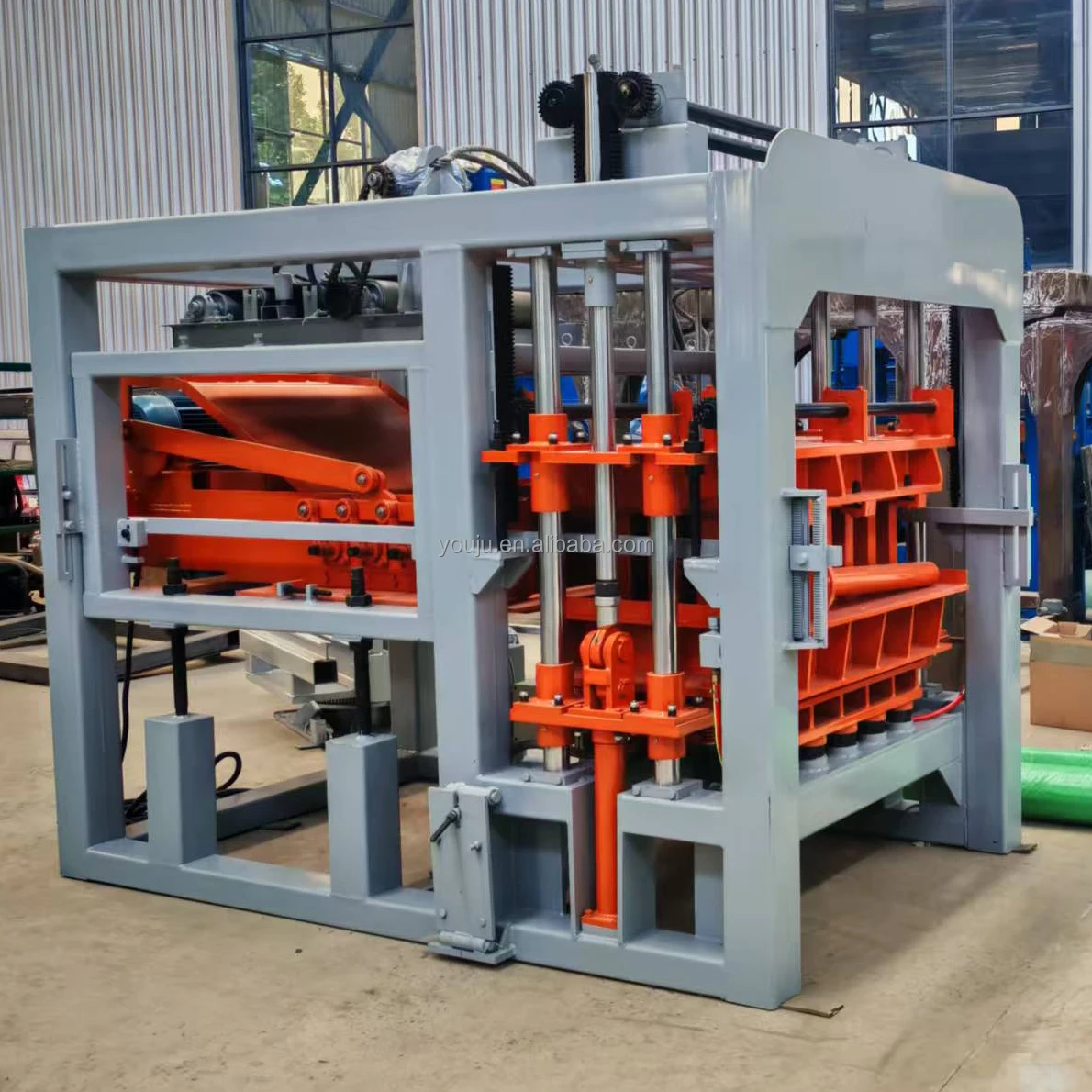
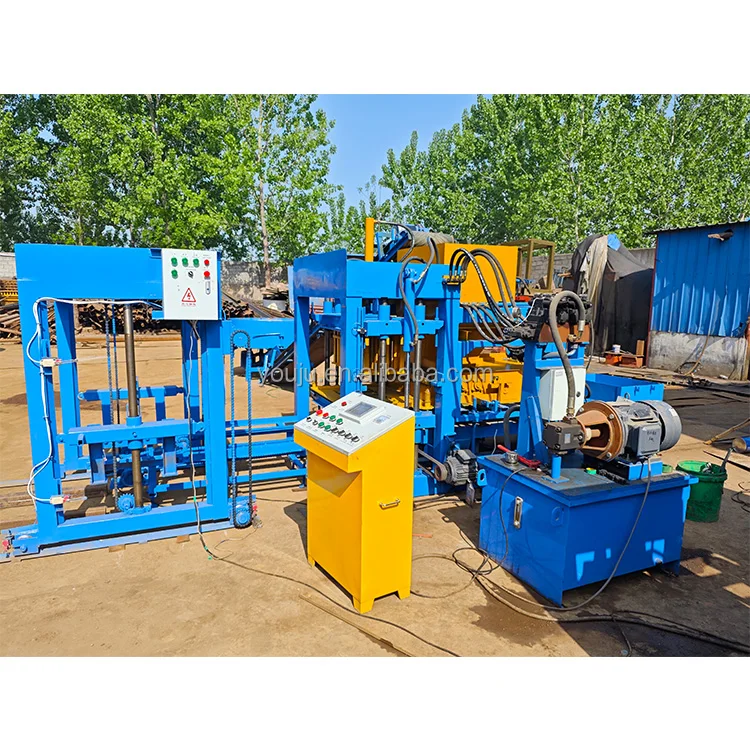 Stationary block machine