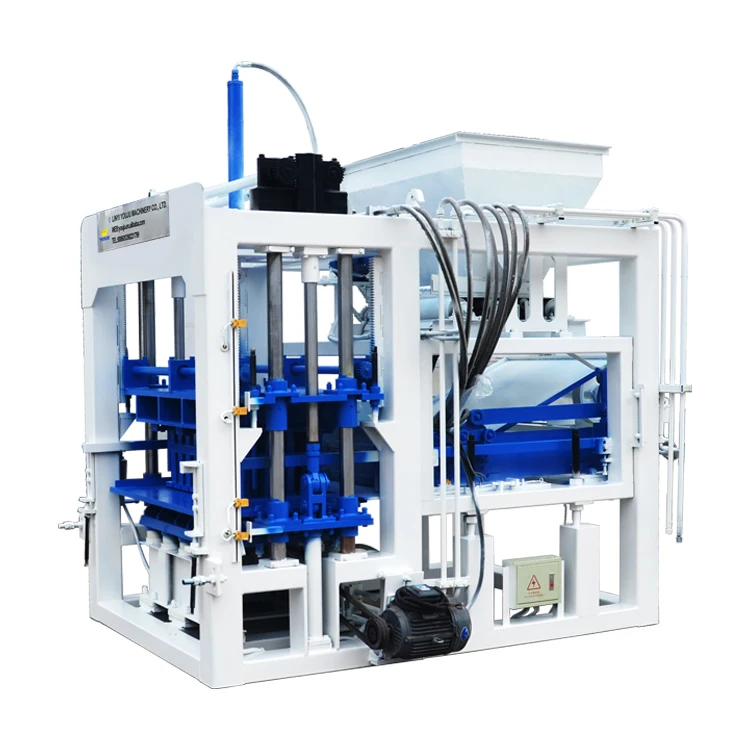
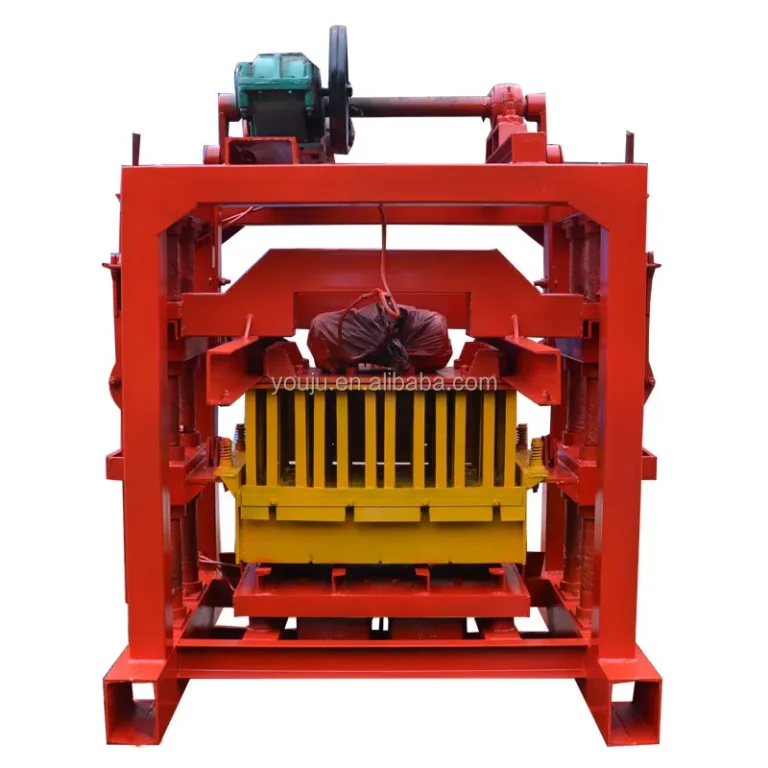
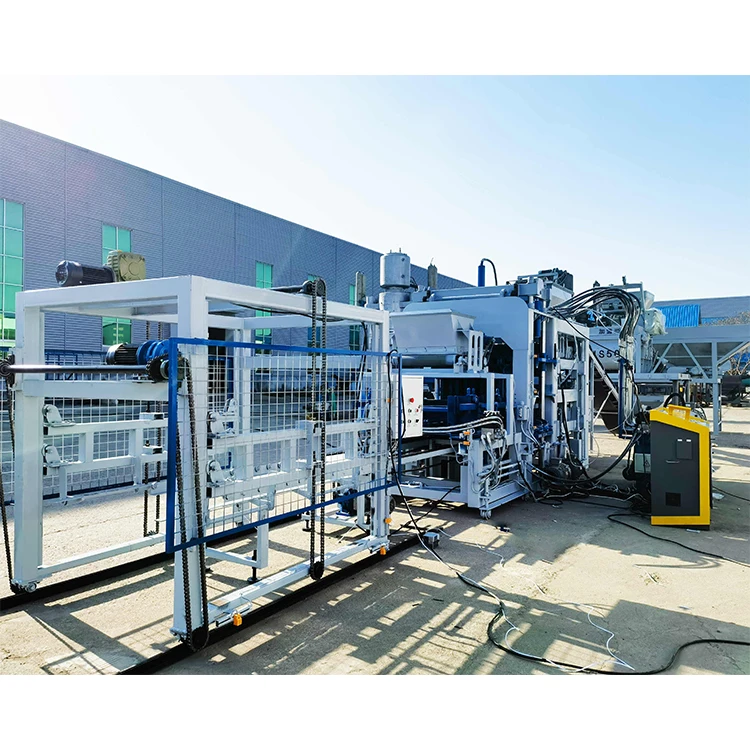
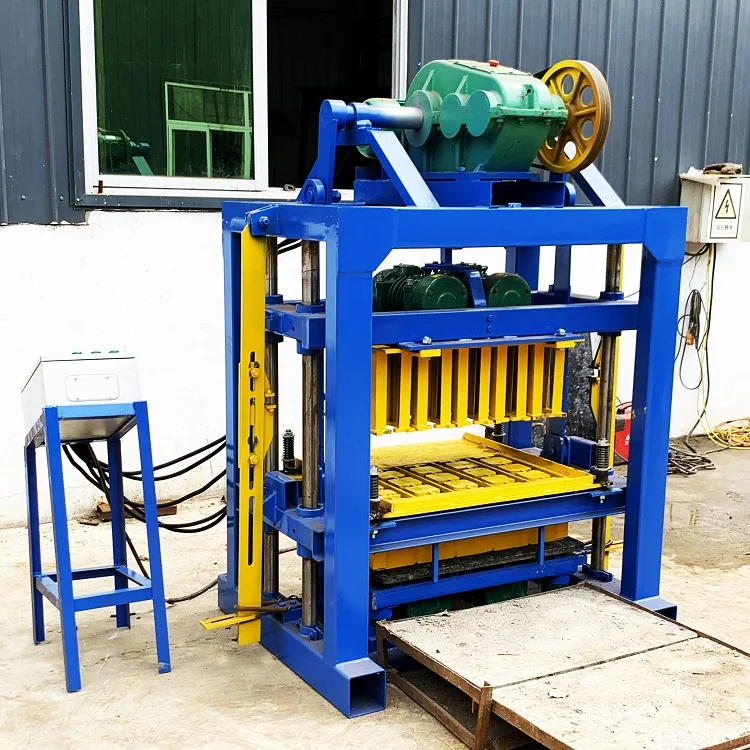
Specification Matched to Site — the QT6-15 is presented here with its pallet size, output tier and plant footprint mapped against every other model in the range, so you can see exactly where it fits before committing capital.
Technical Specifications
| Parameter |
Value |
| Model |
QT6-15 |
| Product Type |
Automatic Hydraulic Concrete Block Making Machine |
| Overall Dimensions (L×W×H) |
7100×1500×3000 mm |
| Net Weight |
8700 kg |
| Rated Pressure |
21 MPa |
| Main Vibration Form |
Platform vibration |
| Vibration Frequency |
4500–5100 r/min |
| Pallet Size |
880×850 mm |
| Moulding Cycle |
15–25 s (basis not stated in source — confirm block format / material / thickness) |
| Overall Power |
31.25 kW |
| Drive Type |
Hydraulic |
| Control System |
PLC intelligence control (human–machine dialogue) |
| Mould Change |
Replaceable moulds for different concrete brick sizes |
| Key Features |
PLC-controlled, hydraulic drive, platform vibration, replaceable mould system |
Application Suitability
| Application |
Material or Output |
| Hollow concrete block production |
Cement-sand-stone mix (reference ratio 8–10% cement, 30–40% sand, 50–60% stone) |
| Solid concrete brick production |
Standard concrete masonry mix, target strength 10–20 MPa (basis to be confirmed) |
| Medium-capacity stationary plant |
Replaces semi-automatic output with full hydraulic pressure and PLC control |
Why "15–25 Seconds per Cycle" Is Not the Whole Story
Cycle time means nothing without the block format it was measured on.
Many quotations for an automatic concrete block making machine manufacturer list a single cycle time that was achieved on a small solid brick, then apply that same number to a large hollow block when calculating daily capacity. The result is a daily output figure that looks impressive on paper but collapses the moment the first shift ends. I recently helped a buyer who had ordered based on a quoted hourly rate, only to find their 200 mm hollow blocks required nearly double the cycle time the seller had assumed. The vibration frequency and hydraulic pressure on the QT6-15 can be matched to your specific mix, but the starting point must be an honest capacity calculation tied to your actual format [NEED_CITE: block format assumptions in capacity quotations].

Where the QT6-15 Sits in the Full Machine Range
The QT6-15 occupies the mid-to-high tier of the stationary automatic range. Below it, semi-automatic machines handle lower daily volumes with manual pallet handling, suitable for entrepreneurs testing a local market. Above it, larger automatic models run bigger pallets and higher vibration forces for plants targeting regional supply contracts. The QT6-15 bridges these two worlds, offering full PLC control and hydraulic drive without the footprint and capital outlay of a high-capacity line. For a first-time buyer or a distributor advising end-users, this tier is where the automatic concrete block making machine manufacturer range begins to deliver consistent, shift-long output.
Pallet Size as the Real Compatibility Boundary
The 880×850 mm pallet used by the QT6-15 is a common mid-tier format shared across several models in the range. This matters because pallets are a recurring cost and a logistics constraint — if your curing area and forklift are already set up for a different size, switching pallets adds hidden expense before the first block is produced. When surveying the full range, check which models share this pallet dimension so that tooling, curing racks and handling equipment remain interchangeable as your plant grows [NEED_CITE: pallet standardisation across block machine tiers].
Reading the Specs That Actually Shape Your Plant
The 21 MPa rated pressure and 4500–5100 r/min vibration frequency together determine the density and strength of every block that leaves the press. Higher pressure alone will not compensate for insufficient vibration if your local aggregate is angular or poorly graded. The platform vibration form distributes force across the full mould area, which is critical when running wide pallets like the 880×850 mm format. The 31.25 kW overall power draw tells you the electrical supply requirement before installation — confirm your site voltage and frequency early, because a motor wound for the wrong supply will sit idle while a replacement is shipped. The PLC control with human–machine dialogue allows operators to store recipes for different block formats, reducing changeover errors across a multi-format production day.
What Happens When the Automation Level Does Not Match the Site
Choosing a fully automatic press for a site that lacks reliable pallet return conveyors or curing rack handling means the machine spends half the shift waiting for manual intervention. I have seen stationary block machines of this class sit idle because the buyer assumed stacking and cubing were included in the quotation when they were not. The QT6-15 is configurable from basic press-only operation through to integrated pallet feeding and stacking, but each added station increases the plant footprint and the capital required. Specifying the automation level against your actual labour availability and site layout avoids paying for capacity you cannot use [NEED_CITE: automation level mismatch in block plant installations].
Why Source the QT6-15 Through This Range
The QT6-15 is specified as part of a matched system — machine, mould, pallet and handling equipment are selected together rather than assembled from separate suppliers, which eliminates the compatibility gaps that cause delays at commissioning. Configuration is set against your actual mix design and local aggregate, not a catalogue default, so the vibration and pressure parameters are realistic from day one. Mould design covers the formats your market actually sells, including custom drawings where standard moulds do not fit. The automation level is selectable, allowing a buyer to start with semi-automatic pallet handling and upgrade stations later as volume justifies the investment. Installation includes operator training so that the PLC recipes and mould change procedures are understood before the first production shift.
Documentation & Verification
- Line layout drawing showing QT6-15 footprint with pallet return and curing rack positions
- Capacity calculation stating the exact block format assumed for each output figure
- Hydraulic and electrical schematic with confirmed voltage and frequency for your site
- Mould drawing and format list showing every block size the QT6-15 can run
- Factory test record on your specified mix and block format before dispatch
- Operation and maintenance manual with wear parts and mould replacement intervals
Installation, Commissioning & Support
- Foundation plan sized to the 7100×1500 mm footprint and 8700 kg operating weight of the QT6-15
- Dedicated electrical circuit rated for 31.25 kW with confirmed voltage and frequency before motor winding
- Machine arrives in dismantled state; reassembly sequence and lifting points provided in the manual
- First-day commissioning includes vibration frequency and hydraulic pressure tuning to your local aggregate
- Operator training covers PLC recipe storage, mould change procedure and daily maintenance checks
- Wear parts list identifies hydraulic seals and vibration components with recommended replacement intervals
Before You Request a Quotation
To position the QT6-15 correctly within the range and confirm it meets your daily volume, share the block format or formats you plan to sell, your target daily output in pieces, and the local raw materials available including aggregate type and cement grade. Confirm your site voltage, frequency and the display language your operators require on the PLC. If you already have curing racks, forklifts or pallets on site, provide those dimensions so the pallet size and handling stations can be matched from the start.
Frequently Asked Questions
Q: How do I decide between mobile, semi-automatic and automatic tiers for my project?
A: Mobile machines suit on-site production without a fixed plant. Semi-automatic models fit lower daily volumes where manual pallet handling is acceptable. The QT6-15 automatic tier is appropriate when you need consistent shift-long output with PLC control and are prepared to invest in the supporting handling equipment that keeps the press running continuously.
Q: What block format is assumed when the 15–25 second cycle time is quoted?
A: The source does not state which block format was used to measure that cycle range. The actual cycle time depends on block height, wall thickness and your mix design. Request a capacity calculation that names the specific format so you can compare daily output figures honestly across different machines.
Q: How does the QT6-15 plant footprint compare to smaller and larger models?
A: The QT6-15 occupies 7100×1500 mm for the press itself, plus space for pallet feeding, stacking and curing rack handling. Smaller semi-automatic models require less length but more manual handling area. Larger automatic models need longer conveyors and higher ceiling clearance for automatic cubing stations.
Q: Can the QT6-15 share pallets with other machines in the range?
A: The 880×850 mm pallet is a common mid-tier size used by several models in the range. This allows pallets, curing racks and forklift handling to remain interchangeable if you add or replace machines later. Confirm pallet compatibility before ordering to avoid duplicating your curing inventory.
Q: What is the upgrade path if I start with a semi-automatic model?
A: The range allows you to begin with semi-automatic pallet handling and add automatic feeding, stacking and cubing stations as volume grows. The QT6-15 PLC control system supports these additions without replacing the press, provided the original specification reserved the necessary electrical and hydraulic interfaces.

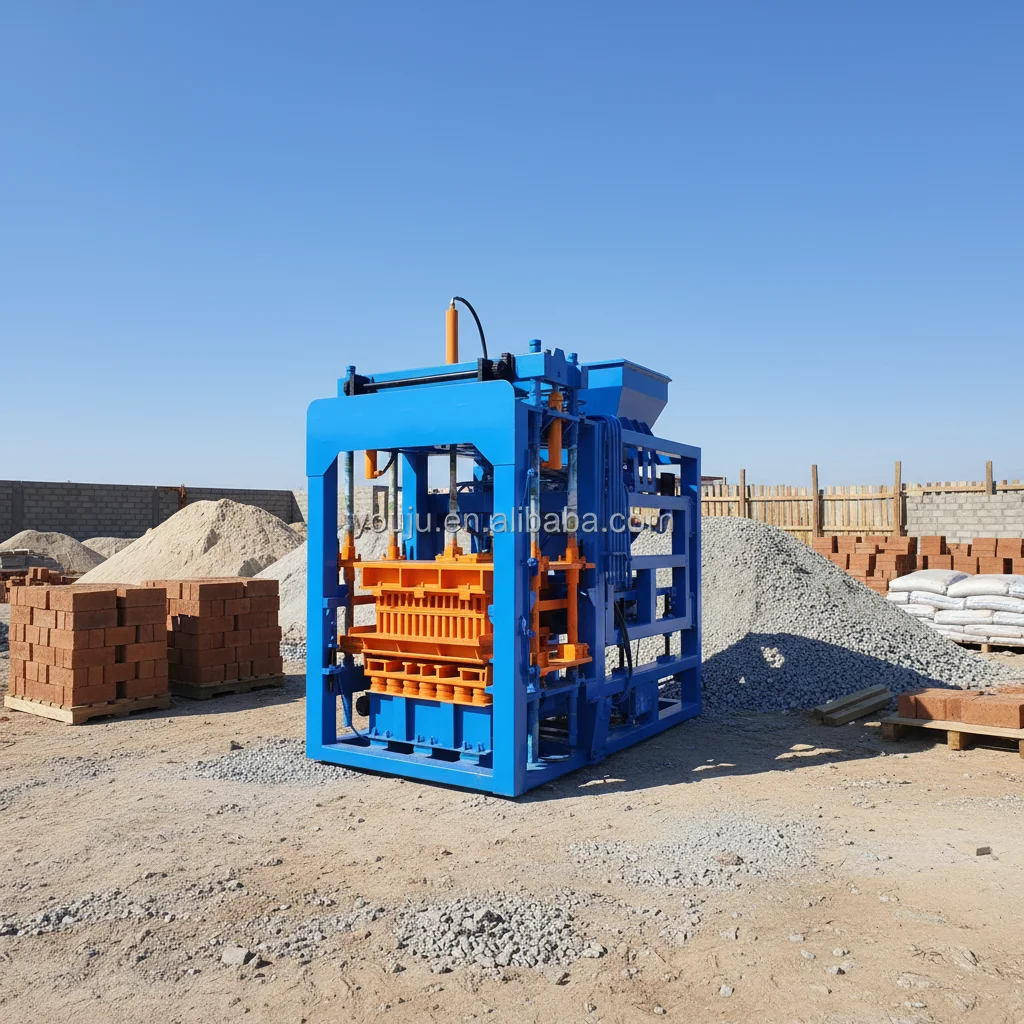
 Stationary block machine