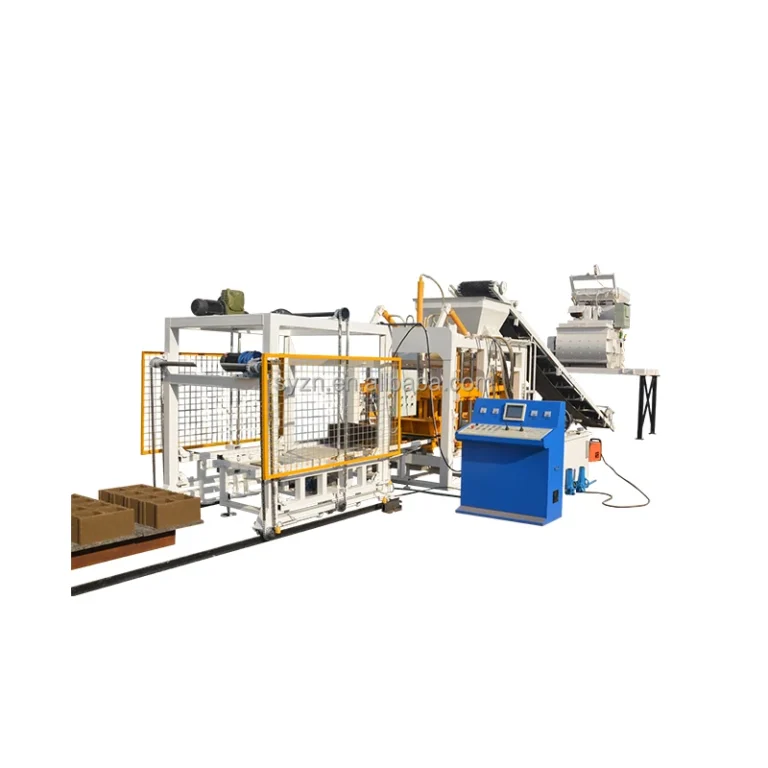
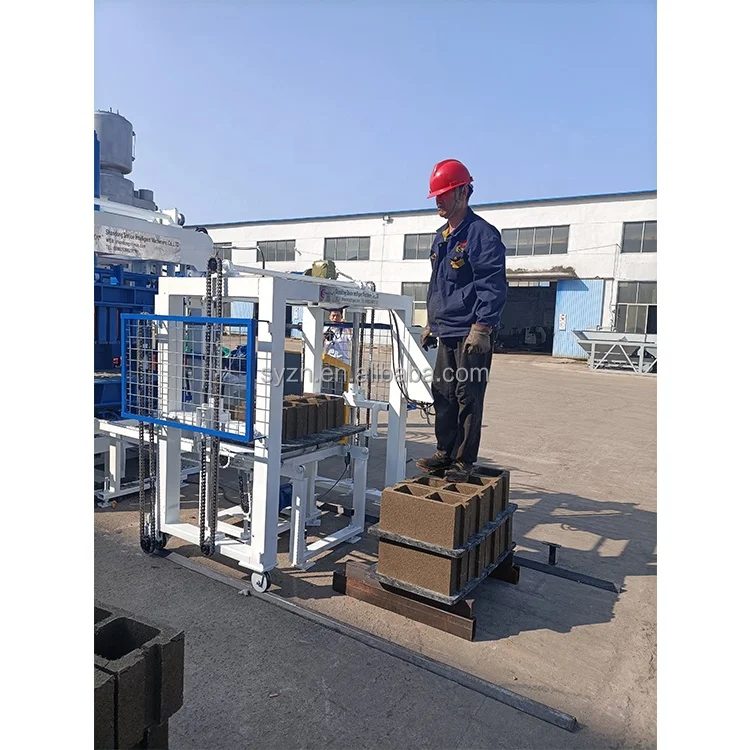
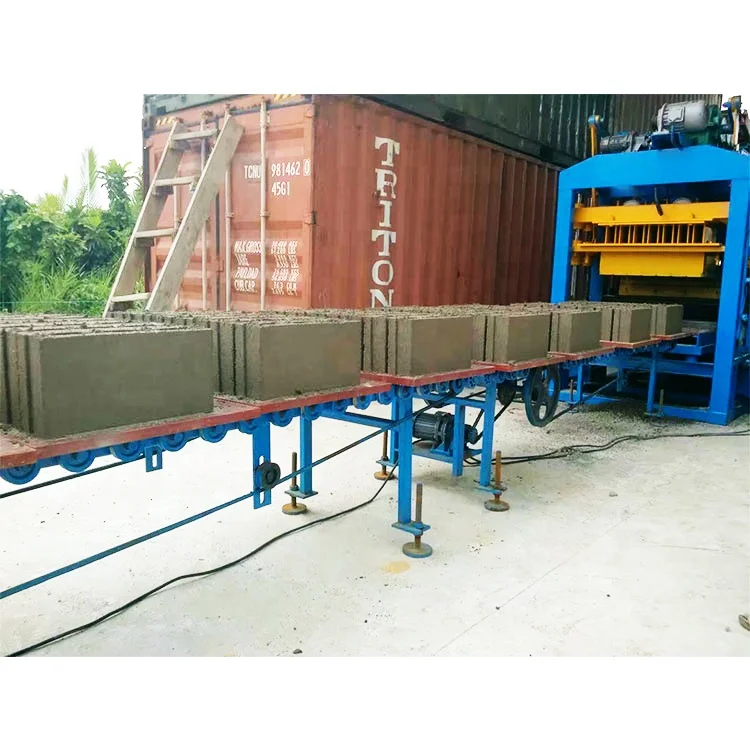
Complete system configuration — machine, mould, pallet and handling equipment are specified as one matched set rather than assembled from separate suppliers, ensuring cycle times align from the mixer to the curing rack.
Technical Specifications
| Parameter |
Value |
| Model |
QT6-15 |
| Product Type |
Concrete Hollow Block Making Machine |
| Overall Dimension |
8200 × 1700 × 2950 mm |
| Vibration Frequency |
0–60 Hz |
| Vibration Form |
Platform Vibration |
| Vibration Force |
45 KN |
| Moulding Mode |
Load automatically, vibration moulding |
| Pallet Size |
880 × 850 mm |
| Molding Cycle |
15–20 s |
| Demolding Method |
Hydraulic |
| Overall Power |
37 kW |
| Total Mass |
7 T |
| Factory Area |
1200 m² |
| Control System |
PLC controlled |
| Compressive Strength of Blocks |
More than 15 MPa |
| Output Capacity (Hollow Block 400×200×200 mm) |
1080–1440 pcs/hour (basis: 15–20 s cycle) |
| Output Capacity (Hollow Block 400×150×200 mm) |
1440–1920 pcs/hour (basis: 15–20 s cycle) |
| Output Capacity (Solid Brick 240×115×53 mm) |
5760–7680 pcs/hour (basis: 15–20 s cycle) |
| Output Capacity (Rectangular Brick 200×100×60 mm) |
2160–2880 pcs/hour (basis: 20–25 s cycle) |
| Output Capacity (Zigzag Brick 225×112.5×60 mm) |
2160–2880 pcs/hour (basis: 20–25 s cycle) |
| Standards |
CE declaration where applicable |
Application Suitability
| Application |
Material or Output |
| Hollow block production |
Crushed stone, sand, cement, fly ash |
| Solid brick manufacturing |
Quarry dust, river sand, cement blends |
| Rectangular paving brick |
Fine aggregate, cement, pigment additives |
| Zigzag interlocking paving brick |
Graded aggregate, cement, mineral oxide pigment |
| Waste material block production |
Ash, slag, recycled construction aggregate |
Why Cycle Time Varies by Block Format and What It Means for Your Daily Output
Real daily tonnage depends on which block you actually run, not a single headline number.
A QT6-15 concrete block machine manufacturer quoting one capacity figure for every format is leaving out the variable that matters most. When a buyer sees 1440 pieces per hour without knowing it assumes a 400×150×200 mm hollow block at a 15-second cycle, the expectation is set wrong from day one. Switch to a heavier interlocking paver and that cycle stretches, pulling hourly output down accordingly. I have watched projects stall because the business plan was built on a catalogue number that never matched the product mix the buyer’s market actually demanded. [NEED_CITE: relationship between block format, cycle time and daily output in concrete block production]

Mapping the QT6-15 Within the Automatic Block Machine Range
The QT6-15 concrete block machine manufacturer positions this unit at the mid-tier of the automatic range. It sits above semi-automatic and mobile egg-laying models in both output and automation level, carrying a PLC control system that manages moulding sequences, pallet indexing and vibration timing without manual intervention. Buyers moving up from hand-fed or egg-laying machines typically land here when daily volume justifies automatic pallet feeding but full robotic stacking is not yet required.
How the Press, Pallet and Handling Stations Must Stay in Step
Every station upstream and downstream of the QT6-15 press sets a ceiling on what the press itself can achieve. The 880×850 mm pallet must arrive at the loading station before the mould closes, and the wet block must clear the demolding zone before the next pallet enters. When raw material feeding or pallet return falls behind, the press idles. A plant layout that accounts for the 8200 mm machine footprint alongside the mixer, conveyor and curing rack handling keeps every station matched to the 15–20 second molding cycle. [NEED_CITE: block production line layout and station synchronization requirements]
Reading the Specification Sheet Beyond Headline Power
The 37 kW overall power rating covers the vibration motors, hydraulic pump and conveyor drives combined. What matters at the mould is how that power converts into compaction: the 45 KN vibration force applied through platform vibration consolidates the concrete mix while hydraulic demolding lifts the mould box straight off the green block. Together these determine whether a 400×200×200 mm hollow block leaves the press at more than 15 MPa compressive strength or crumbles at the corners. Pallet size also plays a role — the 880×850 mm dimension dictates curing rack spacing and the forklift tine width the plant needs on site.
The Hidden Cost of Ignoring Pallet and Curing Compatibility
Buyers who confirm pallet size after the machine is already in production discover the curing racks do not fit the pallets, or the forklift in the yard cannot slide under them without breaking edges off wet blocks. The 880×850 mm pallet must match both the curing area footprint and the handling equipment already on site, otherwise the output bottleneck simply shifts from the press to the yard. [NEED_CITE: pallet size and curing infrastructure compatibility in block plants]
Why Sourcing the Full Line From One Source Matters
Block machinery as a single focus means the QT6-15 press, its moulds, pallets and supporting handling equipment are specified together so vibration force, pallet material and curing rack pitch all align. Configuration is set against your actual mix design and local aggregate, not a catalogue default — I have seen projects in arid regions fail because the standard mix assumed washed river sand that was unavailable locally. Mould design covers the formats your market sells, including custom drawings when standard sizes do not match local building codes. Automation level is selectable, so a buyer can start with manual pallet return and add automatic stacking later. Installation and commissioning support includes operator training on the PLC interface and mould change procedure.
Documentation & Verification
- Line layout showing the 8200×1700 mm footprint alongside mixer and curing rack positions
- Capacity calculation sheet stating which block format and cycle time each figure assumes
- Machine specification sheet with voltage, frequency and PLC display language confirmed
- Mould drawing and format list matching your target market block dimensions
- Factory test record demonstrating actual cycle time on your chosen block format before dispatch
Installation, Commissioning & Support
- Foundation plan sized for the 8200 mm machine length and 7 T operating mass
- Dedicated 37 kW power circuit with confirmed voltage and frequency for your site
- Machine shipped in dismantled modules for container loading and reassembled on arrival
- First-run commissioning includes PLC parameter tuning to your raw material mix
- Operator training covers hydraulic demolding sequence and safe logic interlock circuits
- Wear parts list covering hydraulic seals, vibration motor bearings and mould liner plates
Before You Send an Inquiry
Provide the block format and dimensions your market sells, your target daily output, and the raw materials you can source locally — including aggregate type and any ash or slag you plan to use. Confirm the voltage and frequency available at your site, the PLC language your operators need, and whether you have existing pallets or curing racks the new line must match.
Frequently Asked Questions
Q: How do I verify the QT6-15 output capacity for the block format I actually sell?
A: We provide a capacity calculation sheet that states the assumed block dimension, molding cycle and pallet arrangement for every format in your inquiry. The 400×200×200 mm hollow block figure is based on a 15–20 second cycle; your specific mix and aggregate may shift that range, which is why we run a factory test on your chosen format before dispatch.
Q: What voltage and PLC language options can be configured before shipment?
A: Voltage and frequency are confirmed during the quotation stage to match your local grid standard. The PLC control system display language is set to your operator’s preference before the factory test runs, so the machine arrives ready for commissioning without language-barrier delays on site.
Q: Which automation level should I choose if I already have pallets and a curing yard?
A: The QT6-15 supports configurations from manual pallet handling through to automatic stacking. If your existing curing racks and forklift already match the 880×850 mm pallet, you can start with a simpler pallet return setup and add automatic cubing later as volume grows.
Q: How does the QT6-15 compare to semi-automatic models in the range?
A: The QT6-15 adds PLC-controlled molding sequences and automatic material loading compared to semi-automatic tiers. Output is higher per shift, but it also requires more floor space — the 1200 m² factory area recommendation reflects the full line footprint including mixer, conveyors and curing rack handling.
Q: What mould formats can the QT6-15 be configured to produce?
A: Standard configurations include 400×200×200 mm and 400×150×200 mm hollow blocks, 240×115×53 mm solid bricks, and 200×100×60 mm rectangular or zigzag paving bricks. Custom moulds can be designed to buyer drawings when local building codes require non-standard dimensions.

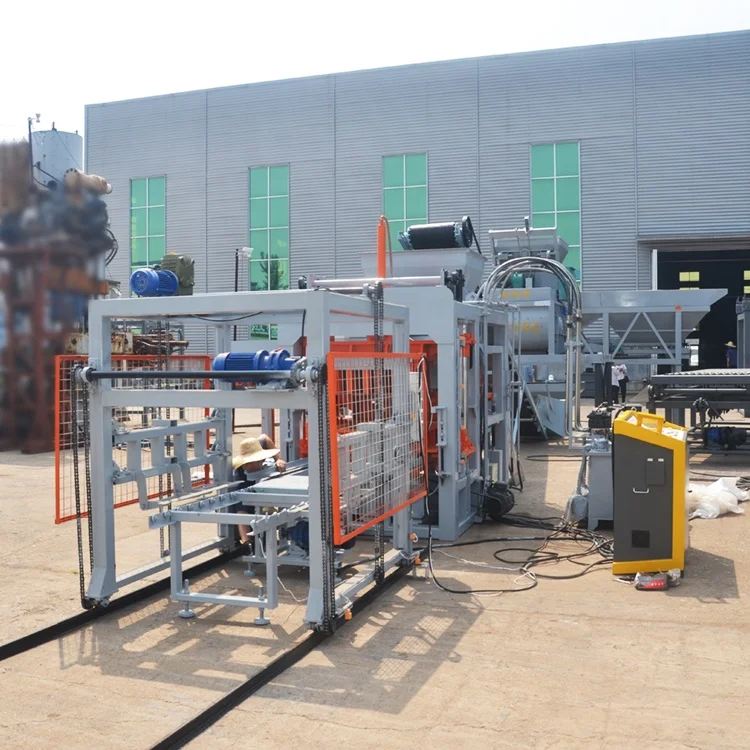
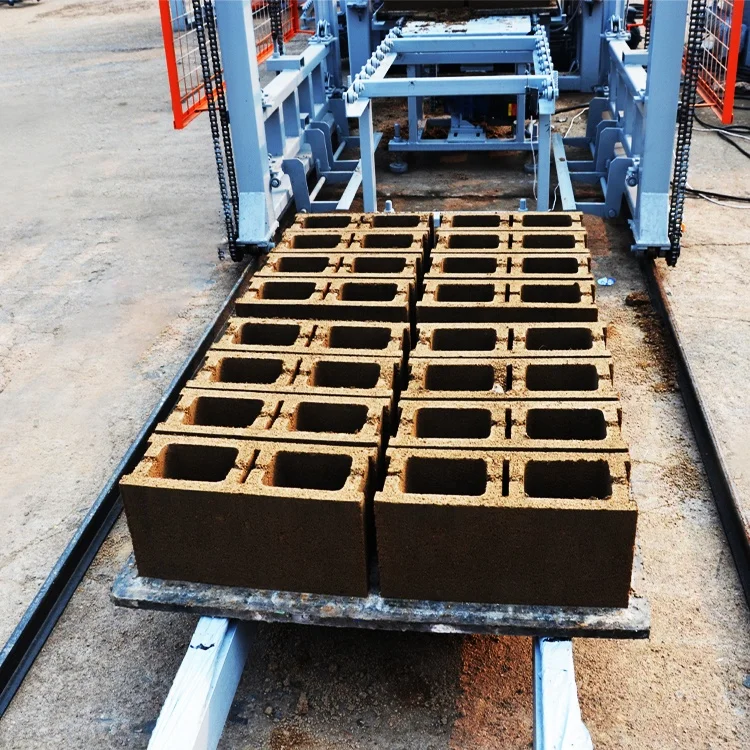 High quality block machine