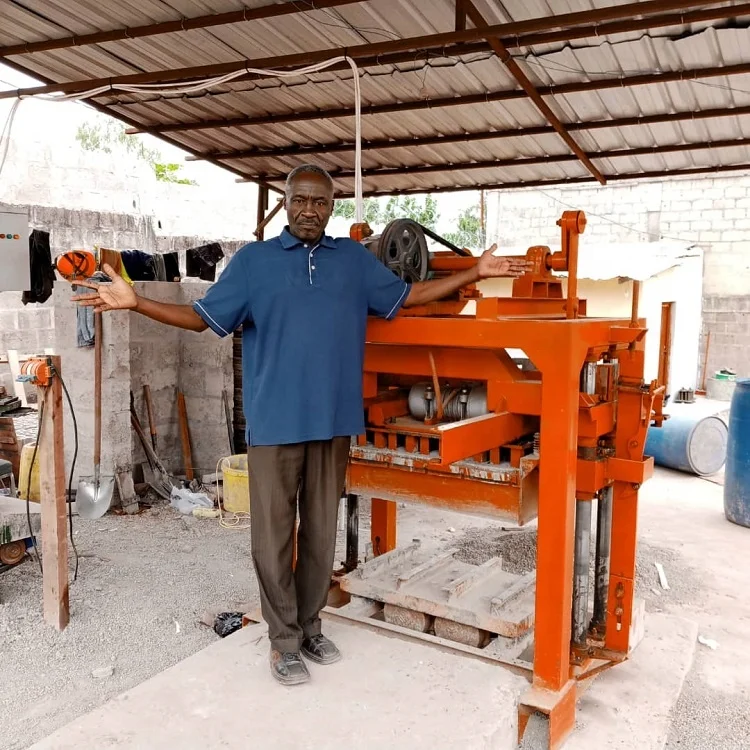
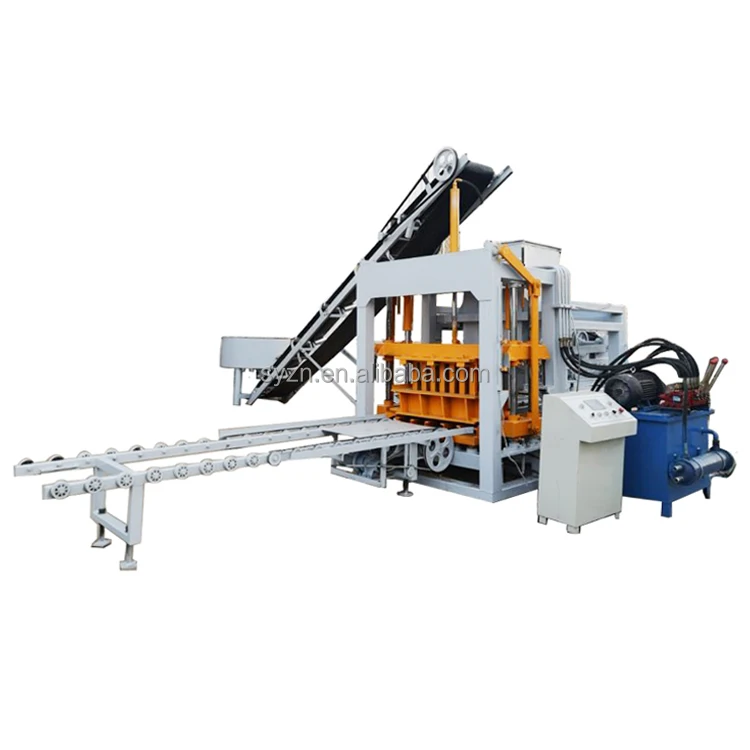
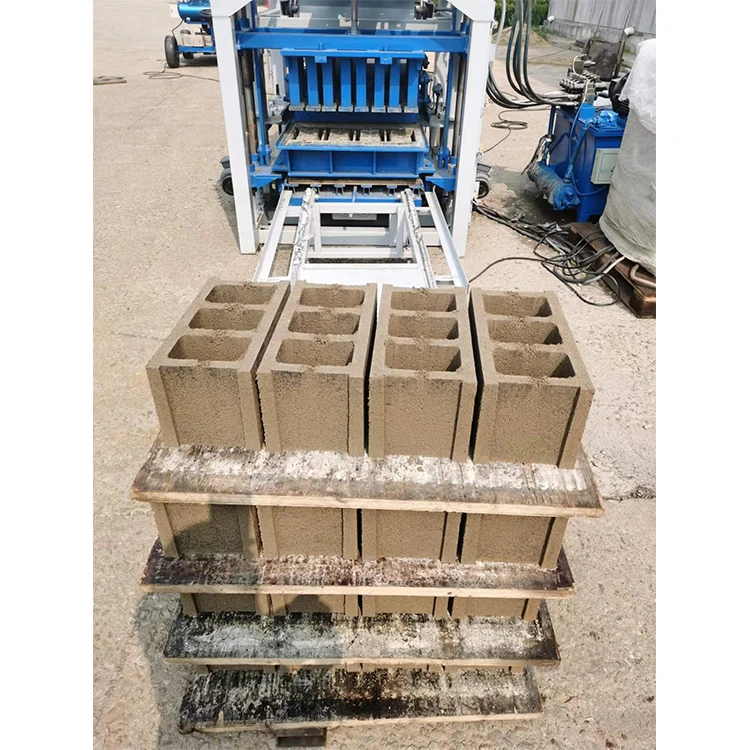
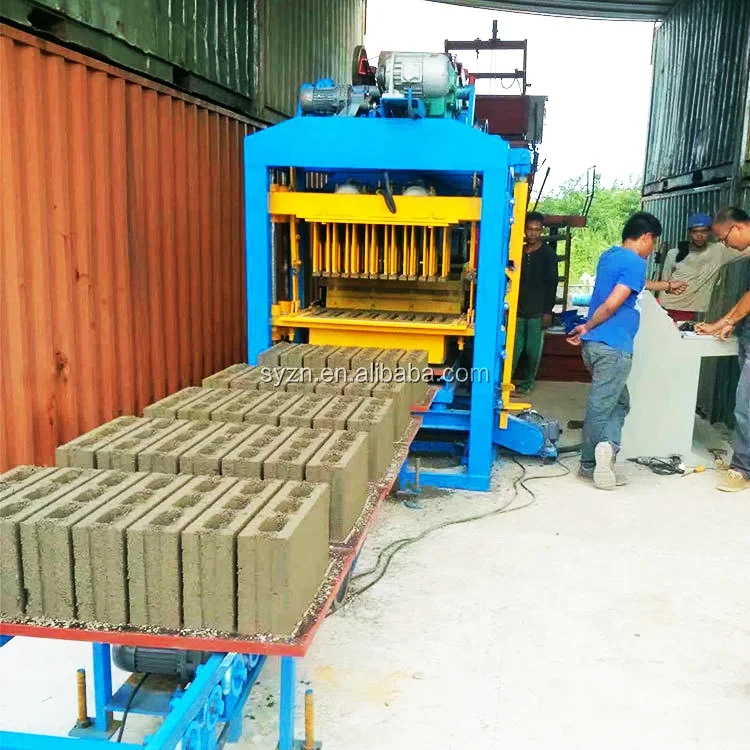
System-Matched Configuration — QT6-15 hydraulic hollow block making machine specified against your local aggregate, target block format, and existing pallet handling setup, not a catalogue default.
Technical Specifications
| Parameter |
Value |
| Model |
QT6-15 |
| Product Type |
Hydraulic Hollow Block Making Machine |
| Overall Dimensions (L×W×H) |
8200×1700×2950 mm |
| Vibration Frequency |
0-60 Hz, adjustable |
| Vibration Form |
Platform vibration |
| Vibration Force |
45 kN |
| Moulding Mode |
Automatic loading with vibration moulding |
| Demolding Method |
Hydraulic |
| Pallet Size |
880×850 mm |
| Molding Cycle |
15-20 s (hollow blocks), 20-25 s (pavers) |
| Overall Power |
37 kW |
| Total Mass |
7 T |
| Factory Area Required |
1200 m² |
| Control System |
PLC with touch screen and fault diagnosis |
| Output: Hollow Block 400×200×200 mm |
1080-1440 pcs/hour (6 pcs/mould, 15-20 s cycle) |
| Output: Hollow Block 400×150×200 mm |
1440-1920 pcs/hour (8 pcs/mould, 15-20 s cycle) |
| Output: Solid Brick 240×115×53 mm |
5760-7680 pcs/hour (32 pcs/mould, 15-20 s cycle) |
| Output: Rectangular Paver 200×100×60 mm |
2160-2880 pcs/hour (21 pcs/mould, 20-25 s cycle) |
| Output: Zigzag Paver 225×112.5×60 mm |
2160-2880 pcs/hour (15 pcs/mould, 20-25 s cycle) |
| Block Compressive Strength |
More than 15 MPa |
| Automation Level |
Automatic, PLC-controlled |
| Warranty |
1 year (excluding spare parts) |
| Standards |
CE declared where applicable |
Application Suitability
| Application |
Material or Output |
| Hollow block production |
400×200×200 mm and 400×150×200 mm from crushed stone, sand, and cement |
| Solid brick production |
240×115×53 mm standard bricks for bearing and non-bearing walls |
| Rectangular paving block |
200×100×60 mm pavers from graded aggregate and cement |
| Zigzag interlocking paver |
225×112.5×60 mm interlocking format for driveways and walkways |
| Waste material utilization |
Waste ash, slag, and various local aggregates with reduced cement dosage |
What "1440 Blocks per Hour" Leaves Out When No Format Is Stated
Capacity numbers only mean something when tied to a specific block size, mould cavity count, and cycle time.
I have watched buyers sign off on a block making machine manufacturer quote that promises impressive hourly output, then arrive at the plant to discover the number was based on a small solid brick they never planned to sell. The QT6-15 produces 1080-1440 hollow blocks per hour rated at 400×200×200 mm with 6 cavities per mould, but switch to 200×100×60 mm rectangular pavers and the cycle extends to 20-25 seconds with a different mould, yielding 2160-2880 pieces per hour. Without knowing which format the buyer’s market actually demands, a single headline capacity figure tells you nothing about real daily throughput [NEED_CITE: block format assumptions in capacity quotations].

Where the QT6-15 Sits in the Full Machine Range
The QT6-15 occupies the mid-tier automatic segment of the Shiyue block machine lineup, positioned between small workshop semi-automatic presses and high-capacity fully automatic lines with integrated stacking and cubing. For a first-time plant entrepreneur, it offers automatic PLC-controlled operation and a 1200 m² factory footprint without requiring the capital outlay of a continuous production system. Buyers surveying options for a first or replacement machine can use this model as a reference point to understand where their investment and output expectations land on the broader range.
Matching the Machine Tier to Your Actual Project Pipeline
A construction contractor producing hollow blocks on-site for a housing development rarely needs the output of a high-capacity line running multiple shifts. The QT6-15 covers the middle ground where daily volumes justify automatic operation but do not demand continuous pallet circulation and robotic cubing. Its pallet size of 880×850 mm defines the curing rack layout and the forklift capacity you will need on-site, which matters when you are planning a temporary block yard next to a project rather than a permanent factory [NEED_CITE: pallet size and curing area planning for mobile block yards].
Vibration Force, Hydraulic Pressure, and What They Mean for Block Density
The 45 kN vibration force delivered through platform vibration at an adjustable 0-60 Hz frequency works together with hydraulic demolding to compact the mix into consistent block geometry. In practice, vibration frequency determines how well fine particles settle into the mould cavity, while hydraulic pressure during demolding controls whether the green block holds its edge or slumps. A mix with high clay content from local river sand may require a lower frequency and longer cycle to avoid trapping air, whereas clean crushed granite aggregate responds well to higher frequency and shorter cycles. The PLC touch screen stores these parameter sets so operators can switch between mix recipes without guesswork.
The Hidden Cost of Specifying a Machine Without Your Local Aggregate in Mind
When vibration parameters are set for a standard quartz sand mix but the buyer’s local aggregate contains high silt or clay, the blocks come out with weak edges and inconsistent density. I have seen this play out where a mid-tier automatic machine ran for weeks producing hollow blocks that failed compressive strength testing, and the root cause was not the press itself but a mismatch between the factory-default vibration profile and a laterite-rich aggregate. Correcting this after installation means re-tuning frequency, pressure, and cycle time from scratch, losing production days and raw material in the process [NEED_CITE: aggregate variability and block compressive strength correlation].
Why Sourcing the Full Line from One Equipment Partner Matters
Block machinery as a single focus means the QT6-15 press, its moulds, pallets, and handling equipment are specified as one matched system. Configuration is set against your actual mix design and target block format, not pulled from a generic catalogue. Mould design covers the formats your market sells, with custom drawings available when standard cavity layouts do not fit. Automation level is selectable, so you can start with the PLC-controlled QT6-15 and add automatic stacking later as volumes grow. Installation support includes operator training so your crew can run the machine confidently from the first shift.
Documentation & Verification
- Line layout drawing showing QT6-15 placement within your 1200 m² factory area
- Capacity calculation sheet stating output per block format with mould cavity count and cycle time
- Machine specification sheet with hydraulic and electrical schematics for the 37 kW system
- Voltage and PLC display language confirmation document before production begins
- Factory test record on your target block format before container dispatch
- Wear parts and mould list with packing photographs for shipment verification
Installation, Commissioning & Support
- Foundation pad sized for 8200×1700 mm footprint with vibration isolation for the 7 T machine mass
- Dedicated electrical circuit rated for 37 kW total power at confirmed voltage and frequency
- PLC touch screen configured to operator language before arrival to avoid commissioning delays
- First-run parameter tuning on your local aggregate to match vibration frequency and cycle time
- Operator training covering mould change procedure, fault diagnosis system, and daily maintenance checkpoints
- Spare mould and hydraulic wear parts list provided for the first replacement cycle
What to Include with Your Inquiry
To receive a configuration proposal that reflects your actual production needs rather than a standard catalogue quote, share the block formats your market sells, the daily volume you need to hit, and a sample or description of your local aggregate. Confirming your site voltage, frequency, and preferred PLC language up front avoids rework after the QT6-15 arrives. If you already have pallets or curing racks in place, include their dimensions so the pallet size and handling setup can be matched accordingly.
Frequently Asked Questions
Q: How is hourly capacity calculated for different block formats on the QT6-15?
A: Each capacity figure is tied to a specific block size, mould cavity count, and cycle time. For example, 400×200×200 mm hollow blocks run 6 cavities per mould at a 15-20 second cycle, yielding 1080-1440 pieces per hour. Switching to pavers changes the mould and extends the cycle, so the hourly number shifts accordingly.
Q: Where does the QT6-15 fit compared to semi-automatic and high-capacity models?
A: It sits in the mid-tier automatic range, offering PLC-controlled operation and multi-format capability without the capital cost of a fully automatic line with stacking and cubing. Buyers comparing options for a first plant often use this tier as a starting point before scaling up.
Q: What electrical and control details need confirming before production?
A: Voltage, frequency, and PLC display language must be confirmed to match your site conditions. Without this step, the machine may arrive with an incompatible electrical configuration or an interface your operators cannot read, delaying commissioning.
Q: Can automation be expanded after the QT6-15 is installed?
A: Yes. The current PLC-controlled setup supports future additions such as automatic pallet feeding, stacking, and cubing. This lets buyers start at an investment level that matches initial volumes and upgrade the line as production demand increases.
Q: What site area and infrastructure does the QT6-15 require?
A: The machine needs approximately 1200 m² of factory area, including space for raw material storage, the press itself, and a curing zone sized around the 880×850 mm pallet. Foundation requirements and forklift capacity should be planned before delivery.

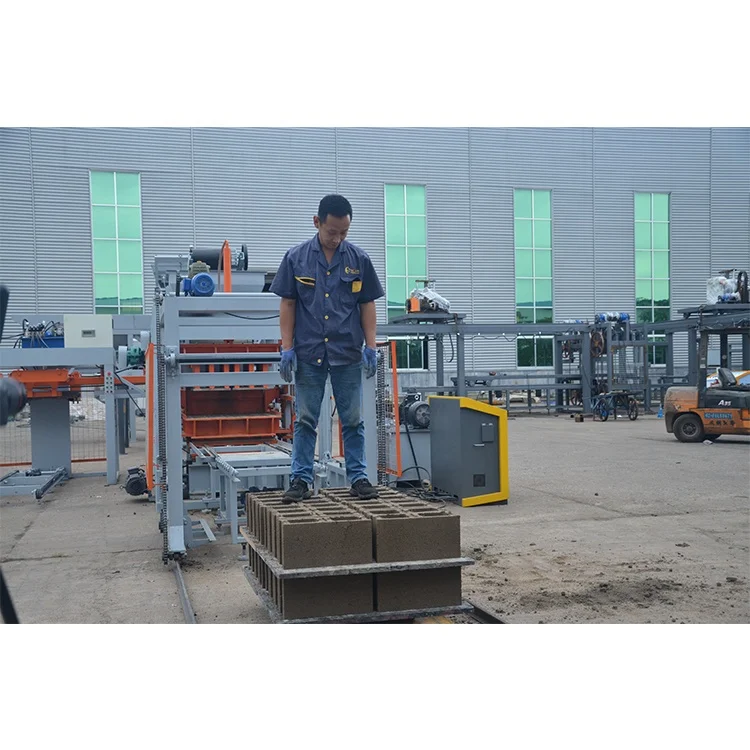
 High quality block machine