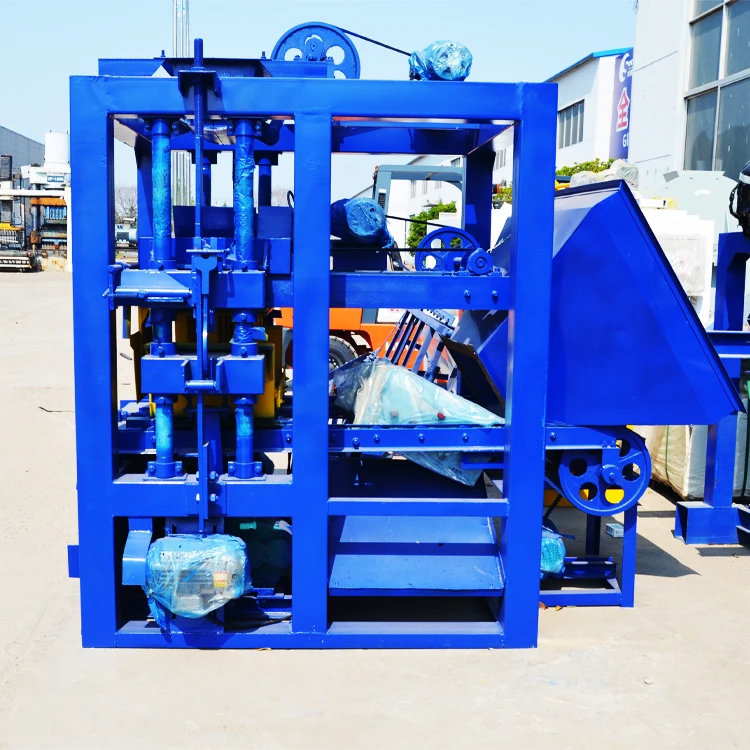
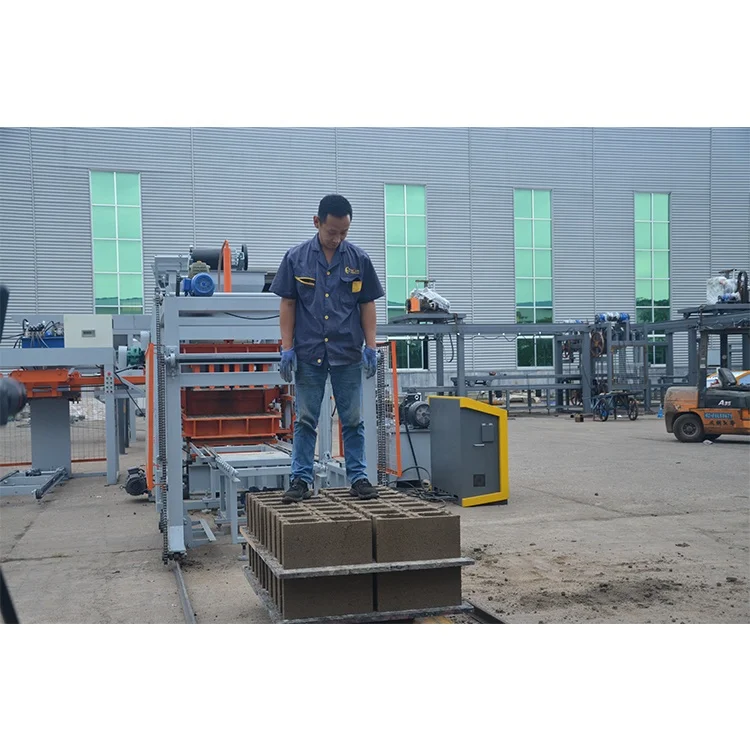
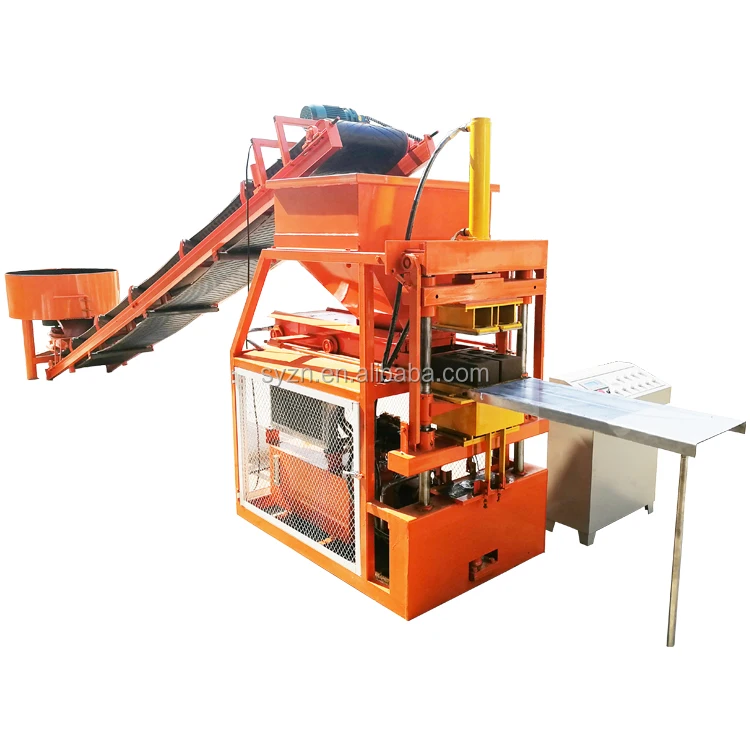
Positioned Mid-Range — The QT6-15 sits between workshop-class semi-automatic units and high-capacity fully automatic lines, so buyers evaluating their first automated plant or replacing aging equipment can see exactly where this output tier fits before committing to a higher investment bracket.
Technical Specifications
| Parameter |
Value |
| Model |
QT6-15 |
| Product Type |
Hydraulic Concrete Block Making Machine |
| Overall Dimensions (L×W×H) |
8200×1700×2950 mm |
| Pallet Size |
880×850 mm |
| Vibration Form |
Platform Vibration |
| Vibration Frequency |
0-60 Hz |
| Vibration Force |
45 kN |
| Moulding Mode |
Automatic loading, vibration moulding |
| Demolding Method |
Hydraulic |
| Molding Cycle |
15-20 s |
| Overall Power |
37 kW |
| Total Mass |
7 T |
| Control System |
PLC with touch screen, fault diagnosis, safe logic interlock |
| Hydraulic System |
Independent integrated hydraulic station |
| Output Capacity (Hollow Block 400×200×200 mm) |
8640-11520 pcs/8hr (basis: 15-20s cycle) |
| Output Capacity (Hollow Block 400×150×200 mm) |
11520-15360 pcs/8hr (basis: 15-20s cycle) |
| Output Capacity (Solid Brick 240×115×53 mm) |
46080-61440 pcs/8hr (basis: 15-20s cycle) |
| Output Capacity (Rectangular Paver 200×100×60 mm) |
17280-23040 pcs/8hr (basis: 20-25s cycle) |
| Block Compressive Strength |
>15 MPa |
| Recommended Factory Area |
1200 m² |
| Voltage & Frequency |
Configurable to destination (basis to be confirmed) |
Application Suitability
| Application |
Material or Output |
| Hollow block production (400×200×200 mm, 400×150×200 mm) |
Crushed stone, cement, sand, and waste ash blends |
| Solid brick production (240×115×53 mm) |
Standard concrete mix with local aggregates |
| Rectangular and zigzag paving block production |
High-density concrete mix requiring consistent surface finish |
| Waste material utilization |
Fly ash, slag, and recycled aggregate incorporated via adjustable mix ratio |
Why "Pieces per Hour" Without a Block Size Means Nothing
Every capacity figure here is tied to a named block format and a stated cycle window — because a number without context is just marketing.
When buyers compare block machines across suppliers, they often see a headline capacity quoted with no mention of which block format that figure assumes. A QT6-15 block machine manufacturer quoting 1440 pieces per hour could mean hollow blocks, solid bricks, or pavers — each requiring a completely different mould, cycle time, and raw material feed. I once reviewed a competitor quotation where the stated output was based on a thin solid brick while the buyer needed 200 mm hollow blocks, cutting real daily volume nearly in half. That mismatch only surfaces after the machine arrives and the first production run disappoints [NEED_CITE: block format assumptions in manufacturer capacity claims].

Where the QT6-15 Fits in the Complete Machine Range
The QT6-15 occupies the mid-tier automatic segment, bridging the gap between small semi-automatic workshop machines and high-output fully automatic lines. For a first-time block plant entrepreneur, it delivers PLC-controlled consistency without the capital outlay of a top-tier press. For a building material distributor adding paver or hollow block formats, it provides the output volume needed to serve regional contractors without overbuilding capacity.
Reading the Output Tiers Against Your Actual Product Mix
A buyer planning to run 400×200×200 mm hollow blocks as the primary product will see 8640-11520 pieces over an 8-hour shift at a 15-20 second cycle. Switching to 200×100×60 mm rectangular pavers shifts the cycle to 20-25 seconds and changes the hourly rate entirely. This matters because plant layout, pallet circulation speed, and curing rack capacity must all match the slowest format you plan to produce regularly [NEED_CITE: pallet circulation matching press cycle time in block plants].
What the Core Specifications Actually Mean on the Factory Floor
The platform vibration system operates across a 0-60 Hz frequency range, delivering 45 kN of vibration force directly through the pallet rather than through the mould walls. This approach produces denser blocks with more uniform wall thickness, particularly important for hollow blocks where uneven compaction creates weak corners. The independent integrated hydraulic station is physically separated from the main machine frame, keeping hydraulic valves and seals away from the vibration and concrete dust that degrade components prematurely. An 880×850 mm pallet size supports multiple mould formats on one machine, so a buyer can produce hollow blocks in the morning and switch to pavers after a mould change without needing separate pallets. The PLC touch screen with fault diagnosis and safe logic interlock prevents the press from cycling if a pallet is misaligned or a safety gate is open, reducing the operator errors that cause mould damage.
The Cost of Choosing the Wrong Pallet and Automation Level
Buyers who select a pallet size without considering their existing curing area and forklift capacity end up with pallets that do not fit their racks, forcing a manual restacking operation that was never budgeted. Similarly, specifying a machine with manual pallet handling while expecting automatic-level output means the press waits for an operator to feed each pallet, cutting real throughput well below the rated cycle [NEED_CITE: pallet handling bottlenecks in semi-automatic block production]. These mismatches rarely appear in quotations because the supplier assumes the buyer has already planned the downstream line.
Why Buyers Specify This Machine Through Shiyue
Block machinery is our single focus, so the QT6-15 is never quoted as a standalone press — it is configured as one matched system with mould, pallet, and handling equipment specified together. We set the configuration against your actual mix design and local aggregate rather than shipping a catalogue default, because a machine tuned for one sand gradation will underperform with another. Mould design covers every format your market sells, including custom drawings when standard moulds do not match local block dimensions. Automation level is selectable, meaning a buyer can commission the QT6-15 in semi-automatic mode and add automatic stacking or cubing later as production volume grows. Installation includes on-site commissioning with operator training so your team runs the machine correctly from the first shift.
Documentation & Verification
- Line layout and capacity calculation stating the block format assumed for each output tier
- Machine specification sheet with confirmed voltage, frequency, and PLC display language
- Mould drawing and format list covering every block type your market requires
- Hydraulic and electrical schematic for local maintenance teams
- Factory test record and packing photographs captured before dispatch
- Operation and maintenance manual with wear parts and mould replacement list
Installation, Commissioning & Support
- Foundation plan sized to the 8200×1700 mm footprint with vibration isolation provisions
- Power supply confirmed for 37 kW total draw on the buyer’s local voltage and frequency
- Machine shipped in dismantled state with reassembly supervised on site
- PLC touch screen configured in the buyer’s preferred operating language before first run
- Operator training covering mould change procedure, fault diagnosis, and daily maintenance
- Wear parts list provided with recommended reorder intervals for hydraulic seals and vibration components
What We Need Before Quoting Your Line
To match the QT6-15 to your project, share the block formats your market sells along with target daily output per format. Tell us the raw materials available locally — especially aggregate type and maximum particle size — and your existing pallet dimensions if you already have curing racks and forklifts. Confirm your site voltage, frequency, and preferred PLC display language so commissioning proceeds without delay.
Frequently Asked Questions
Q: How is the QT6-15 positioned within the full machine range?
A: The QT6-15 sits in the mid-tier automatic segment, offering PLC-controlled production with hydraulic demoulding at an investment level below high-capacity lines. Buyers producing under 12000 hollow blocks per shift typically find this tier sufficient, while those targeting larger volumes or fully unmanned operation should evaluate higher-tier models with integrated stacking and cubing.
Q: What block format is assumed in each capacity figure?
A: Every output figure in the specification table names a specific block size and cycle time. The 8640-11520 pieces per 8-hour shift figure, for example, assumes 400×200×200 mm hollow blocks at a 15-20 second cycle. Switching to pavers or solid bricks changes both the cycle time and the pieces per mould, so always size your line against your primary selling format.
Q: Can the automation level be upgraded after installation?
A: Yes. The QT6-15 can be commissioned with semi-automatic pallet handling and later upgraded with automatic pallet feeding, stacking, or cubing modules as production volume justifies the investment. The PLC control system supports these additions without replacing the main controller.
Q: What factory area does the QT6-15 require?
A: The recommended factory area is 1200 m², which covers the press, raw material feeding and mixing station, pallet circulation, and a basic curing zone. The exact footprint depends on your chosen automation level and whether curing racks or open-floor curing is planned.
Q: What voltage and PLC language options are available?
A: Voltage and frequency are configured to match the buyer’s destination power supply, and the PLC display language is set before dispatch. These details must be confirmed during the quotation stage to avoid commissioning delays after the machine arrives on site.

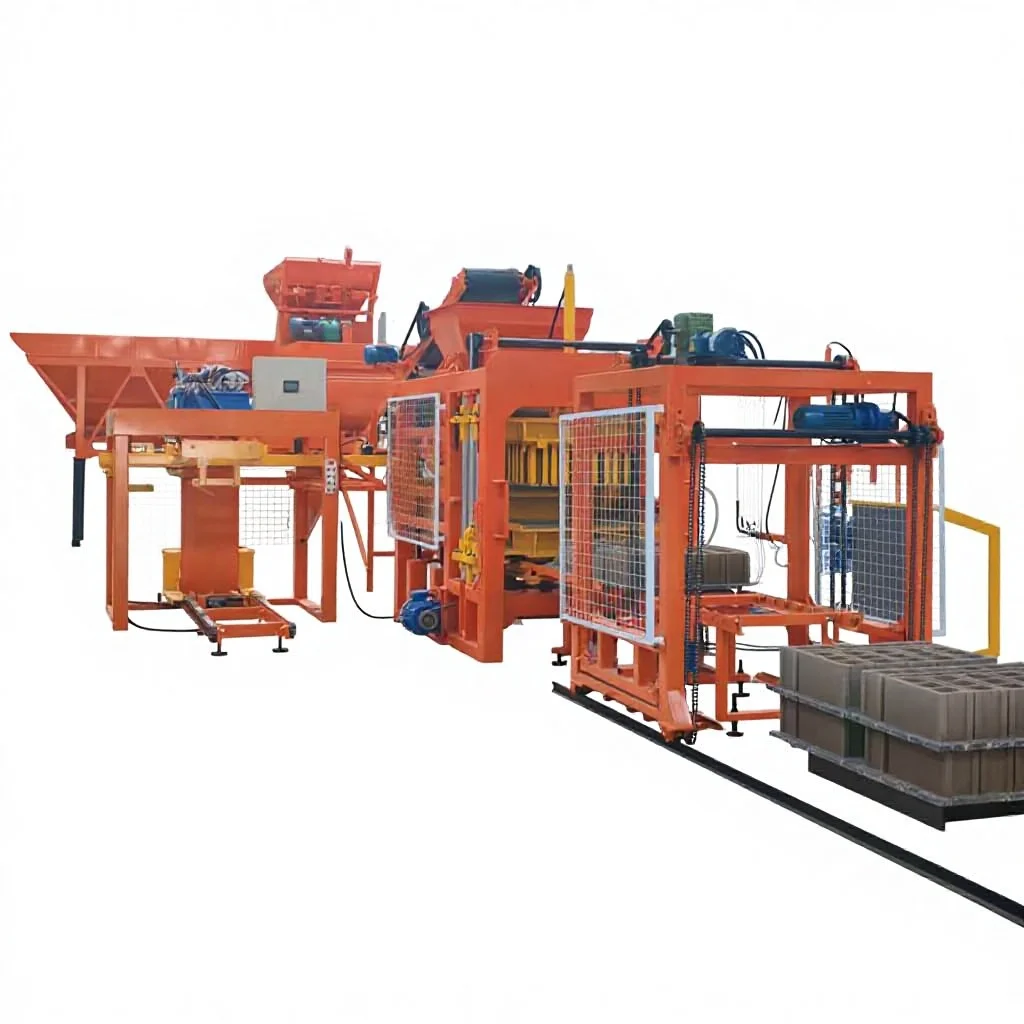
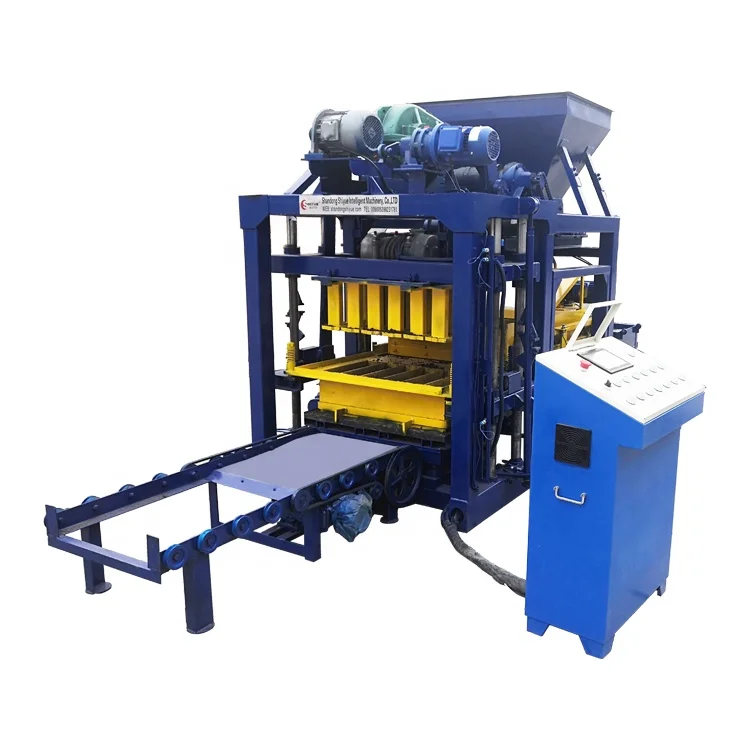 High quality block machine