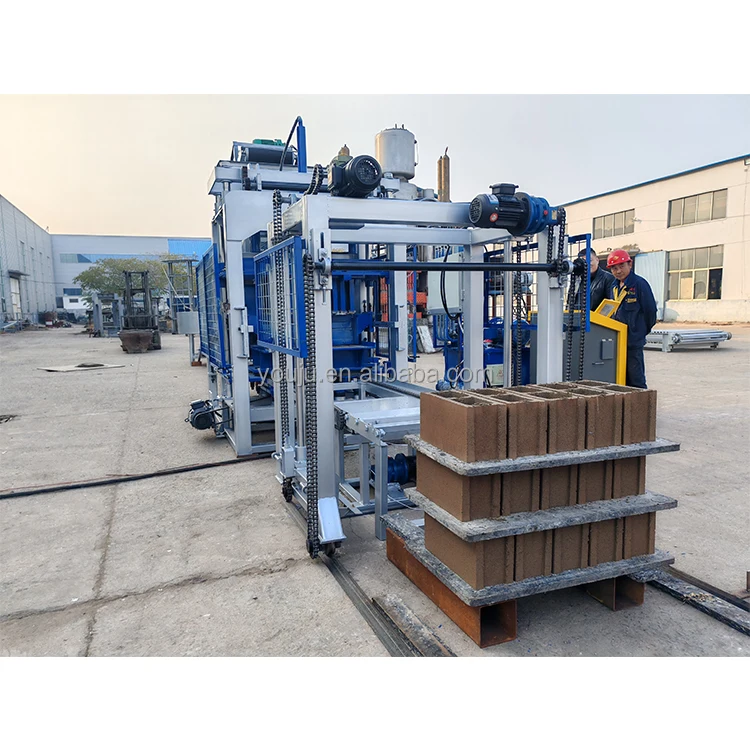
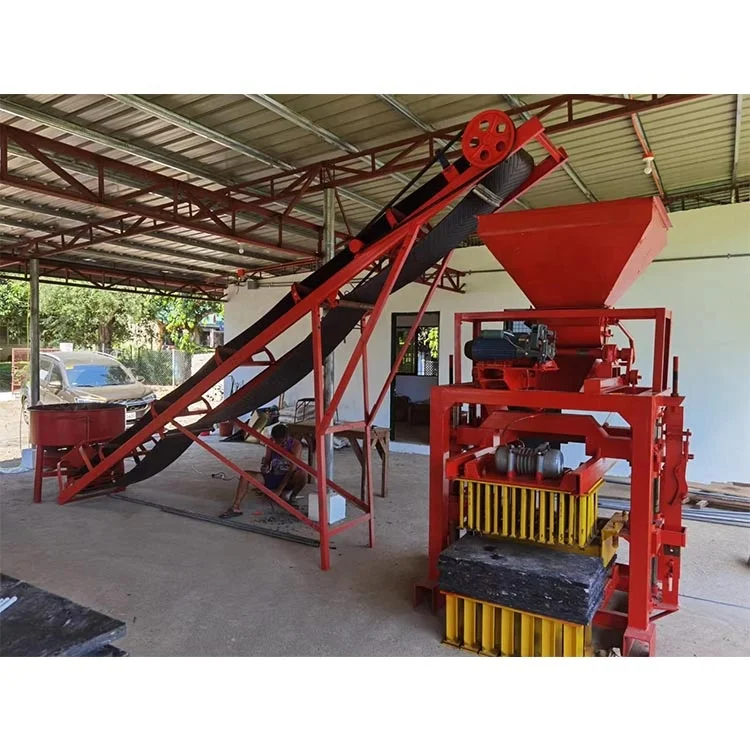
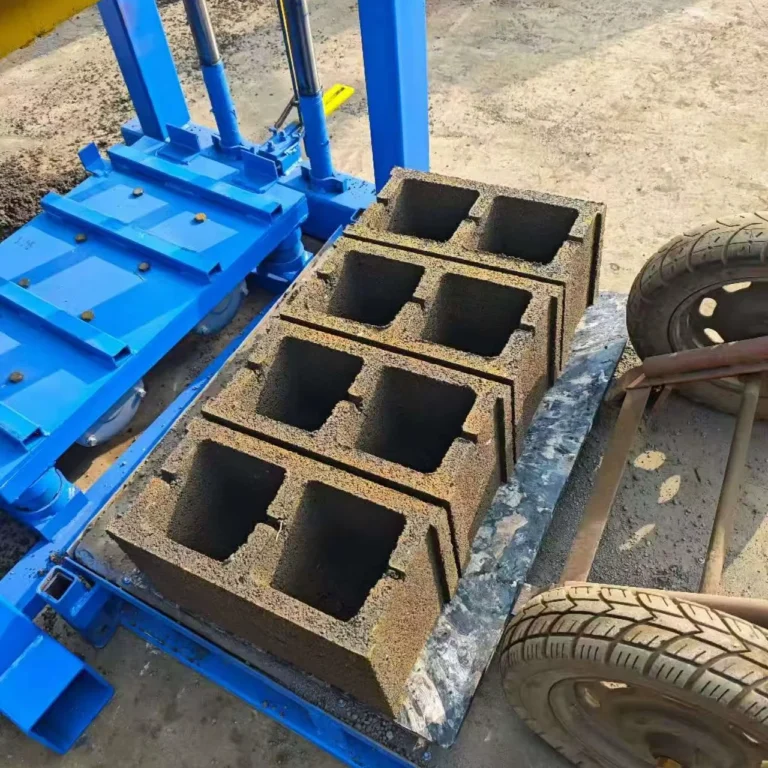
Matched System Configuration — the QT6-15 automatic hydraulic block machine, moulds, pallets and handling are specified together against your actual mix and block format, not sourced separately.
Technical Specifications
| Parameter |
Value |
| Model |
QT6-15 |
| Product Type |
Automatic Hydraulic Concrete Block Making Machine |
| Overall Dimensions (L×W×H) |
7100 × 1500 × 3000 mm |
| Rated Pressure |
21 MPa |
| Main Vibration Form |
Platform vibration |
| Vibration Frequency |
4500–5100 r/min |
| Pallet Size |
880 × 850 mm |
| Moulding Cycle |
15–25 s (basis not stated in source — confirm block format / material / thickness) |
| Overall Power |
31.25 kW |
| Weight of Machine |
8700 kg |
| Control System |
PLC intelligence control (human-machine dialogue) |
| Drive Type |
Hydraulic |
| Automation Level |
Fully automatic |
| Mould Change |
Replaceable moulds for different concrete brick sizes (time not stated) |
| Voltage & Frequency |
Configurable to buyer specification (basis to be confirmed) |
| Raw Material Ratio (reference) |
Cement 8–10%, Sand 30–40%, Stone 50–60% |
Application Suitability
| Application |
Material or Output |
| Hollow concrete block production |
Crushed stone, sand, cement mix (approx. 1:4:5 ratio) |
| Solid concrete brick manufacturing |
Fine aggregate and cement blend for 10–20 MPa target strength |
| On-site contractor block production |
Locally sourced aggregate adapted to regional supply |
| Paver and kerbstone formats |
Interlocking and paving moulds on the same pallet size |
| First-plant entrepreneur setup |
Mid-to-high output tier for regional block market entry |
Why "Cycles per Hour" Doesn’t Tell You the Whole Story
Real daily output depends on the block format, mix design, and curing logistics — not a single headline number.
Buyers often see an automatic concrete block making machine manufacturer quote a cycle time like 15–25 seconds and extrapolate that into a daily production figure. The problem is that a hollow block, a solid brick, and a paving block each demand different vibration durations, hydraulic hold times, and demoulding care. A cycle that works for a thin paver may crack a tall hollow block if the parameters aren’t adjusted per format. [NEED_CITE: block format impact on cycle time in hydraulic press operations]
I once configured a mid-tier stationary press where the signed capacity was based on a standard hollow block. The buyer’s local aggregate had higher clay content than anticipated, which reduced vibration compaction and forced a longer cycle to maintain strength. Daily output dropped significantly from the catalogue projection. That experience changed how I approach every quotation — capacity must be stated per block format, with the mix assumptions written into the proposal.

Where the QT6-15 Sits in the Shiyue Range
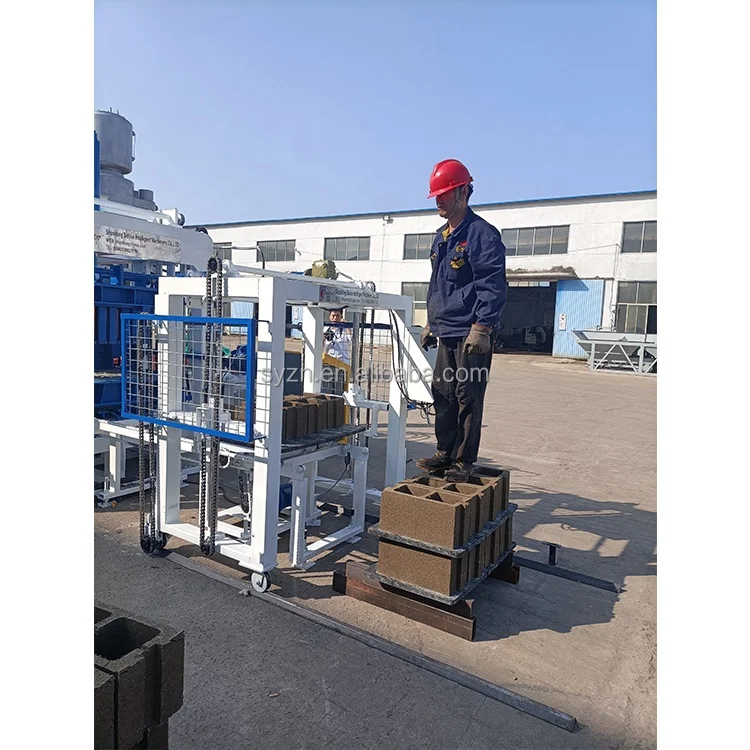
Shiyue offers stationary block machines across several output tiers, from small workshop volumes to high-capacity fully automatic lines. The QT6-15 occupies the mid-to-high tier, positioned for buyers who have outgrown semi-automatic egg-laying machines and need consistent daily throughput without stepping into the capital commitment of the largest lines. Its 880 × 850 mm pallet size places it above entry-level models but below the heavy-duty tier that requires reinforced curing racks and heavier forklifts.
For a buyer comparing options within the Shiyue range, this automatic concrete block making machine represents a balance between automation depth and initial investment footprint.
Automation Level and the Upgrade Path
The QT6-15 ships as a fully automatic system with PLC intelligence control that manages moulding cycles, pallet feeding, and block stacking sequences. The human-machine dialogue interface allows operators to adjust parameters without rewiring the control cabinet. However, some buyers prefer to start with manual pallet handling and add automatic stacking later as their curing area and logistics grow. The control architecture supports this staged approach — the PLC can be expanded with additional I/O modules when the buyer is ready to add cubing and rack handling automation. [NEED_CITE: PLC scalability in concrete block production lines]
This flexibility matters because a block plant’s labour availability and curing infrastructure often develop at different rates than the press itself.
Reading the Specifications That Actually Matter
The 21 MPa rated hydraulic pressure and 4500–5100 r/min platform vibration frequency work together to determine block density and strength. Higher pressure alone does not guarantee a stronger block — the vibration must fluidise the mix so the hydraulic force can compact it uniformly. When these two parameters are matched to the buyer’s specific aggregate gradation and cement content, the result is consistent wall thickness in hollow blocks and uniform compressive strength across solid bricks.
The 880 × 850 mm pallet size is another critical specification that extends beyond the press. It must align with the curing rack dimensions, the forklift tine spacing, and the floor space available for wet block storage. A pallet that is too large for an existing curing area forces the buyer to rebuild shelving or sacrifice storage capacity. The 31.25 kW overall power rating also determines the electrical supply requirements — a dedicated circuit with appropriate breaker sizing must be in place before commissioning.
The Hidden Cost of a Mismatched Pallet and Curing Area
When pallet size is chosen from a catalogue without considering the buyer’s existing infrastructure, the consequences appear on the first production day. Blocks on pallets that do not fit standard curing racks must be stacked on the floor, consuming space and slowing the forklift cycle. The 8700 kg machine weight also demands a level concrete foundation with adequate load-bearing capacity — a compacted gravel base that works for a lighter mobile machine will settle unevenly under this stationary press, affecting platform vibration uniformity over time. [NEED_CITE: foundation requirements for stationary hydraulic block presses]
These downstream costs rarely appear in the initial quotation but directly affect whether the plant reaches its intended daily output.
Why Buyers Specify Through Shiyue
Block machinery is our single focus, which means the QT6-15 press, its moulds, pallets, and handling equipment are configured as one integrated system rather than assembled from unrelated suppliers. Each proposal is built around the buyer’s actual target block format, local aggregate properties, and site conditions — not a default catalogue configuration. Mould design covers the formats the buyer’s market demands, with custom drawings available for non-standard sizes. The automation level is selectable, allowing a buyer to begin with semi-automatic pallet handling and expand as production grows. Installation support includes on-site commissioning and operator training so the plant reaches stable output from the first week.
Documentation & Verification
- Line layout with capacity calculation per block format for the QT6-15
- Machine specification sheet including hydraulic and electrical schematics
- Mould drawing and format list matching your target products
- Pallet specification aligned to your curing rack and forklift dimensions
- Voltage, frequency, and PLC language confirmation before production
- Factory test record and packing photographs before dispatch
Installation, Commissioning & Support
- Level concrete foundation required to support the 8700 kg machine weight and vibration loads
- Dedicated electrical circuit sized for the 31.25 kW overall power draw at confirmed voltage
- Machine shipped in dismantled state for container loading, reassembled on-site during commissioning
- PLC parameters set and moulding cycle tuned to your specific block format during first run
- Operator training covers mould change procedure, daily maintenance, and fault diagnosis
- Wear parts list and mould inventory provided for first replacement planning
What We Need to Build Your Quotation
To configure the QT6-15 for your plant, we need to know your target block formats and the daily output you expect for each. Share your local raw material sources — specifically the aggregate type, gradation, and any clay or silt content — along with your available curing area dimensions and existing forklift capacity. Your site voltage and frequency, plus the preferred PLC display language, should be confirmed before we release the production order.
Frequently Asked Questions
Q: How is the QT6-15 capacity calculated, and which block format does each figure assume?
A: Capacity is stated per block format, not as a single headline number. The moulding cycle of 15–25 seconds varies depending on block height, wall thickness, and mix design. Each proposal includes a capacity table showing expected output for hollow blocks, solid bricks, and pavers separately, with the mix ratio and vibration parameters assumed for each row.
Q: Where does the QT6-15 sit in the Shiyue range?
A: It occupies the mid-to-high output tier among Shiyue’s stationary automatic machines. Below it sit semi-automatic and mobile egg-laying models for smaller plants. Above it are higher-capacity lines with larger pallets and heavier frames. This position suits buyers moving past entry-level production who need consistent daily volume without the investment of the largest tier.
Q: What plant footprint and investment level should I plan for?
A: The 7100 × 1500 × 3000 mm press footprint must be combined with raw material storage, mixer placement, pallet return conveyor space, and a curing area sized for at least one day’s output on 880 × 850 mm pallets. The total plant footprint typically extends well beyond the machine itself, and we provide a line layout drawing showing every station before order confirmation.
Q: Can I start semi-automatic and upgrade later?
A: Yes. The PLC control system supports additional I/O modules, so automatic stacking and cubing functions can be added when your curing logistics are ready. The press itself does not need modification — only the downstream handling stations and control wiring are expanded.
Q: Which voltage, frequency, and control language are confirmed before shipment?
A: Voltage and frequency are confirmed against your site supply before production begins. The PLC display language is specified at the same stage to ensure operators can read menus and fault messages in their working language from the first day of commissioning.

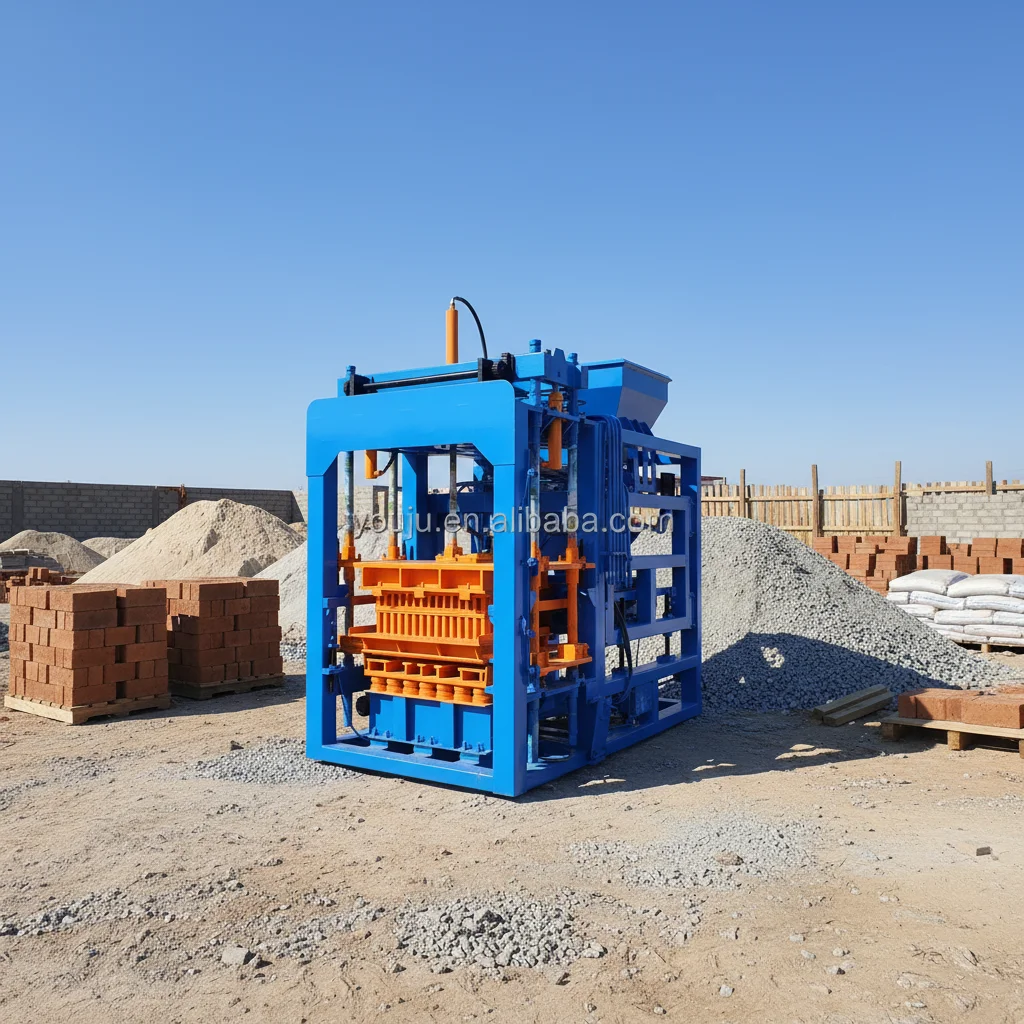
 Stationary block machine