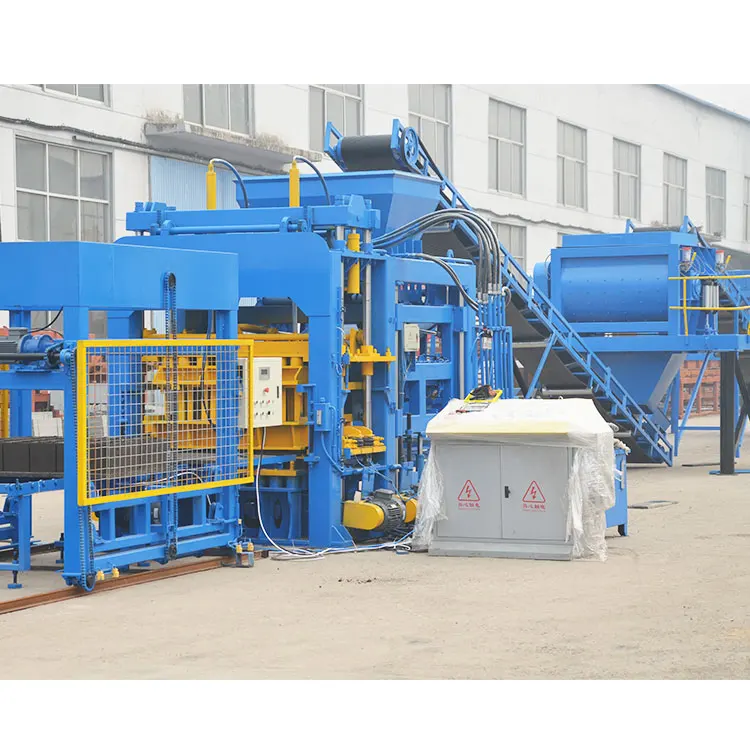
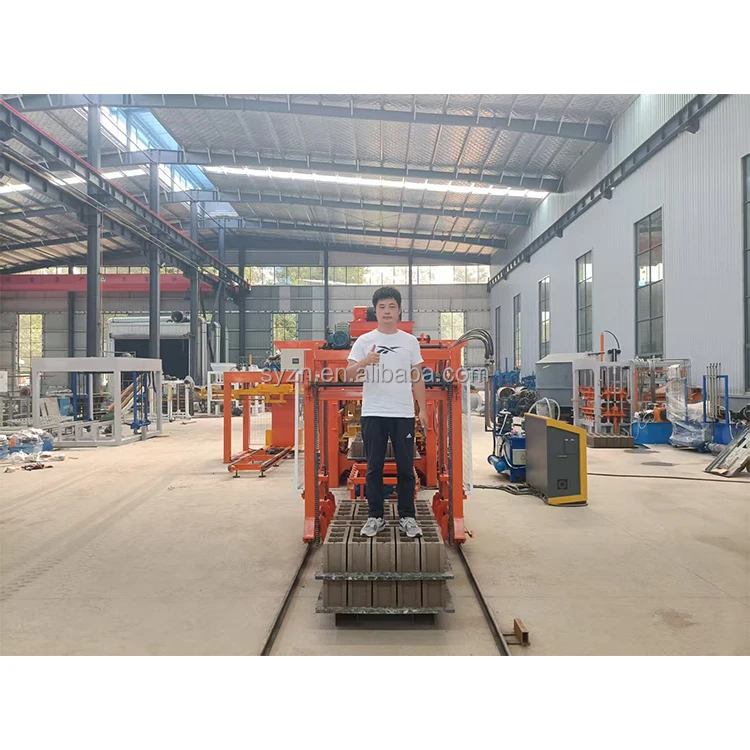
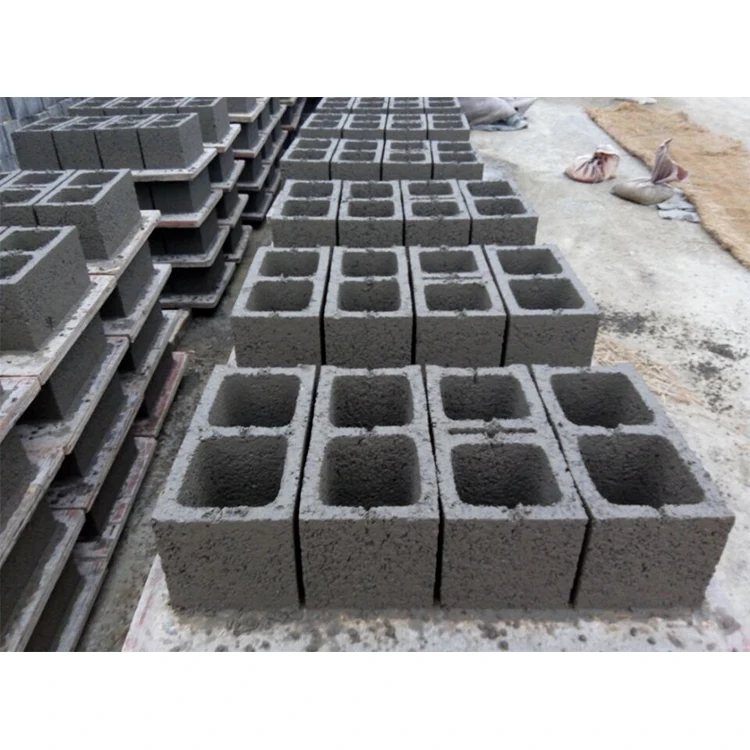
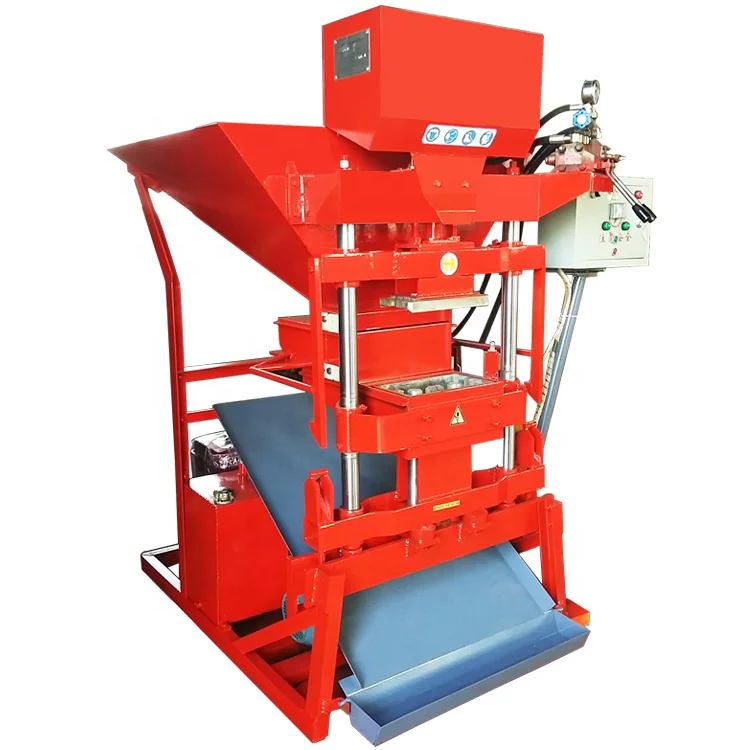
Matched System Design — the QT6-15 is specified as a complete block machine range tier with pallet, mould, and handling aligned to your actual plant conditions rather than assembled from separate catalogue defaults.
Technical Specifications
| Parameter |
Value |
| Model |
QT6-15 |
| Product Type |
Automatic Concrete Block Making Machine |
| Molding Way |
Vibration and hydraulic pressing |
| Rated Pressure |
21 MPa |
| Molding Cycle |
15s–20s |
| Pallet Size |
900×700 mm |
| Main Machine Weight |
6000 kg |
| Output – Hollow Block 400×200×200 mm |
1440 pcs/h, 11520 pcs/8h |
| Output – Paving Brick 200×100×60 mm |
5040 pcs/h, 40320 pcs/8h |
| Output – Solid Brick 240×115×53 mm |
7680 pcs/h, 61440 pcs/8h |
| Raw Materials |
Cement, sand, fly ash, stone powder, slag |
| Control System |
Automatic, PLC configurable |
| Voltage & Frequency |
Customized to local standard (basis to be confirmed) |
| CE Declaration |
Where applicable |
| Warranty |
1 year (excluding wearing parts) |
Application Suitability
| Application |
Material or Output |
| Hollow block production for load-bearing walls |
Crushed stone, cement, sand at 1440 pcs/h based on 400×200×200 mm |
| Interlocking paving brick for landscaping |
Cement and stone powder at 5040 pcs/h based on 200×100×60 mm |
| Solid brick for partition and infill masonry |
Sand, fly ash, slag at 7680 pcs/h based on 240×115×53 mm |
| Kerbstone and curb units for roadworks |
Aggregate-rich mix on 900×700 mm pallets |
| Porous brick for permeable pavement projects |
Open-graded aggregate blend with cement binder |
What "11520 Blocks per Day" Leaves Out When Format Is Never Mentioned
Output figures only mean something when the block format behind them is stated clearly.
Many quotations list a single daily number without telling the buyer which block size it assumes. A buyer expecting 11520 hollow blocks per shift might instead be running a smaller format that produces more pieces but less wall area, leaving the construction site short. I have seen this mismatch cancel out weeks of project planning before the first block is even cured. The QT6-15 automatic block machine manufacturer specifications here list output separately for hollow block, paving brick, and solid brick so there is no ambiguity at the quotation stage [NEED_CITE: block output calculation standards per format].

Where the QT6-15 Sits in the Full Machine Range
The QT6-15 occupies the mid-tier position in our automatic block machine range. It is designed for buyers who need consistent daily output above a workshop-scale semi-automatic line but are not yet ready for the footprint and investment of a high-capacity fully automatic plant. The 900×700 mm pallet size keeps the curing area manageable while still allowing multiple blocks per cycle.
Automation Tiers and the Upgrade Path
Buyers often start with a semi-automatic setup where pallets are moved by hand, then add automatic stacking and cubing as demand grows. The QT6-15 automatic block machine for sale is available with an automatic PLC control system, and the automation level can be selected at the ordering stage. This means a first-time plant owner can begin with manual pallet handling and later integrate automatic feeders and stackers without replacing the press itself [NEED_CITE: automation upgrade paths in block production].
Reading the Specs That Actually Shape Your Output
The 21 MPa rated hydraulic pressure works together with the vibration system to compact the mix into a dense, consistent block. If the vibration force is high but the hydraulic pressure is too low for the aggregate size in your local sand, the blocks come out with weak corners and surface spalling. The 15s–20s molding cycle applies across formats, but the actual cycle time depends on how quickly the mix fills the mould and reaches target density — a fly-ash-heavy mix typically requires a slightly longer cycle than a pure crushed-stone blend. The 6000 kg main machine weight reflects the frame mass needed to absorb vibration without transferring it into the foundation, which keeps block dimensions consistent across a long production shift. Pallet dimensions of 900×700 mm must match your existing curing racks and forklift tine spacing; ordering a machine with pallets that do not fit your curing area creates a bottleneck that no amount of press speed can solve.
The Cost of Skipping the Voltage Conversation
One of the most common commissioning delays happens when voltage and frequency are confirmed after the machine has already shipped. A plant wired for 380V/60Hz will not run on a motor wound for 380V/50Hz, and sourcing a step-up or step-down transformer locally can add weeks before the press sees its first pallet. I have watched machines sit under tarps at the port because the buyer and the factory never aligned on the grid specification before production started. This is why the QT6-15 voltage and frequency are customized to the buyer’s local standard, but only when that standard is confirmed at the quotation stage, not after [NEED_CITE: industrial voltage and frequency standards by region].
Why Buyers Specify the Line Here Instead of a Catalogue
Block machinery is a single focus for this factory, so the QT6-15 press, its moulds, pallets, and handling equipment are specified as one matched system. The configuration is set against the buyer’s actual mix design and local aggregate rather than a default catalogue setting. Mould design covers the formats the buyer’s market actually sells, including custom drawings when a standard mould does not fit. Automation level is selectable, allowing a buyer to start semi-automatic and add automatic stacking later. Installation includes commissioning support with operator training so the first production run is not a trial-and-error exercise.
Documentation & Verification
- Line layout drawing with capacity stated per block format for the QT6-15
- Machine specification sheet confirming hydraulic pressure and pallet size
- Mould drawing and format list showing pieces per pallet and cycle time
- Voltage and PLC display language confirmation before production begins
- Factory test record run on your specified raw material blend
- Packing photographs and customs documentation support for container loading
Installation, Commissioning & Support
- Foundation must support the 6000 kg main machine weight plus dynamic vibration loads
- Top cylinder removal required for container loading, re-assembly on site during commissioning
- Dedicated electrical circuit matching the confirmed voltage and frequency specification
- First-run parameter tuning for your local aggregate moisture content and cement ratio
- Operator training on PLC controls, mould change procedure, and daily maintenance checkpoints
- Wear parts and mould list provided at handover with recommended reorder intervals
What to Prepare Before Requesting a Quotation
To configure the QT6-15 for your plant, share the target block formats you intend to produce, the daily output you need per format, and the raw materials available locally including aggregate grading and moisture range. Your site’s voltage, frequency, and preferred PLC display language should be confirmed at the same stage so the electrical package is built correctly from the start.
Frequently Asked Questions
Q: How is the daily output calculated and which block format is it based on?
A: Daily output is calculated by multiplying the pieces per pallet by the number of cycles per hour, then by the working hours in a shift. The QT6-15 output is stated separately for each format: 11520 pieces per 8-hour shift based on 400×200×200 mm hollow blocks, 40320 pieces for 200×100×60 mm paving bricks, and 61440 pieces for 240×115×53 mm solid bricks.
Q: What voltage and frequency configurations are available for my region?
A: The QT6-15 electrical system is wound and configured to match the buyer’s local grid standard. Voltage, frequency, and PLC display language must be confirmed before production begins. This prevents the situation where a machine arrives on site and cannot be powered until a transformer or frequency converter is sourced locally.
Q: What automation level does the QT6-15 offer, and can it be upgraded later?
A: The QT6-15 is available with automatic PLC control. Buyers can start with manual pallet handling at a lower investment level and later integrate automatic pallet feeding, stacking, and cubing modules. The press frame and control architecture are designed to accept these additions without replacing the main machine.
Q: How does the machine footprint compare to semi-automatic or higher-tier models?
A: The QT6-15 sits in the mid-tier of the range, with a 900×700 mm pallet size that requires a moderate curing area. Semi-automatic machines use smaller pallets and less floor space, while higher-tier automatic lines use larger pallets and need expanded curing and stacking zones. The exact line layout depends on the supporting equipment selected.
Q: What supporting equipment is included or recommended for the QT6-15?
A: The quotation can include raw material feeding and mixing, pallet feeding, automatic stacking, and curing rack handling matched to the QT6-15 cycle time. Each station is specified so the press is not left waiting for the next pallet. Buyers should share their existing equipment list so the new line connects without duplication.

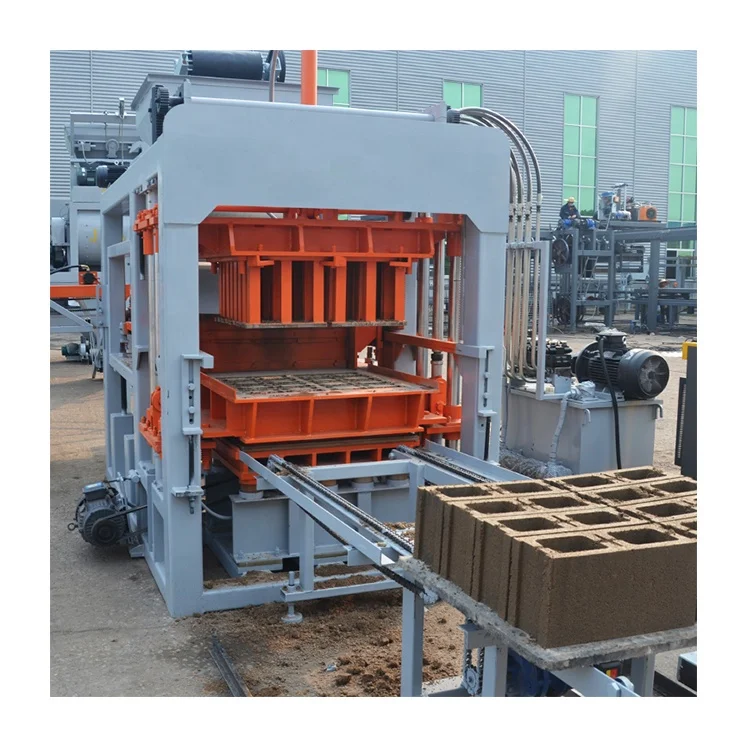
 Automatic block machine