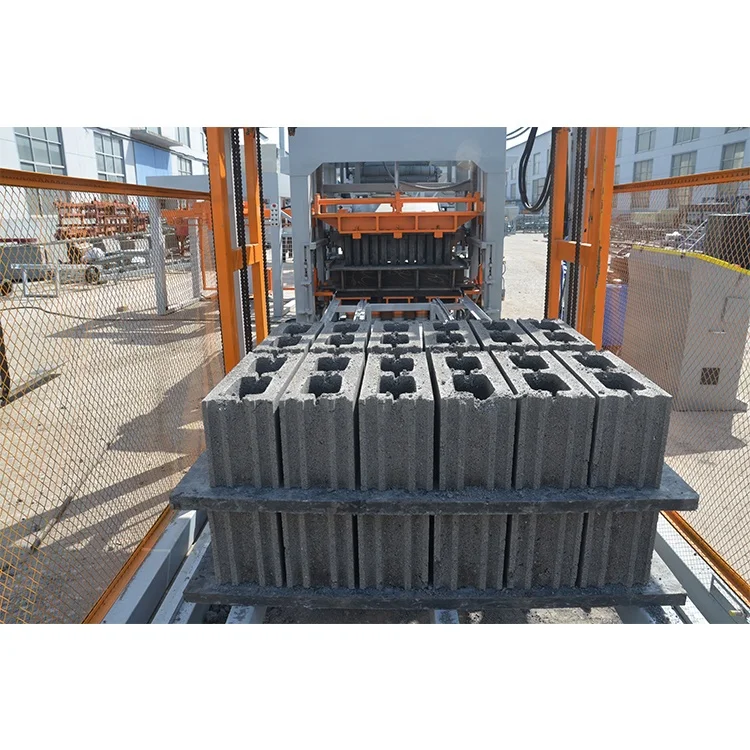
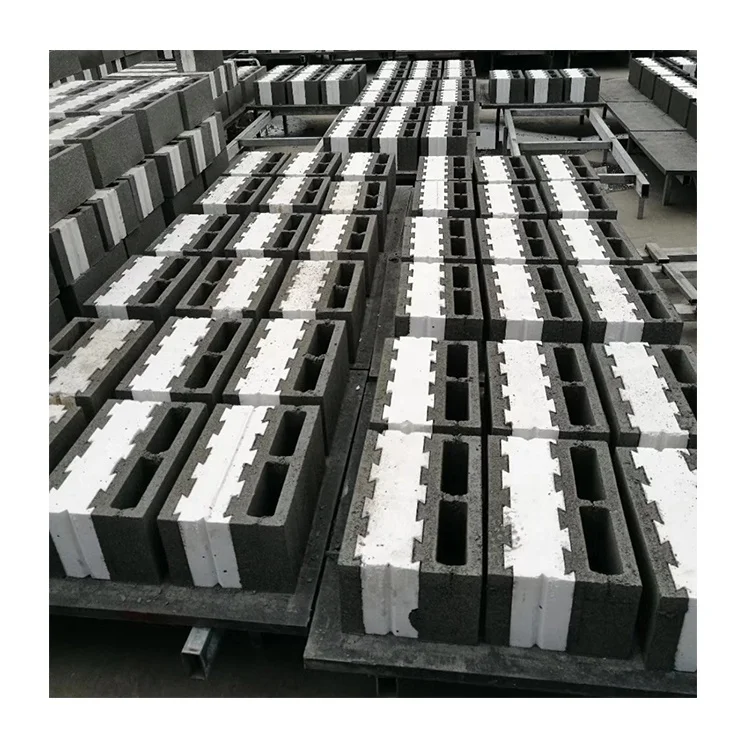
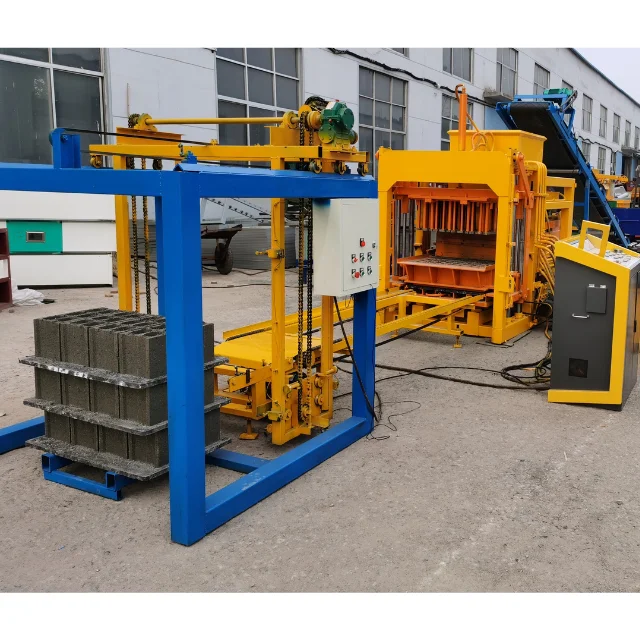
Matched System Integrity — the QT6-15 block making machine, mould, pallet and handling equipment are specified as one coordinated line rather than sourced from separate suppliers and assembled on site.
Technical Specifications
| Parameter |
Value |
| Model |
QT6-15 |
| Product Type |
Automatic Hydraulic Vibrating Block Making Machine |
| Overall Dimensions |
7400 × 1900 × 2660 mm |
| Total Weight |
7 T |
| Molding Cycle |
15–25 s depending on block format |
| Vibration Frequency |
4600 r/min |
| Exciting Force |
40–50 KN |
| Total Power |
31.25 kW |
| Mixer Model |
JQ350 |
| Pallet Size |
850 × 550 × 25 mm |
| Control System |
PLC control system |
| Hydraulic Station |
Included, high-pressure configuration |
| Included Equipment |
Block making machine, hydraulic station, PLC control system, pallet feeder, brick conveyor, block sweeper |
| Free Accessories |
Manual hydraulic trolley, spare parts and tools |
| Output (400×200×200 mm hollow block) |
1200–1680 pcs/hr, 9600–13440 pcs/8hr |
| Output (400×150×200 mm hollow block) |
1800–2400 pcs/hr, 14400–19200 pcs/8hr |
| Output (240×115×53 mm solid brick) |
3240 pcs/hr, 16200–19440 pcs/8hr |
| Applied Products |
Paver, solid block, hollow block, curbstone |
| Raw Materials |
Crushed stones, sand, cement, dust, fly ash |
| Automation Level |
Automatic |
| Standard |
CE |
Application Suitability
| Application |
Material or Output |
| Hollow block production for building walls |
Crushed stone, sand, cement, fly ash — formats 400×200×200 mm and 400×150×200 mm |
| Solid brick manufacturing |
Cement and sand mixes — 240×115×53 mm standard format |
| Paver and curbstone production for infrastructure |
Dense aggregate blends with higher cement content |
| First block plant for entrepreneurs |
Mid-tier automatic output suited to regional market demand |
| On-site block production for contractors |
Portable within fixed-plant layout using locally available aggregates |
What "1200 Pieces per Hour" Actually Means for the QT6-15 Automatic Block Making Machine Manufacturer
Capacity figures only hold value when the block format behind them is named.
Many quotations list a single hourly number without disclosing which block size produced it. A buyer planning around hollow blocks may receive a figure calculated on small solid bricks, and actual daily output falls noticeably short once the correct mould is mounted. I have seen this mismatch cause project delays when the first production run could not meet contractual delivery schedules [NEED_CITE: common block machine quotation practices and format assumptions]. The QT6-15 automatic block making machine manufacturer output is stated separately for each format — 400×200×200 mm hollow, 400×150×200 mm hollow, and 240×115×53 mm solid — so the buyer can plan against the product they actually sell.

Where the QT6-15 Sits Across the Full Machine Range
The QT6-15 occupies the mid-tier position in an automatic range that stretches from small semi-automatic workshop machines up to high-capacity fully automatic lines with cubing and rack handling. Buyers comparing options for a first plant or a replacement machine can use this tier as a reference point: it delivers automatic cycling with PLC control, yet its footprint and investment level remain within reach of entrepreneurs who are not yet ready for a continuous high-volume operation.
Positioning Output Against Plant Footprint and Investment
A buyer surveying the range needs to understand not only what the QT6-15 automatic block making machine manufacturer produces per shift, but also how much floor space the line requires and what supporting infrastructure must be in place. The 7400 × 1900 mm machine footprint, combined with the pallet feeder, brick conveyor and block sweeper, defines a line layout that fits a medium workshop. Movers evaluating whether to step up to a higher tier or remain at this level can weigh the curing area needed for 850 × 550 mm pallets against the space already available on site [NEED_CITE: block plant layout planning and curing area requirements].
Reading the Specs Beyond the Brochure Numbers
Vibration force of 40–50 KN at 4600 r/min works together with the hydraulic station to compact the mix into the mould cavity. If vibration is high but hydraulic pressure is low, blocks emerge with good surface finish but insufficient internal density; reverse the imbalance and blocks are dense but surface-cracked. The QT6-15 pairs both forces within one hydraulic circuit so the operator adjusts them as a matched set rather than tuning two independent systems. Pallet size at 850 × 550 × 25 mm is not arbitrary — it determines how many blocks cure per rack, what forklift capacity is needed, and whether existing curing shelves can be reused. The 15–25 second molding cycle range reflects the difference between a thin solid brick and a large hollow block, and the PLC control adjusts vibration duration accordingly so each format receives the compaction time it requires.
The Cost of Skipping Configuration Details Before Order
When voltage, frequency and PLC display language are left unconfirmed at the quotation stage, the machine may arrive on site with a control panel the operator cannot read or a motor rated for a supply the local grid does not provide. Commissioning stalls, an electrician is called in to rewire, and the first production week is lost before a single block is sold [NEED_CITE: industrial equipment commissioning delays from voltage mismatch]. The same applies to pallet specification: ordering pallets sized for a different machine means the entire curing and handling workflow must be redesigned after installation.
Why Source the QT6-15 Through This Range
The QT6-15 is specified as part of a matched system where the machine, mould, pallet and handling equipment are selected together against the buyer’s actual mix design and target block format, not pulled from a catalogue default. Mould design covers the formats the buyer’s market demands, with custom drawings available when standard options do not match local building codes. Automation level is selectable, allowing a buyer to begin with the included pallet feeder and brick conveyor and later add stacking or cubing as volume grows. Factory testing is conducted with the buyer’s confirmed block format before dispatch, so cycle time and output are verified on the actual mould that will ship. Installation and commissioning support includes operator training on the PLC interface in the confirmed language.
Documentation & Verification
- Line layout drawing showing QT6-15 position, pallet flow path and curing area allocation
- Capacity calculation sheet stating output per block format with assumed cycle time
- Machine specification sheet confirming hydraulic pressure, vibration force and pallet dimensions
- Mould drawing and format list covering all block types included in the order
- Voltage, frequency and PLC display language confirmation record before production begins
- Factory test record on the buyer’s specified block format prior to container loading
Installation, Commissioning & Support
- Foundation pad sized to the 7400 × 1900 mm footprint with level tolerance for hydraulic station stability
- Power supply matching the confirmed voltage and frequency with a dedicated 31.25 kW circuit
- Machine arrives nude-packed in a 20GP container with pallets loaded; reassembly supervised on site
- PLC parameters set to the buyer’s confirmed block format and molding cycle during commissioning
- Operator training on mould change procedure, pallet feeder operation and block sweeper use
- Wear parts list and mould maintenance schedule provided at handover
What to Prepare Before Requesting a Quotation
To position the QT6-15 correctly within the range and confirm the supporting equipment, share the block formats your market sells, the daily output target per format, and the raw materials available locally including aggregate grading and moisture content. Provide the workshop dimensions, curing area layout, and existing forklift capacity so the pallet size can be matched. State the local voltage, frequency and preferred PLC display language to avoid commissioning delays after arrival.
Frequently Asked Questions
Q: How is QT6-15 capacity verified per block format and what cycle time does each assume?
A: Output is calculated separately for each mould. The 400×200×200 mm hollow block assumes a 15–25 second cycle yielding 1200–1680 pieces per hour, while the smaller 400×150×200 mm format cycles faster at 1800–2400 pieces per hour. The solid brick at 240×115×53 mm reaches 3240 pieces per hour. Each figure is tied to a specific format and cycle range so the buyer can plan against the product they actually intend to sell.
Q: Where does the QT6-15 sit between semi-automatic and high-capacity automatic lines?
A: It occupies the mid-tier of the full range. Below it are semi-automatic machines requiring manual pallet handling and lower output. Above it are high-capacity lines with automatic stacking and cubing. The QT6-15 delivers automatic PLC-controlled cycling with included pallet feeder and conveyor, suited to entrepreneurs and contractors whose volume does not yet justify a continuous high-capacity investment.
Q: What voltage, frequency and PLC language options are confirmed before shipment?
A: These are confirmed during the quotation stage, not after production begins. The buyer provides local grid specifications and preferred control language, and the electrical system and PLC interface are configured accordingly. This prevents the common situation where a machine arrives with a motor or display that does not match the site conditions.
Q: How are mould, pallet and handling equipment specified as one matched system?
A: The QT6-15 ships with moulds sized to the buyer’s block formats, pallets cut to 850 × 550 × 25 mm, and a pallet feeder, brick conveyor and block sweeper included as standard. Pallet size is chosen to match the curing area and forklift the buyer already has, so handling equipment works as a coordinated line rather than requiring on-site adaptation after arrival.
Q: What installation and operator training support comes with the QT6-15?
A: On-site installation and commissioning are included, with PLC parameters set to the buyer’s confirmed block format. Operator training covers mould change, pallet feeder operation, cycle adjustment and routine maintenance. A wear parts list and mould maintenance schedule are provided so the buyer knows which components to stock before the first replacement is due.

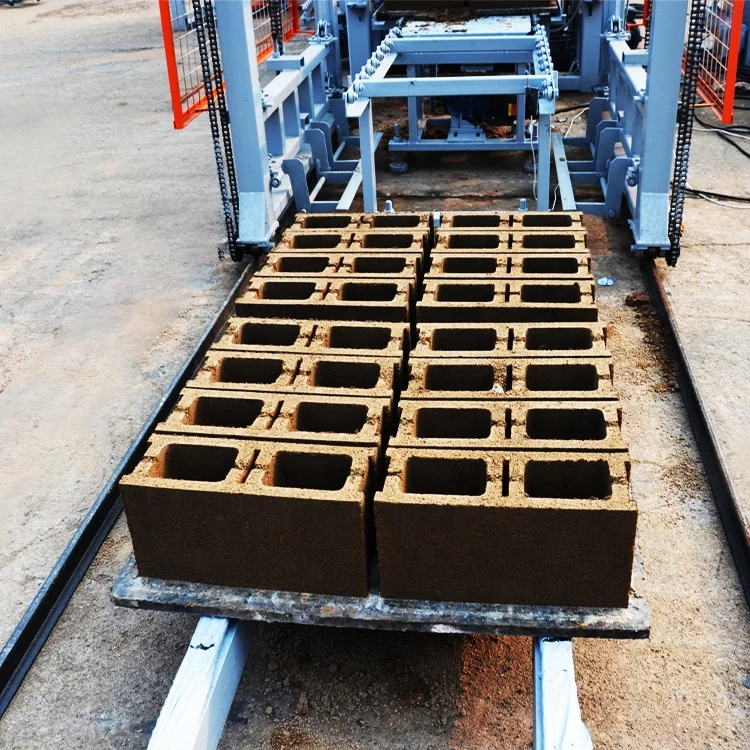
 High quality block machine