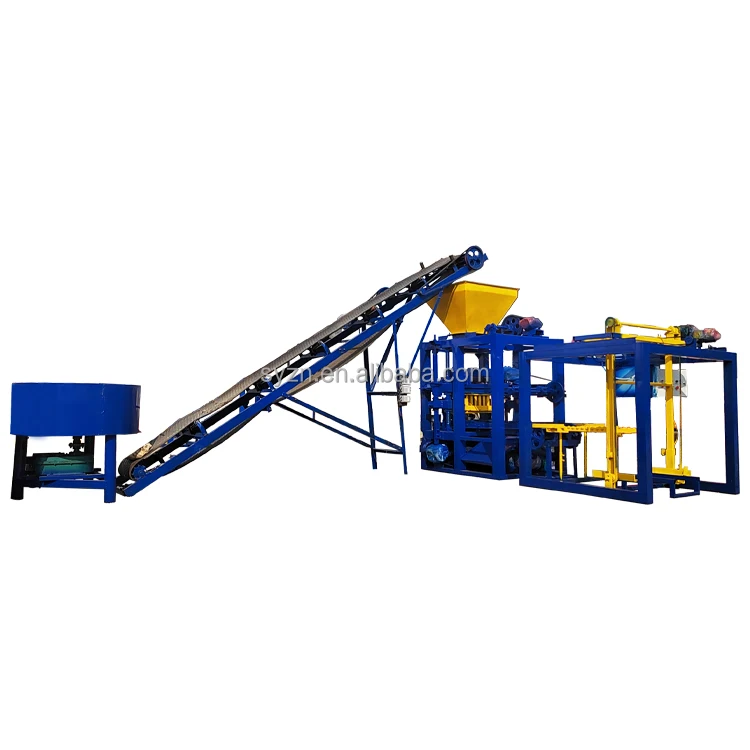
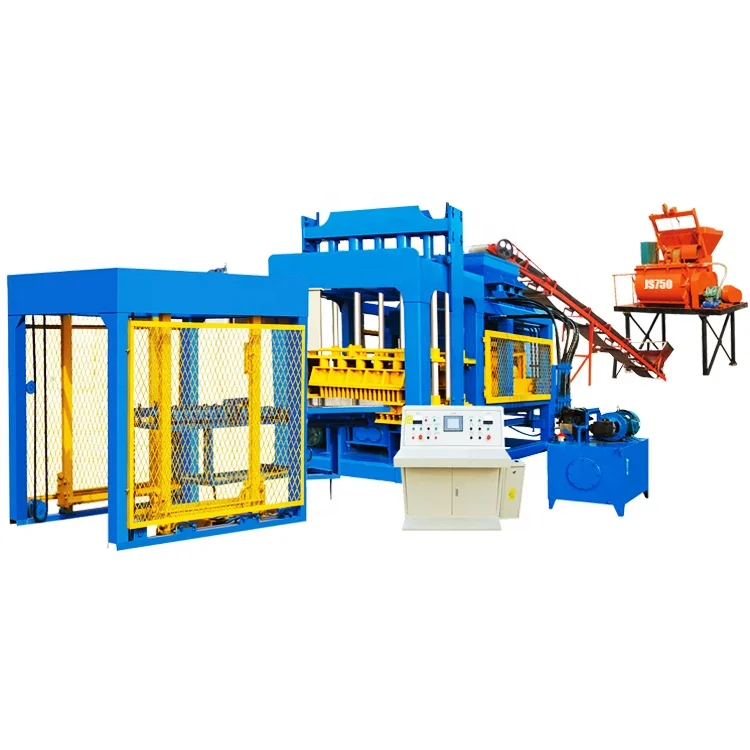
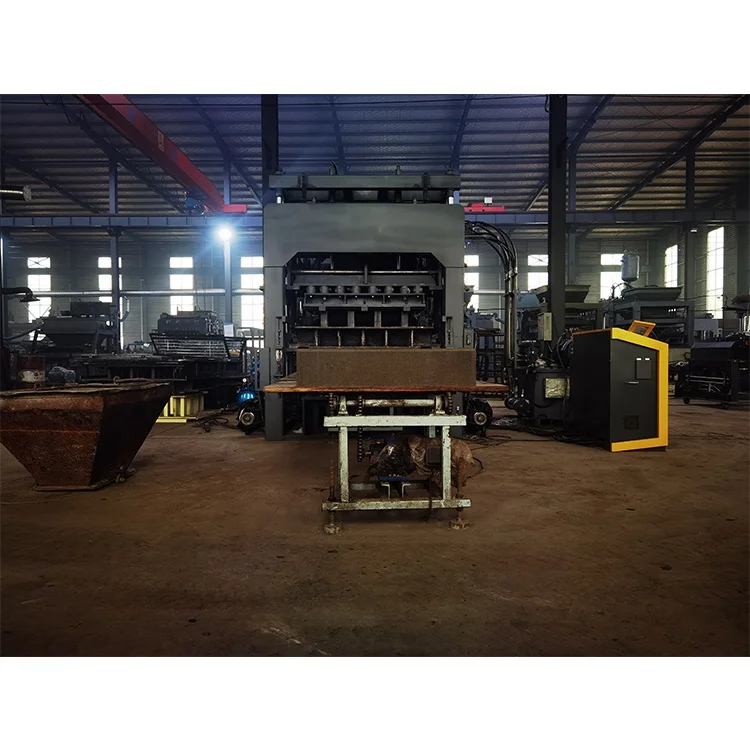
Mid-Tier Stationary Line Focus — The QT5-15 fills the gap between workshop-grade semi-automatic presses and high-output fully automatic lines, sized for buyers who need consistent daily volume without the footprint of a continuous plant.
Technical Specifications
| Parameter |
Value |
| Model |
QT5-15 |
| Product Type |
Hydraulic Automatic Concrete Block Making Machine |
| Overall Dimensions (L×W×H) |
7400×1950×2800mm |
| Rated Pressure |
21MPa |
| Main Vibration Form |
Platform Vibration |
| Vibration Frequency |
2800~4500 r/min |
| Pallet Size |
1100×550mm |
| Molding Cycle |
15-25s |
| Overall Power |
26.5KW |
| Demolding Method |
Hydraulic |
| Control System |
PLC Controlled |
| Drive Type |
Gear-Driven |
| Output Capacity (Hollow Brick 400×200×200mm) |
5 pcs/mould, 16-20s cycle, 1800 pcs/h |
| Output Capacity (Hollow Block 400×150×200mm) |
6 pcs/mould, 15-20s cycle, 1300 pcs/h |
| Output Capacity (S Paver 225×112.5×60mm) |
16 pcs/mould, 15-17s cycle, 3700 pcs/h |
| Automation Level |
Automatic |
| Warranty |
One year |
Application Suitability
| Application |
Material or Output |
| Hollow Block Production |
Crushed stone, sand, cement, fly ash, gravel, slag |
| Solid Block Production |
Standard concrete mix, local aggregate |
| Paver and Interlocking Brick |
Colored concrete, fine aggregate mix |
| Curbstone Production |
High-strength concrete mix |
| On-Site Construction Supply |
Project-specific formats for housing contractors |
What a Quoted Cycle Time Actually Means for Your Output
A cycle time only matters once you state which block format, mould cavity count, and mix design it was measured against.
Many quotations list a single cycle figure that assumes the most favorable format in the catalogue. When the buyer switches to a heavier hollow block or a paver requiring longer vibration, the real hourly output drops significantly. On Middle East project sites where I have worked, this mismatch between quoted and actual throughput has delayed contractor schedules and forced overtime shifts to meet delivery commitments. The QT5-15 block machine manufacturer specifications here list cycle time and output for three distinct formats so you can match the figure to the product you actually sell [NEED_CITE: block format assumptions in capacity quotations].

Where the QT5-15 Sits in the Shiyue Stationary Range
The Shiyue stationary block machine lineup spans from small semi-automatic workshop presses to high-capacity automatic lines designed for continuous multi-shift operation. The QT5-15 occupies the mid-tier position: it delivers PLC-controlled automatic cycling with hydraulic demolding, but keeps the overall plant footprint manageable for a first-time buyer or a contractor setting up a dedicated project plant. This is the tier where a buyer moves from manual pallet handling to automatic pallet feeding without committing to the full stacking and cubing infrastructure of a high-output line.
Matching the Machine Tier to Your Project Timeline
Buyers working to a construction deadline need to know whether the mid-tier automatic tier can deliver the daily volume their site demands. The QT5-15 automatic hydraulic block machine produces hollow blocks and pavers on a single pallet size, which means format changeover involves swapping the mould rather than reconfiguring the entire material feed path. For a housing project contractor producing several block formats across different construction phases, this flexibility within one machine footprint reduces the risk of ordering a press that is either under-capacity for peak demand or oversized for the project’s actual product mix [NEED_CITE: stationary block machine tier selection for project contractors].
How Pressure, Vibration, and Mould Envelope Shape Block Quality
The 21MPa rated hydraulic pressure works in conjunction with the platform vibration system to compact the concrete mix during the molding cycle. The adjustable vibration frequency range of 2800 to 4500 r/min allows the operator to tune the vibration profile to the specific mix design — a drier, harsher mix typically requires higher frequency for proper compaction, while a wetter mix with fine aggregate needs lower frequency to prevent segregation. The 1100×550mm pallet size defines the maximum mould envelope, and every format from hollow blocks to interlocking pavers must fit within that boundary. The gear-driven mechanism reduces mechanical play compared to belt or chain drive systems, which matters when the machine runs extended shifts and dimensional consistency across thousands of cycles determines whether blocks meet structural load requirements.
The Cost of Specifying Without Confirming Local Aggregate
When a machine is configured for a standard mix design but the buyer’s local sand contains high clay content or unusual grading, the vibration force may not compact the material properly. Block density drops, breakage during demolding increases, and daily output falls well below the quoted figure. I have encountered project sites where this mismatch was only discovered during commissioning, requiring weeks of mix adjustment and mould tuning before the press could run at a stable cycle time. Confirming the local raw material profile before the QT5-15 block machine manufacturer finalizes the vibration and pressure settings avoids this delay [NEED_CITE: aggregate variation impact on block machine commissioning].
Why Buyers Choose This Configuration for Stationary Production
Shiyue configures each QT5-15 against the buyer’s stated block format, local aggregate, and target daily output rather than shipping a default catalogue build. The pallet size and pallet material are selected to match the curing area dimensions and the forklift the buyer already operates on site. Voltage, frequency, and PLC display language are confirmed before production begins, so the machine powers up correctly on arrival without waiting for an electrical panel swap. Mould drawings are supplied for every format within the 1100×550mm pallet envelope, and custom mould design is available when the buyer’s market requires a non-standard brick profile. The automatic cycle covers the full pressing sequence, but the automation level remains selectable — a buyer can start with the QT5-15 and add automatic stacking or cubing modules later as production volume justifies the investment.
Documentation & Verification
- Line layout showing QT5-15 footprint with supporting equipment positions
- Capacity calculation sheet stating the block format for each output figure
- Mould drawing and format list for every mould within the pallet envelope
- Factory test record demonstrating cycle time against your mix design
- PLC language and voltage confirmation document before shipment
- Packing photographs showing dismantling state for container loading
Installation, Commissioning & Support
- Foundation plan sized to the 7400×1950mm machine footprint and vibration load
- Power supply circuit rated for the 26.5KW overall draw with correct voltage and frequency
- Machine reassembly from container-dismantled state with hydraulic and electrical reconnection
- First-run commissioning with cycle time and block density verification against your local mix
- Operator training on PLC interface, mould change procedure, and daily maintenance checklist
- Wear parts list covering hydraulic seals, vibration motor bearings, and mould wear components
What to Include in Your Inquiry
To size the QT5-15 stationary block machine correctly for your plant, specify the block formats you intend to produce and the daily volume required for each. State your local raw material sources — particularly sand type and any industrial by-products like fly ash — so the vibration and pressure settings can be matched to your mix. Confirm the voltage and frequency at your site, the PLC display language your operators need, and whether your existing forklift and curing area are compatible with the 1100×550mm pallet size.
Frequently Asked Questions
Q: Where does the QT5-15 fit between semi-automatic and high-capacity automatic tiers?
A: The QT5-15 sits in the mid-tier of the Shiyue stationary block machine range. It provides full PLC-controlled automatic cycling with hydraulic demolding, moving beyond manual pallet handling of semi-automatic models, but without the stacking and cubing infrastructure of a high-capacity line. It suits buyers who need consistent automatic output while keeping plant footprint and initial investment measured.
Q: How do I verify the real daily output for my specific block format?
A: Request the capacity calculation sheet that lists cycle time and output for each block format you intend to produce, not a single aggregate figure. The QT5-15 specification includes output data for hollow bricks, hollow blocks, and pavers separately. Your actual daily volume also depends on mix design, shift length, and pallet handling efficiency around the press.
Q: Which voltage and PLC language will the QT5-15 ship with?
A: Voltage and frequency are configured to your site supply before production begins, not set to a default. The PLC display language is confirmed at the same stage. Both are documented in a pre-shipment confirmation so the machine connects to your power supply and is readable by your operators on day one of commissioning.
Q: What plant footprint and supporting equipment does the QT5-15 require?
A: The press itself measures 7400×1950×2800mm. Around it you need space for raw material feeding, a mixer, pallet feeding, and a curing area sized to your daily output. The supporting equipment layout depends on your automation level — manual pallet return requires more floor space than an automatic pallet circulation system.
Q: Can I add formats or upgrade automation later on the same QT5-15 platform?
A: Yes. Any mould designed for the 1100×550mm pallet envelope can be added later without modifying the press. Automation modules such as automatic stacking and cubing can be integrated as your production volume grows, allowing the QT5-15 to scale with your operation without replacing the core machine.

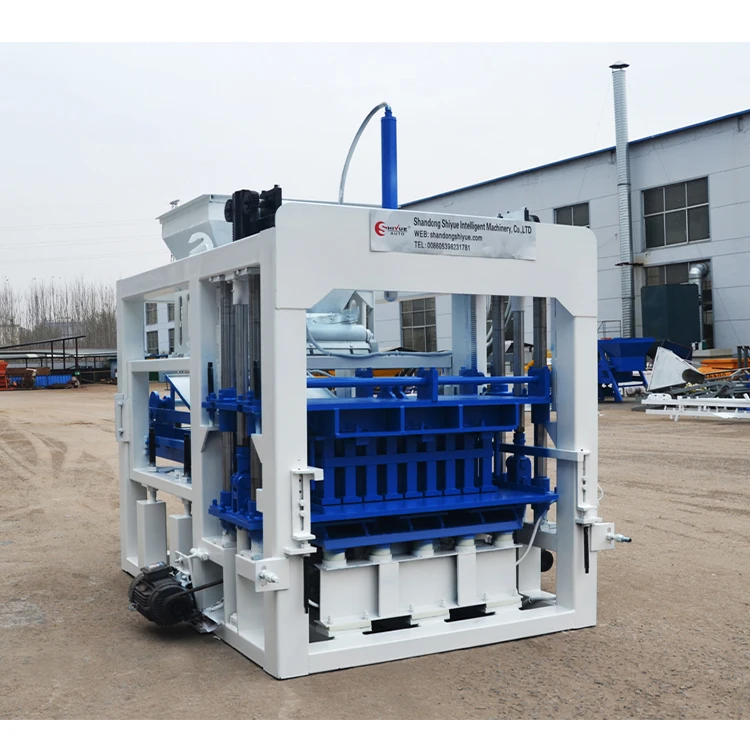
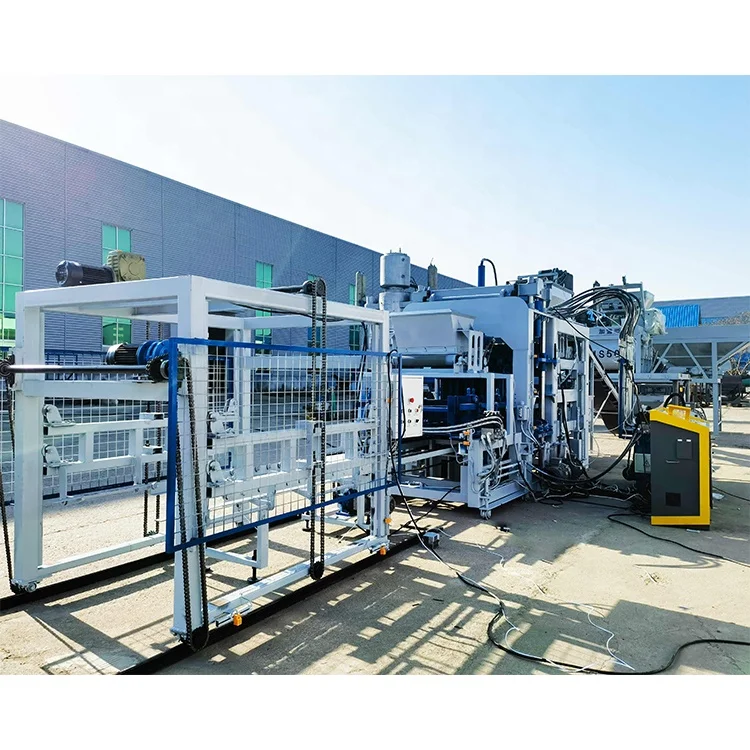 Stationary block machine