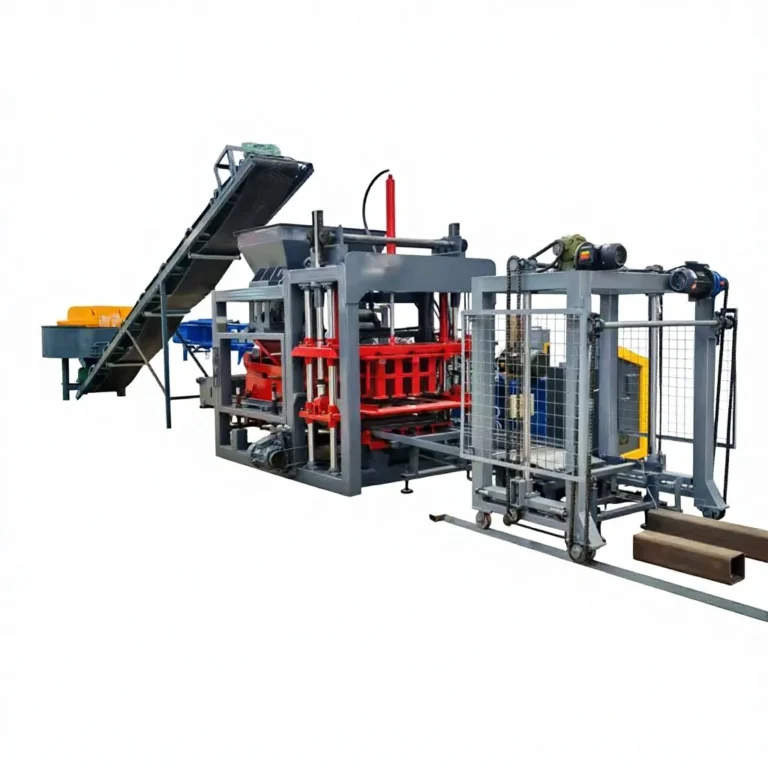
Mid-Tier Automation for Multi-Format Plants — the QT5-15 is specified as a matched system covering hollow block, solid brick, and paver production on a single pallet size, so buyers can place themselves on the output range before committing to a higher or lower tier.
Technical Specifications
| Parameter |
Value |
| Model |
QT5-15 |
| Product Type |
Fully Automatic Hydraulic Block Making Machine |
| Overall Dimensions (L×W×H) |
7400×1950×2800 mm |
| Vibration Form |
Platform Vibration |
| Vibration Force |
80 kN |
| Vibration Frequency Range |
0–60 Hz |
| Moulding Mode |
Automatic loading with vibration moulding |
| Pallet Size |
1100×550 mm |
| Molding Cycle |
15–20 s |
| Demolding Method |
Hydraulic |
| Overall Power |
32 kW |
| Total Mass |
5000 kg |
| Control System |
PLC with touch screen interface |
| Automation Level |
Fully automatic (pallet feeding, material feeding, vibrating, demoulding) |
| Recommended Factory Area |
1000 m² |
| Block Compressive Strength |
>15 MPa |
| Output (400×200×200 mm hollow block, 5 pcs/mould) |
900–1200 pcs/h |
| Output (400×150×200 mm hollow block, 6 pcs/mould) |
1080–1440 pcs/h |
| Output (240×115×53 mm solid brick, 32 pcs/mould) |
5760–7680 pcs/h |
| Output (200×100×60 mm rectangular paver, 25 pcs/mould, 20–25 s cycle) |
3600–4500 pcs/h |
| Output (225×112.5×60 mm zigzag paver, 16 pcs/mould, 20–25 s cycle) |
2304–2880 pcs/h |
| Voltage & Frequency |
Configurable (to be confirmed before order) |
| PLC Display Language |
Configurable (to be confirmed before order) |
| Standards |
CE declaration available |
Application Suitability
| Application |
Material or Output |
| Hollow block production for wall construction |
Fly ash (up to 70%), slag, sand, crushed stone, cement |
| Solid brick manufacturing |
Gangue, sand, cement, water |
| Rectangular paver production for walkways and yards |
Crushed stone, cement, pigment (optional) |
| Interlocking zigzag paver production |
Sand, crushed stone, cement |
| On-site block production for housing projects |
Locally sourced aggregate and cement |
| Format expansion for existing building material distributors |
Multiple mould formats on a single pallet size |
What "900 to 1200 Pieces per Hour" Actually Means for Your Plant
Capacity figures only hold up when tied to a specific block format and mould cavity count.
I have sat across from buyers who signed off on a block machine because the quoted output sounded right for their daily target, only to discover the number was based on a hollow block they never planned to produce. The QT5-15 automatic block machine manufacturer rates this model at 900–1,200 pieces per hour based on a 400×200×200 mm hollow block with 5 cavities per mould. Switch to a 240×115×53 mm solid brick with 32 cavities and the same machine cycles 5,760–7,680 pieces per hour. The machine does not change — the format does [NEED_CITE: capacity calculation methods for concrete block machines]. That gap between a headline number and what you actually produce is where project budgets go wrong.

Where the QT5-15 Sits in a Growing Block Plant
The mid-tier position matters because it covers the volume range where a first-time plant owner needs format flexibility without over-investing in a high-capacity line. The 1100×550 mm pallet size is shared across hollow block, solid brick, and paver moulds, which means a buyer can add formats later without replacing the curing racks or forklifts already on the floor. The QT5-15 automatic block machine manufacturer positions this model between the semi-automatic tier — where an operator handles pallets by hand — and the high-capacity automatic lines that demand a larger factory footprint and dedicated maintenance crew.
Matching the Press to Your Local Aggregate and Mix
Vibration force and hydraulic pressure must work together against the specific density and gradation of the aggregate available near your site. The 80 kN platform vibration on the QT5-15 is tuned through the 0–60 Hz frequency range to compact mixes with up to 70% fly ash content as well as standard crushed stone and sand blends. When the mix design and vibration profile are aligned, block compressive strength holds above 15 MPa consistently across a production run [NEED_CITE: relationship between vibration frequency and concrete block compressive strength]. When they are not, you get blocks that pass a lab test on day one and crumble by day thirty.
Reading the Specs That Actually Shape Your Daily Output
The molding cycle of 15–20 seconds governs how fast the press completes one press-and-release sequence, but the real cycle time for a paver format extends to 20–25 seconds because the surface finish demands a longer vibration dwell. The 32 kW overall power draw covers the hydraulic pump, vibration motors, and PLC control running simultaneously — a figure that determines your electrical supply specification and dedicated circuit sizing. The 5,000 kg total mass reflects the steel frame required to absorb 80 kN of vibration force without fatigue cracking over years of operation. The 1,000 m² recommended factory area accounts for the press, raw material feeding zone, pallet return path, and a curing rack layout that keeps wet blocks undisturbed for the initial set [NEED_CITE: factory layout planning for concrete block production lines].
The Cost of Skipping the Pallet and Voltage Conversation
A pallet size chosen without checking your existing curing racks means blocks arrive at the rack and do not fit — forcing you to buy new racks or hand-stack output on the floor. I have seen plants where the forklift tines were too narrow for the pallets that arrived with the machine, so every pallet was moved by hand for the first two weeks. Voltage and frequency are equally unforgiving. One shipment to Jordan left the factory with the PLC display still set to Chinese, and the operator could not navigate a single menu screen. Commissioning stalled for four days until an engineer could reflash the interface over a video call [NEED_CITE: PLC language configuration and export machinery commissioning]. I check language settings before I check anything else now.
Why Buyers Spec This Machine Through a Single Source
Block machinery is the only product line here, so the press, mould, pallet, and handling equipment are specified as one matched system rather than assembled from separate suppliers. Configuration starts from the buyer’s actual mix design, local aggregate, and target block format — not a catalogue default. Mould design covers the formats your market actually sells, including custom drawings when a standard cavity layout does not fit. Automation is selectable: a buyer can start with the fully automatic cycle on the QT5-15 and add stacking or cubing modules as volume grows. Installation support includes on-site commissioning and operator training so the crew running the machine on day one is the same crew maintaining it six months later.
Documentation & Verification
- Line layout and capacity calculation sheet stating the block format assumed for each QT5-15 output figure
- Machine specification sheet confirming vibration force, hydraulic pressure, pallet size, and cycle time per format
- Voltage, frequency, and PLC display language confirmation document signed before production begins
- Factory test record and packing photographs reviewed before the QT5-15 leaves the shop floor
- Mould drawing and format list matching the cavity count used in the capacity calculation
- Operation and maintenance manual covering daily greasing points and hydraulic filter intervals
Installation, Commissioning & Support
- Foundation pad sized to the 7400×1950 mm footprint with anchor bolt template supplied before machine arrival
- Dedicated 32 kW electrical circuit with voltage and frequency confirmed to match local grid specification
- PLC touch screen language reflashed and verified during on-site commissioning before operator handover
- Mould change procedure demonstrated with your specific format set so the crew can swap independently
- Wear parts list with hydraulic seal and vibration motor part numbers for first reorder planning
- Daily and weekly maintenance schedule calibrated to the 80 kN vibration load and hydraulic demolding cycle
What We Need to Move Forward
To size the QT5-15 correctly for your line, tell us the block formats you intend to sell and the daily volume target for each. Confirm the local aggregate type, the cement source, and any fly ash or slag available in your area. Share your workshop dimensions, ceiling height, and the curing rack and forklift specifications you already have on site so the pallet size and handling layout can be matched before the machine enters production.
Frequently Asked Questions
Q: How do I verify the QT5-15 capacity against my specific block format?
A: Request the capacity calculation sheet that states the block format, cavity count, and cycle time assumed for each output figure. Compare that format to the one you actually sell. If your target block differs, ask for a revised calculation using your mould drawing and local mix design before the order is confirmed.
Q: Where does the QT5-15 fit between semi-automatic and high-capacity tiers?
A: The QT5-15 sits in the mid-tier fully automatic range, handling pallet feeding, material feeding, vibrating, and demoulding without manual intervention. It suits plants that have outgrown semi-automatic machines but do not yet need the footprint and investment of a high-capacity line with automatic stacking and cubing.
Q: How is the pallet size matched to my existing curing area and forklift?
A: The standard 1100×550 mm pallet is checked against your curing rack spacing and forklift tine width before the order is finalized. If your existing equipment uses a different dimension, the pallet specification is adjusted so blocks move from press to rack to dispatch without manual re-handling.
Q: What voltage and frequency options are available for my market?
A: Voltage and frequency are confirmed with you before production starts, based on your local grid standard. The PLC display language is set at the same time to ensure the operator can read every screen from day one, avoiding the commissioning delays that occur when language configuration is overlooked.
Q: What factory footprint and utility requirements does the QT5-15 line need?
A: The recommended factory area is 1,000 m² to accommodate the press, raw material feeding, pallet return, and curing racks. The 32 kW power draw requires a dedicated circuit, and the foundation must support the 5,000 kg machine mass plus dynamic vibration loads. Ceiling height should clear the 2,800 mm machine height with room for maintenance access.

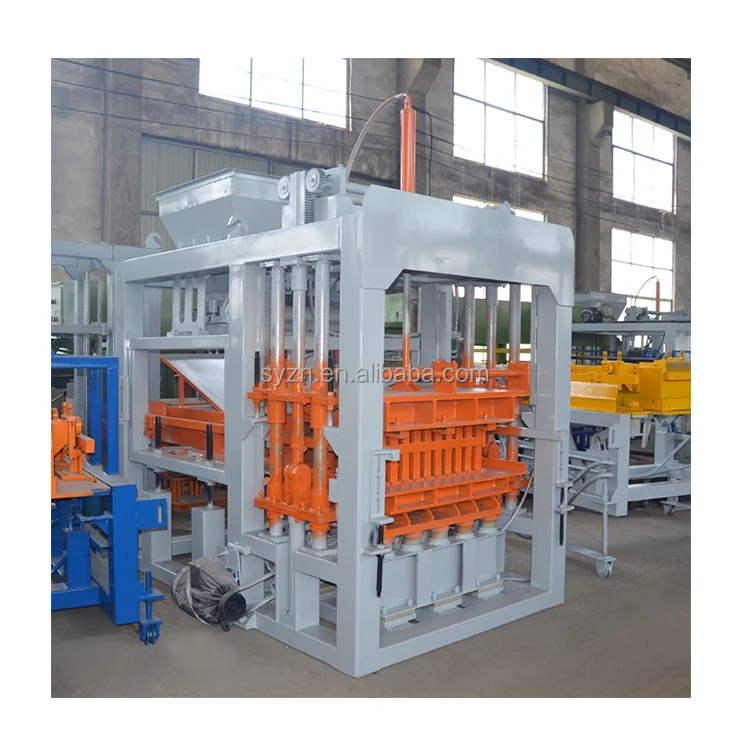
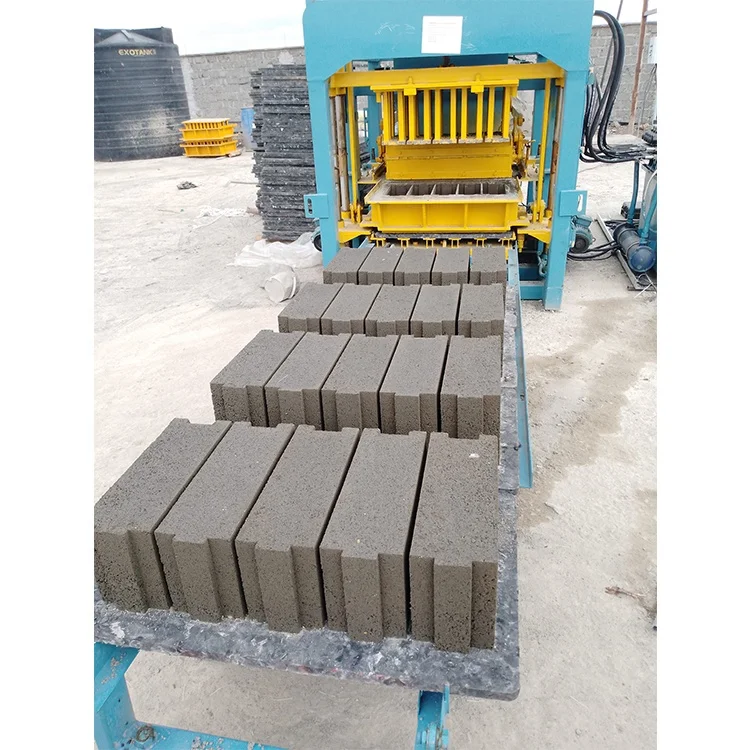 High quality block machine
![QT10-15 Cement Block Machine for Hollow Block | Manufacturer8 + 2 + 9 + 4 + 7 = 30 30 mod 6 = 0 → 句式:[品类词] for [应用或物料] – [站点修饰词] 目标站 shiyueblockmachine.com → 全品类目录类角色 → 池:Manufacturer / Factory Supply / Full Range 30 mod 3 = 0 → Manufacturer Cement Block Machine for Hollow Block – Manufacturer (50) → 刚好50字符 Cement Block Machine for Hollow Block – Manufacturer](https://shiyueblockmachine.com/wp-content/uploads/2026/04/Hb41b33f9751e441c8a35b36846992f0bP.webp)