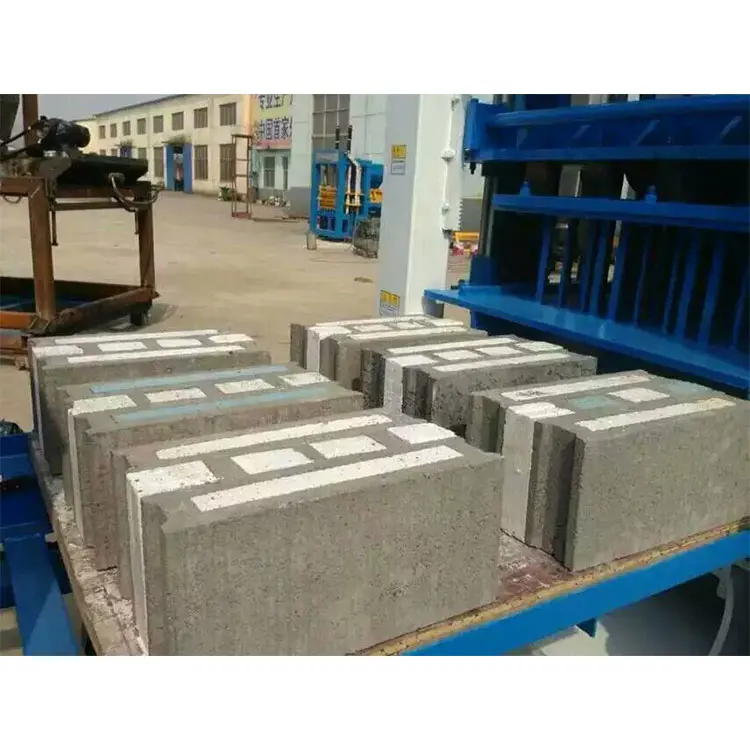
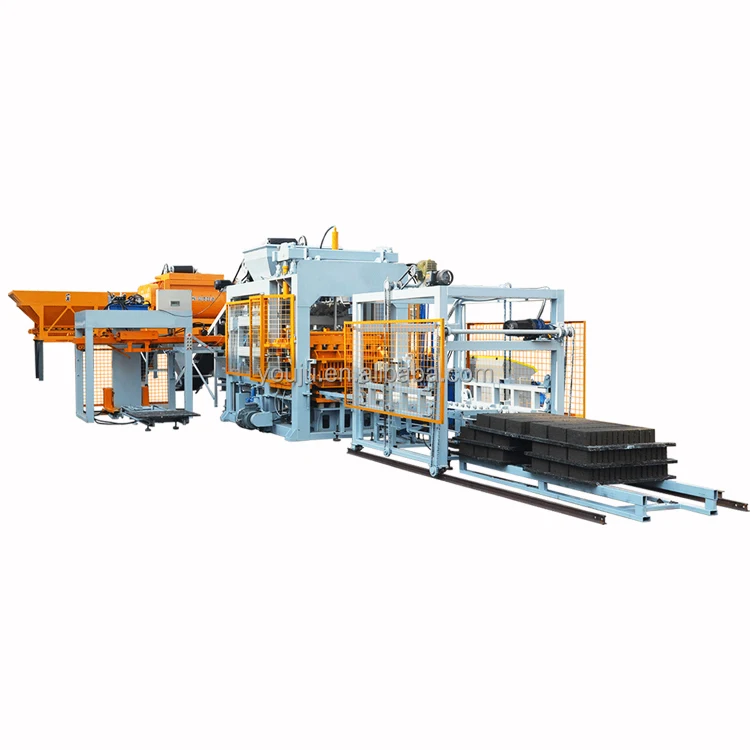
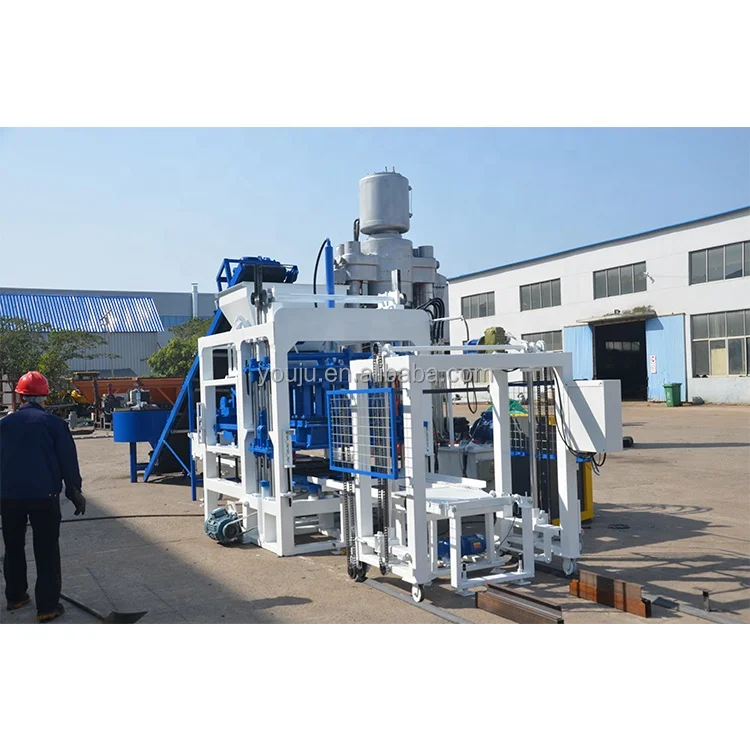
Matched System Approach — QT5-15 specification ties pallet, mould, press and PLC into one validated configuration rather than a list of disconnected components.
Technical Specifications
| Parameter |
Value |
| Model |
QT5-15 |
| Product Type |
Automatic Hydraulic Concrete Block Making Machine |
| Overall Dimensions (L×W×H) |
7400×1950×2800 mm |
| Rated Pressure |
21 MPa |
| Main Vibration Form |
Platform Vibration |
| Vibration Frequency |
2800-4500 r/min |
| Vibration Force |
40 KN |
| Pallet Size |
1100×550 mm |
| Molding Cycle |
15-20 s |
| Total Mass |
6 T |
| Demolding Method |
Hydraulic |
| Recommended Factory Area |
600 m² |
| Control System |
PLC intelligent control with man-machine interface, logic control, malfunction diagnosis, remote control function |
| Machine Frame |
Manganese steel (China national standard) |
| Output Capacity — Hollow Brick (400×200×200 mm) |
5 pcs/mould, 15-20 s cycle, 7200-9600 pcs/day (basis not stated in source) |
| Output Capacity — Porous Brick (240×115×90 mm) |
16 pcs/mould, 16-20 s cycle, 23040-28800 pcs/day (basis not stated in source) |
| Output Capacity — Standard Brick (240×115×53 mm) |
32 pcs/mould, 13-15 s cycle, 61440-70892 pcs/day (basis not stated in source) |
Application Suitability
| Application |
Material or Output |
| Hollow block production for building walls |
Crushed stone, sand, cement, gravel, fly ash |
| Solid and standard brick manufacturing |
Local aggregates, cement, dust |
| Interlocking paver production for driveways and plazas |
Colored aggregates, crushed stone, sand |
| Porous brick for permeable paving applications |
Gravel, slag, cement blends |
| Curbstone and kerbstone production |
Heavy aggregate mixes, high-strength cement |
What Cycle Times Really Mean for Daily Output on a QT5-15 Automatic Block Machine Manufacturer
Every capacity figure here is tied to a specific block format, mould cavity count, and cycle time — not a single headline number.
Capacity quoted in cycles per hour without stating which block format that figure assumes is one of the most common reasons daily output falls far short of expectation. On a Middle East project I was involved with, the buyer signed off based on a peak hourly figure that assumed the smallest solid brick format, while the actual daily plan was 400×200×200 mm hollow blocks — five per mould at a longer cycle. The gap between expected and real output created scheduling problems across the entire construction timeline [NEED_CITE: block plant capacity calculation methods by format]. When evaluating any QT5-15 automatic block machine manufacturer, the buyer needs a capacity document that spells out each format separately.

Where the QT5-15 Sits in the Full Automatic Range
The QT5-15 occupies a mid-tier position in our automatic block machine range. Below it sit smaller workshop-scale machines suited to entrepreneurs testing a local market with limited investment. Above it are high-capacity lines designed for plants running multiple shifts with fully automated stacking and cubing. This model serves buyers who have outgrown semi-automatic operation and need PLC-controlled consistency, but whose market volume does not yet justify the footprint and capital of a top-tier line. Understanding where this tier sits helps a buyer place themselves on the range before narrowing down the exact configuration.
Pallet Size, Curing Area, and Plant Footprint Alignment
The 1100×550 mm pallet dimension is a mid-range size that directly determines how the curing area, forklift routes, and stacking zones must be laid out within the recommended 600 m² factory area. A pallet chosen without regard to the curing racks and material handling equipment the buyer already operates will force expensive retrofitting after installation [NEED_CITE: block plant layout planning standards]. The QT5-15 configuration process confirms pallet material and size against the buyer’s existing site conditions, so the press output integrates with the curing and handling infrastructure already in place.
How Hydraulic Pressure and Vibration Shape Block Density
The 21 MPa rated pressure and 40 KN vibration force on the QT5-15 work together to compact the mix into a dense, consistent block. Hydraulic pressure squeezes the material while platform vibration at 2800-4500 r/min settles fine particles into voids, reducing air pockets. If the vibration frequency is not matched to the buyer’s specific mix design and local aggregate — for example, river sand with high silt content common in Gulf states — the resulting block density can fall below structural standards. The PLC system allows frequency adjustment within the rated range, but the starting point must be validated against the actual raw materials on site before production begins. The manganese steel frame absorbs repeated vibration cycles without fatigue cracking, maintaining alignment between the mould box and press head over extended production runs.
The Cost of a Misconfigured Automation Level
Choosing an automation tier that does not match the plant’s labour availability and operator skill level creates hidden friction after commissioning. A buyer who selects full PLC control without trained staff may find the man-machine interface underused, with operators bypassing diagnostic functions and running the press manually. Conversely, a plant that could benefit from automatic pallet feeding and remote malfunction diagnosis but opts for a simpler control package will face unnecessary labour costs and slower response to faults [NEED_CITE: automation adoption challenges in block manufacturing]. The QT5-15 offers selectable automation features, but each option must be justified against the buyer’s actual operational capacity.
Why Sourcing from This QT5-15 Automatic Block Machine Manufacturer Differs
Block machinery as a single focus means the press, mould, pallet, and handling equipment are specified as one matched system rather than assembled from separate suppliers with mismatched tolerances. Configuration is set against the buyer’s actual mix design, local aggregate characteristics, and target block format — not a catalogue default. Mould design covers the formats the buyer’s market actually sells, including custom drawings when standard options do not fit. The automation level is selectable, so a buyer can begin with semi-automatic pallet handling and plan a later upgrade path. Installation support includes on-site commissioning and operator training tied to the specific PLC language and control interface confirmed before production.
Documentation & Verification
- Line layout and capacity calculation stating each block format assumed for output figures
- Machine specification sheet with voltage, frequency, and PLC display language confirmed pre-production
- Mould drawing and format list covering every product the buyer’s market sells
- Hydraulic and electrical schematic for the confirmed 21 MPa pressure and vibration configuration
- Factory test record and packing photographs provided before shipment
Installation, Commissioning & Support
- Foundation plan sized for the 7400×1950 mm footprint and 6 T operating mass of the QT5-15
- Dedicated electrical circuit confirmed for the voltage and frequency specified before production
- Machine dismantled for container loading with reassembly sequence documented for site crew
- PLC interface language and malfunction diagnosis functions verified during on-site commissioning
- Operator training covering mould change procedure on the 1100×550 mm pallet system
- Wear parts list and hydraulic seal schedule based on the 21 MPa pressure system
Planning Your QT5-15 Inquiry
To configure a QT5-15 that matches your plant, share the block formats your market sells and the daily volume target for each. Provide details on local raw materials — particularly aggregate type and silt or moisture content — along with available factory area and ceiling height. Confirm the local voltage, frequency, and preferred PLC display language so commissioning proceeds without delay.
Frequently Asked Questions
Q: Where does the QT5-15 sit in the full machine range, and what tiers are above and below it?
A: The QT5-15 is a mid-tier automatic block machine. Below it are smaller semi-automatic and mobile models for first-time entrepreneurs or on-site production. Above it are high-capacity automatic lines with larger pallet sizes and fully integrated stacking and cubing systems for plants running continuous multi-shift operations across a wide format range.
Q: How does the recommended 600 m² factory area break down between press, curing, and stacking zones?
A: The 600 m² recommendation covers the press area, raw material storage, pallet circulation paths, curing rack zones, and stacking space. The exact split depends on pallet size, block format mix, and curing method. A line layout document maps each zone to the QT5-15 footprint and the 1100×550 mm pallet flow pattern.
Q: Which block formats can this pallet size accommodate, and when would a larger pallet be needed?
A: The 1100×550 mm pallet handles hollow blocks, standard bricks, porous bricks, pavers, and interlocking blocks listed in the specification. A larger pallet becomes necessary when the buyer’s market requires formats that exceed this surface area or when higher per-cycle cavity counts are needed to meet daily output targets.
Q: Can the QT5-15 be upgraded later with automatic stacking and cubing, or is that only available on higher tiers?
A: The automation level on the QT5-15 is selectable. A buyer can start with manual or semi-automatic pallet handling and add automatic stacking and cubing equipment later, provided the line layout was planned with future upgrade space. This upgrade path is discussed during the initial configuration phase.
Q: What investment difference exists between the QT5-15 and semi-automatic or higher-tier automatic models?
A: The gap lies in automation components — PLC sophistication, automatic pallet feeding, stacking systems, and mould change speed — rather than just the press itself. A detailed quotation breaks down each configuration tier so the buyer can compare capital outlay against labour savings and output consistency for their specific operation scale.

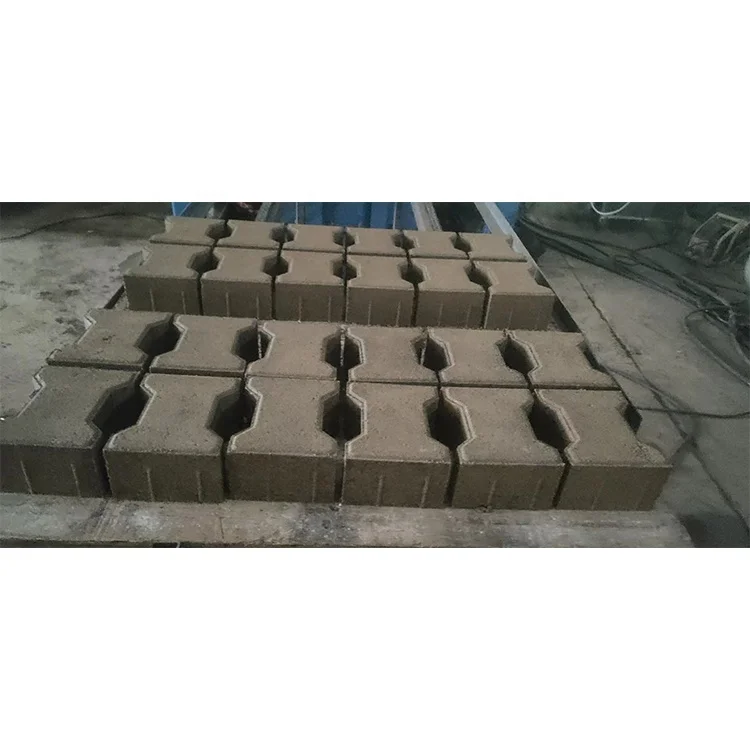
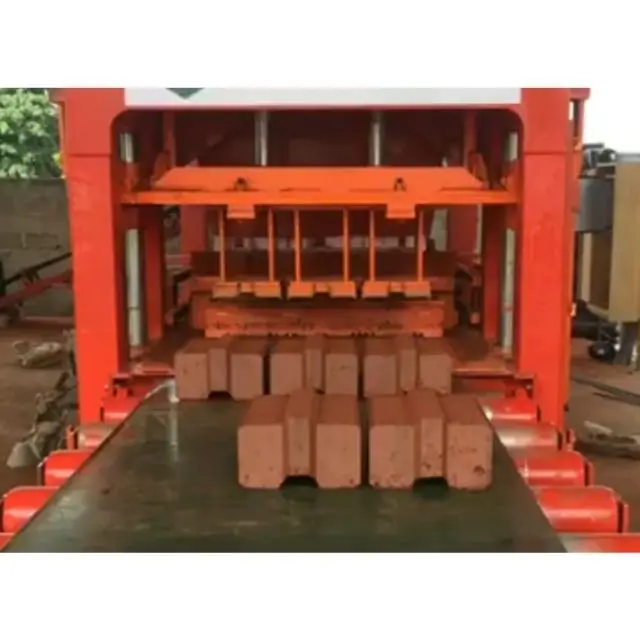 Automatic block machine