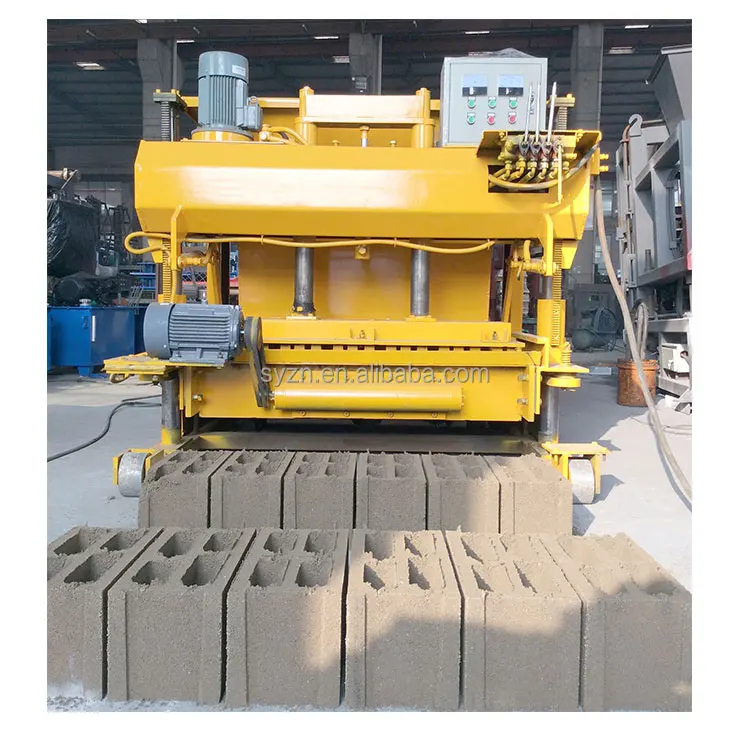
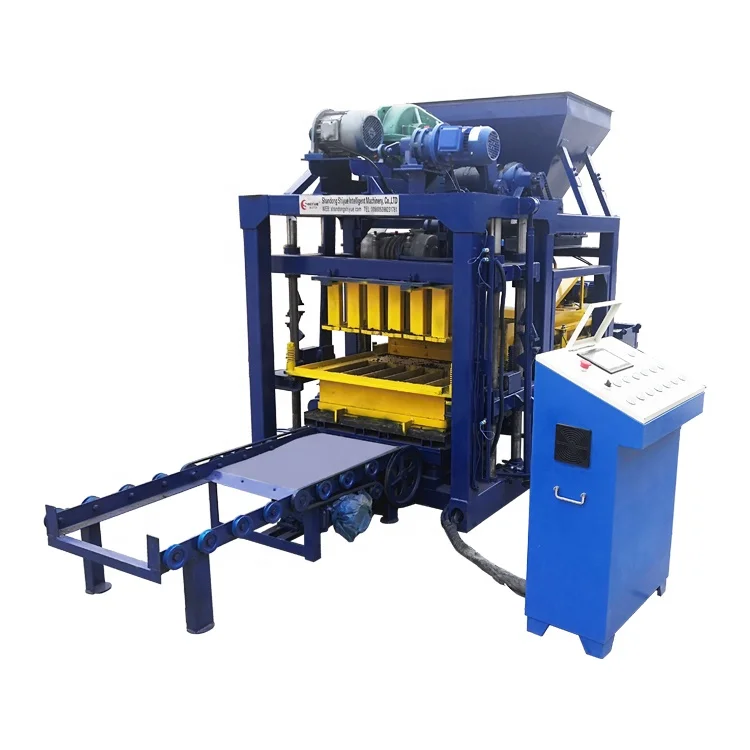
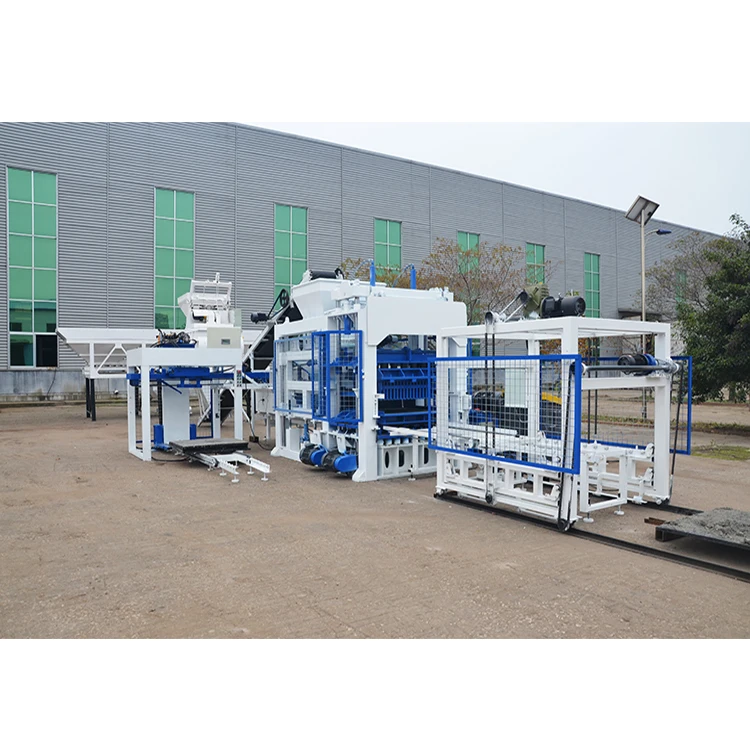
Mid-tier automation matched to your block format — the QT415 sits between entry-level semi-automatic presses and high-capacity lines, with its 880×550 mm pallet and PLC control specified against the buyer’s actual target output rather than a catalogue default.
Technical Specifications
| Parameter |
Value |
| Model |
QT415 |
| Product Type |
Full Automatic Vibration Press Concrete Block Making Machine |
| Overall Dimensions (L×W×H) |
4100×1600×2600 mm |
| Rated Pressure |
16–21 MPa |
| Main Vibration Form |
Platform Vibration |
| Vibration Frequency |
4200 r/min |
| Vibration Force |
55 kN |
| Pallet Size |
880×550 mm |
| Molding Cycle |
25–30 s (basis to be confirmed per block format) |
| Overall Power |
18.45 kW |
| Demolding Method |
Hydraulic |
| Total Mass |
4 T |
| Factory Area |
300 m² |
| Applied Products |
Hollow blocks, solid blocks, pavers, interlocking blocks, curbstone, colored pavers |
| Raw Materials |
Crushed stone, sand, cement, fly ash, gravel, slag, dust |
| Mould Customization |
Available per customer drawings |
| Container Loading |
1×40HQ (basic equipment) |
Application Suitability
| Application |
Material or Output |
| Hollow block production for building walls |
Crushed stone, sand, cement, fly ash blends |
| Solid block manufacturing for load-bearing structures |
Gravel, sand, cement with local aggregate |
| Interlocking paver production for driveways and walkways |
Colored concrete mixes with fine aggregate |
| Curbstone forming for road and landscaping projects |
High-strength concrete with coarse aggregate |
| On-site block production for housing developments |
Locally sourced sand, dust, and cement |
What "25–30 Seconds per Cycle" Actually Means for Your Daily Output
Cycle time only translates to daily throughput when the block format and shift length are stated alongside it.
I have seen buyers in East Africa order a machine based on a cycles-per-hour figure, only to discover on commissioning that the number assumed a small solid block — while their market needed 200 mm hollow blocks, which cut real output nearly in half. The QT415 block machine full range listing quotes a 25–30 s molding cycle, but that figure shifts depending on whether you are pressing pavers, hollow blocks, or interlocking bricks. Before you compare machines, ask the supplier to state the cycle time per format you actually sell. [NEED_CITE: block format assumptions in capacity quotations]

Where the QT415 Sits in the Automatic Range
The QT415 block machine full range occupies the middle tier: above mobile egg-laying units and semi-automatic workshop presses, below high-capacity lines that run multiple pallets per cycle. Buyers stepping up from manual pallet handling typically land here because the PLC control and hydraulic demolding remove the two most labour-intensive stations on the line. For a first-time plant owner, this tier offers a clear upgrade path — start with the press and basic pallet feeder, then add automatic stacking and cubing as daily volume grows.
Matching the Press to the Rest of the Line
A block press does not run in isolation. Raw material feeding, mixing, pallet circulation, and output handling must keep pace with the press cycle, or the machine sits idle waiting for the next pallet. The QT415 block machine full range is typically quoted with a matched mixer and pallet feeder so that the 25–30 s cycle is not bottlenecked by upstream delays. When you evaluate this tier, confirm that the supporting equipment is sized to the same pallet format and cycle speed — otherwise the press capacity you paid for is never reached. [NEED_CITE: line synchronization in block production]
Reading the Numbers That Matter
Platform vibration at 4200 r/min paired with 55 kN vibration force determines how densely the concrete is compacted inside the mould. Higher vibration force on a stiff mix produces stronger blocks but increases mould wear; lower force on a wet mix speeds the cycle but risks cracking during demolding. The 16–21 MPa hydraulic rated pressure works with that vibration to squeeze out air voids, so both values must be read together — not in isolation. The 880×550 mm pallet size dictates how many blocks fit per cycle: a 400×200×200 mm hollow block typically yields four pieces per mould, while smaller pavers may yield eight or more, directly shifting daily output.
The Cost of Skipping the Mix-Design Conversation
Ordering a machine configured for a standard sand-cement mix and then feeding it high-clay local aggregate is a pattern I have watched repeat across several installations. The vibration frequency that works for clean crushed stone leaves clay-heavy mixes under-compacted, producing blocks that fail drop tests. Buyers who skip sending a raw material sample before order confirmation end up paying for a second round of parameter tuning on site — lost production days, wasted cement, and weakened blocks that damage their market reputation. [NEED_CITE: aggregate variability and block strength]
Why Source the QT415 Block Machine Full Range Here
Block machinery is the single focus of this production line, so the press, mould, pallet, and handling equipment are specified as one matched system rather than assembled from unrelated suppliers. Configuration starts from the buyer’s local aggregate and target block format, not a catalogue default — meaning the vibration and pressure parameters are set before the machine leaves the factory. Mould design covers the formats your market actually sells, with custom drawings available when standard options do not fit. Automation level is selectable, so you can begin with semi-automatic pallet handling and add stacking later without replacing the press. Installation support includes on-site commissioning and operator training so the crew running the machine on day one understands the parameter settings.
Documentation & Verification
- Line layout showing QT415 position within the full block production setup
- Capacity calculation stating the block format assumed for the 25–30 s cycle
- Mould drawing and format list for the 880×550 mm pallet
- Voltage, frequency, and PLC display language confirmation before shipment
- Factory test record on your specified block format before dispatch
- Hydraulic and electrical schematic for local maintenance teams
Installation, Commissioning & Support
- Foundation pad sized to the 4100×1600 mm footprint with vibration isolation
- Dedicated power circuit matching confirmed voltage and the 18.45 kW total load
- Machine arrives dismantled in one 40HQ container for site reassembly
- First-run parameter tuning against your local aggregate and mix design
- Operator training on PLC controls, mould change procedure, and daily checks
- Wear parts list covering hydraulic seals and vibration platform components
Before You Request a Quotation
Share the block formats your market demands, the daily volume you need to hit, and a sample of your local raw material so the machine can be configured before production begins. Confirm your site voltage, frequency, and preferred PLC display language to avoid commissioning delays after arrival. If you already have a mixer, pallet feeder, or curing racks in place, list their specifications so the QT415 is quoted to integrate rather than duplicate.
Frequently Asked Questions
Q: What output tier does the QT415 represent compared to other machines in the range?
A: The QT415 sits in the mid-tier automatic segment, positioned above semi-automatic and mobile models but below high-capacity multi-pallet lines. It suits buyers who need PLC-controlled production with hydraulic demolding and are evaluating whether this daily throughput matches their current demand or if they should step up to a larger press.
Q: Which block formats can the 880×550 mm pallet produce?
A: The pallet supports hollow blocks, solid blocks, interlocking pavers, curbstone, and colored pavers. The number of pieces per cycle varies by format — larger hollow blocks yield fewer pieces than small pavers. A format list and mould drawing are provided during the proposal stage so you can calculate realistic daily output per product.
Q: What electrical and control details are confirmed before shipment?
A: Voltage, frequency, and PLC display language are confirmed during the quotation stage to match the destination country’s electrical standards. This prevents rewiring or reprogramming after arrival, which would otherwise delay commissioning and add on-site electrical costs.
Q: How much factory area does the QT415 require?
A: The machine itself occupies a 4100×1600 mm footprint, with a recommended factory area of around 300 m² to accommodate the press, mixer, pallet circulation, raw material storage, and a section of cured block staging. Exact layout depends on whether supporting equipment is included in the line.
Q: Is the QT415 quoted as a standalone press or with supporting equipment?
A: It can be quoted either way. Basic equipment fits in one 40HQ container and includes the press with standard mould. Buyers planning a complete line can add raw material feeding, mixing, pallet handling, and stacking to the same quotation so that every station is matched to the press cycle time.

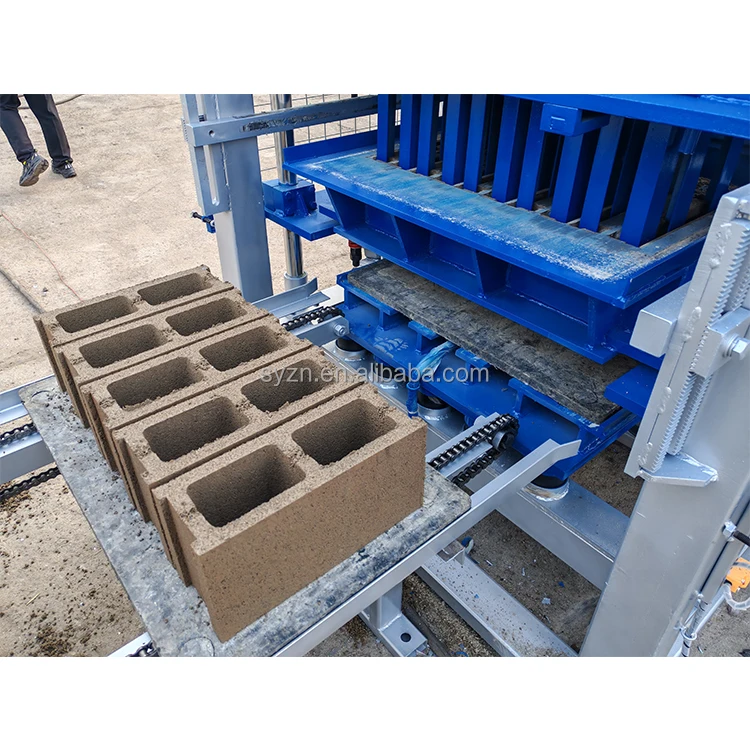 High quality block machine