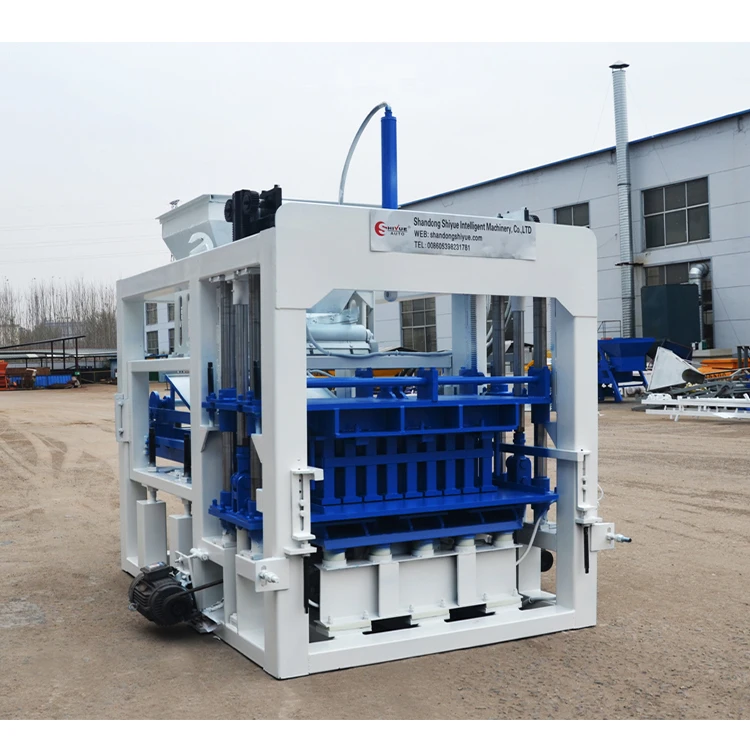
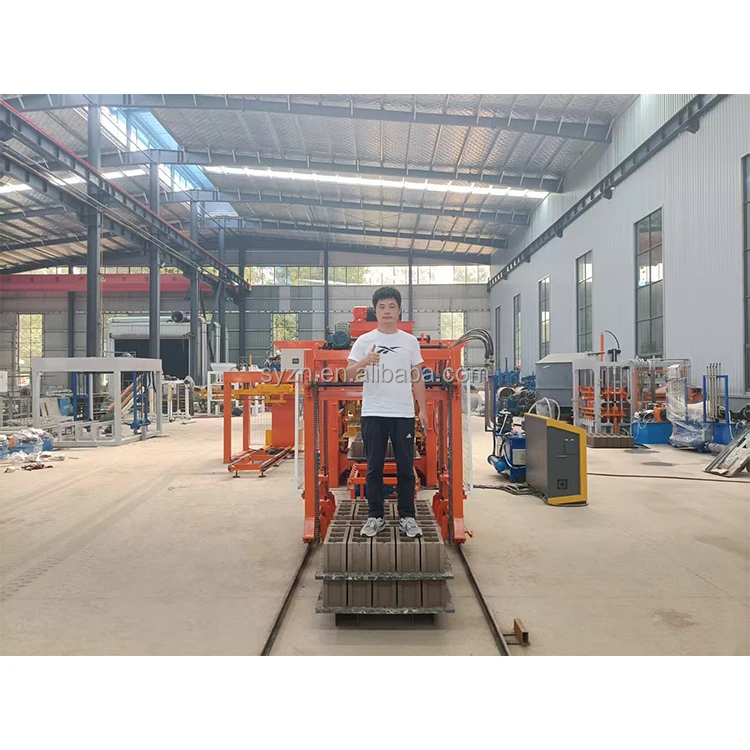
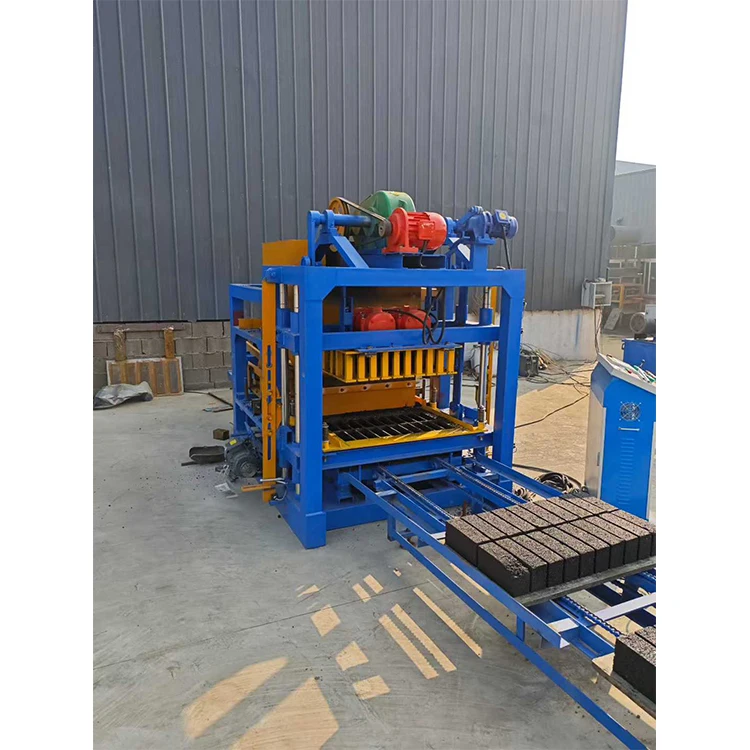
Integrated System Matching — QT4-25 automatic block machine configured with matched mould, pallet and handling specifications rather than assembled from separate catalogue defaults, ensuring the line operates as one coordinated unit.
Technical Specifications
| Parameter |
Value |
| Model |
QT4-25 |
| Product Type |
Automatic Concrete Block Making Machine |
| Control System |
PLC controlled fully automatic |
| Automation Level |
Fully automatic (pallet feeding, material feeding and scraping, block stacker) |
| Machine Power |
16.58 kW |
| Molding Cycle |
25 seconds |
| Capacity |
4600 pcs/8hours (basis not stated in source — confirm block format, material and thickness) |
| Machine Weight |
5000 kg |
| Overall Size |
6400 × 1500 × 2700 mm |
| Pallet Size |
850 × 480 mm |
| Vibration System |
Mechanical vibration (vibration motor and big vibration box) |
| Motor |
Siemens motor |
| Raw Materials |
Concrete, sand, cement, fly ash, crushed stone, lime, water |
| Voltage |
Configurable to local voltage and frequency |
Application Suitability
| Application |
Material or Output |
| Hollow block production for medium-sized block factories |
Crushed stone, sand, cement and fly ash mixes |
| Solid brick manufacturing for local building supply |
Concrete and sand blends with standard curing |
| Paver stone brick production for landscaping and municipal projects |
High-density concrete mixes with colour pigment options |
| On-site block production for construction contractors |
Locally sourced aggregate matched to project specifications |
Why "4600 Pieces per Shift" Can Mislead Your Production Plan
Capacity means nothing without stating which block format it assumes.
I have seen buyers plan two-shift operations around a headline number, only to discover the quoted figure applied to a thin solid brick while their actual product was a 200 mm hollow block requiring longer vibration and curing. The gap between brochure output and real daily throughput can stall a project before the first pallet leaves the press [NEED_CITE: block format impact on cycle time and daily capacity]. When an automatic block machine manufacturer quotes capacity, the block dimensions, mix design and pallet cycle must all be stated alongside the number so your labour and raw material planning matches reality.

Where the QT4-25 Sits in the Full Machine Range
The QT4-25 occupies the medium-output tier of our automatic block machine lineup, positioned between entry-level semi-automatic presses and high-capacity fully hydraulic lines. For a buyer moving away from manual pallet handling or replacing an ageing egg-layer, this automatic block machine manufacturer offers the step up to PLC-controlled production with integrated pallet feeding, material scraping and stacking. The mechanical vibration system keeps the investment threshold manageable while still delivering consistent compaction across standard hollow and solid block formats.
Positioning Against Higher and Lower Tiers
Below this tier, semi-automatic machines require operators to feed pallets and move wet blocks by hand, capping practical output and increasing labour cost per block. Above it, high-capacity hydraulic lines add servo-driven mould change, automatic cubing and larger pallet formats suited to plants running multiple shifts with frequent format switches. The QT4-25 bridges that gap for buyers who need automatic block machine reliability without the footprint and capital outlay of a full hydraulic plant [NEED_CITE: automation tier selection criteria for block production].
Vibration Force, Pallet Size and Cycle Time Explained
The 25-second molding cycle is governed by the mechanical vibration system rather than hydraulic pressure, meaning compaction density depends heavily on the vibration motor output and the mass of the vibration box transmitting force through the mould. The 850 × 480 mm pallet size dictates how many blocks form per cycle and must align with the buyer’s curing rack spacing and forklift tine width. A mismatch here forces manual re-stacking after the press, negating the automation advantage. The 16.58 kW total power draw covers the vibration motor, material feeder and pallet conveyor, so buyers should confirm their workshop supply can sustain continuous draw without voltage drop that would weaken vibration amplitude and reduce block density.
The Cost of Overlooking Pallet and Voltage Details
Buyers who select pallet material and size without checking their existing curing racks often find wet blocks cannot be moved by their forklift, turning an automatic line into a manual handling bottleneck. Voltage and frequency left unconfirmed until after shipment delay commissioning by weeks while transformers or motor rewinds are arranged locally [NEED_CITE: common commissioning delays from unconfirmed electrical specifications]. PLC display language set to a default the operator cannot read leads to parameter errors during mould changes, producing off-spec blocks that must be crushed and re-pressed.
What This Automatic Block Machine Manufacturer Brings to Your Line
Block machinery is the single focus here, so the QT4-25 press, mould, pallet and handling equipment are specified as one matched system rather than sourced from separate vendors and bolted together. Configuration starts from the buyer’s actual mix design and local aggregate, not a catalogue default that may not suit regional sand or fly ash characteristics. Mould design covers the formats the buyer’s market actually sells, with custom drawings available for non-standard dimensions. The automation level is selectable, meaning a buyer can commission the line semi-automatic and add stacking or cubing modules later as volume grows. Installation includes operator training on the PLC interface and mould change procedure so the plant reaches stable output quickly after arrival.
Documentation & Verification
- Line layout drawing with capacity calculation stating the block format assumed for the 4600-piece figure
- Machine specification sheet confirming voltage, frequency and PLC display language before production
- Pallet specification matched to buyer’s curing rack dimensions and forklift capacity
- Factory test record demonstrating 25-second cycle time across the buyer’s target block formats
- Hydraulic and electrical schematic for local maintenance team reference
Installation, Commissioning & Support
- Foundation pad sized to the 6400 × 1500 mm footprint with level tolerance for vibration stability
- Dedicated power circuit rated for 16.58 kW continuous draw at the confirmed local voltage and frequency
- Machine shipped in dismantled state with marked components for on-site reassembly
- First-run commissioning covering PLC parameter setting for the buyer’s specific mix and block format
- Operator training on mould change procedure and daily vibration box inspection routine
- Wear parts list identifying mould liners, vibration springs and scraper blades with reorder codes
What to Include in Your Inquiry
Provide your target block format with exact dimensions, the daily output you need for that specific format, and the raw materials available locally including aggregate type and moisture range. Confirm your workshop voltage, frequency and whether the PLC display needs to run in a specific language for your operators. If you already have curing racks, pallets or forklifts on site, share their dimensions so the line can be configured around your existing infrastructure.
Frequently Asked Questions
Q: How do I verify the 4600-piece capacity figure for the block format I actually produce?
A: Request a capacity calculation that names the exact block dimensions, mix composition and pallet cycle assumed. The QT4-25 cycle time varies between hollow blocks, solid bricks and pavers, so the output number must be tied to your specific format to be useful for shift planning.
Q: Can I start with semi-automatic operation and add the stacker later?
A: The automation level is configurable. You can commission the QT4-25 with manual pallet handling first, then retrofit the automatic pallet feeder and block stacker as production volume justifies the investment. The PLC architecture supports this upgrade path without replacing the main control cabinet.
Q: What voltage and language details need confirming before the machine ships?
A: Provide your site voltage, phase configuration and frequency so the motor and control panel are wired correctly at the factory. Confirm the PLC display language your operators read fluently. These details locked before production prevent multi-week commissioning delays after arrival.
Q: How much floor space does the QT4-25 line need including pallet handling?
A: The press itself measures 6400 × 1500 × 2700 mm, but the full line including pallet return conveyor, material hopper and stacking area requires additional length. Submit your workshop floor plan so the layout drawing accounts for operator walkways and curing rack access routes.

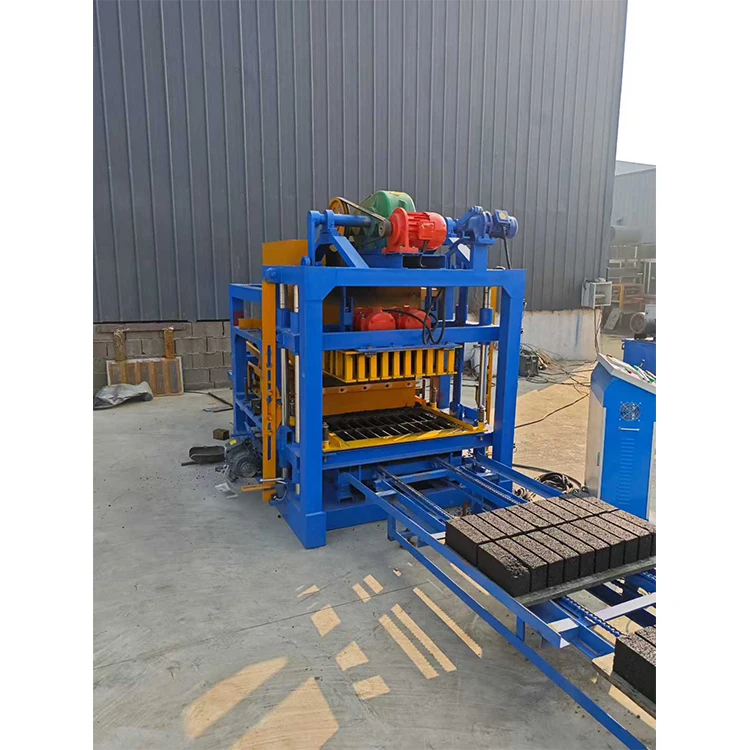
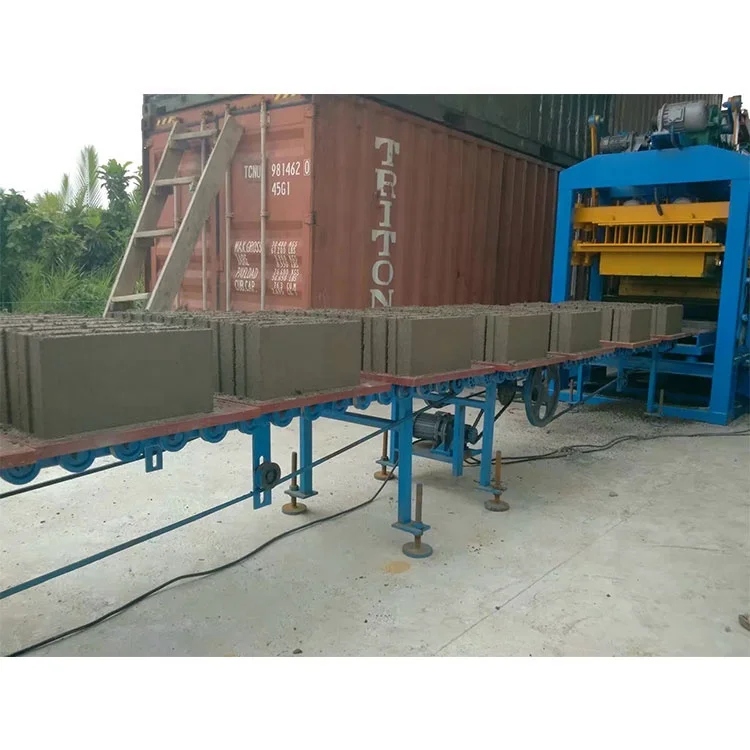 Automatic block machine