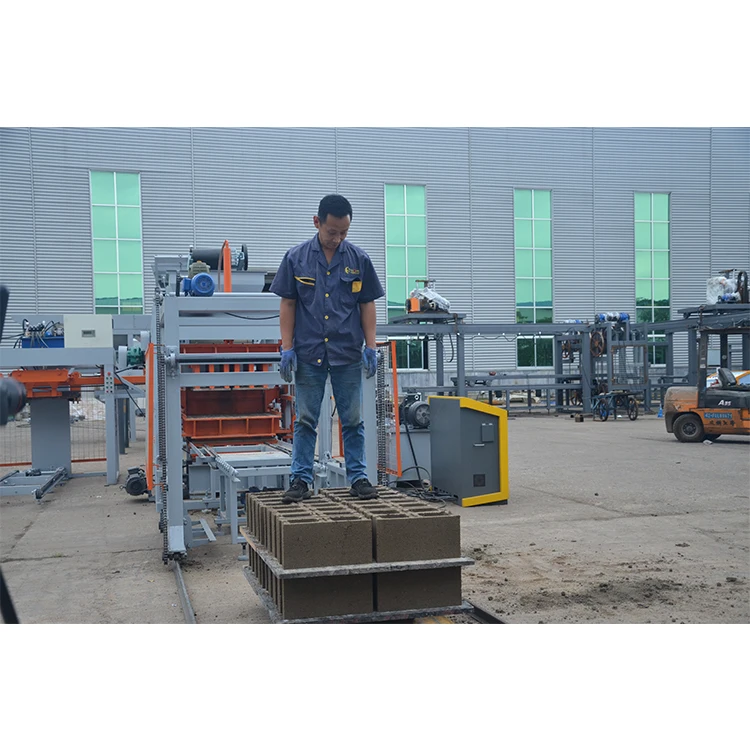
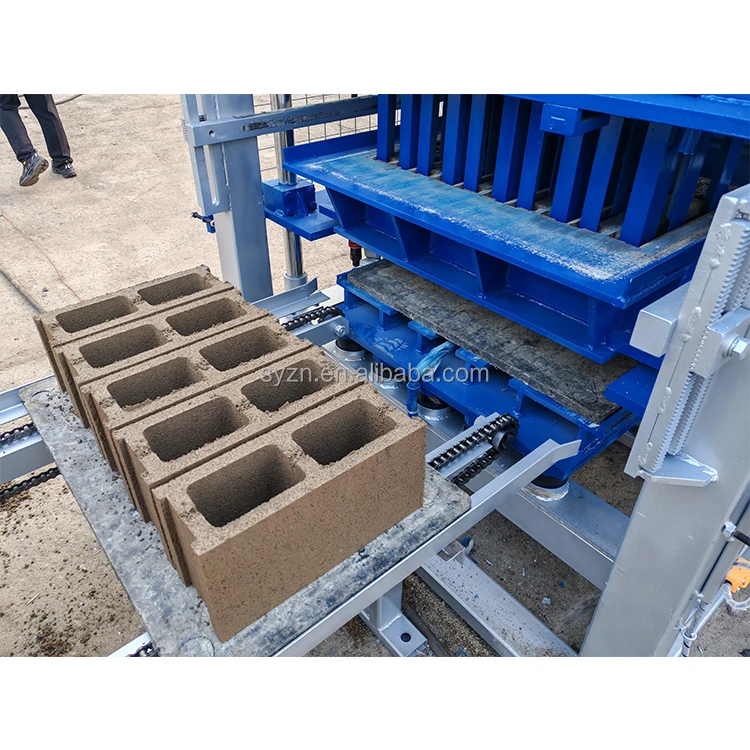
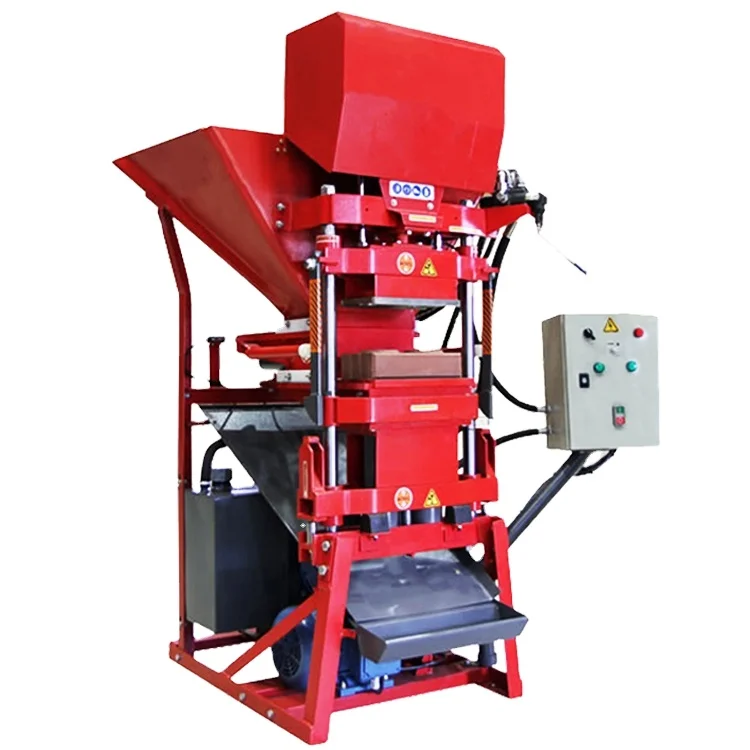
Configuration matched to actual mix design — we set vibration frequency and pallet size against your local aggregate before confirming output, not from a default catalogue sheet.
Technical Specifications
| Parameter |
Value |
| Model |
QTJ4-25 |
| Product Type |
Automatic Block Making Machine |
| Control System |
PLC controlled fully automatic |
| Vibration System |
Vibration motor with large vibration box |
| Machine Power |
16.58 kW |
| Molding Cycle |
25 seconds |
| Output Capacity |
4600 pcs / 8 hours (basis not stated in source — confirm block format, material, and thickness) |
| Net Weight |
5000 KGS |
| Overall Dimensions (L×W×H) |
6400 × 1500 × 2700 mm |
| Pallet Size |
850 × 480 mm |
| Motor Brand |
Siemens motor |
| Raw Materials |
Concrete, sand, cement, fly ash, crushed stone, lime, water |
| Block Formats |
Hollow blocks, solid blocks / bricks, paver stone bricks |
| Voltage & Frequency |
Configurable to buyer’s local voltage and frequency |
| Frame |
Thick steel construction |
| Automation Level |
Fully automatic (pallet feeding, material feeding and scraping, block stacking) |
| Warranty |
One year (free parts supply during warranty period) |
Application Suitability
| Application |
Material or Output |
| Medium-scale block factory |
Hollow blocks from crushed stone, cement, and sand for commercial masonry |
| Housing project on-site production |
Solid blocks from fly ash and cement for residential wall construction |
| Paver production for contractors |
Interlocking paver stone bricks from concrete and fine aggregate |
| First plant for entrepreneurs |
Mixed format output across hollow, solid, and paver blocks on one machine |
What "4600 Pieces per Shift" Actually Means for Your Output
Capacity figures without a stated block format leave buyers comparing numbers that do not match their production reality.
When a quotation lists only cycles per hour or pieces per shift, the buyer often discovers after commissioning that real daily output falls noticeably short of expectation. The gap usually comes from the format assumed during calculation — a small solid brick cycles far faster than a large hollow block, yet both may be quoted under the same headline number. For the QTJ4-25, we always ask which block format you intend to produce as your primary product before confirming any capacity projection [NEED_CITE: block format impact on cycle time and daily output in vibration-based compaction]. This is where many first-time plant buyers lose production days they had already committed to project timelines.

Where the QTJ4-25 Fits Across the Full Automatic Block Making Machine Manufacturer Range
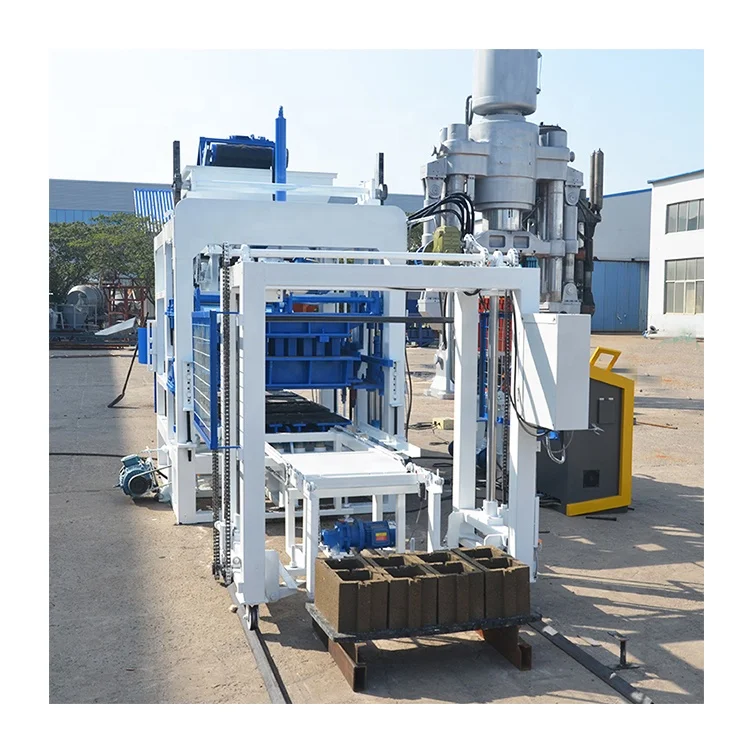
The QTJ4-25 occupies the mid-tier of our automatic block machine lineup, sitting between entry-level semi-automatic machines and high-capacity fully automatic hydraulic lines. It uses vibration-based compaction rather than hydraulic pressure, which keeps maintenance complexity lower for buyers who do not yet need the density that hydraulic pressing delivers. For a buyer surveying options, this model represents the point where fully automatic pallet feeding, material feeding, and block stacking become standard without stepping into the footprint and investment level of a hydraulic press line.
Choosing Between Vibration-Based and Hydraulic Compaction
Buyers often ask whether they should skip the vibration tier and go straight to hydraulic. The answer depends on the block strength requirement and the aggregate available locally. Vibration compaction handles standard concrete and sand mixes well for hollow and solid blocks used in general masonry. When the project specifies high-density pavers or kerbstones requiring compaction forces beyond what vibration alone provides, a hydraulic model becomes the appropriate step up [NEED_CITE: compaction method selection for concrete block strength requirements]. The QTJ4-25 gives buyers an automatic entry point with a clear upgrade path when market demand shifts toward higher-specification products.
Reading the Specs That Matter on the Production Floor
The 25-second molding cycle governs how fast the machine completes one press, but actual throughput depends on pallet return time and material feed speed matching that cycle. The 850 × 480 mm pallet size must align with your curing rack dimensions and forklift capacity — a mismatch here means pallets do not stack properly in the curing area, creating a bottleneck downstream from the press itself. The 16.58 kW total power draw tells you what dedicated circuit capacity the electrical installation requires before the machine arrives. The large vibration box paired with the vibration motor provides the compaction energy in place of a hydraulic cylinder, so vibration frequency consistency becomes the primary factor in block density uniformity across a production run.
The Hidden Cost of Skipping Voltage and Language Confirmation
Commissioning delays after the machine arrives on site almost always trace back to two details that could have been confirmed during ordering: voltage and frequency mismatch, and PLC display language. A machine wired for a frequency different from the local grid will run the vibration motor at the wrong speed, producing blocks with inconsistent density. When the PLC interface displays in a language the operators cannot read, parameter adjustments during commissioning take far longer than planned [NEED_CITE: industrial machinery commissioning delays from voltage and control language mismatch]. Both issues are preventable when confirmed before production begins, yet they remain among the most common reasons installation stretches beyond the expected timeframe.
Why Source This Automatic Block Making Machine from Here
Block machinery is our single focus, which means the QTJ4-25 is specified as a matched system — machine, mould, pallet, and handling equipment — rather than assembled from separate suppliers. We set the configuration against your actual mix design and local aggregate, not a catalogue default, because the river sand versus crushed stone distinction directly affects cycle time and block strength. Mould design covers the formats your market sells, including custom drawings when standard moulds do not match local block dimensions. The automation level is selectable so you can start with the QTJ4-25 and move to hydraulic or higher-capacity models as demand grows, keeping the upgrade path within a familiar control platform. Factory testing runs your specified block format before dispatch, so the capacity figure you receive reflects actual production conditions rather than a generic test cycle.
Documentation & Verification
- Line layout showing QTJ4-25 placement with capacity calculation per stated block format
- Machine specification sheet confirming vibration motor rating and pallet dimensions
- Mould drawing and format list for hollow, solid, and paver block production
- Voltage, frequency, and PLC display language confirmation before production
- Factory test record run on buyer-specified block format before dispatch
- Packing photographs and customs documentation for shipment clearance
Installation, Commissioning & Support
- Foundation must support 5000 KGS static load across the 6400 × 1500 mm machine footprint
- Dedicated circuit matching confirmed voltage and frequency for 16.58 kW total draw
- Machine ships partially assembled with vibration box and frame pre-mounted
- First-run commissioning includes molding cycle tuning on your actual block format
- Operator training covers PLC interface navigation and mould change procedure
- Wear parts list provided with hydraulic and vibration component replacement intervals
What to Prepare Before Requesting a Quote
To give you a capacity figure that reflects your actual production rather than a generic test, we need to know the primary block format and dimensions you plan to produce, the daily output target for that format, and the type of aggregate available at your location. Confirm your local voltage and frequency so the electrical system is built to match. If you have existing pallets, curing racks, or forklifts on site, share the dimensions so the 850 × 480 mm pallet size can be verified against your handling equipment before the order is placed.
Frequently Asked Questions
Q: How is the 4600 pieces per 8 hours capacity calculated for the QTJ4-25?
A: This figure originates from the source documentation, but the block format and dimensions it assumes are not stated. Actual output varies between hollow blocks, solid bricks, and pavers because each format requires a different number of pieces per mould and may need different cycle times. We provide a recalculated capacity once you confirm your primary block format.
Q: Where does the QTJ4-25 sit in the full automatic block making machine manufacturer range?
A: It occupies the mid-tier as a vibration-based, PLC-controlled automatic machine. Buyers who need higher block density for pavers or kerbstones typically move to a hydraulic model. Those producing standard masonry blocks find this tier sufficient before scaling to higher-capacity lines.
Q: What voltage and PLC language options are available for different export markets?
A: Voltage and frequency are configurable to match the buyer’s local grid specification. The PLC display language is confirmed before production to ensure operators can read the interface during commissioning and daily operation without translation delays.
Q: What supporting equipment does the QTJ4-25 need for a complete automatic line?
A: The machine handles pallet feeding, material feeding and scraping, and block stacking automatically. Supporting equipment includes raw material batching and mixing upstream, plus curing racks and forklift handling downstream, sized to match the 850 × 480 mm pallet format.
Q: Can a buyer start with the QTJ4-25 and upgrade later?
A: Yes. The control platform and pallet handling concepts carry across to higher-capacity and hydraulic models in the range. Buyers often begin with this vibration-based tier and move up when market demand shifts toward formats requiring hydraulic compaction.

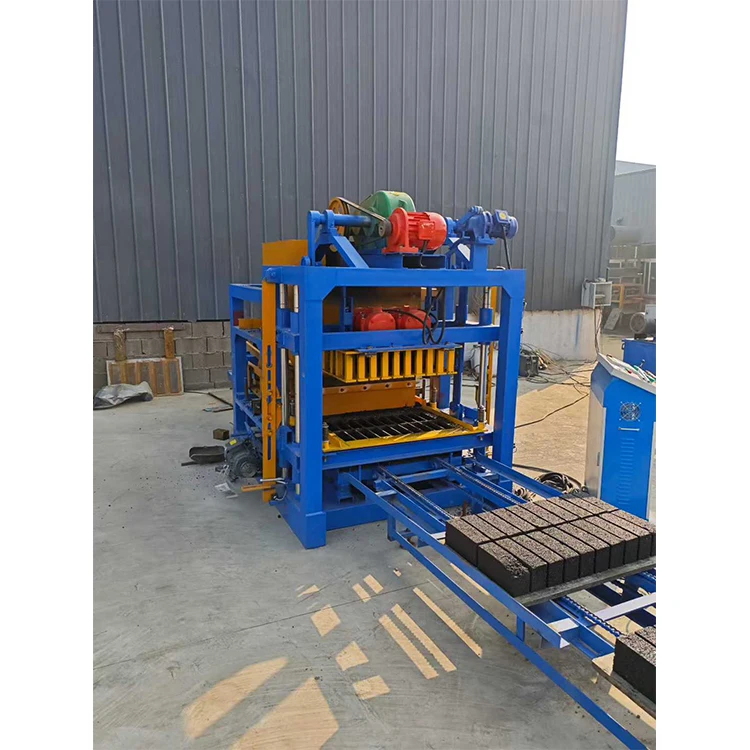
 Automatic block machine