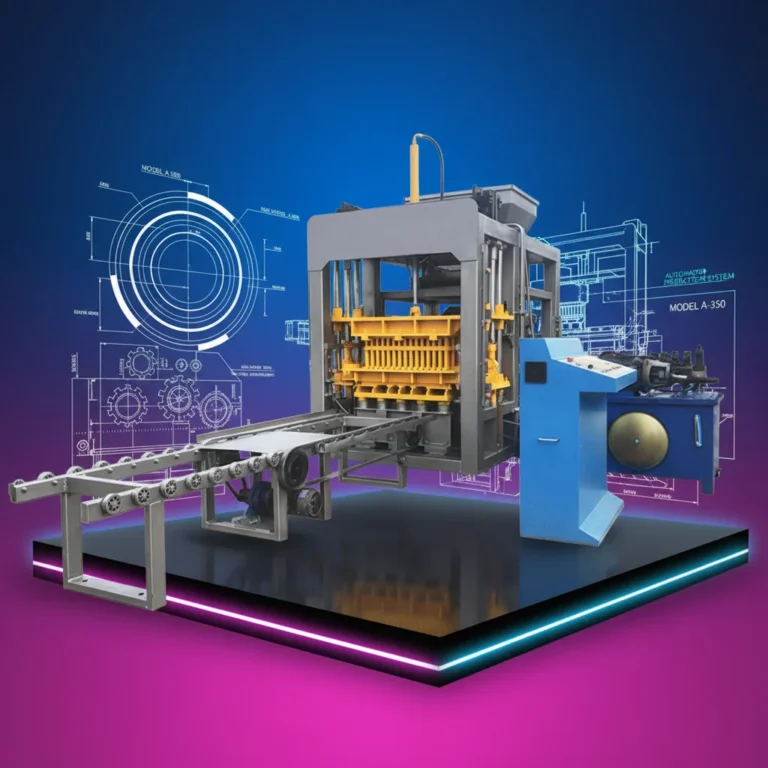
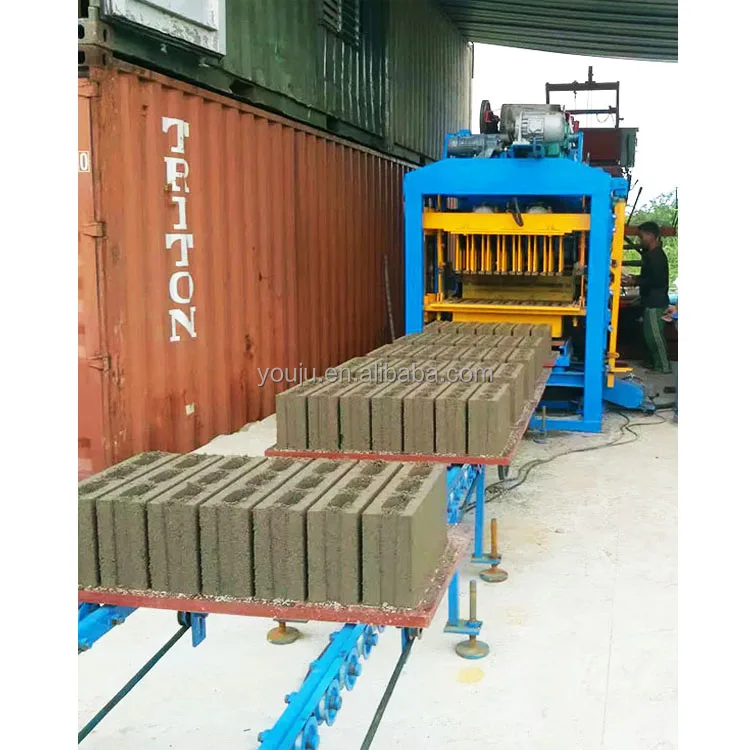
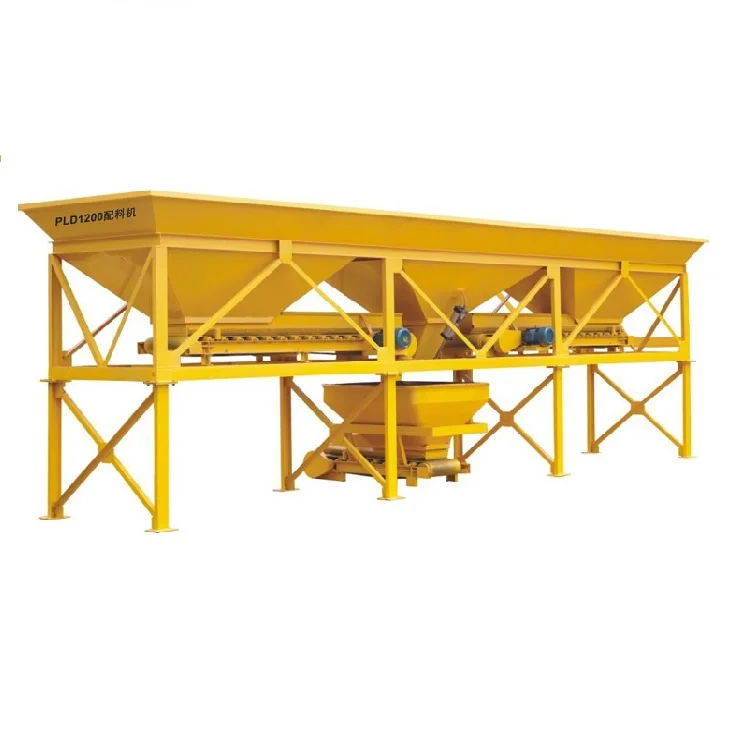
Complete machine range integration — The QT4-18 automatic concrete block making machine is specified as one matched system with mould, pallet and handling, helping first-time and replacement buyers position their investment across output tiers before finalizing layout decisions.
Technical Specifications
| Parameter |
Value |
| Model |
QT4-18 |
| Product Type |
Automatic Concrete Block Making Machine |
| Overall Dimensions (L×W×H) |
2500×1750×2200mm |
| Rated Pressure |
16MPa |
| Vibration Form |
Platform Vibration |
| Pallet Size |
950×550mm |
| Molding Cycle |
18-25s (basis to be confirmed by block format) |
| Overall Power |
27.5kW |
| Control System |
PLC with frequency converter |
| Electrical Components |
Schneider |
| Mould Lifting Mechanism |
Double-sided synchronous gears |
| Material Feeder System |
Hopper, feeding box, feeding platform, conveyor system |
| Pallet Feeder Power |
Hydro-cylinder |
| Automation Level |
Automatic (mixer, pallet conveyor, molding machine, block conveyor, hydraulic station, PLC console) |
Application Suitability
| Application |
Material or Output |
| Hollow block production |
Crushed stone, cement, sand, and fly ash aggregates |
| Paving block and kerbstone |
High-density concrete mixes with fine aggregates |
| Solid block and interlocking brick |
Standard concrete mixes for load-bearing walls |
| On-site contractor production |
Local aggregates sourced near the construction project |
| First block plant setup |
Entrepreneurs evaluating workshop volume output tiers |
What "Cycles Per Hour" Leaves Out in Automatic Block Machine Quotations
A molding cycle of 18-25s only translates to daily output when the block format and mix design are fixed.
Many buyers receive quotations for an automatic concrete block making machine manufacturer based on a generic cycles-per-hour figure. If the supplier does not state which block format — such as a 400×200×200mm hollow block — that figure assumes, the real daily output can fall far short of expectation once production begins. I once spent two weeks on-site in the Middle East stabilizing the molding cycle because the local aggregate moisture content had not been factored into the vibration frequency settings [NEED_CITE: impact of aggregate moisture on concrete block vibration settings]. This is why confirming the target format is the first step before discussing capacity.

Positioning the QT4-18 Across the Full Machine Range
The QT4-18 sits at the entry-to-mid tier of the automatic block machine spectrum. Buyers comparing semi-automatic workshop machines against high-capacity automatic lines need to understand where this model lands in terms of plant footprint, automation level, and investment. It is designed for entrepreneurs setting up a first block plant or construction contractors who need consistent on-site production without the complexity of a fully continuous high-volume line. The automatic concrete block making machine manufacturer range includes models above and below this tier, so placing the QT4-18 correctly prevents over-investing in capacity the project does not yet require.
Matching Automation to the Buyer’s Actual Operation
Automation on the QT4-18 covers the mixer, pallet conveyor, molding machine, block conveyor, hydraulic station, and PLC console as an integrated package. This removes manual pallet handling from the operator’s daily routine, which is where most labour inconsistency originates in smaller plants. For a building material distributor surveying options for different customer budgets, this tier offers automatic operation without the full stacking and cubing systems found on higher-tier lines. The PLC with frequency converter allows the operator to adjust cycle parameters, meaning the machine can adapt as the buyer’s product range expands [NEED_CITE: PLC frequency converter adjustment range for block molding cycles].
How Pressure, Vibration, and Pallet Size Shape Block Quality
The 16MPa rated hydraulic pressure works together with the platform vibration system to compact the concrete mix into the mould. If vibration force and hydraulic pressure are not matched to the buyer’s specific mix design and local aggregate, block strength becomes inconsistent from batch to batch. The 950×550mm pallet size must be checked against the curing area dimensions and the forklift the buyer already operates — a mismatch here means pallets cannot be moved efficiently after pressing. The double-sided synchronous gear mould lifting mechanism ensures balanced demoulding, reducing the risk of block edge damage that leads to waste. The 18-25s molding cycle range is adjustable, but the final cycle time depends on the block thickness and the concrete mix setting characteristics. Choosing a pallet material without considering the local climate and curing duration can shorten pallet life significantly [NEED_CITE: pallet material selection for concrete block curing environments].
The Cost of Skipping Configuration Verification Before Shipment
When voltage, frequency, and PLC display language are not confirmed before the machine leaves the factory, commissioning delays follow immediately upon arrival. A machine configured for a mix the buyer cannot source locally forces a costly material change or a complete re-tuning of the vibration and pressure settings. Mould change time is another area where assumptions cause losses — if the format flexibility quoted does not reflect the actual shift time required to swap moulds, the buyer pays for versatility they cannot practically use. These are not theoretical risks; they are the most common reasons an automatic concrete block making machine manufacturer receives post-delivery service calls that could have been prevented at the quotation stage [NEED_CITE: common causes of block machine commissioning delays].
Why Buyers Source This Tier From a Single-Focus Manufacturer
The QT4-18 is specified as one matched system where machine, mould, pallet, and handling equipment are selected together rather than assembled from separate suppliers. Configuration is set against the buyer’s actual mix design and local aggregate, not pulled from a catalogue default. Mould design covers the formats the buyer’s market actually sells, including custom drawings when standard options do not fit. The automation level is selectable, so a buyer can start with the QT4-18’s automatic package and plan an upgrade path as production volume grows. Installation support includes operator training on the specific PLC interface and mould change procedures for this model, not generic machine operation.
Documentation & Verification
- Line layout showing QT4-18 placement with capacity calculation per block format
- Machine specification sheet confirming 950×550mm pallet and 16MPa pressure ratings
- Mould drawing and format list for hollow, solid, paving, and interlocking block types
- Voltage, frequency, and PLC display language confirmation record before dispatch
- Factory test record on the buyer’s target block format and mix design
- CE declaration documentation where applicable to the destination market
Installation, Commissioning & Support
- Foundation plan sized to the 2500×1750×2200mm machine footprint and vibration load
- Dedicated electrical circuit rated for the 27.5kW overall power draw at confirmed voltage
- Pallet conveyor and block conveyor alignment checked against site curing area layout
- PLC console language and frequency converter parameters set during on-site commissioning
- Operator training on double-sided synchronous gear mould lifting and mould change sequence
- Wear parts list covering hydraulic seals, vibration platform components, and mould liners
What to Include in Your Inquiry
To receive a configuration proposal that reflects actual production conditions rather than catalogue defaults, include your target block format and dimensions, the local raw materials available with aggregate type and moisture range, and your daily output requirement stated per specific block size. Confirm your site voltage and frequency, the PLC display language your operators require, and whether existing forklifts or curing racks need to be accommodated by the pallet specification.
Frequently Asked Questions
Q: How do I verify the real daily output of the QT4-18 for my block format?
A: Request a capacity calculation that states the exact block format, dimensions, and mix design assumed. A molding cycle of 18-25s produces different daily totals for hollow blocks versus paving blocks. The automatic concrete block making machine manufacturer should provide this per-format breakdown before you commit, so your production plan is based on verified numbers rather than a generic cycles-per-hour figure.
Q: Where does the QT4-18 sit between semi-automatic and high-capacity automatic tiers?
A: The QT4-18 is an automatic-tier machine covering mixer, pallet conveyor, molding, and block conveyor functions. It sits above semi-automatic workshop machines that require manual pallet handling, and below high-capacity lines with full stacking and cubing. Buyers evaluating their first plant or a replacement for a semi-automatic unit typically find this tier matches their volume without the footprint of a continuous line.
Q: What plant footprint and investment level does this tier require?
A: The machine itself measures 2500×1750×2200mm, but the total plant footprint depends on pallet circulation space, curing area, and raw material storage. This tier requires less floor space than high-capacity automatic lines while offering more consistent output than semi-automatic models. Investment sits at the mid-range of the automatic block machine spectrum, suitable for first plants and contractor on-site setups.
Q: Can the automation level be upgraded after initial installation?
A: The QT4-18’s PLC control with frequency converter provides a foundation for adding automatic stacking and cubing functions later. Buyers starting with the standard automatic package can plan an upgrade path as production volume justifies additional handling equipment. Confirm the upgrade compatibility with the automatic concrete block making machine manufacturer during the initial quotation to ensure the control system supports future expansion.

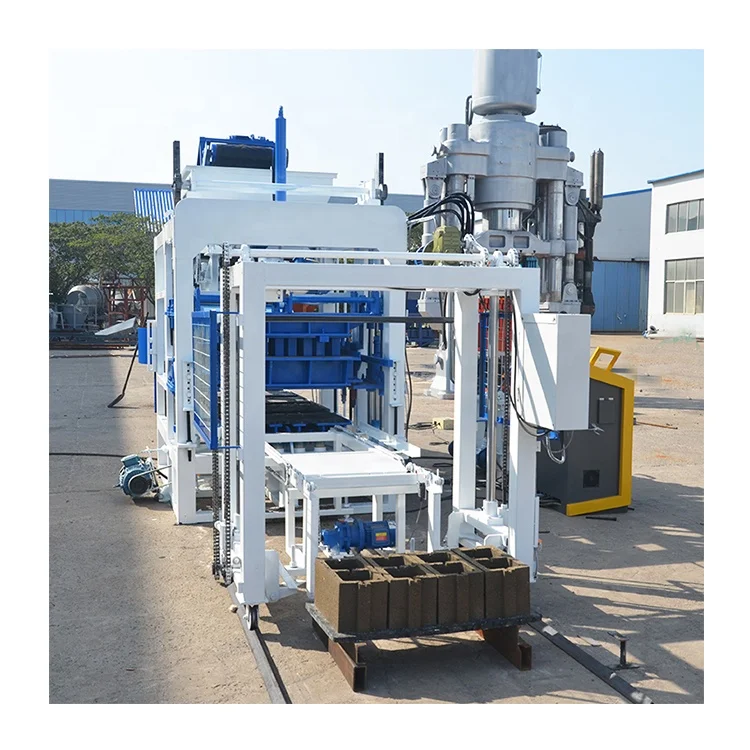
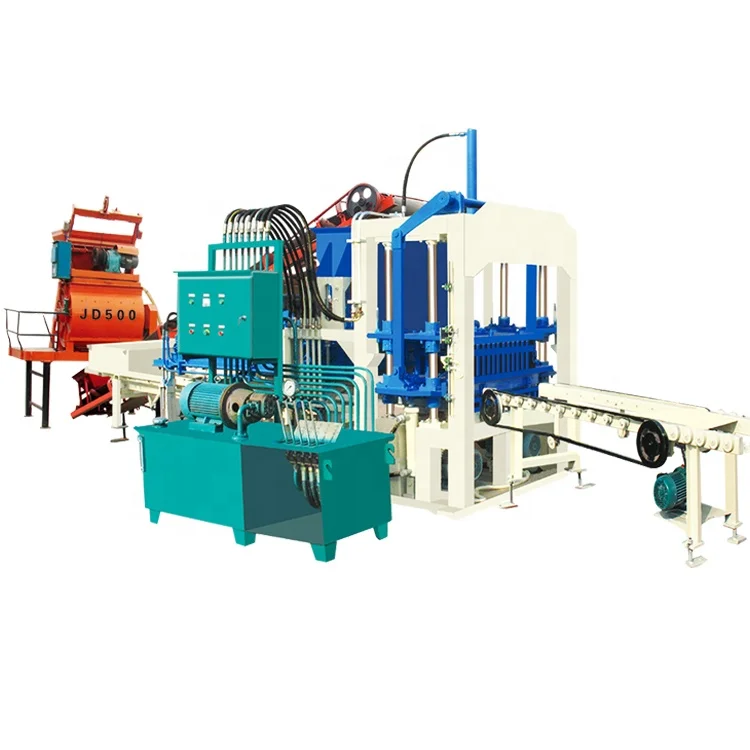 Automatic block machine