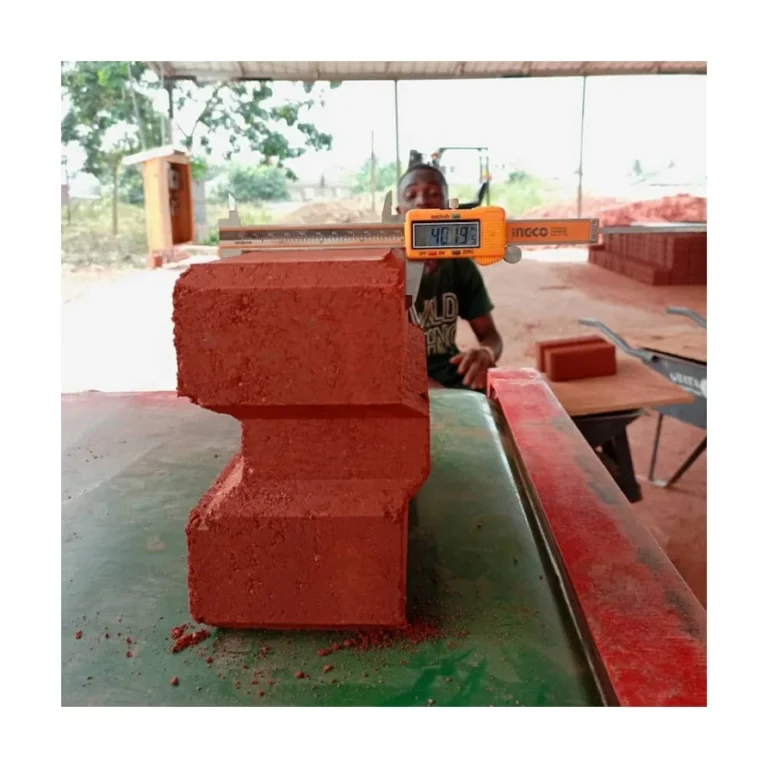
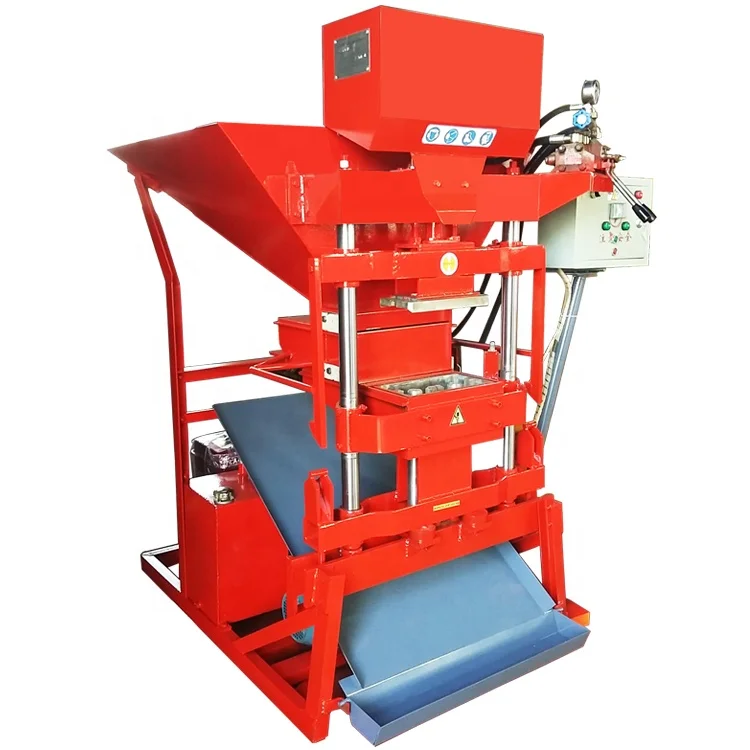
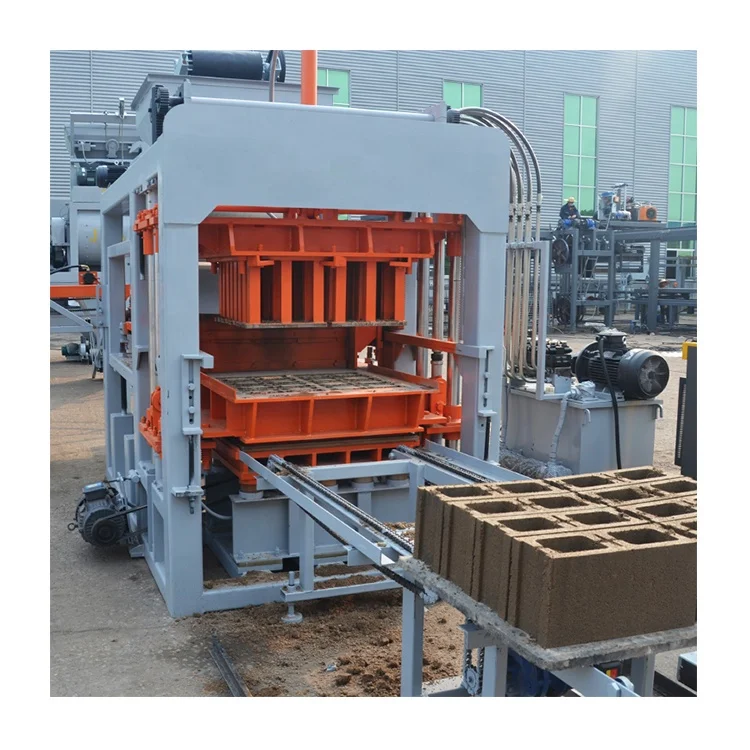
Matched system design — The QT4-18 is configured with pallet, mould, and handling equipment as a single coordinated line rather than a standalone press assembled from separate vendors.
Technical Specifications
| Parameter |
Value |
| Model |
QT4-18 |
| Product Type |
Semi-Automatic Concrete Block Making Machine |
| Overall Dimensions (L×W×H) |
2500×1750×2200 mm |
| Rated Pressure |
16 MPa |
| Vibration Form |
Platform Vibration |
| Pallet Size |
950×550 mm |
| Molding Cycle |
18-25 s (basis to be confirmed per block format) |
| Overall Power |
27.5 kW |
| Control System |
PLC with frequency converter (brand and language options to be confirmed) |
| Mould Lifting Mechanism |
Double-sided synchronous gears |
| Electrical Components |
Schneider (full component list to be confirmed) |
| Automation Level |
Semi-automatic with manual or mechanized block transfer |
| Support Equipment Compatibility |
JQ500 pan mixer, 6 m / 8 m belt conveyor, stacker, block clamper, trolley, cement silo, batching plant |
| Mould Format |
One hollow mould included; additional formats customizable |
Application Suitability
| Application |
Material or Output |
| Hollow block production |
Crushed stone, sand, cement, and water in standard CMU mixes |
| Solid block production |
Dense aggregate blends for load-bearing masonry units |
| Paving block production |
Fine aggregate and cement mixes for interlocking or rectangular pavers |
| On-site contractor production |
Local sand and gravel for housing or development project blocks |
What "18-25 Seconds per Cycle" Actually Means for Your Output
Cycle time only becomes real daily capacity once the block format and mix design are locked in.
I have seen buyers receive a quoted cycle figure and assume it applies to every mould they plan to run. The QT4-18 molding cycle of 18-25 seconds covers a range, and where your product lands within that range depends entirely on the block geometry, the vibration dwell needed for your aggregate, and the hydraulic pressure your mix demands. A hollow block with thin walls may sit near the lower end, while a dense interlocking paver requiring full compaction will push toward the upper boundary. Without stating the format, a Semi-Automatic Block Making Machine manufacturer cannot give you a meaningful daily output number [NEED_CITE: capacity calculation standards for concrete block production equipment].

Where the QT4-18 Sits on the Semi-Automatic Range
The QT4-18 occupies the entry-to-mid tier within the semi-automatic block machine lineup. It targets buyers setting up a first block plant or expanding a small workshop where capital outlay and curing yard space are both constrained. The 27.5 kW overall power draw keeps electrical infrastructure requirements modest, which matters in regions where industrial supply connections carry long lead times. This Semi-Automatic Block Making Machine manufacturer positions the QT4-18 as a starting point that can later accept additional handling equipment — a stacker or block clamper — as production volume grows.
How Semi-Automatic Operation Shapes Your Daily Workflow
Semi-automatic means the press cycle runs under PLC control with frequency converter adjustment, but pallet movement between the press and the curing yard still depends on manual labor or a separate mechanized transfer system. The 950×550 mm pallet size defines how many blocks ride on each board and determines the curing rack dimensions you will need. Buyers often overlook this until the machine arrives and the existing forklift cannot handle the loaded pallets [NEED_CITE: pallet handling logistics in small-scale block plants]. The double-sided synchronous gear mould lifting mechanism ensures the mould releases evenly, which reduces corner damage on green blocks during demoulding and keeps scrap rates within acceptable bounds.
Pressure, Vibration, and What They Mean for Block Strength
The 16 MPa rated hydraulic pressure works together with platform vibration to compact the concrete mix inside the mould cavity. Pressure alone does not produce a strong block — it must be matched with sufficient vibration amplitude and duration to settle the aggregate particles into a dense matrix. When the local sand contains high clay or silt content, as I encountered with a buyer in the Middle East whose bricks started dusting after curing, the vibration force and pressure settings need recalibration against that specific material. The QT4-18 frequency converter allows the operator to adjust cycle parameters, but the starting configuration must be based on actual sample testing, not a catalogue default. Mould change involves the double-sided synchronous gear system, and the time required for a full swap depends on how many formats the operator runs per shift and whether the crew has practiced the procedure.
The Hidden Cost of Unconfirmed Electrical and Pallet Specifications
Voltage and frequency mismatches remain one of the most common reasons a block machine sits idle after arrival [NEED_CITE: voltage and frequency standards by export market]. The QT4-18 overall power of 27.5 kW requires a stable three-phase supply, but the exact voltage and frequency must be confirmed against the buyer’s local grid before production begins. Equally problematic is the pallet size assumption — a 950×550 mm pallet that does not match the buyer’s existing curing racks or forklift tine spacing turns a straightforward installation into a workshop modification project. These are not engineering failures; they are specification gaps that surface only when the machine is plugged in.
Why Source This QT4-18 from Our Facility
Every QT4-18 leaves our Linyi workshop with the mould, pallet, and handling equipment specified as a matched set, not sourced separately and bolted together at the buyer’s site. The platform vibration and 16 MPa hydraulic pressure are calibrated against the buyer’s actual mix design and local aggregate sample before dispatch. Mould design covers the formats the buyer’s market actually sells, with custom drawings available for non-standard shapes. The semi-automatic configuration is deliberately modular, so a buyer running manual pallet transfer today can add a stacker or clamper when volume justifies the investment. Installation and commissioning include operator training on the PLC controls and mould change procedure.
Documentation & Verification
- Line layout drawing with capacity calculation stated per block format and cycle time assumption
- Machine specification sheet confirming PLC brand, frequency converter details, and electrical component list
- Mould drawing and complete format list with demoulding procedure for each cavity type
- Pallet specification matched to 950×550 mm dimensions and buyer’s curing rack configuration
- Voltage, frequency, and PLC display language confirmation record signed before production
- Factory test record on buyer’s specified block format with cycle time measurement
Installation, Commissioning & Support
- Foundation pad sized to 2500×1750 mm footprint with level tolerance specified before machine placement
- Dedicated three-phase circuit rated for 27.5 kW overall power with correct voltage and frequency confirmed
- Machine arrives partially assembled; platform vibration unit and PLC cabinet require on-site connection
- First production run supervised to set molding cycle parameters against buyer’s actual mix and aggregate
- Operator training covers PLC frequency converter adjustment and double-sided synchronous gear mould lifting
- Wear parts list and spare mould inventory documented at quotation stage for first replacement cycle
What We Need to Size Your Line Correctly
Before quoting, we need to know which block formats your market sells and the daily volume you expect for each one. Send us a sample of your local sand and aggregate so we can test the vibration and pressure settings against real material. Confirm your site voltage, frequency, and the language your operators will use on the PLC display — these decisions lock in before production starts.
Frequently Asked Questions
Q: What block format does the 18-25 second cycle time assume, and what is the realistic daily output?
A: The 18-25 second range covers different block geometries. A thin-wall hollow block may cycle near 18 seconds, while a dense paver requires the full 25 seconds or longer. We calculate daily output only after confirming your exact block format, mix design, and number of working hours per shift.
Q: Can I start with manual pallet transfer and upgrade to mechanized handling later?
A: Yes. The QT4-18 semi-automatic design supports manual pallet movement initially. A stacker, block clamper, or trolley system can be added to the line as production volume increases, without replacing the press itself.
Q: What voltage, frequency, and PLC language options are available?
A: The electrical system is configured to match your local grid standard. We confirm voltage, frequency, and PLC display language before production begins so the machine is ready for commissioning on arrival.
Q: Which supporting equipment is included in the quotation versus optional?
A: The QT4-18 quotation specifies the JQ500 pan mixer, belt conveyor length, pallet type, and any handling equipment you select. Each item is listed separately so you see exactly what the line includes and what you may source locally.
Q: How long does a mould change take, and how many formats can one machine run per shift?
A: The double-sided synchronous gear system allows mould swaps within a shift, but the actual time depends on the crew’s familiarity with the procedure. We document the change steps and recommend limiting formats per shift to maintain output consistency.

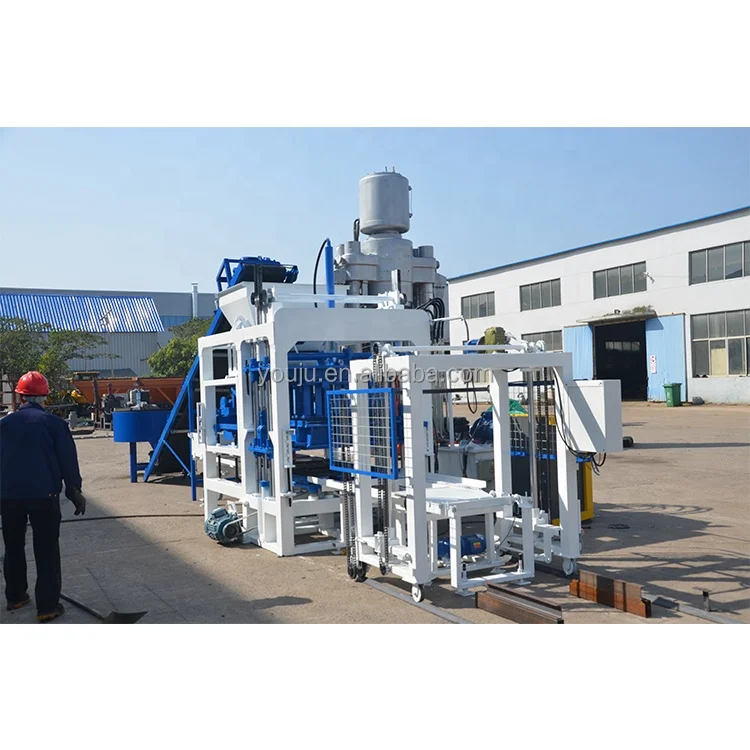
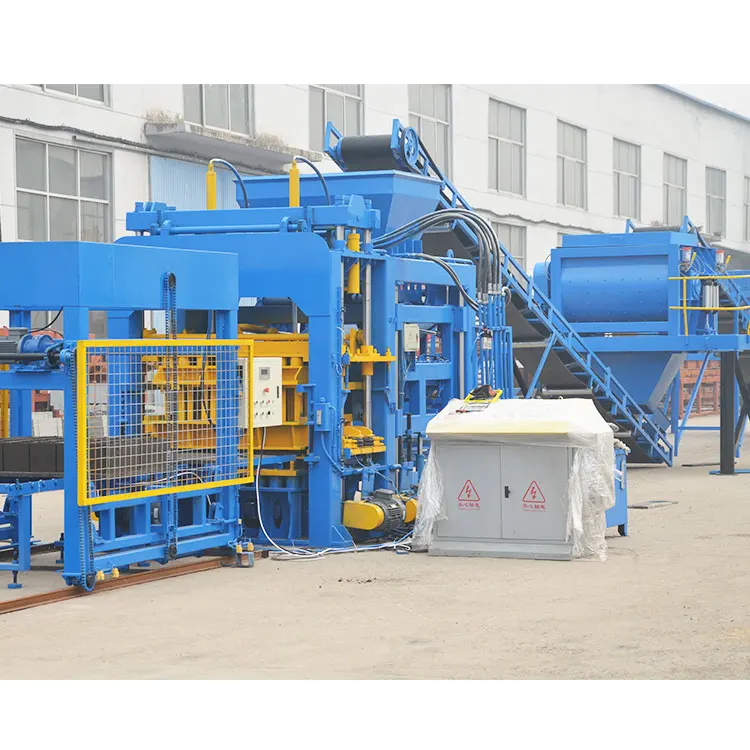 Semi automatic block